
In brief: Choose an 18V battery based on the intended application. For short, light tasks such as driving screws, a battery with 1,5-2,5 Ah is sufficient. For demanding projects such as sawing or mowing the lawn, models with 4,0 Ah or more are ideal because they offer significantly longer runtime. Always check brand compatibility.
Cordless tools give you freedom. No tangled cables and no searching for the nearest socket. You can work flexibly in the garden, workshop or on the building site. The battery is at the heart of this freedom. The 18-volt class in particular has become an established high-performance standard. But the choice is extensive, and the technical specifications can be confusing. This guide takes you through the world of 18V lithium-ion batteries and helps you find exactly the right power source for your projects.
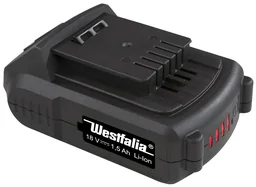
For many standard applications and as a reliable replacement battery, the : 18 Volt Li-Ion battery 1,5 Ah is an excellent choice. Its compact design and low weight make it ideal for tasks where easy handling matters, such as driving screws overhead or working in tight spaces. With 1,5 amp-hours, it provides enough energy for shorter jobs and recharges quickly, allowing you to continue working without long breaks.
What do volts, amp-hours and watt-hours really mean?
To buy the right battery, you need to understand the three key specifications. They determine your tool's power, runtime and total available energy.
Voltage (volts): The motor's power
Voltage, measured in volts (V), is the driving force. You can think of it like the pressure in a water pipe. Higher voltage means more "pressure" and therefore more power that the tool's motor can deliver. The 18V class is a universal standard for a huge range of powerful power tools. It offers an excellent balance of power, weight and ease of handling for drills, saws, grinders and many other tools.
Capacity (amp-hours): The battery's runtime
Capacity, measured in amp-hours (Ah), is your battery's "fuel tank". It indicates how long the battery can supply a certain current before it needs to be recharged. Under identical conditions, a 4,0 Ah battery runs twice as long as a 2,0 Ah battery. For long, uninterrupted jobs, you therefore need a battery with high capacity.
Energy (watt-hours): The total energy
Watt-hours (Wh) describe the total energy stored in the battery. They are calculated by multiplying voltage by capacity (V x Ah = Wh). An 18V battery with 2,0 Ah therefore stores 36 Wh of energy. This is the most reliable figure for directly comparing the total output of different batteries, even across different voltage ranges.
Choosing the right number of amp-hours is crucial. It is not about always choosing the biggest battery. It is about balancing the tool perfectly for the task at hand – in terms of both runtime and weight.
How do I choose the right battery capacity (Ah) for my project?
The right capacity depends directly on your application. A large battery is not always the best solution. Consider the weight, handling and duration of your project.
For short and light tasks (1,5 Ah - 2,5 Ah)
For quickly assembling furniture, hanging pictures or carrying out precise work in hard-to-reach places, a lightweight battery is worth its weight in gold. Models such as the (1,5 Ah) or batteries from sets such as the
: the "EasyFlex" Advantage Set with 2,5 Ah are ideal here. They reduce the tool's overall weight, significantly reducing fatigue during overhead work. The shorter runtime is usually not a problem for these tasks, as they often only take a few minutes.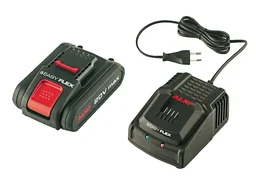
For medium to demanding tasks (3,0 Ah - 4,0 Ah)
Are you planning to cut panels with a jigsaw, trim the hedge in the garden or change tyres with an impact wrench? Then a battery in the medium-capacity range is the right choice. It offers a good balance between long runtime and manageable weight. The
: the "EnergyFlex" Advantage Set with a 4,0 Ah battery is a prime example of this all-rounder class, which is ideally suited to most DIY and garden projects. It allows you to handle longer sessions without constantly changing batteries in your garden tools.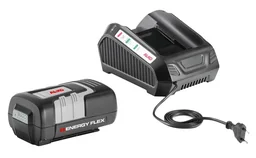
Pro tip
Always buy two batteries. While you work with one battery, the second can already be charging. This helps you avoid enforced breaks and complete even large projects efficiently. A third battery provides extra security when using particularly power-hungry tools such as angle grinders or lawn mowers.
For professionals and long jobs (5,0 Ah and more)
On building sites, in professional horticulture or during all-day renovation projects, maximum runtime matters. This is where batteries with 5,0 Ah, 8,0 Ah or even more come into play. They power energy-intensive tools such as large circular saws, leaf blowers or cordless lawn mowers for extended periods. The downside is their greater weight and higher price. For occasional DIY users, these powerhouses are often overkill.
How can I recognise a high-quality Li-ion battery?
Price is not the only criterion. The internal components and build quality determine your battery’s performance, safety and service life.
Cell quality and manufacturer
The individual lithium-ion cells are the heart of every battery. Brand-name manufacturers often use high-quality cells from renowned producers such as Samsung, LG, Panasonic or Sony. These cells offer high energy density, low self-discharge and excellent cycle stability, resulting in a long service life. Very inexpensive unbranded batteries often cut corners here, which can lead to faster performance loss and safety risks.
Battery management system (BMS)
An intelligent battery management system is the battery’s essential control unit. It continuously monitors the temperature, voltage and current of every individual cell. The BMS actively protects the battery against harmful deep discharge, dangerous overcharging, short circuits and overheating. It also provides so-called “balancing”, which keeps all cells at the same charge level and significantly extends the battery’s overall service life.
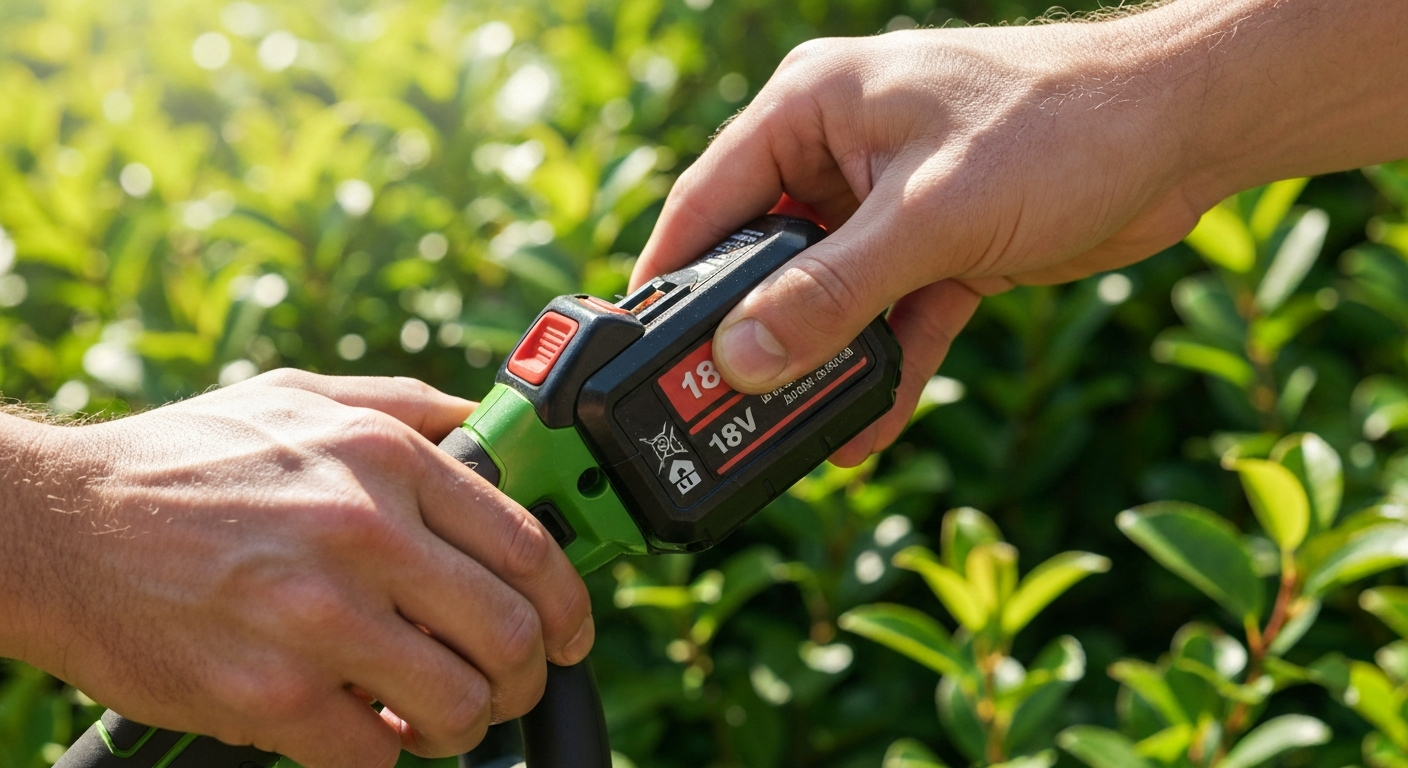
Charge indicator and housing
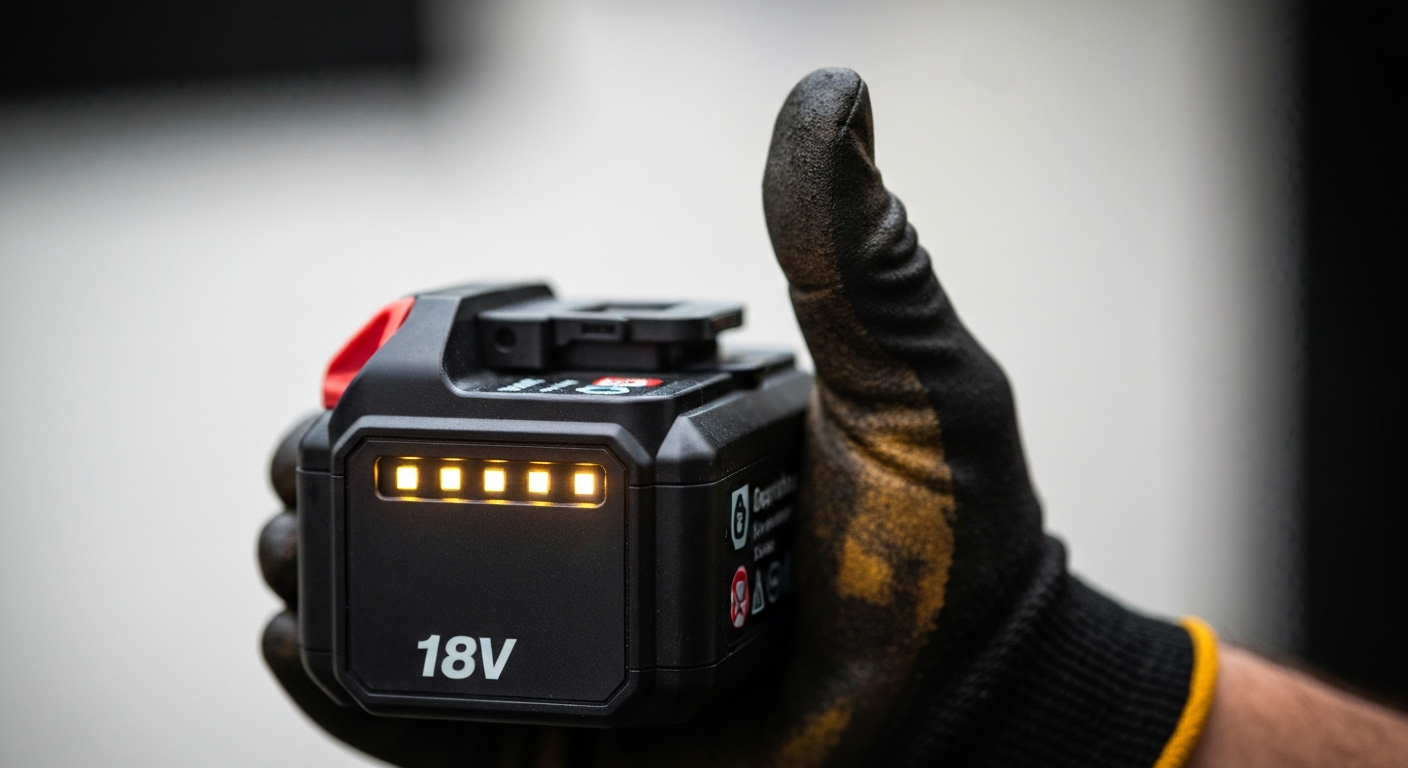
Practical and important: an LED charge indicator. At the touch of a button, you can see how much energy remains in the battery and plan your work more effectively. A robust, impact-resistant housing protects the sensitive technology inside from drops and the harsh conditions on a building site. Look for solid construction and precisely fitting contacts. High-quality tool accessories are distinguished by details like these.
The compatibility trap: will every 18V battery fit every tool?
One of the most common and costly misconceptions is that all 18V batteries are interchangeable. This is not the case. Almost every manufacturer has its own proprietary battery system. Batteries differ not only in the mechanical shape of the connection, but also in the electronic communication between the battery and the tool.
Only use batteries that are explicitly approved for your tool system. Trying to use a battery from another brand may simply not work at best. At worst, you risk serious damage to the tool or battery, or even fires. Battery platforms from Westfalia, Bosch, Makita or Einhell offer the advantage that you can use one battery type with a wide range of devices. Battery systems often offer more than just conventional tools. Practical helpers such as the
: 10 Watt Multi-Position Cordless Lights significantly expand the range of applications.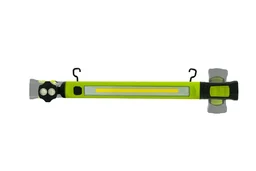
Important note
Never use third-party batteries without certification from the tool manufacturer. The warranty for your device will become void immediately. In addition, missing or inadequate protective circuits in the battery can lead to overheating and a risk of fire.
Care tips for maximum battery life
With the right care, you can significantly extend the service life of your valuable batteries. Treat them well and they will serve you reliably for a long time.
Store correctly
Store your batteries in a dry, cool place. The ideal temperature is between 10 °C and 20 °C. Be sure to avoid extreme heat, such as that which can build up inside a car or a metal garden shed in summer. Frost is just as harmful. If you are not going to use a battery for an extended period, store it with a charge level of around 40-60 % (usually two of the four LEDs lit). A fully charged or completely empty battery ages faster in storage.
Charge correctly
Only use the charger specified by the manufacturer. It is perfectly matched to the battery’s charging electronics. Do not charge a battery immediately after heavy use while it is still hot. Let it cool down to room temperature first. The same applies when bringing it in from a cold environment. Modern Li-ion batteries have no memory effect, so you can top them up at any time without damaging their capacity.
Battery cell technology is advancing at a rapid pace. What is a high-performance battery today will be standard in just a few years. This makes cordless tools one of the most dynamic and exciting categories for tradespeople and DIY enthusiasts.
Use correctly
Avoid completely draining the battery. Although modern tools switch off in time to prevent harmful deep discharge, it is better to change the battery at the first warning or noticeable drop in performance. Do not overload your tool. If you notice that the machine is reaching its limits, give it and the battery a short break. This prevents overheating and protects the cells.
Additional advice
Defective or worn-out batteries do not belong in household waste. They contain valuable raw materials as well as environmentally harmful substances. Return old batteries to municipal collection points or retailers, where they can be properly recycled. Secure the terminals with adhesive tape before transport to prevent short circuits.
Frequently Asked Questions
- Can I use an 18V battery from another brand?
- No, generally not. Each manufacturer has its own system with specific connections and electronics. You must use a battery from the same brand and series as your tool to ensure compatibility and safety. Exceptions are rare.
- What does “Ah” mean on a battery?
- “Ah” stands for ampere-hours and describes the battery’s capacity, or how long it can supply energy. Under the same load, a 4,0 Ah battery runs for about twice as long as a 2,0 Ah battery.
- Does a lithium-ion battery have a memory effect?
- No, modern lithium-ion batteries do not have a memory effect. You can recharge them at any time, regardless of their current charge level, without reducing their capacity. However, you should avoid deep discharge.
- What is the best way to store my 18V battery?
- Store the battery in a cool, dry place at around 10-20°C. Avoid direct sunlight and frost. The ideal charge level for longer-term storage is between 40 % and 60 % to maximise the lifespan of the cells.
- Is a battery with more Ah always better?
- Not necessarily. A battery with more ampere-hours (Ah) offers longer runtime, but is also larger, heavier and more expensive. For short jobs or overhead work, a lighter battery with fewer Ah may be more ergonomic and practical.
You may also be interested in
- Battery won’t charge? Troubleshoot 18V Li-ion battery problems yourself
- 18V 4A Li-ion fast charger: Your buying guide
- One battery, countless projects: Get the most from your 18V battery
- Battery capacity: When 2,0 Ah is the perfect choice (and when it isn’t)
- How to care for your 12V Li-ion battery: Maximise its lifespan
- Cordless drill buying guide: Find the right model