
In brief: The most common mistakes when cutting with an angle grinder stand are clamping the workpiece incorrectly, using unsuitable cutting discs and failing to wear protective equipment. Excessive pressure and neglected stand maintenance also result in inaccurate cuts and significantly increase the risk of accidents.
An angle grinder stand transforms your handheld tool into a precise chop saw for metal and stone. It promises straight, repeatable cuts and a major boost in safety. However, this potential can only be realised when the tool is used correctly. In practice, mistakes can quickly creep in that not only ruin the result but also create serious hazards. We show you the five most common mistakes and how to avoid them reliably.
The basis for every successful cut is a stable and reliable foundation. The Cutting stand for one-handed angle grinders provides exactly that. Its robust construction securely holds standard angle grinders, while the integrated vice clamps workpieces precisely. With its adjustable angle setting, you can make even demanding mitre cuts with pinpoint accuracy.
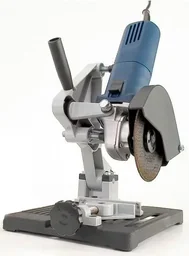
Mistake 1: How clamping the workpiece incorrectly leads to a dangerous loss of control
The most common and also the most dangerous mistake is failing to secure the workpiece properly. Even minimal vibrations or slight movement during cutting can cause the cutting disc to bind. The result is a violent kickback that damages the material and machine and poses a significant risk of injury.
The hidden danger: vibration and movement
A loose pipe starts to rotate. A flat piece of metal begins to “sing” and vibrates its way out of the clamp. These movements are often barely visible, but the forces acting on the thin cutting disc are enormous. If the disc binds in the cut, it can shatter or bring the angle grinder to an abrupt stop, potentially ripping the machine out of the stand.
Step by step: How to clamp every material securely
Take your time when clamping the workpiece. Position it so that the cutting line is as close as possible to the clamping jaws. This minimises leverage and vibration. Tighten the vice spindle firmly until the material is completely immobile. For round materials, use the V-grooves in the clamping jaws for a secure hold. Give the workpiece a firm shake to check that it is secure before starting the machine.
A job that is clamped properly is a safe job. I always tell my team: If you wouldn't trust the workpiece to support your entire body weight, it isn't clamped tightly enough.
Mistake 2: Why the wrong cutting disc ruins more than just the cut
The cutting disc is the heart of the operation. It is a highly specialised consumable that must be matched precisely to the material being cut. The wrong choice leads to poor results and extreme wear and could even cause the disc to burst in the worst-case scenario.
Understanding materials: not every disc is right for every job
A thin cutting disc for stainless steel will be worn away within seconds on a concrete slab. Conversely, a coarse diamond cutting disc is more likely to tear a thin steel profile than cut it cleanly, creating dangerous burrs in the process. Always pay attention to the pictograms and manufacturer's specifications on the disc. They indicate the suitable material (steel, INOX, stone, tiles) and the maximum permitted speed.
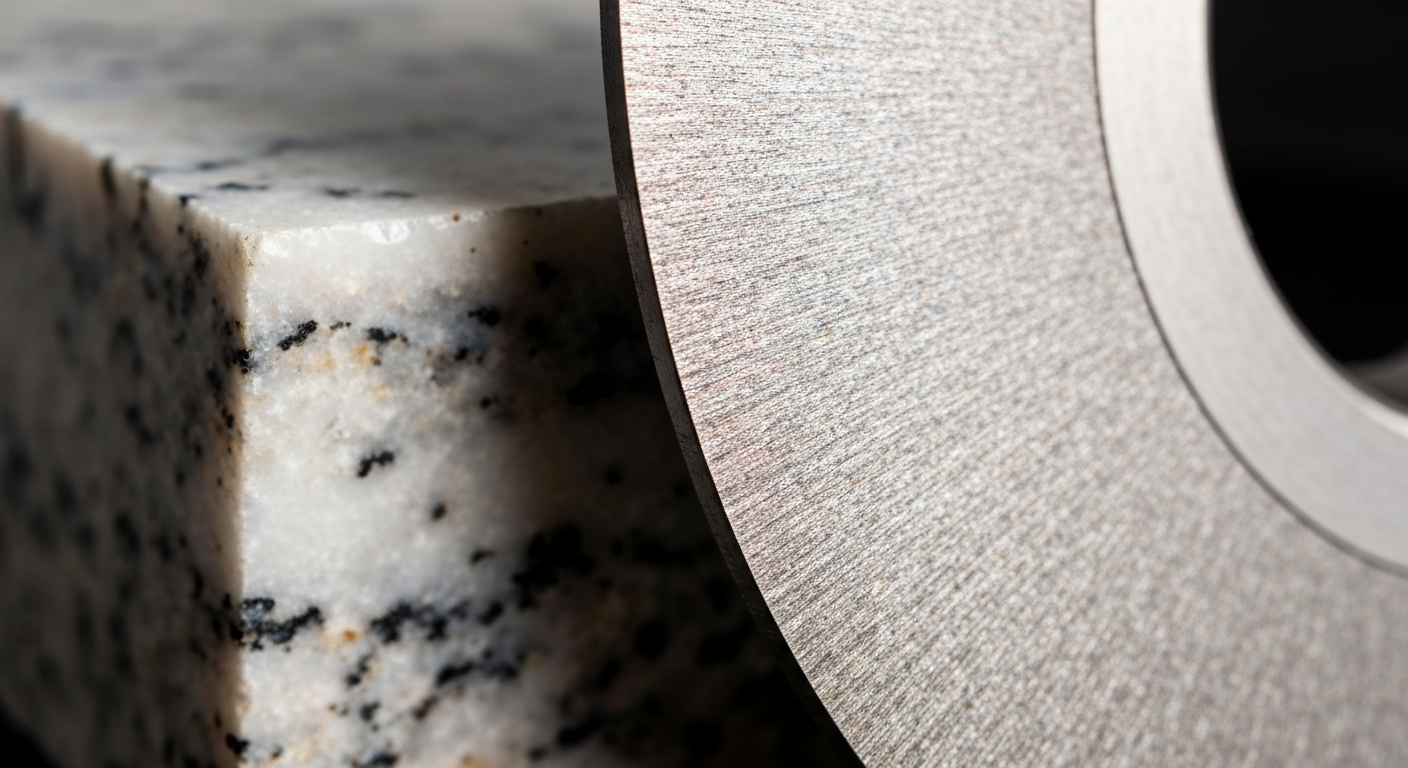
The benefits of specialised discs are particularly clear when working with hard materials such as concrete or ceramics. The Akku Power Trennen diamond cutting disc, diameter 125 is optimised for tasks like these. Its diamond segments remove the material cleanly instead of merely grinding it away, resulting in cooler, more precise cuts and an exceptionally long service life.

Additional advice
Before fitting any cutting disc, check it for cracks or damage by gently tapping it with the handle of a screwdriver. An intact disc produces a clear, bright sound. A dull or rattling sound indicates a crack – dispose of the disc immediately and safely!
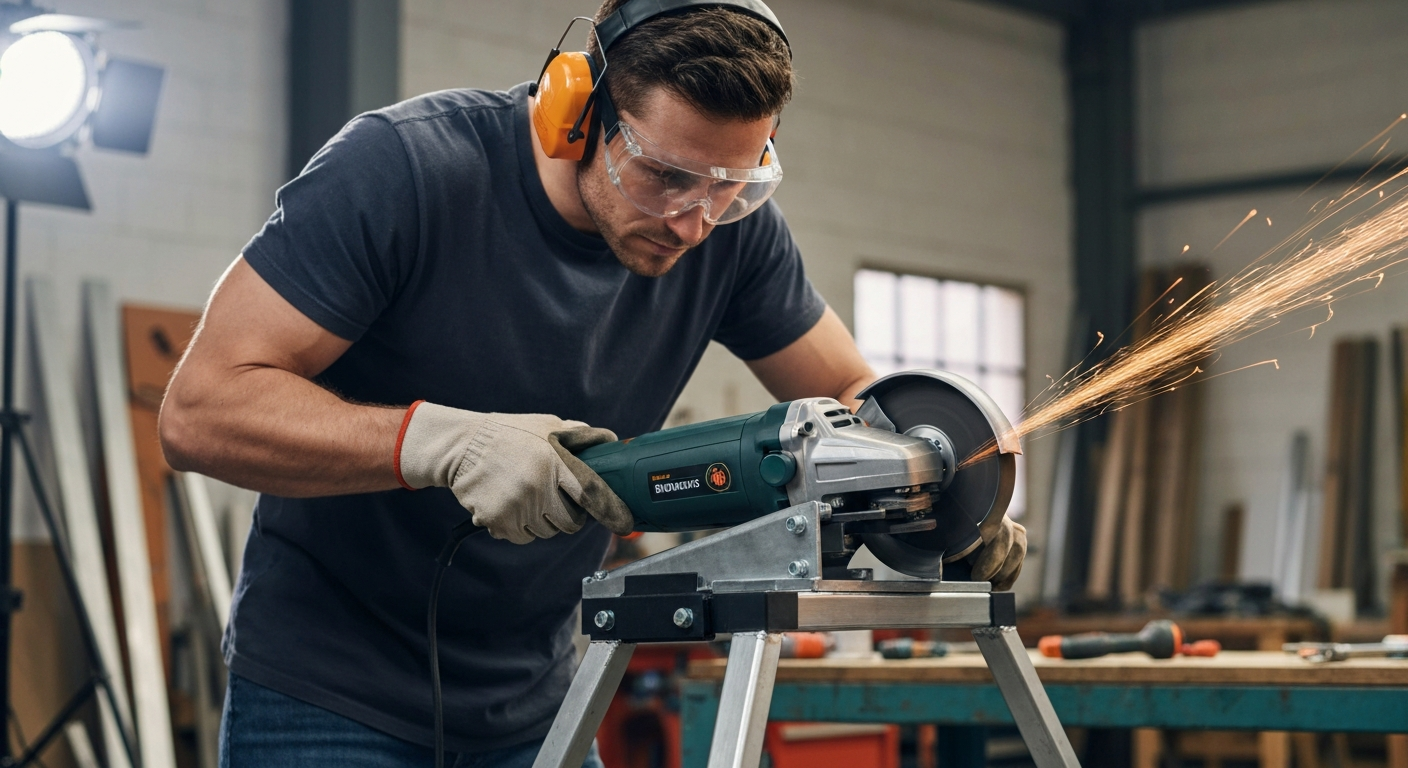
Mistake 3: Underestimated risks – Why you should never skip protective equipment
An angle grinder stand greatly improves safety, but it does not override the laws of physics. Cutting still produces sparks, fragments, deafening noise and fine dust. Ignoring personal protective equipment (PPE) is not a sign of experience but of carelessness.
Sparks, fragments and noise: the direct hazards
A shower of sparks from glowing metal particles can reach temperatures of over 1000 °C. It can not only ignite flammable materials in the workshop but also cause severe burns to the skin. A tiny fragment that flies into your eye can cost you your sight. The noise produced by an angle grinder is far above the pain threshold and causes irreversible hearing damage.
Important note
When cutting, NEVER wear loose clothing, jewellery or leave long hair loose. These can become caught in the rotating disc and cause the most serious injuries. Cotton clothing is preferable to synthetic fibres, as synthetic materials can melt on contact with sparks and burn into the skin.
Your personal protective equipment (PPE) from head to toe
The right equipment is non-negotiable. Close-fitting safety goggles that also provide side protection are the absolute minimum. Ear defenders effectively protect your hearing. Sturdy leather work gloves protect against sharp edges and sparks. For dust-intensive work on stone or concrete, a respirator mask (at least FFP2) is also essential. You can find a comprehensive selection in our Occupational Safety & Protection category.
Error 4: How can I tell if I am applying too much pressure or using the wrong speed?
The idea that “more pressure means a faster cut” is a dangerous misconception. An angle grinder is designed to work at high speed, not through brute force. Excessive pressure overloads the machine, the cutting disc and the workpiece.
Less is more: Let the machine do the work
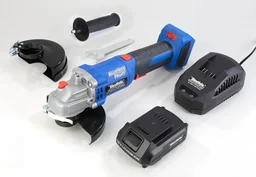
A high-quality angle grinder such as the 18V angle grinder BL 125 mm - with battery and charger has enough power thanks to its brushless motor to handle the cut almost by itself. Your job is to guide the lever of the cutting stand downwards smoothly and with care. The correct feed rate is indicated by a constant operating sound and an even shower of sparks.
Signs of overloading in the tool and material
If the machine’s speed audibly drops, you are applying too much pressure. The sparks become irregular and dark. The workpiece may turn blue at the cut edges – a clear sign of overheating. This can deform the material and blunt the cutting disc. In the worst case, the motor may seize or the overheated disc may deform and break apart.
Pro tip
Take short breaks when working with thick materials or making long cuts. Pull the cutting disc out of the cut and let it run freely for a few seconds. The fan’s airflow actively cools the disc, significantly extending its service life and maintaining cutting quality.
Error 5: How neglected maintenance of the cutting stand compromises your safety
A cutting stand is a mechanical device with joints, screws and clamps. Like any tool, it is subject to wear and can become misaligned. A quick check before every use and regular maintenance are essential for lasting precision and safety. Many tools and stands also have their place in suitable workshop trolleys & material stands.
The quick check before every use
Before starting work, briefly check the most important points. Is the angle grinder securely seated in its holder? Are all the screws on the stand’s joint tightened? Can the vice be moved easily without sticking? Is the spark guard positioned correctly? This check takes less than a minute but can prevent an accident.
Long-term care for lasting precision
Regularly clean the cutting stand to remove metal dust and swarf. An oily cloth protects bare metal parts from surface rust. From time to time, apply a drop of oil to the thread of the clamping mechanism and the lever’s pivot points. This keeps the mechanism smooth and precise. Proper care of your power tools and accessories ensures that they remain functional for years.
Precision does not happen by chance. It is the result of good tools, the right technique and consistent maintenance. A wobbly cutting stand makes even the best angle grinder useless.
An angle grinder stand is a valuable addition to any workshop. It enables tasks that would be impossible or far too dangerous to perform freehand. By avoiding these five common mistakes, you can make full use of its potential for precision and safety. Work with concentration, use the right equipment and give your tools the attention they need. This way, every cut will be a success.
Frequently Asked Questions
- Is a cutting stand suitable for every angle grinder?
- No, most cutting stands are designed for standard one-handed angle grinders with 115 mm or 125 mm disc diameters. Always check compatibility in the product description before buying. The thread size of the mount and the dimensions of the tool head are crucial.
- Which cutting disc do I need for metal?
- For metal, use resin-bonded cutting discs specifically designated for steel, stainless steel or non-ferrous metals. Choose a thin disc (approx. 1-1.6 mm) for fast, clean cuts and minimal burr formation. Thinner discs produce less heat and material loss.
- How tightly do I need to clamp the workpiece in the cutting stand?
- Clamp the workpiece “hand-tight plus a quarter turn”. It must be held completely firmly to prevent vibration and slipping. However, avoid tightening the vice with excessive force, as this can damage thin-walled profiles or the thread.
- Can I also make mitre cuts with a cutting stand?
- Yes, this is one of the main advantages. Most cutting stands, including the Westfalia model, have an adjustable clamping mechanism. This allows you to make precise mitre cuts at angles from 0 to 45 degrees, ideal for frame construction or accurately fitting corners.
- Why is personal protective equipment (PPE) so important when cutting?
- Cutting produces sparks, hot metal fragments and fine dust, which can cause serious eye injuries or respiratory problems. An angle grinder also produces noise levels that can damage your hearing. Safety goggles, hearing protection and gloves are therefore essential.
You might also be interested in
- Angle grinder cutting stand: Step-by-step guide
- Buying a cutting stand: The ultimate guide for your workshop
- How to use an angle grinder safely: Tips for DIYers
- Avoid common mistakes when machine grinding: Here’s how!
- Chainsaw: 5 common cutting mistakes and how to avoid them
- 5 common mistakes when sharpening drill bits & how to avoid them