
In brief: The ideal angle finder depends on how you plan to use it. For fast digital measurements, a digital angle finder such as PRODUCT_76064 delivers high accuracy. Traditional woodworking and metalworking call for robust models such as the engineer’s square PRODUCT_141441 or the precise carpenter’s square PRODUCT_92597. An angle finder with an integrated measuring tongue, such as PRODUCT_140547, offers maximum versatility. Our comparison helps you find the right tool.
A precise angle finder is indispensable in every workshop. Whether you need to check and transfer exact angles during woodworking, metalworking or renovation work, the right tool makes all the difference. Our 2026 review and comparison presents the best models, from classic steel squares to modern digital measuring devices.
We show you which angle finder is right for each task. You’ll learn what to look for when buying and receive clear buying advice. This makes it easy to find the model that perfectly meets your requirements.
Table of contents
What types of angle finders are available?
The range of angle finders is varied. Each type has its own strengths and is optimised for specific applications.
You should therefore think carefully about the work you mainly carry out before buying.
The classic engineer’s square
An engineer’s square is a robust steel tool with a fixed 90-degree angle. It is primarily used to check right angles and transfer lines during metalworking. Its weight and stability are major advantages here.
The versatile carpenter’s square
For woodworking, a carpenter’s square is often the first choice. It is usually lighter than an engineer’s square and, in addition to checking 90-degree angles, can also be used to transfer angles if it has an adjustable blade.
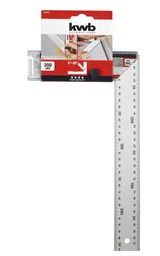
The angle finder with measuring tongue
These models combine a fixed angle with an integrated, extendable measuring tongue. This makes them extremely versatile. You can use them not only to check angles, but also to take measurements and mark them out directly. A typical example is the
.
The digital angle finder
Modern digital angle finders measure angles and inclines with high precision. They display the result on a screen, minimising reading errors. They are ideal for precise installation work, machine adjustments and any task where tenths of a degree matter. The
is an example of this category.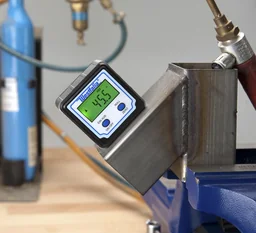
Specialist squares such as the angle stop
Angle stops such as the
are used less for measuring and primarily for securing workpieces at an exact angle. They are an important addition to any workshop.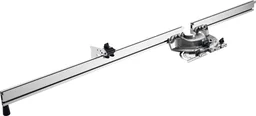
How do we test the angle finders?
Our assessment is based on practical tests under real-world conditions. We test every model for its suitability for everyday workshop use.
The following criteria are particularly important to us.
Accuracy and precision
The most important feature is measurable accuracy. We test the angles against known references and check whether they remain deviation-free along the entire length of the blades. With digital devices, we test the repeatability of the measurements.
Build quality and durability
We assess the quality of the materials and workmanship. Is the angle finder made from a stable, torsion-resistant material? How well are the edges finished? Does it prove robust against knocks and heavy use?
Handling and comfort
A good tool feels comfortable in the hand. We test the weight, grip and scale readability. For digital devices, we assess the operating logic and display quality.
Note: The accuracy of an angle finder can change over time, particularly after mechanical stress or falls. Check the accuracy of your tool at regular intervals, especially before important projects.
The Best Angle Finders in Our Test
In our practical comparison, we put various models through intensive testing. Here, we present the best angle finders for different applications.
For Digital Precision: Digital Angle Finder
The impresses in the digital measuring tools category. It measures angles and inclines with high resolution and offers useful features such as a zero button and hold function. The display is easy to read even in bright ambient light.
The measuring surfaces are magnetic, which makes handling on metal surfaces considerably easier. For precise machine adjustments or accurately determining gradients, this device is an excellent choice.
The Classic for the Metalworking Shop: Engineer's Square
The
is a typical example of a robust engineer's square. Its solid steel body guarantees lasting precision and resistance to demanding workshop use.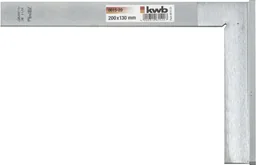
The sharp-edged blades are perfect for accurate marking out. This square is purely a checking and marking-out tool designed for durability and reliability. It is hard to beat for traditional metalworking.
The All-Rounder for Wood and More: Angle Finder with Measuring Blade
The combines the advantages of a fixed square with those of a calliper. Its integrated, finely adjustable measuring blade allows you to take measurements and transfer them directly without changing tools.
This versatility makes it an ideal companion for furniture making, renovation and many other DIY projects. It is the Swiss Army knife of angle finders.
Precision for Woodworkers: Carpenter's Square
The
, a classic carpenter's or woodworking square, stands out with its lightweight design and easy handling. It is manufactured with precision and is ideal for checking right angles in woodworking, marking out joints and carrying out general inspections.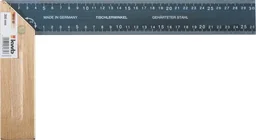
For anyone who mainly works with wood and is looking for a reliable, straightforward square, this model is an excellent choice.
What Makes a Good Angle Finder?
Not every angle finder is suitable for every task. The selection criteria depend largely on the intended application.
Material and Stability
High-quality angle finders are made from hardened steel or sturdy aluminium. The material must be resistant to twisting so that the angle does not distort under load and lose its accuracy. A satin or painted surface protects against corrosion.
Scale Readability
The scale must be clear, high-contrast and permanently engraved or applied. For digital devices, a bright, sharp display with a good viewing angle is essential. A backlit display can be an advantage in darker areas of the workshop.
Functionality and Additional Features
Consider which functions you actually need. Do you only need a fixed 90-degree angle? Would a measuring blade be useful? For a digital device, are magnetic feet, a spirit-level function or a Bluetooth interface relevant to you?
Warning: Cheap angle finders made from thin sheet metal or with poor workmanship quickly lose their accuracy. A single bent edge makes the tool unusable for precision work. Invest in quality that lasts.
Buying Guide: Which Angle Finder Is Right for Me?
The right choice depends on your main application and individual requirements. Our decision guide will help you find the ideal model.
For Metalworking and Heavy-Duty Tasks
Choose a solid engineer's square such as the . Its robustness and sharp marking-out edges are essential for this type of work. A dedicated checking square is often sufficient here.
For Woodworking and Furniture Making
A carpenter's square () or an angle finder with measuring blade () are ideal companions. The carpenter's square is lightweight and precise, while the angle finder with blade offers additional functions for taking and transferring measurements.
For Precise Assembly and Adjustment
A digital angle finder () is the first choice. It provides accurate digital readings, is versatile and saves time. Digital precision is unbeatable, particularly when installing kitchens, machinery or carrying out renovation work.
For Occasional DIYers
A versatile angle finder with measuring blade covers most requirements. It is an all-rounder that can be used for checking, measuring and marking out, replacing several tools in one.
Tip: For a fully equipped basic tool kit, it is best to combine a robust, classic engineer's or carpenter's square with a digital angle finder for fine adjustments. This way, you are prepared for every situation.
Care and Handling
With the right care, your angle finder will remain accurate and functional for a long time.
Store mechanical angle finders in a dry place and protect them from impacts. Do not place them on top of other tools to prevent bending.
After use, clean dirt and moisture from the measuring surfaces and scales. For digital devices, follow the manufacturer's recommendations for battery care and protect the display from scratches.
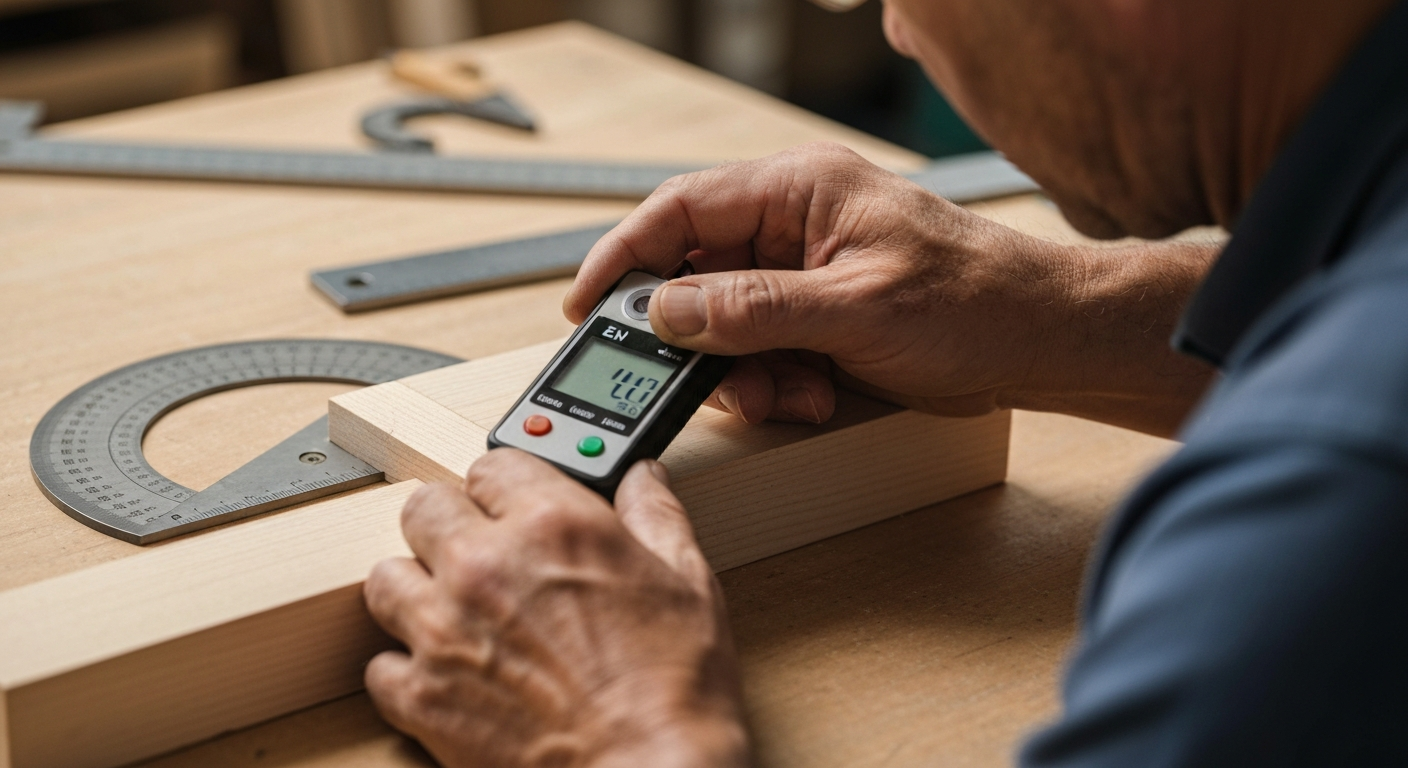
Check the accuracy of your angle finders at regular intervals using the method described at the beginning. This ensures that your work always delivers the precise results you want.
Conclusion
Choosing the right angle finder is essential for precise results in the workshop and around the home. Our comparison shows that there is an ideal tool for every task.
The traditional engineer's square is the rugged choice for metalworking. The carpenter's square offers reliable precision for woodworking projects. An angle finder with a measuring blade provides maximum versatility. And for the highest level of digital precision, nothing beats .
Choose quality tools that match the work you typically do. A well-chosen angle finder will serve you reliably for many years and continue to pay off with consistently accurate results.
The most highly rated angle finders in our range compared directly:
| Model | Customer rating | Availability |
|---|---|---|
| 250 mm square with measuring blade | – | Currently unavailable |
| 300 mm square with measuring blade | – | Currently unavailable |
| FS-WA-ISC angle stop | – | Currently unavailable |
| 300 mm carpenter's square | – | Currently unavailable |
| Digital angle finder | – | Currently unavailable |
Frequently asked questions
- What is the difference between an engineer's square and a carpenter's square?
- An engineer's square is typically made of steel and has a fixed 90-degree angle. It is primarily used for checking and marking right angles in metalworking. A carpenter's square is often made of aluminium or steel, is lighter and may also have adjustable legs for transferring different angles, which is essential for woodworking joints.
- When is it worth buying a digital angle finder?
- A digital angle finder is worthwhile if you frequently need to measure angles with a high degree of precision, for example when adjusting machinery, surveying buildings or carrying out demanding woodworking and metalworking tasks. The digital display reduces reading errors and often offers features such as zeroing at any position or converting inclination angles into percentages.
- Can I also use an angle finder to mark lines?
- Yes, many angle finders are designed for this purpose. Models with an integrated measuring blade, such as PRODUCT_140547, combine the function of an angle finder with that of a marking tool. A robust engineer's square with a sharp-edged leg is also ideal for marking lines on metal or wood.
- How do I check the accuracy of my angle finder?
- Check a 90-degree angle by placing the angle finder against a known straight edge and marking a line along the other leg. Then turn the square around and mark another line from the same edge. If both lines run parallel, the angle is accurate. For digital devices, use a level reference surface.
- What material properties should I look for in an angle finder?
- Look for stable, torsion-resistant materials such as hardened steel to ensure lasting accuracy. The scale should be easy to read and protected against wear. Digital devices should have a non-slip, ergonomic grip area. For outdoor use or damp environments, corrosion-resistant materials or suitable coatings are beneficial.