
In brief: AA or AAA alkaline batteries are usually a good choice for remote controls. Before buying, check the battery size, voltage and space in the battery compartment. Compact remotes may need button cells or 12-volt batteries. Our comparison highlights suitable options and explains what to consider for storage, battery life and safety.
A remote control is only as reliable as its power source. If buttons respond slowly, the signal cuts out or the device suddenly stops working, dead or unsuitable batteries are often to blame. Choosing batteries may seem simple, but you still need to match the size, voltage and battery type to the remote, as well as consider how long the batteries should last.
In this 2026 battery comparison, we look at options for everyday remote controls, including common AA and AAA batteries and specialty types for compact remotes. You will learn which batteries fit different compartments, when it makes sense to keep spares on hand and how to prevent damage from leaking batteries.
There is no single best battery for every remote. For a standard TV remote, the right size and a stable voltage are key. A small remote for a garage door or alarm system may need a button cell or a special 12-volt battery instead. Check the labeling on your device before buying.
Which battery fits your remote control?
The battery compartment is the best place to start. Open the cover and look for a designation such as AAA, AA, LR44, V23GA or a similar code. The voltage may be printed there, too. If you cannot find a label, check the device manual. On older remotes, the specifications may be printed on the back.
Do not rely on shape alone. Two batteries can look similar but have different dimensions or voltages. A battery that is too large may not fit safely, while the wrong voltage can affect performance or, in the worst case, damage the electronics.
AA or AAA: the most common sizes
AA batteries, also called Mignon, have a higher capacity than AAA batteries, also known as Micro. Many full-size TV, receiver and DVD remotes use AA batteries. Slim devices and compact streaming remotes often take AAA batteries. Always follow the manufacturer's label rather than guessing from the size that looks right.
Keeping spare batteries on hand can be useful in a larger household, especially if several remotes, remote-controlled outlets or other devices use the same size. Check that the batteries have a similar production date and store them in a dry place.
Button cells and specialty batteries
Flat remotes, car keys, garage door openers and alarm systems often use button cells or compact specialty batteries. Some look alike but are not necessarily interchangeable. For example, an LR44 will not fit every round button cell compartment. The codes V23GA and MN21 also refer to specific battery types, not general categories.
If the battery compartment lists several names, they may be compatible designations for the same battery type. Even so, check the dimensions and voltage. If you are unsure, bring the old battery with you to compare or take a photo of its label before ordering a replacement.
The best batteries for remote controls compared
Our comparison groups the selected products by typical use. We consider battery size, suitability for remote controls, how practical they are to stock up on, and what to keep in mind when replacing them. Because power consumption varies considerably by remote control model, there is no single battery life that applies to all devices.
Our most-reviewed batteries for remote controls, compared side by side:
| Model | Customer rating | Availability |
|---|---|---|
| Aesculap Bonum horse clipper, night blue, 2 rechargeable batteries, cordless | – | Currently unavailable |
| Alkaline AAA batteries – 36-pack | – | Currently unavailable |
| Alkaline AA batteries – 36-pack | – | Currently unavailable |
| Alkaline and lithium button cell battery set – 24 pieces | – | Currently unavailable |
| Alkaline LR1/LADY N battery, 1.5V – 1 piece | – | Currently unavailable |
For standard TV remote controls: The right-size AA or AAA alkaline battery is usually the simplest choice. It's easy to replace and suitable for devices with low to moderate power consumption. Replace all the batteries in a set at the same time.
For devices you use often: A multipack means fewer individual purchases and keeps spare batteries on hand. It's a practical option if you have several remote controls that use the same battery size. Store spare batteries separately from used ones so you don't accidentally put old batteries in when replacing them.
Alkaline AAA batteries for compact devices
The Alkaline AAA batteries are designed for remote controls with a slim AAA battery compartment. This size is typically suitable for compact TV and streaming remote controls, household radios, and small input devices. The multipack is handy if several devices use AAA batteries or you regularly need replacements.
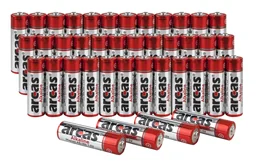
Before inserting the batteries, check for the AAA or LR03 designation. Use batteries of the same age in pairs. If a remote control takes two or more batteries, replace the entire set. This prevents a weak battery from putting unnecessary strain on a stronger one.
Alkaline AA batteries for larger remote controls
The Alkaline AA batteries are suitable for remote controls with an AA battery compartment. Their larger size gives AA batteries more capacity than AAA batteries, although actual battery life depends on the device and how you use it. The multipack works well for households with several devices or for keeping a planned supply on hand.
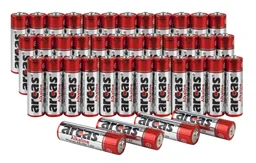
Typical uses include large TV remote controls, audio systems, receivers, and older devices with larger housings. When replacing the batteries, follow the symbols in the battery compartment. The positive and negative ends must face the directions shown. Inserting a battery the wrong way can break the circuit.
Button cell battery set for a range of small devices
The set includes several sizes of alkaline and lithium button cells. It can be useful if your household uses different remote controls, keys, or small control devices. Having a range of batteries to choose from is convenient, but you'll need to check the correct designation carefully.
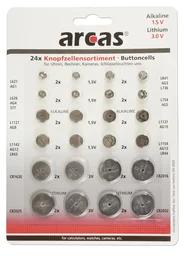
A mixed set doesn't replace careful identification. Only use a battery whose designation, size, and voltage match the device. Don't insert an unsuitable button cell just to test it. Store the set where children can't reach it.
LR44 batteries for compact remote controls and control devices
The Alkaline V13GA/LR44 battery is a small button cell with a specified voltage. It's used in compact control units, basic remote controls, and devices with a flat battery compartment. Before buying, compare the designation on the old battery, since similar button cells can look almost identical.

Insert the LR44 with the correct side facing up. Avoid touching its surface with wet or dirty fingers. If the compartment uses several button cells, replace the entire set and don't mix old and new batteries.
V23GA or MN21 batteries for 12-volt remote controls
The Alkaline V23GA/MN21 battery is designed for devices that require 12 volts. These batteries are used in some wireless doorbells, alarm systems, garage door openers, and specialty remote controls. Don't replace one with a similar-looking lower-voltage battery.
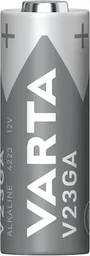
Check the contacts and insertion direction as well as the battery designation. This size contains several small cells in one housing. After replacing it, the device should respond again from a short distance and at different angles. If there's still no signal, first check the polarity, then check the remote control itself.
Availability note: Items mentioned in the store may be unavailable depending on stock levels. Product names are intended as a guide to battery size and use. If an item is unavailable, look for a battery with the same designation, voltage, and dimensions.
Which types of batteries are suitable for remote controls?
For most remote controls, alkaline batteries are the best choice. They are designed for low continuous loads and provide a steady voltage over a long period of use. This suits the typical use of a remote control, which only requires power when a button is pressed.
Lithium batteries are mainly used in certain button cells. They have different electrical properties and should only be used if the device supports the relevant type. A lithium cell is not a general replacement for an alkaline cell.
Disposable batteries or rechargeable batteries?
Rechargeable batteries can be a good solution if you use a remote control very frequently and have a suitable charger. However, the nominal voltage of many NiMH rechargeable batteries is lower than that of conventional alkaline cells. Some devices still work without problems, while others indicate a low battery early or do not respond reliably.
Disposable batteries are often more practical for remote controls that are used infrequently. You can keep a spare supply and do not need to charge them before use. However, remove them from devices that will remain unused for several months. This reduces the risk of damage caused by leaking batteries.
Why voltage is important
Voltage describes the electrical power that a cell can fundamentally provide. Remote controls are designed for specific values. A higher voltage can put strain on components, while a lower voltage can cause interruptions. Always use the battery type specified by the manufacturer.
What should you look for when buying batteries?
A good buying decision starts with the device, not the pack. First determine the required size and voltage. Then choose the cell type and the right quantity. A small supply is often enough for individual specialist devices. If you have several remote controls, a multipack may be the more convenient option.
- Size and shape: Match AA, AAA, button cell or specialist format exactly.
- Designation: Compare labels such as LR03, LR6, LR44, V23GA or MN21.
- Voltage: Only use the voltage required by the device.
- Technology: Choose between alkaline, lithium and rechargeable batteries according to the manufacturer's specifications.
- Quantity: Buy a suitable supply, but do not store batteries unnecessarily for long periods.
- Freshness: Look for the longest possible remaining shelf life and undamaged packaging.
- Safety: Keep small button cells out of the reach of children.
For general guidance, you can find more batteries for remote controls by their typical application. If you are not sure whether you need an alkaline, lithium or rechargeable solution, the overview of batteries can help you choose.
Choosing the right pack size
A large pack is not automatically the best choice. It makes sense if several devices use the same battery size and you can store the cells in a dry place. For a single specialist remote control, however, a small supply is usually sufficient. Check the best-before date and use older batteries first.
Understanding compatible designations
Many battery sizes have several designations. These can vary depending on the manufacturer, standard or distribution channel. However, do not buy based on a similar name alone. Also compare the voltage and dimensions. Small differences can cause contact problems, especially with button cells.
How should you use and replace batteries?
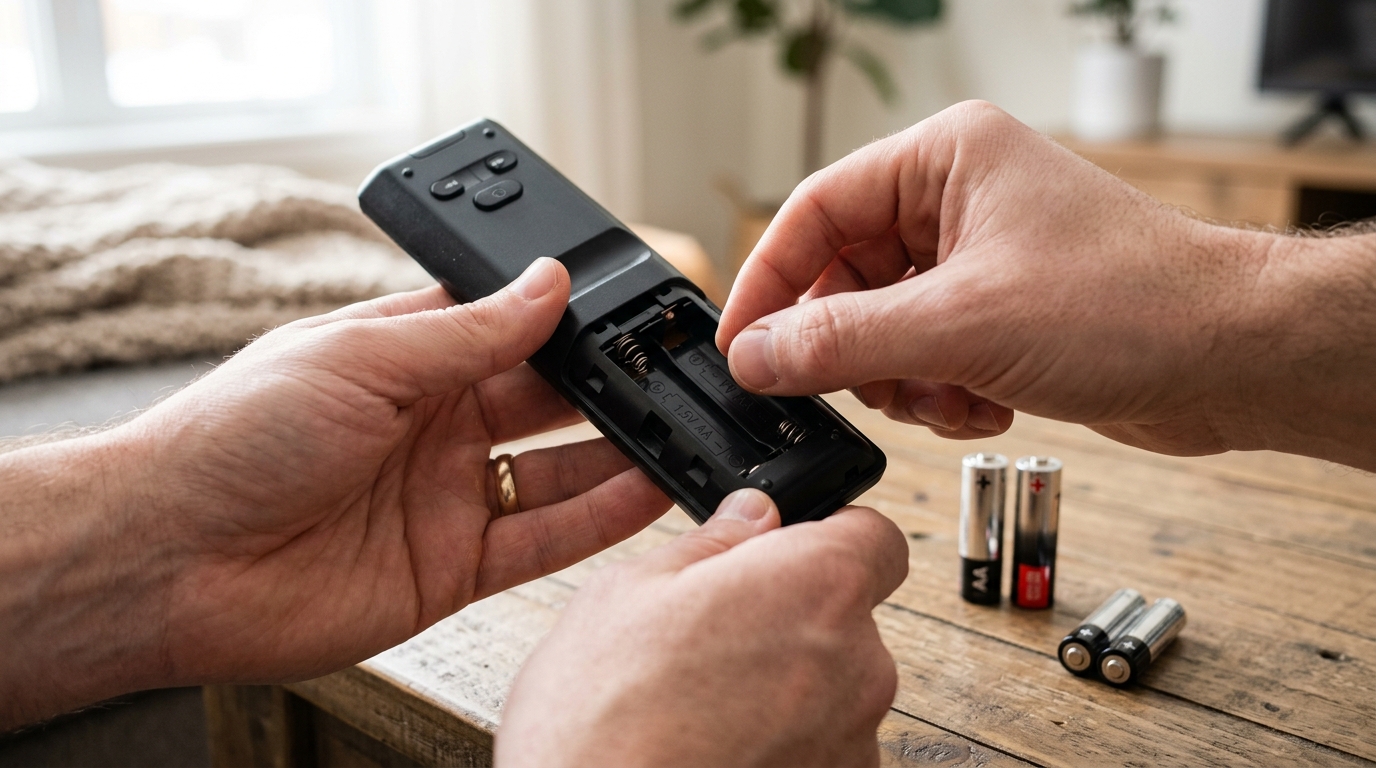
Switch off the device before replacing the batteries, if possible. Open the cover without forcing it and check that the contacts are clean and dry. Remove all the old batteries together. Insert the new set according to the markings and close the compartment fully.
If the remote control does not work afterwards, check the polarity first. Then test whether all the buttons respond. With infrared remote controls, you can often see the transmitting LED using a smartphone camera. This shows whether a signal is being sent, but does not prove that the receiving device is receiving the command.
Do not mix old and new batteries
Always replace all the cells in a shared battery compartment. Old and new batteries have different charge levels. This can place more strain on the stronger cell, while the weaker cell may leak more quickly. Also do not mix batteries from different technologies or manufacturers in the same set.
How to remove a leaking battery safely
If a battery has leaked, do not touch the residue with your bare hands. Ventilate the room and use suitable protective gloves. Remove the battery carefully and clean the compartment only as recommended by the device manufacturer. If the contacts are badly damaged or visibly corroded, have the device inspected by a specialist.
How should you store and dispose of batteries?
Store batteries in a dry, cool place away from direct sunlight. High temperatures accelerate ageing. Original packaging protects against moisture and prevents the contacts from coming into contact with metal objects. Do not keep loose batteries in a drawer with keys, coins or tools.
Store button cells and small specialist batteries particularly safely. Children can swallow them, which can cause serious injuries. Keep used batteries out of the reach of children until they are taken for recycling.
Do not dispose of batteries in household waste. Take them to collection points or retailers that accept used batteries. For individual lithium button cells and other small cells, cover the contacts according to local requirements to prevent short circuits.
You can find other suitable solutions for your devices in the Technology section. There you can find batteries, accessories and other power supply solutions by their respective application.
Conclusion: Which battery is best for your remote control?
For most traditional remote controls, suitable AA or AAA alkaline batteries are the simplest choice. AA batteries are suitable for larger housings, while AAA batteries are designed for slimmer devices. Compact controls, on the other hand, require precisely matching button cells or specialist batteries. The marking in the battery compartment is the deciding factor.
Choose the battery based on its size and shape, voltage and frequency of use. Keeping a supply makes sense if you have several devices, while specialist types should be bought selectively using the exact designation. Always fit a complete set, store spare batteries in a dry place and dispose of empty cells properly. This will keep your remote control reliably ready for use.
Frequently Asked Questions
- What kind of battery does a remote control need?
- The right battery depends on the battery compartment. Remote controls often use AA or AAA alkaline batteries. Some compact models need button batteries or special 12-volt batteries. Check the label inside the battery compartment or the user manual. The battery size, voltage and polarity must match the remote control.
- Are alkaline batteries good for remote controls?
- Yes, alkaline batteries work well in most remote controls with replaceable batteries. They provide a stable voltage and are suitable for low-power devices. Make sure you choose the right size. Do not mix old and new batteries or different battery types.
- How long do remote control batteries last?
- Battery life depends on how often you use the remote, the remote control itself and the battery size. Alkaline batteries often last for many months in a remote control used normally. A backlit or voice-controlled remote uses more energy. Weak signals, delayed button responses and intermittent operation are signs that the batteries need replacing.
- Can I use rechargeable batteries in a remote control?
- Rechargeable batteries can work if their size and contacts are compatible. However, many NiMH rechargeable batteries have a lower nominal voltage than disposable batteries. As a result, the remote control may show a low-battery warning sooner or work less reliably. Check the manufacturer's specifications and charge rechargeable batteries only with a suitable charger.
- How should I store remote control batteries?
- Store batteries in a cool, dry place away from direct sunlight. Keep them in their original packaging or an insulated container. Do not store loose batteries with metal objects. Remove batteries from remote controls you rarely use to prevent leaking batteries from damaging the device.