
Briefly explained: In our test, blind rivet guns with a 2-in-1 function for rivets and rivet nuts perform particularly well. Material quality, grip and comfortable leverage are crucial. For frequent use, a professional rivet gun with interchangeable nosepieces is worthwhile. Beginners can find good options in starter kits with suitable accessories.
Are you planning an assembly project and need a reliable fastening solution? Blind rivet guns are the tool of choice for creating permanent, vibration-resistant connections. Our test and comparison for 2026 shows which models perform best in practical use and professional settings. We analyze the most important criteria and help you find the right rivet gun for your requirements.
What makes a good blind rivet gun?
You can identify a high-quality blind rivet gun by more than its robust appearance. It also stands out through precise workmanship and a well-designed construction. The handles should be ergonomically shaped and non-slip. The mechanism must operate smoothly and transfer the required force efficiently to the rivet mandrel.
Choosing the right nosepieces is especially important. They determine which rivet diameters you can work with. Look for clear labeling and a secure fit. The mandrel catcher should work reliably so that no metal fragments end up in the surrounding area.
Materials and workmanship under the microscope
The housing should ideally be made of impact-resistant steel or a robust metal alloy. Cheap cast parts can break quickly under pressure. Moving parts such as the lever and jaws must be precisely guided and lubricated. This helps prevent premature play in the joints.
Comfort and handling in practical testing
Test whether the rivet gun sits comfortably in your hand. Comfort matters when carrying out many riveting operations. Rubberized or profiled handles protect against blisters and provide a secure grip even with sweaty hands. The lever ratio should be designed so that you do not have to apply excessive force, even when working with harder rivets.
Tip: Before buying, check whether you can operate the rivet gun with one hand. This is often crucial when working in tight spaces or overhead. A swivel nosepiece makes it much easier to access hard-to-reach areas.
What types of blind rivet guns are available?
Not every rivet gun is suitable for every task. Models differ in function, drive system and design. Here are the most common types.
Manual blind rivet guns for versatile use
The classic hand riveter is an all-rounder for DIY enthusiasts and professionals. It is robust, low-maintenance and ready to use immediately. Manual models are available as rivet-only guns or combination tools. The blind rivet guns category offers the widest selection here.
2-in-1 combination rivet guns for rivets and rivet nuts
These versatile tools are a real asset. By changing the nosepiece, you can install both conventional blind rivets and rivet nuts. This saves space in your toolbox. A good example is the
. It offers both functions in a robust housing.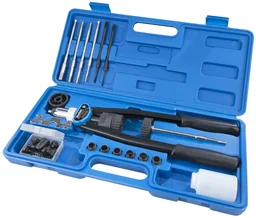
Specialist rivet guns for high volumes or specific materials
For production assembly or extremely hard materials, pneumatic or cordless blind rivet guns are available. They reduce strain on your wrists and increase speed. However, they are less common in the DIY sector. For general tool requirements, take a look at our tool overview.
How do I choose the right blind rivet gun?
Base your buying decision on your specific requirements. Ask yourself these questions before you buy.
What material and rivet size do I need the gun for?
Check the diameter and material of your standard rivets. A universal rivet gun for 2,4 to 6,4 mm covers most DIY projects. If you often work with thin sheet metal or plastics, a finer adjustment range is an advantage.
For professional use with different thread sizes, a set is a good choice. The
provides blind rivet nuts in the common sizes M3 to M6. This prepares you for a wide range of situations.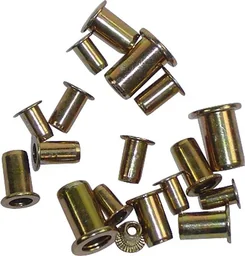
Warning: Never exceed the maximum rivet diameter the gun can handle. This overloads the mechanism and can cause it to break. The manufacturer's specifications are binding here.
How often will the rivet gun be used?
A solid starter rivet gun from the hand tools range is sufficient for occasional repairs. If you use it regularly, it is better to invest in a professional model with replaceable wear parts. Its durability justifies the additional cost.
Key Buying Criteria Compared Directly
Our test compares the models based on objective features. This table will help you make your decision.
The highest-rated blind rivet pliers in our range compared directly:
| Model | Customer rating | Availability |
|---|---|---|
| 2-in-1 lever rivet pliers for blind rivets and rivet nuts 🏆 Test winner | ★ 4,9 (29) | In stock |
| Rivet nuts M4x0,7 - 50 pieces | ★ 5,0 (1) | In stock |
| Rivet nut set, 100 pcs. - M3, M4, M5, M6, 25 each | – | In stock |
| Blind Rivet Pliers N-120 | – | Currently unavailable |
| Blind Rivet Pliers N-140 | – | Currently unavailable |
Assessing Versatility and Accessories
Plier with a comprehensive range of accessories offers better value. These may include various attachments, a storage box or replacement mandrel collectors. The
is an example of specialised, robust pliers. Check whether you really need the included accessories.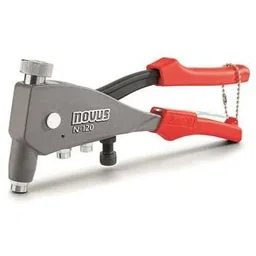
Note: The availability of spare parts is an often-overlooked criterion. The jaws and mandrel collector in particular are subject to natural wear. With branded manufacturers, these parts are still available even years later.
Practical Tips: How to Work Efficiently with Your Blind Rivet Pliers
The best pliers are of little use if you do not use them correctly. These tips will help you achieve perfect results and protect your tool.
Proper Preparation and Positioning
Drill the hole precisely to the rivet's nominal diameter. A hole that is too large will result in a loose connection. Insert the rivet straight and hold the pliers at a right angle to the material. This prevents crooked or damaged rivet heads.
Maintenance and Care for a Long Service Life
After use, remove metal swarf and dirt from the pliers. Store them in a dry place to prevent rust. Occasional oiling of the moving joints keeps them operating smoothly. Regularly check the jaws for wear.
Conclusion: Which Blind Rivet Pliers Are Best for You?
The ideal blind rivet pliers do not exist. You will find the right ones based on your personal requirements. For the versatile DIY enthusiast who also wants to install rivet nuts, a 2-in-1 combination tool such as the is an excellent choice. It combines durability with flexibility.
If you mainly work with rivet nuts in different sizes, a set such as is the more practical solution. It includes the matching nuts straight away. For riveting only in large quantities, it is worth looking at specialised models such as the .
Choose quality from the pliers range. Good blind rivet pliers will serve you for many years and countless projects. They are a worthwhile investment in your workshop.
Frequently Asked Questions
- What is the difference between blind rivet pliers and rivet nut pliers?
- Standard blind rivet pliers are used only for blind rivets. A 2-in-1 tool or combination pliers can handle both blind rivets and rivet nuts. The latter require special attachments. Choose a flexible tool if you want to use both types of fastener.
- What rivet diameters are universal blind rivet pliers suitable for?
- Standard universal pliers typically handle rivet diameters from 2.4 mm to 6.4 mm. Check the manufacturer's specifications carefully. Special models are required for very small or large diameters. Most DIY jobs fall within this range.
- Can I use inexpensive blind rivet pliers to set aluminium rivets?
- Yes, the rivet material is not the deciding factor. The pliers simply need to cover the required diameter range. Force transmission is crucial. When working with many aluminium rivets or harder steel rivets, your hand will tire more quickly with stiff pliers.
- Why does the sheared rivet mandrel sometimes get stuck in the pliers?
- This may be due to a blocked or worn mandrel collector. Clean it regularly. In high-quality pliers, the mandrel is reliably sheared off and collected. A fault in the cutting mechanism may also be the cause.
- Do I need different attachments for different rivet nut sizes?
- Yes. Each rivet nut thread size (e.g. M4, M5, M6) requires a matching attachment for the pliers. Combination sets are therefore practical. When buying a 2-in-1 tool, make sure that the attachments you need are available or included.