
In brief: Our 2026 review and comparison shows that high-quality box-end wrenches stand out for their precise fit, durable chrome vanadium steel and useful range of sizes. Sets with ergonomic forged handles and easy-to-read size markings are especially impressive. The key is choosing between box-end, open-end and combination wrenches based on the work you do most often.
Looking for a reliable box-end wrench or a complete set for your workshop? Our 2026 review and comparison looks at the key features of popular sets and helps you choose the right one. Find out what to look for in terms of quality and which sets suit different jobs. Whether you need a wrench for occasional home repairs or daily professional use, choosing the right box-end wrench is essential for safe, efficient work.
Table of contents
What is a box-end wrench?
A box-end wrench is a hand tool for loosening and tightening hex-head bolts and nuts. Unlike an open-end wrench, its ring-shaped head fully surrounds the fastener. The ring has a six-point profile precisely sized for standard fasteners.
This transfers force across all six sides of the fastener, reducing the risk of rounding off its edges. Box-end wrenches are generally sturdier and designed to handle more torque than open-end wrenches.
Design and how it works
A traditional box-end wrench has three parts: the box end, the neck and the handle. The head is often angled 15 degrees from the handle. This offset makes it easier to work in tight spaces and reach hard-to-access fasteners without scraping your knuckles against nearby parts.
The quality of the six-point profile is essential. It should be sharply defined and precisely made to prevent slipping. High-quality models are forged from a single piece of steel rather than welded together.
Key benefits at a glance
Why choose a box-end wrench? Its main advantages are safety and efficiency.
- Reduced risk of injury: Because the wrench is less likely to slip off, it helps protect your hands.
- Less wear on fasteners: Full contact helps prevent the edges from rounding off.
- More torque: You can apply more torque without damaging the tool.
- Long service life: A high-quality box-end wrench can last a lifetime.
Tip: If a fastener's edges are already rounded off, a box-end wrench may be a last resort. Use the smallest suitable wrench that still fits securely.
What we look for in our review
For our 2026 review and comparison, we looked at several key criteria. Keep them in mind when choosing a wrench set.
Material and hardness
Chrome vanadium steel (CrV) is the standard material for professional box-end wrenches. It combines hardness with enough toughness to help prevent breakage. Hardness is measured in Rockwell (HRC). Good wrenches typically measure between 45 and 50 HRC. Less expensive wrenches made from basic carbon steel are softer and more likely to bend or break.
Build quality and fit
Pick up the wrench and check the details. Signs of high-quality construction include:
- Smooth, burr-free handle edges
- A deeply stamped, easy-to-read size marking
- A precise fit with no play on a test bolt
- An even, high-quality finish, often chrome-plated for corrosion resistance
Handle design and ergonomics
The handle should feel comfortable in your hand. An ergonomically shaped handle, often with a two-component grip, can reduce fatigue during extended use. Check that the handle is long enough for the job. A longer handle gives you more leverage but needs more room to move.
Warning: Never slip an extension pipe ("cheater bar") over a box-end wrench to apply more force. This can exceed the tool's load limit and cause it to break suddenly, creating a serious hazard.
Compare the Best Sets
In everyday use, one wrench is rarely enough. A set with a range of sizes is a smart investment. Here are the standout sets from our review.
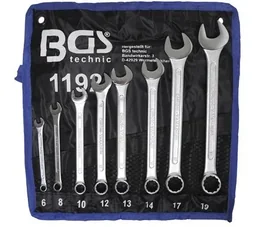
The , an 8-piece combination wrench set, offers a clever two-in-one design. One end is a box-end wrench and the other is an open-end wrench. That makes it especially versatile when you want to carry as few tools as possible. Combining both wrench types in one tool saves space and weight.
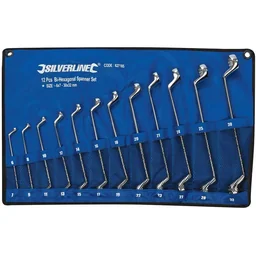
For demanding projects involving larger bolts, the , a 12-piece offset box-end wrench set 6 - 32 mm, is a great choice. The offset design makes fasteners easier to reach, while the broad size range handles everything from delicate adjustments to heavy-duty work.
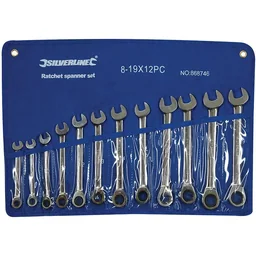
If maximum torque and straight-on access matter most, choose the , the 12-piece straight box-end wrench set 8 - 19 mm. Straight wrenches are ideal when you need to apply your full body weight and there is enough clearance around the bolt.
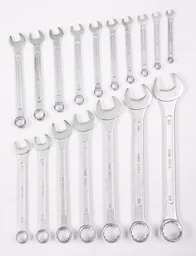
Our top pick for a versatile workshop is the , a 17-piece open-end and box-end combination wrench set. This set combines three wrench styles: open-end, box-end and combination wrenches in a range of sizes. It is a compact starter set for almost any tool task.
Here are the most-reviewed box-end wrenches in our range, compared side by side:
| Model | Customer rating | Availability |
|---|---|---|
| 8-piece combination wrench set 🏆 Test winner | ★ 5,0 (1) | In stock |
| "XXL Master-Wrench-Set" | – | Currently unavailable |
| 12-piece open-end and box-end wrench set 6-22 mm | – | Currently unavailable |
| 12-piece flexible pin wrench set 8 - 19 mm | – | Currently unavailable |
| 12-piece offset box-end wrench set 6 - 32 mm | – | Currently unavailable |
Note: Product availability may vary. Check current stock status in the shop before making your final decision.
Uses and Recommendations
Which set is right for you? It largely depends on how you plan to use it.
For Home Use and Hobbies
A compact set with the most common sizes from 8 to 19 mm is more than adequate. A combination wrench such as is a great choice. It gives you the most common wrench styles in a handy format.
For Professional Shops or Automotive Work
For these jobs, you need a comprehensive, durable set. The wrenches must stand up to demanding daily use. Sets such as or , with their broad size ranges and high-quality construction, are excellent choices. Look for a sturdy storage case to keep your workspace organized.
For Bicycle or Motorcycle Maintenance
These jobs often call for specialty sizes, both metric and imperial. A set with small size increments in the 6-15 mm range is important. Offset wrenches are often a good choice because bicycles and motorcycles have many tight spaces.
Care and Storage
Keep your box-end wrenches in good condition for years. Clean them after use to remove dirt and grease. A light coat of tool oil helps prevent rust, especially if you work in a damp environment or use your tools infrequently.
Store your wrenches in a clean, dry place. A toolbox with dedicated slots or a wall-mounted holder keeps them from knocking against each other and getting damaged. A disorganized toolbox can lead to damaged handles and worn wrench openings.
Conclusion
Our 2026 review and comparison shows that a good box-end wrench is a worthwhile investment for safe, precise work. Choose a set based on the jobs you do most often. For general home use, combination wrenches such as are an excellent choice. Professionals should consider comprehensive box-end wrench sets such as or versatile all-in-one options such as .
Pay attention to the quality of the materials and construction. Spending a little more upfront can save you frustration, damaged bolts and potential injuries down the road. With the right set from the box-end wrench range, you will be ready for most mechanical challenges.
Frequently Asked Questions
- What’s the difference between an open-end wrench and a box-end wrench?
- An open-end wrench grips a bolt or nut on two opposite sides. A box-end wrench fully surrounds it with a toothed ring, providing more contact and reducing the risk of slipping or rounding off the edges.
- What’s the best material for box-end wrenches?
- Chrome vanadium steel (CrV) is the standard for high-quality box-end wrenches. It offers excellent hardness, toughness, and corrosion resistance. Cheap tools made from basic carbon steel are more prone to breaking and rusting.
- Should I get an offset or straight box-end wrench?
- Offset wrenches with an angled head (often 15° or 75°) provide better access in tight spaces. Straight wrenches transfer force more directly and are often the best choice when there’s enough room to apply maximum torque.
- What’s the minimum number of pieces in a good box-end wrench set?
- A practical starter set for household use and many DIY projects includes 8 to 12 wrenches in common sizes from 6 mm to 22 mm. Larger sets with sizes up to 32 mm are useful for professional users.
- How can I tell if box-end wrenches are poor quality?
- Warning signs include unclear size markings, rough burrs along the edges, a loose fit between the ring and the bolt head, and an unusually thin or uncomfortable handle. High-quality wrenches are precisely made and comfortable to hold.