
In brief: The right conifer for your garden depends on the growing conditions and the look you want. For fast-growing, dense privacy screens, hardy arborvitae varieties such as PRODUCT_113750 or PRODUCT_119327 are ideal. For striking specimen trees with distinctive needle colors, the Colorado fir (PRODUCT_97900, PRODUCT_107449) and Edith's blue spruce (PRODUCT_109035, PRODUCT_115496) stand out. For low-maintenance, drought-tolerant locations, black pines (PRODUCT_85691, PRODUCT_114028) are an excellent choice.
Contents
Conifers add structure to your garden year-round. They provide privacy, are often easy to care for, and come in a wide range of shapes and needle colors. Our 2026 comparison will help you find the right tree for your needs.
What types of conifers are there?
Conifers come in a wonderfully wide variety. They range from low-growing ground cover to impressive specimen trees. The most popular genera for gardens include arborvitae (Thuja), spruces (Picea), firs (Abies), pines (Pinus), and junipers (Juniperus).
Each genus has its own characteristics. Arborvitae are ideal for hedges. Spruces and firs make impressive specimen trees. Pines are well suited to challenging locations.
Our conifers selection includes a wide range of trees. For more ideas, browse our ornamental trees category.
Classic hedge plants
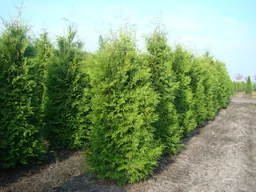
Arborvitae are a top choice for a dense, evergreen hedge. The Thuja Brabant variety grows especially quickly and reliably. Thuja Smaragd keeps its slim, pyramidal shape even without pruning.
Both varieties are included in our comparison. You can find them as and .

Blue and gray specimen trees
Conifers with blue or gray foliage add a distinctive accent to the garden. The Colorado fir (Abies concolor) stands out with its long, silvery-gray needles. It is very hardy and tolerates urban conditions, too.
The needles of Edith's blue spruce (Picea pungens Edith) are an even more intense blue. It's a real eye-catcher in any garden. We feature both species as specimen trees.
What are the benefits of conifers in the garden?
Conifers add structure and color year-round. While deciduous trees are bare in winter, conifers provide privacy and keep your garden looking green.
They are often less demanding than many deciduous trees. Many varieties grow well in drier soil and need less maintenance.
Conifers provide important habitat for birds and insects. Their dense branches offer shelter and nesting spots for many animals.
Tip: Combine conifers and deciduous trees thoughtfully. This creates a varied garden with something to enjoy in every season. Evergreen conifers provide structure, while deciduous trees bring seasonal changes.
What should you look for when buying?
Start by assessing the planting site. Check the soil conditions and amount of sunlight. Measure the space available for the tree at maturity.
Buy only high-quality plants. Look for a healthy plant with a strong root ball. The needles should look fresh and have no pests or spots.
How the plant is sold is key to successful planting. Trees sold with a root ball (bare-root or wrapped in root-ball fabric) are best planted in fall or spring. Container-grown plants can be planted almost year-round.
Important: Consider the tree's mature size and growth habit. A small tree can grow into a giant over the years. Avoid planting large forest trees such as Norway spruce in small gardens. Instead, choose cultivated varieties that stay more compact.
The Best Conifer Trees Reviewed in 2026
Our comparison features some of the best conifers for home gardens. We selected hedge plants, specimen trees and special varieties for specific locations.
Our top-rated conifers, compared side by side:
| Model | Customer rating | Availability |
|---|---|---|
| Black Pine Green Tower - Pinus nigra - specimen plant with root ball 125-150 cm | – | Currently unavailable |
| Black Pine Pinus nigra ssp.nigra - specimen plant with root ball 125-150 cm | – | Currently unavailable |
| Brabant Arborvitae - Thuja occidentalis - 7.5 L pot 80-100 cm | – | Currently unavailable |
| White Fir Abies concolor - specimen plant with root ball 125 -150 cm | – | Currently unavailable |
| White Fir Abies concolor - specimen plant with root ball 150-175 cm | – | Currently unavailable |
Arborvitae for Hedges
: Brabant Arborvitae is a classic choice for quickly creating privacy. It grows densely and upright, adding up to 40 centimetres in height each year. This variety responds well to pruning and is winter-hardy.
: Emerald Arborvitae has a slender, columnar shape and retains its elegant form without regular pruning. Its needles stay an intense emerald green throughout winter, making it ideal for narrower hedges.
Blue and Grey Specimen Trees Reviewed
and : White Fir stands out for its silvery-gray needles, which grow up to 8 cm long and have a pleasant lemon scent. This fir is fully hardy, tolerates urban conditions and is easy to care for. It makes a majestic specimen tree for large gardens.
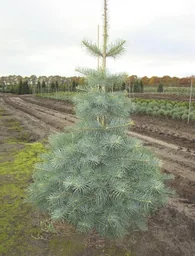
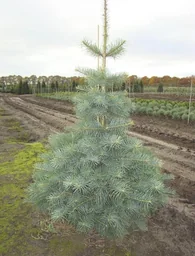
and : Edith's Blue Spruce creates a striking focal point with its intense steel-blue needles and evenly conical shape. It also works well as a decorative potted Christmas tree.


Hardy Pines for Dry Locations
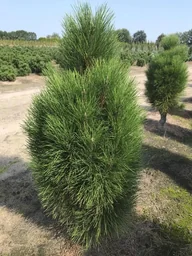
: Black Pine Green Tower is a slender, columnar pine that tolerates heat, drought and wind exceptionally well. It's ideal for sandy soil and gardens in dry regions, and its dense, dark green foliage makes a striking display.
Note: The products mentioned are examples from our extensive range. Availability and exact specifications may vary. Find our latest offers in the Plants category.
Caring for and Pruning Conifers
Most conifers are easy to care for. Once established, they often need little supplemental watering. A layer of mulch helps keep the soil moist and suppress weeds.
Feed your conifers in spring with a fertilizer formulated for them. It provides the nutrients they need for healthy growth and vibrant needle color.
How to Prune Correctly
Prune arborvitae or yew hedges once or twice a year, ideally in late spring and, if needed, late summer. Never cut into old wood, as many conifers won't grow back from it.
Specimen trees generally don't need shaping. Simply remove dead or diseased branches. With firs and spruces, take care not to damage the central leader.
Diseases and Pests Affecting Conifers
Healthy conifers planted in the right location are resilient, but problems can still arise. Common issues include fungal diseases such as shoot blight in arborvitae and needle cast in pines.
Brown needles inside the plant are often part of its natural aging process. Brown tips or spots on young shoots, however, can signal a problem.
Common pests include spider mites, scale insects and the arborvitae bark beetle. Check your plants regularly, and treat an infestation promptly with appropriate, environmentally friendly products.
Choosing the right location is the best way to prevent problems. Avoid waterlogged soil and planting conifers too close together to ensure good air circulation.
Conclusion: Find the Perfect Conifer for Your Garden
The right conifer depends on your garden and your preferences. For a fast-growing, evergreen privacy hedge, Brabant or Emerald arborvitae are excellent choices.
For a striking specimen tree with unusually colored needles, consider a White Fir or Edith's Blue Spruce.
For challenging, dry locations, Black Pine is exceptionally hardy.
Plan your garden carefully. Combine different conifers to add structure, and use colorful accents selectively. With the right plants, you can create an oasis to enjoy all year round.
Our comparison is designed to make your decision easier. Consider each tree's mature size and site requirements, and you'll enjoy your new conifer for many years to come.
Frequently Asked Questions
- Which conifer grows fastest and works best as a privacy screen?
- For a fast-growing, dense privacy hedge, arborvitae varieties such as Thuja Brabant or Smaragd are ideal. They are hardy, respond well to pruning and grow between 20 and 40 centimetres per year. Be sure to plant them close enough together.
- Are all conifers evergreen?
- No, not all conifers are evergreen. Most native species, such as spruce, pine and fir, retain their needles for several years, but there are exceptions. Larch, for example, sheds its needles in autumn after they turn golden yellow.
- Can I grow a large conifer in a container?
- Only slow-growing or compact varieties are suitable for growing in containers. Choose a large enough planter with good drainage and use potting mix made for conifers. Larger trees should be planted in the ground to accommodate their root systems.
- What is the best location for most conifers?
- Most conifers prefer a sunny to partially shaded location. The soil should be well-drained, rich in humus and free from standing water. Some species, such as black pine, also tolerate dry, sandy soil very well.
- When is the best time to plant conifers?
- Container-grown plants can generally be planted year-round, as long as the ground is not frozen. The best times, however, are autumn (September/October) and early spring (March/April). This gives the trees enough time to establish strong roots before summer.