
In brief: The right firewood saw depends on how often you use it and how much wood you need to cut. A compact model may be enough for occasional use at home, while professional forestry businesses need a powerful machine with a larger blade. Consider the motor power, blade diameter, safety features and overall build quality.
Firewood saws are essential tools for forestry and anyone who regularly cuts firewood. In our 2026 reviews and comparison, we explain which models suit different jobs. We look at performance, ease of use and safety to help you choose the right saw.
Table of contents
What is a firewood saw?
A firewood saw has a circular saw blade mounted on a movable cradle. Pull the cradle down to cut a log, then it springs back into position automatically. This design makes cutting firewood quick and easy.
The main benefit is that you only need to guide the saw, rather than move the whole log. This saves time and reduces physical effort, especially when cutting large quantities of wood.
Design and operation
The saw blade is the heart of every firewood saw. It spins at high speed to cut through the wood. The cradle transfers your force to the blade, while a sturdy frame keeps the machine stable and helps deliver accurate cuts.
Key buying criteria compared
Compare firewood saws by looking at their key features. Motor power affects how quickly you can work and is measured in Watt. A higher Watt rating generally means better cutting performance, especially when working with hardwood.
The blade diameter determines the size of logs the saw can handle. Larger blades can cut thicker logs. Check the maximum cutting length, too, as this limits the length of the pieces you can cut.
Tip: Choose a blade slightly larger than the logs you usually cut. The extra capacity helps with uneven pieces and reduces strain on the machine.
Drive type and voltage
Most firewood saws are electric. They run on either 230 volts for a standard household outlet or 400 volts for commercial use. The supply voltage affects the power available, so check your electrical supply before you buy.
2026 model comparison
Our current comparison covers a range of needs, from occasional firewood cutting to professional, continuous use. Here are some of the machines available.
The firewood saw HS410 with 2200 Watt is a good fit for home use. Its 405 mm blade handles typical firewood sizes. The machine is compact and easy to use.
and delivers dependable performance for everyday jobs.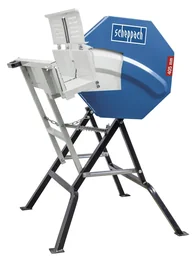
For larger quantities, the firewood saw HS510 is a strong choice. With 3000 Watt and a 505 mm blade, it cuts faster and handles thicker logs with ease.
This makes it well suited to farms and other agricultural businesses.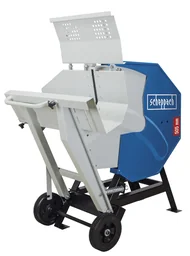
The firewood saw HS720 in the 230 version has 2100 Watt and a 700 mm blade, making it a specialist option for long, thick logs. Its generous cutting capacity helps you work efficiently.
Its reach is a key advantage.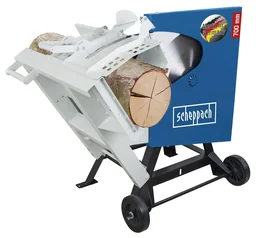
Warning: Never exceed the maximum cutting thickness specified for your machine. Doing so can overload the saw, increase wear and create a safety risk.
Professional users in forestry may also want to consider 400 V models. They deliver maximum power and are built for continuous use. The investment can pay off if you have a consistently heavy workload.
Key specifications compared
Here are some of the highest-rated firewood saws in our range:
| Model | Customer rating | Availability |
|---|---|---|
| Wheeled circular saw KEZ700 | – | Currently unavailable |
| Firewood saw “BWS 400-2” | – | Currently unavailable |
| Firewood saw “BWS 500-2” | – | Currently unavailable |
| Firewood saw HS410 -230V/50hz - 2200 Watt - 405 mm HW saw blade | – | Currently unavailable |
| Firewood saw HS510 - 230V/50 Hz - 3000 W - 505 mm saw blade | – | Currently unavailable |
Working safely
Safety comes first when using a firewood saw. The rotating blade can cause serious injury, so always use the machine's safety features.
The guard bar helps prevent direct contact with the blade. Make sure it is intact and correctly positioned. Two-hand controls keep both hands safely in place during cutting, and the machine will only start when they are engaged.
Personal protective equipment
Wear safety glasses to protect against flying wood chips and hearing protection to reduce noise exposure. Sturdy work gloves protect your hands, but avoid loose-fitting gloves that could get caught. Steel-toe work boots are also recommended.
Note: Check the safety features before each use. Make sure the guard bar and switches work properly. Do not operate the machine if you find any defects.
Maintenance and Care
Regular maintenance can significantly extend the life of your firewood saw. Clean the machine after each use, removing wood chips and dirt from all moving parts to prevent premature wear.
Lubricate the joints and bearings according to the manufacturer's instructions, using only the recommended lubricants. Check the saw blade regularly. A sharp blade cuts more accurately and safely.
Saw Blade Care
The saw blade is the machine's most important wear part. Check the teeth for damage, and have the blade sharpened by a professional. An improperly sharpened blade can run unevenly and strain the drive. Replace badly worn blades promptly.
Applications and Requirements
Firewood saws are used for a range of tasks. For cutting firewood at home, ease of use and sufficient power are usually the main priorities. Compact models with moderate power are often all you need.
For agricultural businesses with their own woodland, the demands are greater. Larger workloads and harder wood require more heavy-duty machines, making cost-effectiveness more important.
Professional Forestry
For professional use, cutting capacity and reliability are essential. These machines often run for several hours at a time, so powerful models built for long service life are a must. The investment can pay off in time saved.
Conclusion and Buying Advice
The right firewood saw depends on your needs. Start by considering how much work you typically do: How much wood do you cut each year? Which types and sizes of wood do you process most often?
For occasional firewood cutting at home, models with 2000-3000 watts and saw blade diameters of around 400-500 mm are usually sufficient. They offer good value and are easy to use.
If you use the machine regularly for agricultural work, choose a more powerful model. Models with 3000 watts or more and saw blade diameters over 500 mm can help you work more efficiently. The higher upfront cost may be offset by the time saved.
For professional forestry work, choose a high-performance machine. Durability, ease of maintenance and maximum cutting capacity are essential. Select a model that suits your specific workload.
Always consider safety. A securely anchored machine with all required guards is essential. Invest in quality accessories, including sharp saw blades and appropriate protective equipment.
The right firewood saw can make cutting firewood more efficient and less strenuous. It saves time and effort when you prepare firewood or process timber, making it a worthwhile investment for anyone who works with wood regularly.
Frequently Asked Questions
- What's the difference between a firewood saw and a chainsaw?
- A firewood saw has a circular blade mounted on a rocking frame. It makes precise cuts in firewood and is designed for cutting large stacks of wood. A chainsaw is more portable and versatile for felling and limbing trees in the woods.
- What safety precautions should I take when using a firewood saw?
- Look for a two-hand switch, a guard over the saw blade and a stable base. An automatic blade return after each cut adds safety. Always wear safety glasses and hearing protection.
- What types of wood can I cut with a firewood saw?
- Firewood saws are suitable for softwoods and hardwoods, including spruce, pine, beech and oak, in log form. Make sure the machine is rated for the maximum diameter of your logs. You can cut damp or freshly cut wood without a problem.
- Can I use a firewood saw outdoors?
- Yes. Most models are designed for outdoor use and need a stable, level surface. For electric models, make sure the controls are adequately protected from the weather.
- How often should I sharpen or replace the saw blade?
- It depends on how much you use the saw and the type of wood you cut. With regular use, check the blade after around 20-30 operating hours and sharpen it if needed. A dull blade takes more effort to use and increases the risk of accidents.