
In brief: Choosing the right battery for your garden tool determines its performance, runtime and ease of use. The key factors are compatibility with your tool, voltage (V), capacity (Ah) and the battery system. Lightweight tools such as hedge trimmers often need 10,8 V to 18 V, while powerful tools such as cordless lawn mowers require systems with 36 V or 40 V. Standardised battery platforms within one brand save money and effort. In our comparison, we show you the most important criteria and recommended models.
Table of contents
- Voltage and capacity: What do volts and ampere-hours mean?
- The battery system: Why one platform is so important
- Service life and care: How to protect your battery
- Comparing the best batteries for garden tools
- Buying guide: How to find the right battery
- Future trends in garden tool batteries
- Conclusion: The right choice for more garden power
Voltage and capacity: What do volts and ampere-hours mean?
The two most important specifications on every battery are its voltage in volts (V) and its capacity in ampere-hours (Ah). Understanding these values will help you make an informed buying decision.
Voltage, measured in volts (V), is comparable to the pressure in a water pipe. It determines how powerfully the garden tool operates. A low voltage such as 3,6 V is sufficient for small handheld tools. For demanding tasks such as cutting thick branches or mowing tall grass, you need 18 V, 36 V or even 40 V.
Typical voltage classes at a glance
- 3,6 V to 10,8 V: Ideal for small, lightweight tools such as hand cultivators, garden tools for pruning or low-power pumps.
- 12 V to 18 V: The standard range for many hedge trimmers, grass trimmers, leaf blowers and small chainsaws. Offers a good balance of performance and ease of handling.
- 36 V to 40 V: The performance class for demanding tools such as cordless lawn mowers, powerful hedge trimmers and chainsaws for larger logs.
Capacity in ampere-hours (Ah) indicates how much energy the battery can store. A higher Ah rating means a longer runtime. At the same voltage and under the same load, a 4,0 Ah battery lasts around twice as long as a 2,0 Ah battery.
Tip: For short, frequent jobs, batteries with a lower capacity are often sufficient. For large gardens or long periods of continuous work, it is better to invest in a battery with a high Ah rating or plan to use a spare battery.
The battery system: Why one platform is so important
The greatest advantage of modern cordless garden tools lies in compatible systems. Many manufacturers offer a platform on which a single battery type fits dozens of different tools.
This not only saves you the cost of buying additional batteries, but also saves space and organisational effort. You only need one or two chargers and can swap your batteries flexibly between a lawn mower, hedge trimmer and leaf blower.
Make sure you check compatibility carefully. Not all tools from one brand necessarily use the same battery system. Look for the exact name of the battery slot and compare it with your existing tools.
Service life and care: How to protect your battery
Modern lithium-ion batteries are robust, but not indestructible. Proper care significantly extends their service life and maintains full performance for many years.
Avoid deep discharge. Switch tools off when their performance noticeably drops. Modern tools often have an automatic shut-off feature that protects the battery. Do not leave the battery completely discharged for long periods.
Warning: Never store batteries in direct sunlight or in hot sheds. Extreme heat is the biggest enemy of lithium-ion cells and significantly accelerates capacity loss. Cold temperatures during use can also cause damage.
Charging habits are important. Frequently recharging lithium-ion batteries while they are still half full is unproblematic and even better than complete charging cycles. Whenever possible, use the manufacturer's original charger.
Comparison of the Best Batteries for Garden Tools
In the following direct comparison, you can see the most important technical data and features of selected batteries at a glance. This will help you assess the options and make your decision.
The highest-rated batteries for garden tools in our range compared directly:
| Model | Customer rating | Availability |
|---|---|---|
| Replacement battery for cordless grass and shrub shears 10,8 V and X-Grubber cordless hand cultivator 🏆 Test winner | ★ 4,8 (26) | In stock |
| Replacement battery, 3,6 Volt, lithium-ion, 1,5 AH, red | ★ 4,9 (18) | In stock |
| 12 Volt Li-Ion battery for water butt pump | ★ 4,9 (40) | Currently unavailable |
| Battery E 22 - 20 Volt 2 Ah | – | Currently unavailable |
| Battery E 24 - 20 Volt 4 Ah | – | Currently unavailable |
A practical model for getting started is the
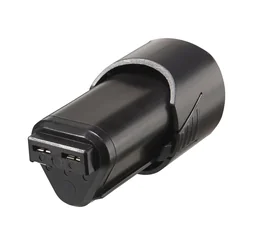
For very small and precise tasks, such as working with mini tools, the
with 3,6 Volt can be an interesting choice. Its compact design fits into specialised hand tools.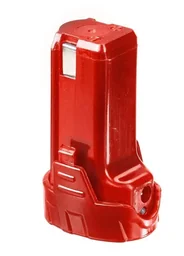
For demanding professional tools that require high performance over long periods, the
is worth considering. This is a powerful 40V battery with fast charging (QC), designed for intensive garden work.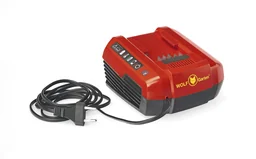
Note: Battery availability can change quickly. Before buying, always check whether the model compatible with your device is in stock or available as a special order.
Buying Guide: How to Find the Right Battery
Take a systematic approach to find the ideal battery for your needs. This step-by-step guide will help you.
Step 1: Check compatibility
This is absolutely essential. Check the voltage (V) and the physical design of the battery compartment on your garden tool. The new battery must fit exactly. The manufacturer's specification on the old battery or in the tool's instructions is your primary source of information.
Step 2: Determine the intended use and runtime
Consider how long you typically use the tool at a time. A 30-minute lawn-mowing session requires a different capacity than several hours of hedge trimming along a long hedge. For lengthy jobs, plan either to use a very large battery or buy a second interchangeable battery.
Step 3: Consider the complete system
Do you already have other tools from the same brand? If so, investing in the corresponding battery system is even more worthwhile. A single battery pool for all your batteries for garden tools gives you maximum flexibility and value for money.
Future Trends in Batteries for Garden Tools
Development is progressing rapidly. Clear trends are also emerging for 2026, promising greater performance, convenience and sustainability.
Charging speeds will continue to increase. New lithium cell chemistries and optimised charging algorithms enable ever shorter charging times without damaging the battery. This makes cordless tools even more practical for everyday use.
Capacity is steadily increasing without changing the physical size. Improved packing density and more efficient cells allow more amp hours to fit into the familiar housing. This gives you longer runtime without making the battery heavier or more cumbersome.
Smart batteries with diagnostic functions are on the way. Some manufacturers are working on batteries with integrated Bluetooth or NFC communication. This could allow you to monitor the charge level, remaining service life and performance data of all your batteries via an app.
Conclusion: The Right Choice for More Garden Power
Choosing the right battery is crucial for the performance of your garden tools. Start by focusing on compatibility with your existing tools. The voltage must match exactly, while the capacity should suit your typical working times.
Where possible, invest in a cross-brand or brand-specific battery system. In the long term, the benefits of a unified platform far outweigh the drawbacks. Take proper care of your batteries to maximise their service life.
Using the criteria and comparison presented here, you are sure to find the ideal power source for your green oasis. This will make your garden work even more efficient and give you reliable power from the first minute to the last.
Frequently Asked Questions
- Can I use a battery with a higher voltage than my tool is designed for?
- No, this is dangerous and will very likely damage your garden tool. The voltage (V) must match exactly. A higher voltage can cause overloading and create a fire hazard. Always check the rated voltage specified by the manufacturer.
- What matters more: high voltage (V) or high capacity (Ah)?
- Both values are important, but they serve different purposes. The voltage (V) determines the tool's power and performance. The capacity (Ah) indicates how long the battery will run at that power level. High-voltage batteries are needed for demanding tasks, while high capacity provides longer runtime.
- Why do some batteries charge faster than others?
- Charging speed depends on the charging electronics in the battery and charger, as well as the supported charging technology (e.g. Quick Charge). High-quality lithium-ion batteries with special cell types and temperature management often charge significantly faster than basic models.
- Will leaving batteries in the charger damage them?
- Modern lithium-ion batteries with intelligent charging electronics cannot be overcharged. Nevertheless, it is better to remove them from the charger once they are fully charged, both to control the ambient temperature and to help preserve their overall service life.
- How should I store my garden tool batteries over winter?
- Store the batteries in a dry, frost-free place at room temperature. A charge level of around 40-60% is ideal for storage. Fully charged or completely empty batteries age faster during extended storage. Remove the batteries from the tools.
You may also be interested in
- Battery Reviews & Comparisons 2026: The Best Models in Practical Testing
- Garden Machinery Reviews & Comparisons 2026
- Cordless Grass Trimmer Reviews & Comparisons 2026
- Power Tool Reviews & Comparisons 2026: The Best Tools Tested
- Cordless Stapler Reviews & Comparisons 2026
- Cordless Hammer Drill Reviews & Comparisons 2026