
In brief: Choosing the right multimedia device depends on your specific requirements. Compact 19-inch models are ideal for space-saving installations, while devices with an integrated DVD player provide added multimedia convenience. Key considerations include compatibility with 12/24-Volt onboard electrical systems, the required tuners (DVB-T, DVB-S2, DVB-C) and additional features such as PVR or Smart TV. Our comparison helps you find the right device.
Multimedia in a vehicle is now about more than just a radio. A good TV or sound system transforms your motorhome into a comfortable living space. Our 2026 multimedia test and comparison puts the latest devices to the test. We show you what to look for when choosing.
The right choice depends on many factors, including the available space, how you intend to use the device and the technical requirements of the onboard electrical system. We compare models of different sizes and specifications to help you make an informed decision.
Table of contents
What defines good multimedia for motorhomes?
A good multimedia device for a motorhome must meet specific requirements. It cannot be compared with a conventional household appliance. Resistance to vibrations is a crucial factor.
Energy efficiency is equally important. Every watt counts when power comes from the onboard battery. You should consider power consumption during operation and in standby mode. An energy-efficient device extends your time off-grid.
Compatibility with 12 and 24-Volt onboard electrical systems is essential. This is the only way to avoid using separate voltage converters. Look for a wide input voltage range that can also tolerate voltage fluctuations.
Tip: Check the exact installation location before buying. Measure the dimensions of the storage compartment or mount. Remember to allow space for cables and ventilation. A precise plan prevents unpleasant surprises.
Comparing screen sizes
The most common screen sizes range from 19 to 32 inches. Smaller devices, such as a 19-inch LED TV with DVD player (
) are space-saving and lightweight. They are perfect for compact motorhomes or guest areas.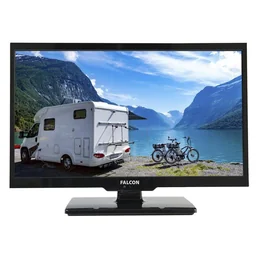
Larger models from 22 inches upwards offer a more immersive viewing experience. A 22-inch LED TV with DVD player (
) offer a good middle ground. They provide more screen space without taking up too much storage room. The integrated DVD function eliminates the need for a separate device.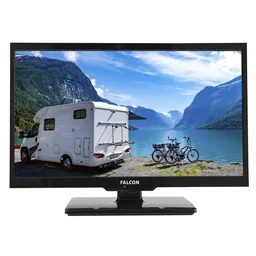
For long-term campers or larger vehicles, screens from 24 inches upwards are worthwhile. A 24-inch LED TV with Easyfind function (
) combines a comfortable size with practical features. The Easyfind function is especially useful when the TV is stored away.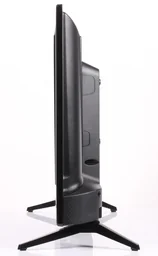
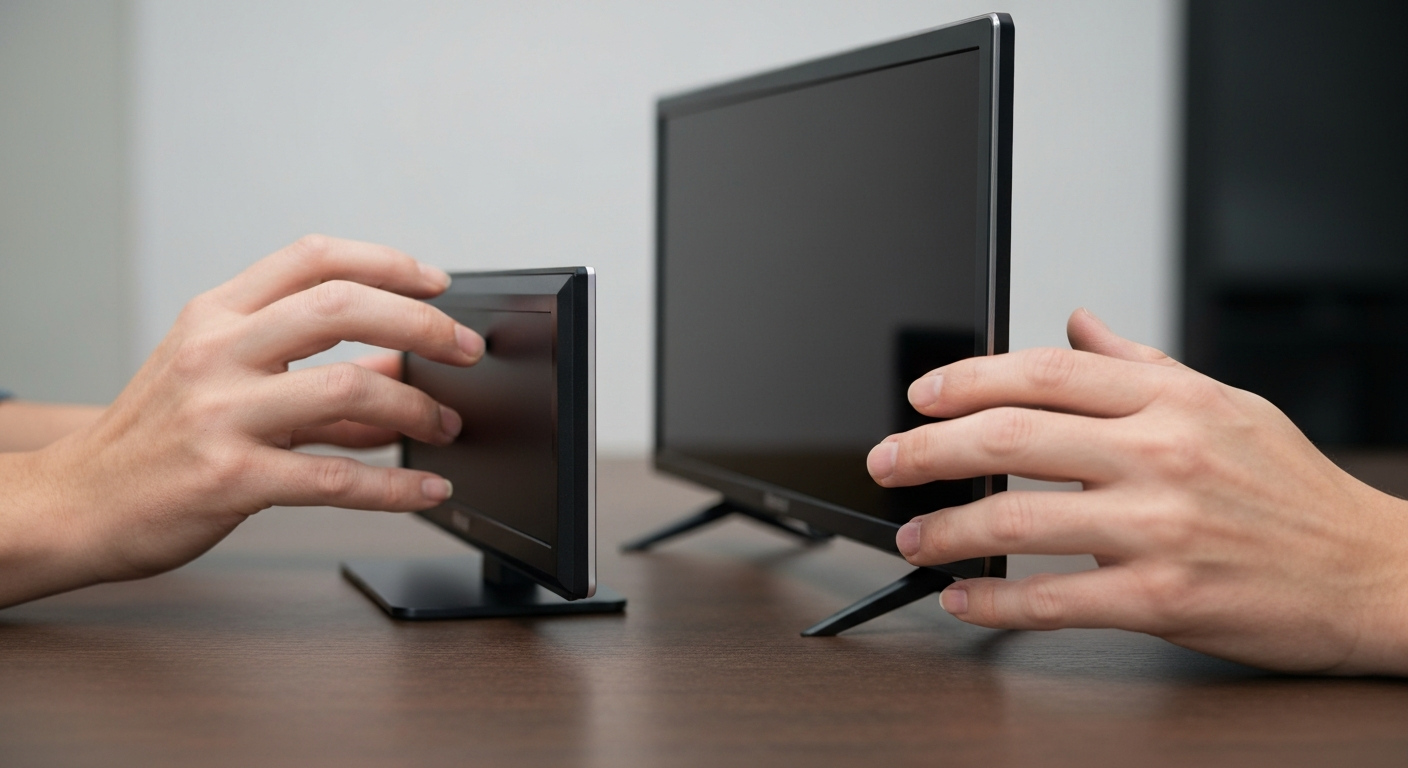
The ultimate option is a 32-inch Full HD smart LED TV (
). This model transforms your living area into a home cinema. However, bear in mind the greater space required and higher power consumption.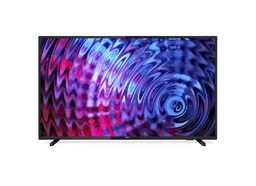
The ideal size for your needs
Compact devices are often sufficient for occasional news or evening entertainment. If you plan regular movie nights or travel with several people, you should choose a larger screen. Viewing distance is also important. As a general rule, allow at least three times the screen height as the viewing distance.
Important: Bigger is not always better. A TV that is too large can feel overwhelming in a small living space and uses more power. Always check that the device will physically fit in the intended storage space and can be securely mounted.
Which tuners and connections are important?
The tuner configuration determines how you receive TV programmes. A DVB-T tuner receives the terrestrial antenna signal. This is the standard in many regions of Europe. Combo tuners provide greater flexibility.
High-quality devices such as a 23.6-inch LED TV with DVB-T2, DVB-S2 and DVB-C tuners offer universal reception. DVB-S2 is essential for satellite dishes, while DVB-C is used to connect to cable networks at campsites. CI+ allows you to decrypt pay-TV channels.
USB connections are essential for playing your own media. You can play films, photos or music from a USB stick. Check which file formats are supported. An HDMI input lets you connect external devices such as Blu-ray players or laptops.
The importance of DVB-T2 HD
The DVB-T2 successor standard often transmits programmes in better quality (HD). DVB-T is already being switched off in many countries. A TV with a DVB-T2 tuner is therefore future-proof. You will still be able to receive broadcasts in the best quality via the antenna in the years to come.
Discover our wide range of multimedia devices for every vehicle and every requirement.
Which additional features add value?
Integrated DVD or Blu-ray players are classic convenience features. They save space and reduce cabling. Devices such as the or are all-in-one solutions. This is ideal if you own a collection of physical media.
PVR functions (Personal Video Recorder) allow you to record programmes. This is useful if your favourite show is on while you are out driving. You can record it and watch it later. Check whether an external hard drive is required.
Smart TV functions open up the world of streaming services. A stable internet connection is required, for example via a mobile router. Bear the additional data consumption in mind. In areas with poor reception, these functions are often unusable.
Note: Every additional feature can increase power consumption and make the device more complex to operate. Ask yourself which features you will actually use regularly. Often, a simpler, more robust device is the better choice for mobile use.
How do I choose the right sound system?
The TV speaker is often not enough to provide good sound throughout the living area. External speakers are the ideal way to complement the system. 2.0 Gaming Speakers with RGB Lighting and USB Power Supply (
) are a versatile option.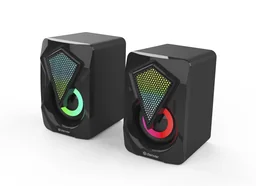
They offer richer sound than most built-in TV speakers. The USB power supply makes them easy to connect, for example to the TV or a USB socket. The RGB lighting is an optical gimmick that you can switch on or off as you wish.
For a genuine home cinema experience, consider a separate soundbar or a multi-channel system. Make sure it is also compatible with 12 volts. The volume and sound quality should suit the room. Huge speakers are excessive in a small motorhome.
Bluetooth for wireless music enjoyment
Many modern speakers and televisions also offer Bluetooth. This allows you to stream music directly from your smartphone or tablet. It is perfect for background music or audiobooks. Check the Bluetooth range and stability.
Technical details you need to consider
In addition to the power supply, power consumption is a key criterion. It is usually specified in watts. Compare the values for operating and standby modes. An energy-efficient device noticeably reduces the strain on your battery.
The refresh rate (Hz) affects how smoothly movement is displayed. 50 or 60 Hz is sufficient for films and series. Contrast and brightness are particularly important when watching in daylight or with the window open.
The casing quality should be robust. Plastic should not feel too lightweight or brittle. Good workmanship protects against damage caused by movement while driving. The mount or stand should also be stable and resistant to tipping.
Find all important technology topics for your motorhome in our overview.
The most-reviewed multimedia products from our range in direct comparison:
| Model | Customer rating | Availability |
|---|---|---|
| 19-inch LED TV incl. DVB-T antenna, 12/24 and 230 Volt | – | Currently unavailable |
| 19-inch LED TV with DVD player, 12/24 and 230 Volt | – | Currently unavailable |
| 2.0 Gaming Speakers with RGB Lighting and USB Power Supply | – | Currently unavailable |
| 22-inch LED TV with DVD player, 12/24 and 230 Volt | – | Currently unavailable |
| 23.6-inch LED TV with DVB-T2, DVB-S2 and DVB-C tuner, CI+, USB media playback | – | Currently unavailable |
Our buying guide: Summary
Choosing the perfect multimedia device involves weighing up various factors. Start by analysing your needs. How often do you watch TV and what do you watch? How much storage space is available? Which reception methods do you mainly use?
For occasional use and limited space, compact 19-inch models with or without a DVD player are a good choice. They are lightweight, energy-efficient and easy to store. If you value convenience and a larger picture, move up to the 22- to 24-inch class.
Choose additional features only if you will actually use them. A PVR or Smart TV is of no benefit if the necessary infrastructure, such as internet access or an external hard drive, is missing. The universal tuner setup (DVB-T2/S2/C), on the other hand, is almost always a worthwhile investment for the future.
Do not forget about sound. If necessary, plan for suitable speakers at the same time. A good overall experience combines picture and sound. With the devices and criteria presented here, you are sure to find the multimedia solution that suits you and your vehicle.
Frequently asked questions
- What screen size is best for a motorhome?
- The ideal size depends on the viewing distance and the available space. 19 to 24 inches are common sizes that offer a good compromise between picture quality and space-saving storage. Measure the available storage space and the expected viewing distance before buying.
- Why is 12/24-volt power important?
- Devices with 12/24-volt power can be connected directly to your vehicle's leisure battery. This avoids the need for a heavy transformer and saves power, as no unnecessary conversion from 230-volt AC is required. This helps protect your battery.
- What is the difference between DVB-T, DVB-S2 and DVB-C?
- DVB-T is for terrestrial aerial reception, DVB-S2 is for satellite reception and DVB-C is for cable reception. A device with all three tuners can be used universally. Choose based on your typical travel style: satellite for remote locations, and DVB-T/C for pitches with a connection.
- Are Smart TV functions useful in a motorhome?
- Smart TV functions provide access to streaming services via Wi-Fi. Their usefulness depends on your internet connection. You can use them with a stable mobile connection or campsite Wi-Fi. Without reliable internet, they are often unnecessary.
- What does the Easyfind function mean?
- The Easyfind function helps you locate the television in your motorhome easily, for example using the remote control. This is useful if the device is stored in a cupboard. It saves time and avoids lengthy searches.