
At a glance: Our 2026 test and comparison covers three types of paint sprayer: cordless models for maximum flexibility without a compressor, pneumatic sprayers for professional results and high output, and airbrushes for detailed work. The right choice depends on your project, how much paint you need to apply and how much mobility you want. We review the best models and help you choose the right one.
Planning a painting project and wondering whether a paint sprayer could save you time and effort? Our 2026 test and comparison helps you find the technology that best suits your needs. We review the best cordless, pneumatic and airbrush models for DIYers and professionals. Find out what to look for when buying.
Contents
- Types of paint sprayers at a glance
- What to look for in a paint sprayer
- Best paint sprayers of 2026 compared
- Cordless paint sprayers tested: freedom from cords
- Pneumatic paint sprayers tested: performance for pros
- Airbrushes tested: precision for detailed work
- Care and maintenance: keep your paint sprayer in top condition
- Conclusion and recommendation
Types of paint sprayers at a glance
Not every paint sprayer is right for every project. The three main types differ in their power source, performance and applications.
Cordless paint sprayers: Portable and easy to use
These models have a built-in battery and pump. They are ready to use without connecting a compressor, making them ideal for projects in the yard, on siding or in hard-to-reach spots. Their performance is sufficient for most DIY projects.
Pneumatic paint sprayers: The classics
These sprayers use compressed air from an external compressor to propel the paint. They deliver an even spray pattern and high material flow. They are a great choice for large surfaces such as walls, garage doors or furniture. Browse the full selection in our paint sprayers section.
Airbrushes: For artistic precision
Airbrushes operate at very low pressure and produce an extremely fine mist. Use one for model making, T-shirt design, fine touch-ups or decorative projects. They take a little practice to use well.
Tip: If you are a beginner, start with a cordless paint sprayer or a basic pneumatic set. This gives you a chance to learn how spraying works without investing heavily in accessories.
What to look for in a paint sprayer
Which features matter most? Keep these points in mind before you buy.
- Paint cup capacity: Small cups (100-400 ml) are easier to handle. Large cups (750 ml or more) mean fewer refills when covering large surfaces.
- Material flow and air pressure: Air consumption is measured in CFM (cubic feet per minute). Higher values mean greater airflow requirements. Make sure your compressor can deliver enough air.
- Nozzle size: This determines the spray width and the material consistency you can use. Fine nozzles work well with thin paints, while larger ones are designed for thicker latex paint.
- Ease of use: An ergonomic handle and easy-to-adjust controls for pressure and material flow make spraying more comfortable.
- Ease of cleaning: Easy access to the nozzle and interior makes cleanup much faster.
Warning: Use only paints and finishes that are suitable for spraying. Materials that are too thick can clog the nozzle and damage the paint sprayer. Thin them as needed, following the manufacturer's instructions.
Best paint sprayers of 2026 compared
This table compares the key specifications of the models in our review.
Top-rated paint sprayers in our range, compared:
| Model | Customer rating | Availability |
|---|---|---|
| Gravity-feed paint spray gun, 100 ml 🏆 Test winner | ★ 4.9 (12) | Currently unavailable |
| 18V cordless spray gun ASP18, including battery and charger | – | Currently unavailable |
| 5-piece pneumatic tool set | – | Currently unavailable |
| ATM1039 paint spray gun 400cc - 4.5-6 Bar - Max. 6cfm - Easy to use - DIN & Orion connection - Incl. gravity-feed cup | – | Currently unavailable |
| ATM1040 paint spray gun 750cc - 4.5-6 Bar - suction cup - User-friendly | – | Currently unavailable |
Cordless paint sprayers tested: freedom from cords
If you want to work without being tied to an outlet, a cordless model is a great choice. We put the
to the test.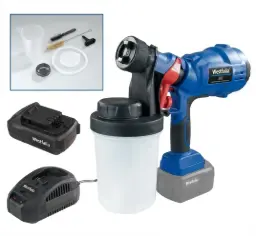
The sprayer feels comfortable to hold and is ready to use right away with the included battery set. Its performance is surprisingly good: it can cover larger surfaces such as fences or cabinets in a reasonable amount of time. With the right technique, it applies paint more evenly than a roller.
Its biggest advantage is portability. You do not have to move a heavy compressor or find an outlet. The tradeoff is limited runtime. For very large projects, plan for a charging break or bring a spare battery.
Practical tip for cordless paint sprayers
Hold the sprayer at a right angle to the surface and maintain an even distance (approx. 20-30 cm). Move it in smooth, overlapping passes. Start moving before you reach the surface and keep moving past its edge to avoid heavy buildup.
Pneumatic Spray Guns Tested: Professional Performance
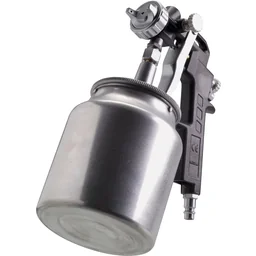
When efficiency and professional-quality results matter, pneumatic spray guns are hard to beat. We tested two cup styles: the
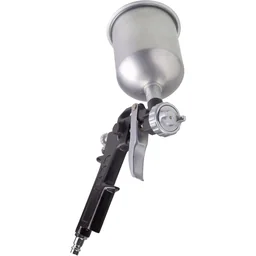
The model with the 400 ml gravity-feed cup is compact and well balanced, making it ideal for furniture, doors, and smaller walls. The spray pattern and material flow controls are precise. You’ll need a compressor that delivers at least 6 CFM at 6 Bar.
The 750 ml suction-feed version is a great choice for long workdays when you don’t want to keep refilling the cup. The bottom-mounted cup gets in the way less when you’re working overhead. Its wider spray pattern covers large areas faster. It’s a must-have for anyone who regularly uses a spray gun. Find more professional tools in the Tools category.
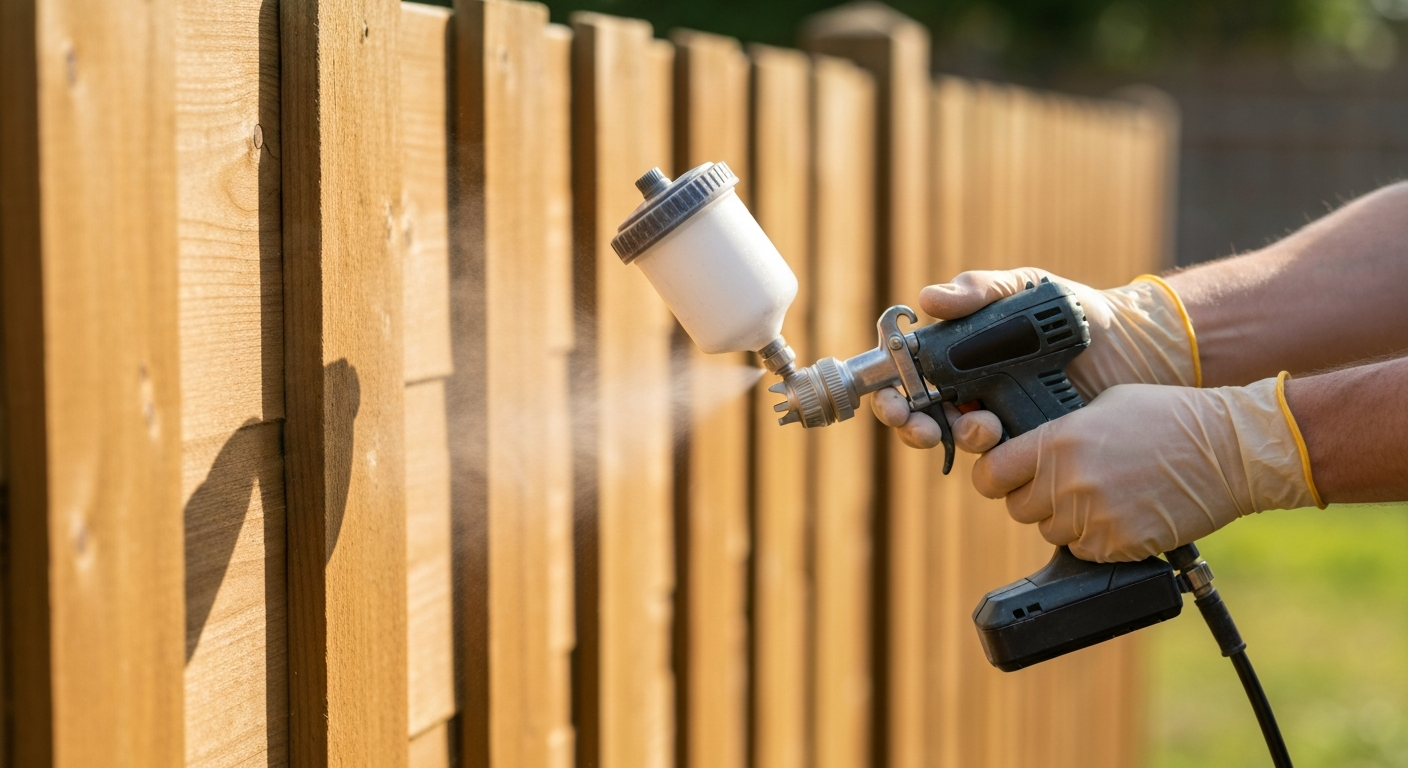
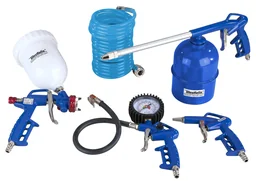
Note: Your pneumatic spray gun’s performance depends directly on the compressor. A compressor that’s too weak will produce a pulsing spray pattern. For the best results, buy the spray gun and compressor as a matched set, such as the
.
Airbrushes Tested: Precision for Detailed Work
For artistic projects and highly detailed work, an airbrush is the right choice. The
from the \"Master Class\" range offers professional features for demanding users.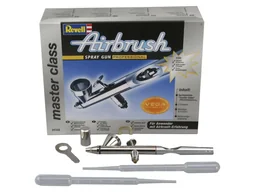
Its fine nozzle and precise needle control produce ultra-fine gradients and pinpoint details. It’s ideal for model builders creating intricate paintwork and artists working on canvas. It takes some practice to use, so check the pressure and paint flow on a test sheet first.
Regular cleaning is essential. The fine channels can quickly become blocked if paint residue dries inside them. Use a dedicated airbrush cleaner.
Care and Maintenance: Keep Your Spray Gun in Top Shape
A well-maintained spray gun can last for many years. Follow these steps after every use.
- Empty and pre-clean: Remove any remaining paint from the cup and rinse it out.
- Flush through: Pour a suitable solvent (water for emulsion paint, thinner for coatings) into the cup and spray it through until the liquid runs clear.
- Disassemble and clean: Carefully remove the nozzle, needle, and any seals. Clean them with a soft brush and solvent.
- Dry and lubricate: Dry all parts. Add a drop of air-tool oil to the moving parts before reassembling the spray gun.
Store the spray gun in a clean, dry place, and protect the nozzle with a cover.
Conclusion and Recommendation
The right spray gun depends largely on the types of projects you typically work on. For occasional jobs where flexibility matters, a cordless paint sprayer like the is the best choice. It’s ready to use right away and delivers good results for DIY projects.
If you paint regularly or work on large areas, invest in a pneumatic system. The offers excellent value for money for beginners and experienced users alike. For maximum efficiency on large projects, choose the with a large bottom-mounted cup.
For precision work on artistic projects, the is a professional airbrush solution. Whichever model you choose, maintain it carefully and your spray gun will reliably support you through many projects.
Frequently asked questions
- What is the best paint sprayer for beginners?
- For beginners, we recommend cordless paint sprayers such as PRODUCT_82754. They’re ready to use right out of the box without a compressor, easy to operate, and deliver good results on furniture, fences, and smaller surfaces. They’re also easy to clean. Pneumatic models require more know-how to adjust the pressure and perform maintenance.
- Do I need a compressor for a pneumatic spray gun?
- Yes, traditional pneumatic spray guns require a suitable compressor. Check the required air flow rate (CFM) and operating pressure. For smaller projects, a compressor from the pneumatic tools range is often sufficient. Larger spray guns such as PRODUCT_90979 need more powerful equipment.
- Can I use a paint sprayer for paint and varnish?
- Yes, modern paint sprayers can handle clear coats, stains, primers, and acrylic paints. Getting the viscosity right is important. Don’t thin the paint too much, and use the included filter. Clean the sprayer thoroughly with a suitable solvent immediately after painting to prevent clogs.
- How do I clean a spray gun properly?
- Immediately after use, rinse the paint cup and channels with a suitable cleaner or water (for water-based paints). Carefully remove and clean the nozzle and needle. Never use hard objects, as they could damage these precision parts. Dry all components before storing them.
- What are the advantages of an airbrush?
- Airbrushes such as PRODUCT_93598 produce a very fine spray for detailed work. They’re suitable for model making, art projects, fine touch-ups, and stencil work. They require less pressure than larger spray guns, but take more practice to achieve an even finish.
You may also be interested in
- Spray Paint Test & Comparison 2026: The Best Spray Paints Reviewed
- Hot Glue Gun Test & Comparison 2026
- Pneumatic Blow Gun Test & Comparison 2026
- Multifunction Tool Test & Comparison 2026
- Cordless Screwdriver Test & Comparison 2026: The Best Models Reviewed
- Workshop Equipment Test & Comparison 2026: The Best Tools Reviewed in Practice