
In brief: The best pillar drill for you depends on your requirements. For precise DIY projects, models with 350-500 Watt and a drill table are often sufficient. Professional workshops need more powerful machines with at least 800 Watt, greater drilling capacity and features such as a laser or variable-speed drive. Comparing the key features will help you make the right choice.
Are you looking for precision and stability for your drilling projects? A pillar drill is the professional answer for accurate, repeatable drilling. Our 2026 test and comparison puts the most important models side by side and explains what matters when buying. We look at performance, features and suitability for different applications.
Table of contents
What makes a good pillar drill?
A good pillar drill is above all stable. The solid column and heavy base prevent vibrations and ensure precise drilling. The adjustable table should be easy to raise and lower and lock securely in place. A tilting table is a major advantage for angled drilling.
Motor power is another key factor. It determines which materials and drill bit diameters you can work with. A stepped or variable-speed range allows you to adapt the machine to wood, metal or plastic. Make sure the controls are easy to reach and clearly marked.
Tip: Check the available space before buying. Due to their height and projecting arm, pillar drills often require more room than expected. Measure your workshop or hobby room.
Pillar drill test 2026: Models compared
You will find models on the market for ambitious DIY users through to professional workshops. We have analysed different power classes for you.
For demanding DIY users and small workshops, the is a good choice. With a 500 Watt motor and an integrated laser for precise marking, it covers a wide range of projects. Its features are well thought out.
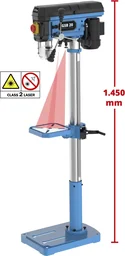
Anyone who values flexibility when cutting threads should consider the . The machine has a forward/reverse function (R+L), which is essential for this type of work. Its 500 Watt output is solid.
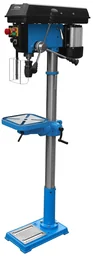
For larger drill diameters and regular use, the is worth considering. Its higher power and robust construction make light work of more demanding materials.
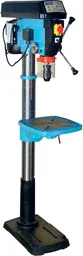
The stands out with its variable-speed drive. This enables infinitely variable speed control, which is a genuine advantage when working with different materials and drill sizes. It is a highly flexible choice.
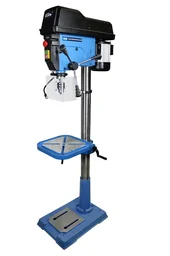
The most-reviewed pillar drills in our range compared directly:
| Model | Customer rating | Availability |
|---|---|---|
| 350 W pillar drill | – | Currently unavailable |
| 350 W pillar drill | – | Currently unavailable |
| GSB 20 LASER/500W pillar drill | – | Currently unavailable |
| GSB 20/812 pillar drill | – | Currently unavailable |
| GSB 20/812 R+L pillar drill | – | Currently unavailable |
Choosing a model for specific requirements
Not every model is suitable for every project. For working exclusively with wood and light metals, compact machines with 350 Watt may also be sufficient. You will find a wide selection in the pillar drills section. If you are unsure, it is worth looking at the drills category to compare all types.
How do you find the right power class?
Motor power in Watt is not everything, but it is a very good indicator. Base your choice on the materials you typically work with. For softwood and aluminium, 350 to 500 Watt is usually sufficient. For steel, stainless steel or frequent use, you should choose 800 Watt or more.
Drilling capacity, meaning the maximum drill bit diameter in steel, is directly linked to power. A powerful motor can drive larger drill bits safely without overloading. Also consider the maximum clamping height beneath the headstock.
Warning: Do not underestimate the space required. In addition to the machine itself, you need enough room for the workpiece and a safe, stable installation. An unstable setup on a wooden bench can compromise precision and put your safety at risk.
Features in Detail
Modern pillar drills offer useful additional features. A laser makes it easier to position the drill bit precisely. An LED work light illuminates the drilling area even in poor lighting. A depth stop helps you drill multiple holes to the same depth.
A parallel fence for the drill table is very practical for drilling rows of holes. The quality of the chuck is crucial for holding the drill bit securely. A keyless chuck makes changing drill bits much quicker.
The Drill Table as the Centre of Your Work
The table is your work platform. It should be solid, flat and equipped with grooves for guide fences. A tilting mechanism of at least 45 degrees in both directions is ideal for drilling at an angle. The height adjustment should operate smoothly and lock securely.
Safety and Ease of Use
Safety is the top priority. A transparent chip guard protects your eyes. An emergency stop switch must always be within easy reach. Make sure the cables are well insulated and properly routed. Always wear safety goggles when working.
Ease of use is determined by clear scales, easily accessible levers and an ergonomic handwheel. The machine should be easy to adjust without requiring significant effort. A clear operating manual is essential.
Note: Most pillar drills are not designed for continuous operation. If you are drilling a large number of holes, plan regular breaks to prevent the motor from overheating. Follow the operating cycles specified by the manufacturer.
Buying Guide: What You Really Need to Consider
Before buying, ask yourself the following questions: Which materials will I mainly be drilling? How often will I use the machine? What maximum drilling depth and diameter do I need? Do I have enough space for safe installation?
Then compare the technical specifications of the models you are considering. Power, drilling capacity in steel and features are the key criteria. Visiting a specialist retailer can help you get a feel for the machine’s size and handling.
The Right Introduction to Power Tools
If you are new to the world of stationary tools, find out as much as possible. Our power tools section provides a useful overview. For the bigger picture, visit our tools homepage.
Maintenance and Care
A pillar drill is a durable tool if you look after it properly. Remove chips and dirt from the table and column after every use. Regularly check the lubrication points on moving parts. Keep the chuck clean and free from grease.
Store the machine in a dry environment. Occasionally check the electrical connections and cable for damage. If the machine is not used for an extended period, you can treat the bare metal parts with a light corrosion inhibitor.
With the right choice and proper care, a pillar drill will serve you for many years and projects. You are investing in precision and reliability for your workshop.
Frequently Asked Questions
- What jobs are pillar drills suitable for?
- A pillar drill is worthwhile for anyone who needs precise, square holes. It is ideal for metalworking, woodworking and making enclosures. Compared with handheld drills, it offers greater stability, repeatability and power. It is less suitable for occasional DIY drilling jobs.
- How much power (watts) do I need for my projects?
- For occasional work with wood or thin metal, 350 to 500 watts is sufficient. For regular work or harder materials such as steel, we recommend 800 watts or more. Power determines the drilling capacity and driving force. Look for a stepped speed range for different materials.
- What is the difference between a pillar drill and a bench drill?
- The main difference lies in the design and stability. A pillar drill has a solid, fixed column and an adjustable table. It is more robust and designed for more precise work. A bench drill is often more compact, and the stand can be separated from the actual drill. It is suitable for lighter tasks.
- Which features should I look for?
- Important features include an adjustable and tilting drill table, a depth-stop scale, a parallel fence and a good-quality chuck. A laser or LED work light is useful for greater precision. A gearbox with several gears or a variable-speed drive provides flexibility when setting the speed.
- Can I cut threads with a pillar drill?
- Yes, many pillar drills have a reverse function (R+L), which allows you to cut threads. The motor runs in both directions. Look for a low, continuously adjustable speed for this operation. Not all models have this function built in.