
In brief: A good pry bar features a sharp, hardened edge, an ergonomic handle and the right length for your tasks. Sets with different sizes are recommended for frequent use. Particularly robust models made from chrome vanadium steel stand out for their durability.
A pry bar is an essential tool in every workshop. Whether you want to remove old nails, loosen wooden joints or pry off trim, the right tool makes all the difference. Our 2026 test and comparison shows you what to look for.
We took a close look at various models, evaluating their durability, handling and suitability for typical tasks. This helps you quickly find the right model for your needs.
What is a pry bar?
A pry bar, also known as a crowbar or lever bar, is a hand tool that amplifies force. It consists of a metal lever with a pointed, often curved or forked end. The basic function is always the same: you place the narrow tip at a specific point and use the lever arm to apply considerable force.
Traditionally, pry bars are used to separate wooden joints or pull out nails. They have a firm place in the modern tool range. Quality varies considerably, particularly in terms of materials and workmanship.
Design and function
A typical pry bar has three main areas. The tip or blade must be narrow and robust. The shaft transfers the force and is often flattened. The end has a knob or opening for a better grip.
Leverage is the key. A long pry bar allows you to overcome significant resistance with relatively little effort. This is particularly useful when working in confined spaces.
Note: The term "pry bar" is used differently in different regions. Sometimes it specifically refers to a tool for pulling nails. In our test, we consider the general form as a lever and prying tool.
Test criteria
What should you look for when buying a new pry bar? Our comparison is based on specific test criteria to make your decision easier.
Material and hardness
The material determines service life and load capacity. High-quality models are made from alloy tool steel such as chrome vanadium. This material is highly resistant to deformation.
Cheap alternatives made from soft steel bend quickly or break. Look for the term "hardened". A hardened tip stays sharp longer and penetrates narrow gaps more effectively.
Length and leverage
Length varies considerably. Short pry bars from 174 mm are suitable for delicate work and areas with limited space. However, they provide less leverage.
Medium-length models around 300 mm are good all-rounders. Very long pry bars such as the
at 600 mm generate enormous force. They are ideal for heavy dismantling work but require sufficient room to maneuver.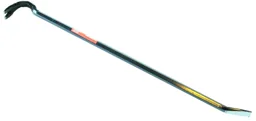
Grip and ergonomics
A secure grip prevents slipping and improves comfort. Many handles are now made from non-slip plastic or feature a rubber coating. An ergonomically shaped handle reduces strain on your hand and wrist during extended work.
Check that the handle fits comfortably in your hand. A handle that is too thick can be uncomfortable for smaller hands. A handle that is too thin causes fatigue more quickly.
Warning: Avoid pry bars with sharp-edged or painted handles. Under load, sharp edges can cause pressure points. Paint can chip or become slippery when exposed to sweat.
Blade and tip
The shape of the tip determines its intended use. A narrow, wedge-shaped tip penetrates joints effectively. A forked tip is better suited to pulling nails. Some models combine both features.
The blade should be sharp. This is the only way to penetrate wood fibers cleanly without crushing the material. A rounded cutting edge is less prone to damage.
The Best Pry Bars Compared
Our 2026 comparison introduces a selection of models. The ratings are based on material analysis, ease of use and suitability for typical tasks.
The most highly rated pry bars in our range compared directly:
| Model | Customer rating | Availability |
|---|---|---|
| Pry Bar 600 x 15 mm 🏆 Test winner | ★ 4,9 (8) | In stock |
| 3-in-1 Hammer Nail Puller | – | Currently unavailable |
| 3-Piece Chisel and Pry Bar Set | – | Currently unavailable |
| 3-Piece Carpenter's Pry Bar Set | – | Currently unavailable |
| Fritz Göbel Vink Replacement Ropes for White Calving Aid (Pair) - Durable | – | Currently unavailable |
The is an impressive long, powerful model for demanding tasks. Its length of 600 mm provides outstanding leverage. The narrow tip made from hardened steel is ideal for deep joints.
Sets are an excellent choice for versatile tasks involving hand tools. The
includes three common sizes in one set. This means you are equipped for a variety of situations.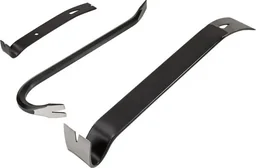
The
is designed specifically for demanding woodworkers and carpenters. Its robust construction and practical sizes make it a reliable companion.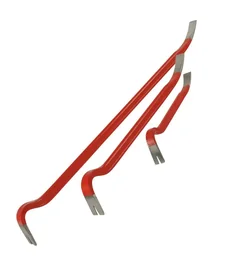
If you are looking for a compact but sturdy model for regular use, consider the
. At 300 mm long, it is a versatile all-rounder for a wide range of projects.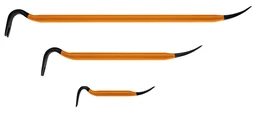
Tip: Combine a long pry bar for maximum force with a short, precise model from a set. This gives you the ideal solution for every task and helps you work more efficiently.
Applications and Techniques
A pry bar is more versatile than you might think. Used correctly, it can make many tasks significantly easier.
Removing Nails Safely
Place the tip directly next to the nail head. Use a piece of wood as a fulcrum to increase leverage and prevent damage to the surface. Lift carefully until you can grip the nail.
With old, rusty nails, a light tap with a hammer on the pry bar can often help drive it under the head. Always work carefully to prevent the nail from breaking.
Separating Wooden Joints
Glued or mortise-and-tenon joints can be separated gently. Work the narrow tip into the joint. Position the tool at several points and apply even leverage to minimise the risk of the wood breaking out.
Removing Trim and Skirting Boards
Short, sturdy pry bars are ideal here. Place the tip behind the trim and lever it away using controlled movements. Protect the wall with a wide protective plate or a piece of plywood.
Work your way from one end to the other rather than starting in the middle. This helps prevent uncontrolled breakage of often brittle trim.
Care and Maintenance
A well-maintained pry bar can last a lifetime. The necessary steps are simple but effective.
Remove dirt and resin from the tool after every use. A lightly oiled cloth prevents rust, especially on the cutting edge. Store the pry bar in a dry place.
Check the sharpness of the edge regularly. A blunt tip requires more force and can damage the wood. If necessary, sharpen the tool on a whetstone.
Check the handle for cracks or loose parts. A damaged handle is a safety risk and should be replaced immediately.
Alternatives to a Pry Bar
Alternative tools are available for specialised tasks and perform similar functions.
A nail puller is designed specifically for removing nails. Its forked shape grips the nail head more securely. For tasks involving nail removal only, it is often the better choice.
With its broad, straight cutting edge, a chisel is the first choice for cutting mortises and tenon holes. However, it is not a substitute for the leverage provided by a pry bar.
For very heavy-duty levering tasks, such as demolition, wrecking bars made from even more substantial material are used. However, they are unsuitable for finer woodworking tasks.
Conclusion and Buying Guide
Choosing the right pry bar depends on the projects you typically work on. For occasional DIY use, a medium-length, solid model or a small set is a good starting point.
Professionals and ambitious tradespeople should invest in high-quality individual tools or more extensive sets such as the products presented here. The extra cost of chrome vanadium steel is worthwhile thanks to its significantly longer service life.
Consider the space you have available. A 600-mm pry bar is powerful, but it also needs room to swing. In confined cabinets or corners, a shorter tool may be the better choice.
Ultimately, a good pry bar is a long-term investment in your workshop. It pays to choose a model that can meet not only your current needs but also future requirements. Browse our pry bars category to find the right model.
Frequently Asked Questions
- What length should a pry bar be?
- The ideal length depends on how you plan to use it. Short models (approx.174-200 mm) are suitable for precise work and tight spaces. Medium lengths (300-400 mm) are the all-rounders. Long pry bars (from 600 mm) provide maximum leverage for loosening firmly attached parts.
- What material should the cutting edge be made of?
- High-quality pry bars are made of chrome-vanadium steel (CrV). This material is particularly hard, retains its sharpness for a long time and is less likely to break. Look for the designation "hardened". Avoid soft, unalloyed steel.
- Do I need a single pry bar or a set?
- For occasional jobs, an all-round model in a medium length is often sufficient. If you work regularly or professionally, a set with different widths and lengths is worthwhile. This ensures you always have the right tool for every task.
- What is the difference between a pry bar and a chisel?
- Pry bars have a thinner, bevelled cutting edge for separating wooden joints and lifting out nails. Chisels have a thicker, straight cutting edge with a shoulder and are primarily used for cutting mortises and grooves.
- How do I maintain and sharpen a pry bar correctly?
- Clean the cutting edge after use and apply a light coat of oil to prevent rust. To sharpen it, use a sharpening stone with several grades of grit. Keep the original bevel angle constant. A sharp tool is safer and works more precisely.
You might also be interested in
- Nails Test & Comparison 2026: The Best Models Reviewed
- Hand Tools Test & Comparison 2026
- Blind Rivet Pliers Test & Comparison 2026: The Best Models in Practical Testing
- Ratchet Wrenches Test & Comparison 2026
- Combination Pliers Test & Comparison 2026: The Best Models Reviewed
- Stepladders Test & Comparison 2026