
In brief: Our 2026 ratchet strap review and comparison focuses on safety, ease of use and materials. Automatic ratchet straps with a rewind function are especially convenient, while classic models with S-hooks are built to last. The right choice depends on the load, required lashing capacity and hook type. We compare the best options for your needs.
Transport loads regularly and need reliable ratchet straps? Our 2026 review and comparison can help you choose. Find out which straps suit different uses and what to look for when buying. Keeping your load secure always comes first.
What types of ratchet straps are available?
Ratchet straps differ mainly in how they work and how they’re designed. The right choice depends on your load and the features you need.
Automatic ratchet straps
These straps have a built-in tensioning mechanism, usually a ratchet. They tighten the strap to secure your load. They’re popular because they’re easy to use. One example is the automatic ratchet strap with rewind function
. It makes securing loads even easier.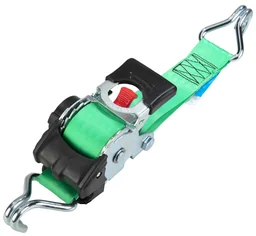
Bungee straps
Bungee straps, also called elastic tie-downs, work well for lighter, stable loads. Their elasticity creates tension. They’re quick to attach but have limited pulling force, so they’re not suitable for heavy loads.
Cable pullers and tensioners
Cable pullers are used for very heavy loads. They work on a block-and-tackle principle to generate enormous pulling force. One example is the 500 kg cable puller
. These tools are a go-to choice for professional load securing.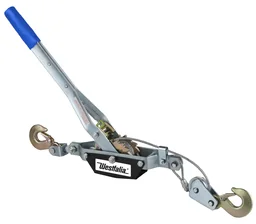
How do I find the best ratchet strap for my needs?
Answer these three key questions to find the right model. This checklist will help you choose the right product.
1. What weight needs to be secured? Check the lashing capacity (LC) and standard tension force (STF). The LC must always be higher than the weight being secured.
2. Which hook type do I need? S-hooks work for a wide range of uses. Pointed hooks grip eyelets more securely. Flat hooks are designed for specific anchor points.
3. How long and wide should the strap be? Choose a length that’s sufficient to wrap around the load. Wider straps (e.g. 50 mm) distribute force more effectively and help protect the load.
Tip: Buy ratchet straps as a set to get the right lengths and strengths for different loads. A set with several strap lengths is a smart investment.

What are the most important buying criteria in the review?
Our comparison evaluates ratchet straps based on specific features that affect safety and durability.
Material and workmanship
The webbing should ideally be made of polyester. It’s tear-resistant and has minimal stretch. The stitching should be neat and reinforced with multiple rows. Metal parts, including the ratchet and hooks, should be made of sturdy steel and galvanized to help prevent corrosion.
Ease of use and convenience
A smooth-running ratchet with an easy-to-grip handle is essential. Models with an automatic rewind function are especially convenient. A useful accessory is the strap winder for tensioning and lashing straps
. It keeps straps organized and makes them quick to put away.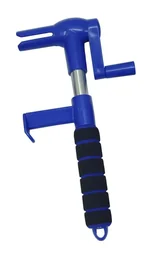
Safety features
Look for a ratchet that locks securely and won’t release by accident. Markings showing compliance with standards (e.g. DIN EN 12195-2) are an important sign of quality. Always read the instructions carefully.
Warning: Never overload ratchet straps. Do not exceed the specified lashing capacity (LC). An overloaded ratchet or torn webbing can become a dangerous projectile and cause serious injuries.
How do I use ratchet straps correctly?
Using a strap correctly is just as important for safety as its quality. Follow these steps.
Tension the straps diagonally and in opposite directions. This helps keep the load from shifting forward or backward. The strap should be taut, but not so tight that it damages the load.
Check the tension again after the first few miles. Vibrations can settle the load and loosen the straps. Retighten them if needed.
What mistakes should I avoid?
Small mistakes can have serious consequences. These common errors can put your load security at risk.
Avoid sharp edges. If a strap touches a sharp corner, place an edge protector underneath to protect the webbing from cuts. Don’t knot the straps; knots can significantly reduce their tensile strength.
Store straps in a dry place away from sunlight. UV radiation and moisture can weaken the material over time. Clean, dry storage helps extend their service life.
Note: Regular maintenance of all components of your agricultural machinery is essential. Check the anchor points on trailers and vehicles regularly for strength and corrosion, too.
Conclusion: Which Ratchet Straps Are the 2026 Test Winners?
There is no single best ratchet strap for everyone. The right choice depends on how you plan to use it. For versatile, convenient use in farming, the automatic ratchet tie-down strap with a rewind function comes out on top.
For everyday hauling with easily accessible tie-down points, the automatic ratchet tie-down strap with S-hooks, 3 m x 25 mm
is a reliable choice. For maximum pulling power with the heaviest loads, a cable hoist is hard to beat.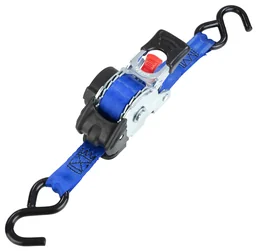
Our most-reviewed tie-down straps, compared side by side:
| Model | Customer rating | Availability |
|---|---|---|
| Adjustable rubber tie-down straps, 2-pack | – | Currently unavailable |
| Automatic ratchet tie-down strap with S-hooks, 1.8 m x 25 mm | – | Currently unavailable |
| Automatic ratchet tie-down strap with S-hooks, 3 m x 25 mm | – | Currently unavailable |
| Automatic ratchet tie-down strap with pointed hooks, 1.8 m x 50 mm | – | Currently unavailable |
| Automatic ratchet tie-down strap with rewind function - 50 mm x 3 m - pointed hooks | – | Currently unavailable |
Invest in quality for peace of mind. The right tie-down straps protect your cargo, your vehicle and everyone else on the road. Our buying guide helps you choose the right model for your needs.
Frequently Asked Questions
- What's the difference between a tie-down strap and a lashing strap?
- The terms are often used interchangeably. A tie-down strap usually creates tension with a lever or ratchet. A lashing strap can also use a tensioning device such as a pulley block. Both secure loads, though lashing straps are often designed for heavier loads.
- How often should I replace my tie-down straps?
- Replace tie-down straps immediately if the webbing has cuts, fraying or heavy soiling. Replace metal parts such as hooks or the ratchet if they show signs of corrosion or deformation. For your safety, inspect the straps visually before every use.
- Can I use any tie-down strap in my car or on my trailer?
- No. Check the working load limit (LC) and strap width. Heavy loads on a trailer require wide, sturdy straps. Narrower straps are often sufficient inside a car. Always follow the manufacturer's maximum load rating.
- What does STF mean on a tie-down strap?
- STF stands for 'Standard Tension Force'. It indicates the maximum force you can apply by hand using the ratchet. This value is important for pretensioning the load. The actual lashing capacity (LC) is higher.
- Are tie-down straps with a strap winder useful?
- Yes, a strap winder is very handy. It keeps straps from getting knotted or tangled in storage and saves time when winding them up. It also protects the strap material and helps extend its service life.