
In brief: In 2026, the RC aircraft market is clearly divided into easy-to-fly beginner models, challenging sport planes and detailed kits. For a quick start with no prior experience, Ready-to-Fly models such as the PRODUCT_89341 or PRODUCT_119637 are ideal. If you enjoy the classic model-building experience, the PRODUCT_76430 and PRODUCT_105980 offer rewarding projects. The right choice depends largely on your experience and the kind of flying you want to do.
Looking for the right RC plane for 2026? Our reviews and comparison help you find the best models. We introduce top picks in several categories and explain what to consider when choosing one. Whether you want a ready-to-fly plane for beginners, a challenging kit or a sporty chuck glider, you’ll find practical buying advice here.
Table of contents
- Beginner or expert – which type are you?
- RTF planes reviewed: flying fun without the wait
- Kits for purists: the journey is the destination
- Chuck gliders for sporty flying
- What equipment do you need?
- Where can you fly? Rules and regulations
- Care and maintenance for years of flying
- Our verdict: how to find the right model
Beginner or expert – which type are you?
Before choosing a model, take an honest look at your skill level. An RC plane is not a toy; it’s a complex piece of equipment. Flying one takes coordination and practice.
For beginners, Ready-to-Fly (RTF) models are a great first choice. They come fully assembled with a remote control and often a charged battery, so you can take off soon after unpacking. A typical model in this category is the . Its biggest advantage is that it’s ready to fly right away.
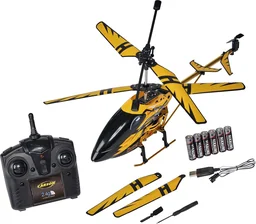
Experienced pilots and hands-on builders often prefer kits. You assemble the plane yourself from prefabricated parts, learning how it works and making it easier to customize. A project such as the can take weeks to build, but the sense of accomplishment is hard to beat.
For pure, unpowered flying and friendly competitions, chuck gliders are a great choice. You launch them by hand, and they ride thermals to stay aloft. Flying them takes a light touch, and they’re a discipline of their own within RC modeling.
Your pre-purchase checklist
- Time: How much time can you spend building and flying?
- Space: Do you have enough room to store and transport the plane?
- Budget: Factor in more than just the plane. You may also need spare batteries, a charger and tools.
- Flying site: Is there a suitable open area or RC flying field nearby?
Tip
Visit a local RC club before you buy. Members can offer valuable advice, and you’ll get to see different models in action.
RTF planes reviewed: flying fun without the wait
RTF models are popular with beginners because they’re convenient and ready to fly. Our comparison shows that the main differences are in how they handle, how durable they are and what equipment they include.
The stands out for its balanced flight characteristics. Its compact size makes it easy to transport, and the 2.4GHz system helps prevent interference from other pilots. The controls are precise, making it a good choice for learning the basics.
The is designed for somewhat different conditions. Its design may suit specific flying conditions, such as light winds. Comparing how the two models handle can help you decide which is the better fit.
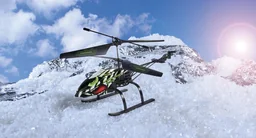
RTF models are convenient: there’s no building, you can fly right away and everything you need is included. One downside is that they can be harder to repair. After a crash, you may rely more on the manufacturer’s spare parts than you would with a model you built yourself.
Key features to look for in an RTF plane
- 2.4GHz remote control: The standard today, helping to ensure reliable, interference-free control.
- Brushless motor: Typically lasts longer and delivers more power efficiently than a conventional brushed motor.
- LiPo battery: Provides a good power-to-weight ratio. Check that it’s compatible with widely available chargers.
- Propeller and electronics protection: A nose wheel or propeller guard can help prevent costly repairs after minor landing mishaps.
Kits for purists: the journey is the destination
The appeal of a kit is in the build. You create a plane of your own while learning how every part works. That knowledge comes in handy when it’s time to make repairs or adjustments.
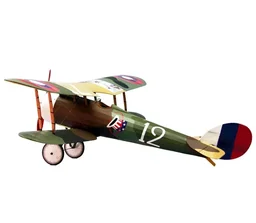
The is an example of a challenging laser-cut kit. Models like this are designed for experienced builders who appreciate historical accuracy and quality materials. The instructions will be your constant companion.
Kits are usually made from quality materials, including wood, composites or specialty plastics. You’ll need the right tools and a suitable workspace for model building.
Warning
Be realistic about your abilities when choosing your first kit. Start with a simple, small model before taking on a complex project such as a large, detailed scale replica. Taking on too much too soon is a common source of frustration for beginners.
Building your own plane gives you full control. You can reinforce weak spots, choose your own color scheme and install the electronics the way you want. If it crashes, you’ll know exactly how to repair it.
Hand-Launch Gliders for Sport Flying
Hand-launch gliders are the track stars of model aircraft. With no engine, they rely on excellent aerodynamics and your skill at launching them and riding thermals.
The delivers an exciting flying experience. These models are exceptionally light and respond sensitively to control inputs. Few other models teach you as much about aerodynamics and flight dynamics.
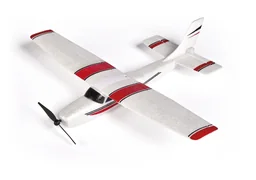
The sporty appeal is hard to beat. It is all about precise maneuvers, long flights in thermals and covering long distances. For many pilots, this is the purest form of model flying. You will find a large community of enthusiasts in clubs devoted to gliding.
What Makes a Good Hand-Launch Glider?
- Low weight: Essential for climbing well in weak thermals.
- Rigid wing construction: Prevents twisting at high speeds or during winch launches.
- Precise control-surface linkages: Help deliver stable, predictable flight and precise control.
- High-quality surfaces: A smooth, hard finish reduces drag and improves performance.
What Equipment Do You Need?
The model itself is only part of your gear. To fly safely and enjoy the hobby for years to come, you need the right accessories.
A high-quality charger for your LiPo batteries is essential. It should have balancing functions and support multiple charging modes. Cheap chargers can pose a fire risk.
Tools are essential for every model builder. Even with RTF models, you may need a screwdriver to change the propeller. For kits, you will also need a hobby knife, sandpaper and glue. Invest in quality tools from the start.
A simulator is one of the best investments for beginners. It can save you money on crash repairs and speed up the learning process. Practice landings and maneuvers safely on your computer.
Note
Don't forget the practical essentials: a takeoff and landing mat, a carrying case or bag, plus tape and super glue for minor repairs at the field.
Where Can I Fly? Legal Requirements
Airspace is regulated. You cannot simply fly your model aircraft anywhere or at any time. Legal requirements have become stricter in recent years.
In general, the provisions of the German Air Traffic Regulations (LuftVO) apply. If you use a camera, the General Data Protection Regulation (GDPR) also applies. Flights beyond visual line of sight (FPV) are subject to additional rules.
The safest option is to fly at a designated model flying site operated by a club. The rules are clear, you are insured, and you can share tips with other pilots. Find a club in your area.
Strict requirements apply to flying outside designated model flying sites (“outdoor flying”). These include a maximum flight altitude, carrying proof of knowledge (“remote pilot certificate”) for heavier models, and keeping your distance from crowds, residential areas and infrastructure.
What You Need to Keep in Mind
- Check your insurance coverage (see FAQ).
- If required, obtain the small UAV pilot certificate (proof of knowledge).
- Always respect other people's privacy.
- Observe the maximum permitted flight altitude of 120 meters above ground (in Germany, as of 2026).
Care and Maintenance for Years of Flying
A well-maintained model aircraft can last for many years. Maintenance starts as soon as your flight is over.
After every landing, check the aircraft for cracks, loose parts or damage to the fuselage and wings. Clean off any dirt. Regularly check the motor, servo and landing gear screw connections.
Battery care is critical. Never store LiPo batteries fully charged or completely discharged. Use specially designed storage or transport bags. Dispose of damaged or swollen batteries properly.
Protect the electronics from moisture. Check that the receiver, servos and speed controller connections are secure and correctly polarized. An annual check of all components is recommended.
Here are the highest-rated model aircraft in our range, compared side by side:
| Model | Customer rating | Availability |
|---|---|---|
| Nieuport 28 EP Lasercut Kit | – | Currently unavailable |
| Dunlop Blizzard Thermal Boots Size 48 - Purofort, Steel Toe Cap & Midsole | – | Currently unavailable |
| Easy Tyrann Hornet 350 2.4GHz 100% RTF | – | Currently unavailable |
| Easy Tyrann Snowbeast 2.4G 100% RTF | – | Currently unavailable |
| Fritz Göbel Bison Spool Axle - Plastic Replacement for Models 10414/10415 | – | Currently unavailable |
Our Conclusion: How to Choose the Right Model
Choosing the right model airplane for 2026 depends on your goals. If you want to get started right away, an RTF model such as the or is a great choice. These ready-to-fly models come as a complete package and let you take to the skies quickly.
If you love technology and have patience, a kit such as the is the way to go. You can experience classic model airplane building at its most challenging.
For a purist, sporty approach and a chance to sharpen your flying skills, the hand-launch glider is hard to beat. It challenges and develops your skills like no other model.
Whichever path you choose, start with a realistic project, get the accessories you need and follow the legal requirements. Then you can enjoy a safe and fascinating hobby in the world of technology. We wish you smooth landings and many unforgettable hours in the air.
Frequently Asked Questions
- What’s the main difference between an RTF model airplane and a kit?
- RTF (Ready-to-Fly) models come fully assembled and ready to fly, so you can get started quickly. Kits take time and hands-on skills to build, but give you more room to customize your plane and learn how it works.
- Which RC plane is best for a complete beginner?
- Beginners should look for a sturdy, lightweight RTF plane that flies slowly and has a 2.4GHz remote control. Features that help the plane stay stable, such as a special wing design or a gyro, make those first flights much easier.
- Do I need special insurance to fly an RC plane?
- Yes. Liability insurance for model aircraft is strongly recommended and required by many clubs. The German Model Aircraft Association (DMFV) and the German Aero Club (DAeC) offer group insurance policies for members.
- Can I take off in an RC plane from a regular grass field?
- It depends on the plane. Lightweight electric planes and hand-launched gliders such as PRODUCT_105980 can fly from grass fields. Planes with wheels need a short, level grass or asphalt runway. Always check local flight restrictions.
- How long does an electric RC plane’s battery last?
- Most electric models fly for 5 to 15 minutes per battery. Bring several batteries for longer flying sessions. Charging takes 30 to 90 minutes, depending on the charger and battery capacity.