
In brief: The best reciprocating saw for you depends on how you plan to use it. For frequent, demanding work on job sites, powerful corded models are a great choice. For flexible work in the yard, pruning branches or tackling renovation projects, cordless reciprocating saws are often more practical. Along with power, vibration control, cutting speed and orbital action are important factors. Our comparison will help you find the right model.
A reciprocating saw is a versatile tool for rough cutting jobs. Whether you need to cut wood, slice through metal pipes or saw branches, it can handle a wide range of materials. With so many models to choose from, finding the right one can be a challenge. Our 2026 test and comparison will help you find the best reciprocating saw for your needs.
We focus on key factors such as performance, handling and features, and provide practical buying advice. That way, you can make an informed choice between the power of a corded tool and the flexibility of a cordless model.
Contents
What is a reciprocating saw?
A reciprocating saw, also known as a Sawzall, cuts with a back-and-forth motion. The blade moves in a straight line, making rough cuts quickly.
Its main advantage is versatility. It can handle jobs that other saws can't, thanks to its compact design and ability to cut in tight spaces.
Common uses
You'll find reciprocating saws on job sites, in yards and in workshops. They're useful for cutting water pipes, removing old nails from wood and sawing through tree roots. They're also ideal for demolition work on doors, window frames and lightweight partition walls.
What to look for in a reciprocating saw
When choosing a reciprocating saw, consider several factors. Wattage alone doesn't determine which model is right for you.
Power and stroke rate
Power determines how effectively the saw cuts through harder materials. The stroke rate, measured in strokes per minute, indicates how fast it cuts. Variable speed control lets you adjust the stroke rate to suit the material.
Orbital action
Orbital action is an important feature. It moves the blade slightly forward as it cuts, producing a more aggressive, faster cut, especially in wood. For metal or plastic, orbital action should be switchable.
Tip: Look for an easy-to-use orbital action switch. It lets you adjust the setting quickly while you work without putting the tool down.
Vibration control
A good vibration control system makes the tool more comfortable to use. It reduces the vibrations that reach your hands and arms, helping protect your muscles and letting you work longer with less fatigue.
Model comparison
Our comparison includes several types of reciprocating saws, from high-performance corded models to flexible cordless tools.
One powerful corded option is the . Its high power makes it suitable for demanding, continuous work. Another powerful corded model is the , which stands out for its convenient variable speed trigger.
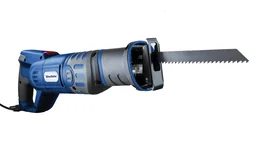
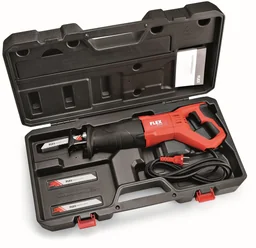
For maximum flexibility, consider a cordless reciprocating saw. The is part of an 18 V system and delivers solid performance. Its battery lets you work without an outlet. A compact cordless alternative is the .
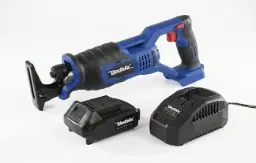
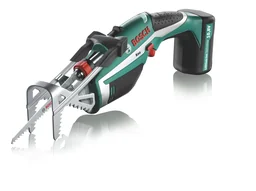
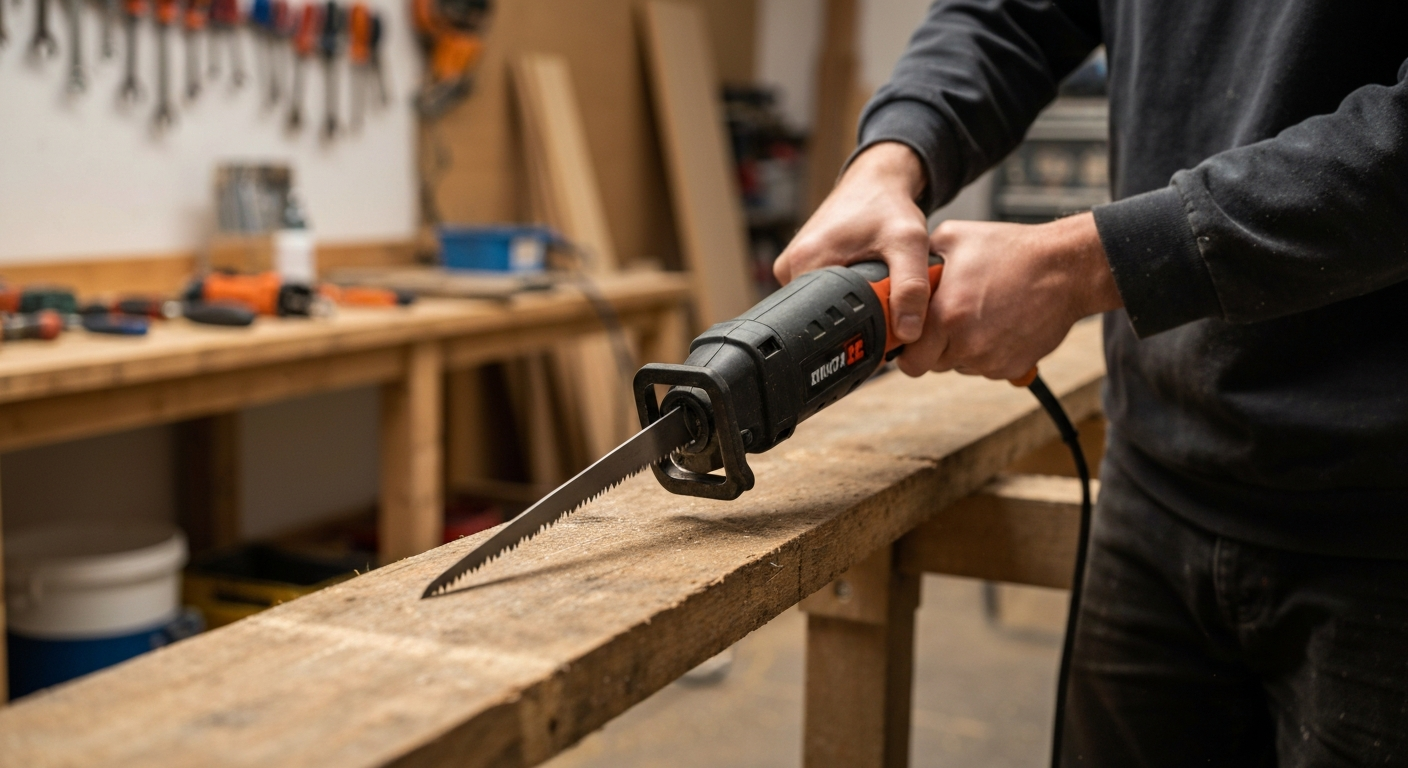
The table below summarizes the key features of the models featured in this comparison.
Our most-reviewed reciprocating saws, compared at a glance:
| Model | Customer rating | Availability |
|---|---|---|
| ASSG18 18 V Li - Ion reciprocating saw including 2.0 Ah battery and charger 🏆 Test winner | ★ 4,8 (4) | In stock |
| RS 1050 reciprocating saw, 1050 Watt | ★ 4,8 (16) | Currently unavailable |
| 1100 Watt universal reciprocating saw RS 11-28 with variable speed trigger | – | Currently unavailable |
| KEO universal saw ST 10,8 LI | – | Currently unavailable |
| MTY8-70 230V circular saw blade sharpener - 250 W - 125 mm incl. saw blade 210 x 30 x 2,6mm - 24 teeth | – | Currently unavailable |
Important: Availability may vary. Before you buy, check the current stock status in our shop for reciprocating saws.
Cordless or Corded?
Choosing between cordless and corded is fundamental. Both options have their own specific advantages and disadvantages.
Advantages of a Cordless Reciprocating Saw
- Maximum mobility: Work independently of a power outlet.
- Quick to use: No cord restricts your movement.
- Safety: No risk of accidentally cutting through the power cord.
Cordless tools are ideal for outdoor work, on ladders, or in hard-to-reach places. You can find them in our power tools range.
Advantages of a Corded Reciprocating Saw
- Consistent power: Delivers constant high power without a drop in performance.
- No charging time: The tool is always ready to use.
- Often more powerful: Corded models frequently offer higher wattage.
For intensive, prolonged use in the workshop or on a job site, corded models are often the better choice. Discover more models in the saws category.
Safety and Handling
Using a reciprocating saw safely is the top priority. Proper handling protects you and extends the tool's service life.
Important Safety Features
A reliable tool-free blade clamp secures the saw blade safely. A safety switch prevents the tool from starting accidentally. Also, make sure the tool is well balanced so that you can control it safely, even when using it one-handed.
Note: Always wear safety goggles, hearing protection, and sturdy gloves when working with a reciprocating saw. Loose clothing or jewelry pose a significant safety risk.
Proper Handling
Always hold the saw firmly with both hands whenever the situation allows. Do not apply excessive pressure; let the tool do the work. Ensure that you have a firm stance and that the workpiece is securely held.
Maintenance and Care
Regular maintenance keeps your reciprocating saw powerful and safe. A few simple steps are all it takes.
Cleaning and Storage
After use, clean dust and dirt from the housing. Regularly remove sawdust from the shoe area and ventilation slots. Store the tool in a dry, dust-free place, preferably in its original storage case.
Changing and Caring for Saw Blades
Replace worn or dull saw blades in good time. A dull blade requires more effort and can be dangerous. Regularly check the power cord of corded tools for damage. You can find all the necessary spare parts and accessories in our extensive tools category.
Conclusion and Buying Guide
Choosing the right reciprocating saw depends on how you plan to use it. Consider your typical projects and working environments.
Who Is a Corded Reciprocating Saw Suitable For?
Choose a corded model if you regularly carry out demanding, prolonged work. This is typical on job sites or in a workshop with a power connection. Here, you benefit from consistently high performance. A tool such as the could be worth considering.
Who Is a Cordless Reciprocating Saw Suitable For?
A cordless reciprocating saw is the first choice for anyone who values mobility. Gardeners, DIYers carrying out renovations, and installers appreciate the freedom of cordless operation. They are ideal for work in the garden, in the attic, or anywhere there is no power outlet within reach. The complete system offers a good basic setup for these tasks.
Our Buying Guide
Ask yourself these questions before buying:
- Where and how often will I use the saw? Occasionally in the garden or every day on a job site?
- Which materials will I mainly cut? Softwood, metal, or a mixture?
- Do I need maximum flexibility? Will I often be working without a power connection?
- How important is low weight to me? For overhead work or in confined spaces?
By answering these questions and considering the results of our comparison, you are sure to find the reciprocating saw that perfectly meets your requirements.
Frequently Asked Questions
- What jobs is a reciprocating saw suitable for?
- A reciprocating saw is an extremely versatile tool. It is perfect for rough cuts, such as when dismantling or carrying out demolition work. Typical uses include cutting through pipes, cutting down small trees, pruning branches, and cutting wood, metal, and plastic. With special saw blades, it can even cut tiles or masonry.
- Should I choose a cordless or corded reciprocating saw?
- The choice depends on the mobility and continuous power you need. Cordless reciprocating saws offer maximum freedom and are ideal for work without a power connection, such as in the garden. Corded models usually deliver higher continuous power and are suitable for intensive, prolonged use in the workshop or on a job site where a power outlet is available.
- What is orbital action on a reciprocating saw?
- Orbital action is an important feature. The saw blade moves not only up and down but also swings slightly forward and backward. This produces a more aggressive, faster cut with less effort, especially in softer materials such as wood. For hard materials like metal, orbital action is usually switched off.
- Which safety features should I look for?
- Look for a reliable, lockable tool-free blade clamp that holds the saw blade securely. An easily accessible safety switch prevents accidental start-up. A protected blade-changing system, which means you do not have to touch the hot saw blade, and a stable housing design for safe handling are also important safety features.
- Can I make precise cuts with a reciprocating saw?
- A reciprocating saw is not the primary tool for precise, fine cuts. It is designed for rough, fast cutting and demolition work. For precise results, it is better to use a jigsaw or circular saw. With some practice and a fine-toothed saw blade, more controlled cuts are also possible.