
In brief: The best scythe for you depends on where you’ll use it and how much ground you need to mow. A long-handled scythe with a wide blade is well suited to large meadows, while shorter models such as brush scythes are easier to handle on rough terrain and around hedges. Blade quality and handle ergonomics matter just as much as length. Our comparison shows which designs are best for different jobs.
Best Scythes 2026: Top Models Compared
Looking for a dependable scythe for your garden, meadow or rough terrain? Our scythe comparison for 2026 will help you choose the right model. We explain the different types, what to look for when buying and which scythe suits your needs. Compare models for a range of jobs, from mowing a traditional meadow to trimming hedges.
Contents
What types of scythes are available?
Not every scythe is right for every job. Choosing the right type makes work more efficient and helps prevent unnecessary fatigue. There are three main types.
The traditional grass scythe
A grass scythe is the standard choice for mowing meadows and lawns. It has a long snath, usually made of ash, and a long, curved blade. This design makes broad, sweeping strokes possible. The full length of the blade cuts the grass, covering a wide area with each swing. It’s hard to beat for large, flat areas.
Heath and brush scythes
For rough terrain, undergrowth or hedge trimming, a heath or brush scythe is often a better choice. These scythes have shorter, sturdier blades that can cut through thick stalks and thin branches. Their blades are often straighter and more enclosed, so they’re less likely to snag on branches. A model such as the heath and brush scythe, 45 cm is ideal for working at the edge of a forest or in overgrown corners of the garden.
Folding scythes and professional sickles
Folding scythes, such as the Reichsform folding scythe, 60 cm, fold away for compact storage and safer transport. They’re a good choice for taking on the go or for occasional use. A professional sickle, by contrast, is a precise one-handed tool for detailed jobs such as cutting individual plants or harvesting.
How we compare scythes
We tested the scythes in practice on typical areas, rather than assessing them on paper alone. These were the main criteria in our review.
Cutting performance and handling
How cleanly and easily does the blade cut through grass? A good blade cuts without bending or tearing the grass. Comfort and control matter too: the snath should sit well in your hands and let you work upright in a natural position. A scythe that’s too heavy or poorly balanced can quickly become tiring.
Build quality and durability
We assessed the steel quality, the blade’s sharpness out of the box, and the construction of the snath and grips. High-quality, properly hardened steel holds its edge longer and is easier to sharpen. The grips should be firmly attached and provide a secure, non-slip hold, even when your hands are wet.
Versatility
What jobs is the scythe suited to? Does it work only on a smooth meadow, or can it handle slightly uneven ground too? We tried the models on different surfaces and with vegetation at varying heights.
Tip: If possible, check the scythe’s balance before you buy. Stand upright and take your usual mowing stance. The scythe should feel like a natural extension of your arms and shouldn’t tip forwards or backwards.
Scythes compared
A side-by-side comparison shows which model is best suited to each job. The table below gives you a quick overview of the scythes we tested and their key features.
Our highest-rated scythes, compared side by side:
| Model | Customer rating | Availability |
|---|---|---|
| Dengelmax Extra scythe peening machine 🏆 Test winner | ★ 4,6 (28) | In stock |
| "Dengelmax Extra", quality scythe + whetstone and scythe ring set | – | Currently unavailable |
| Dengelmax starter set | – | Currently unavailable |
| Reichsform folding scythe, 60 cm | – | Currently unavailable |
| Folding scythe handle with scythe, 150 cm | – | Currently unavailable |
Choosing the right scythe for the job
The right tool makes all the difference when mowing. Here’s which type of scythe to choose for each job.
Large meadows and lawns
For large, flat areas, a long grass scythe with a snath measuring 150 cm or more is ideal. A model such as the folding scythe handle with scythe, 150 cm (
) gives you the momentum you need for efficient work. The long blade cuts a wide strip with every swing. Look for a high-quality blade with a fine grind for a clean cut.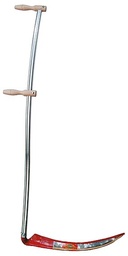
Uneven and overgrown terrain
On uneven ground, slopes or between bushes, a shorter scythe is safer and easier to handle. A heath scythe with a shorter, sturdier blade is less likely to snag. It lets you work more precisely and stay in control. The heath and brush scythe mentioned above is an excellent choice for this kind of terrain.
Detailed work and hedges
For shaping hedges or removing individual thistles, a specialist hedge or brush scythe—or a sharp professional sickle—is the better choice. These tools let you make precise cuts without damaging nearby plants.
Care and Peening: How to Keep Your Scythe Sharp
A dull scythe is not only inefficient but also dangerous, since it takes more force to use. Regular maintenance is essential.
Sharpening with a Whetstone
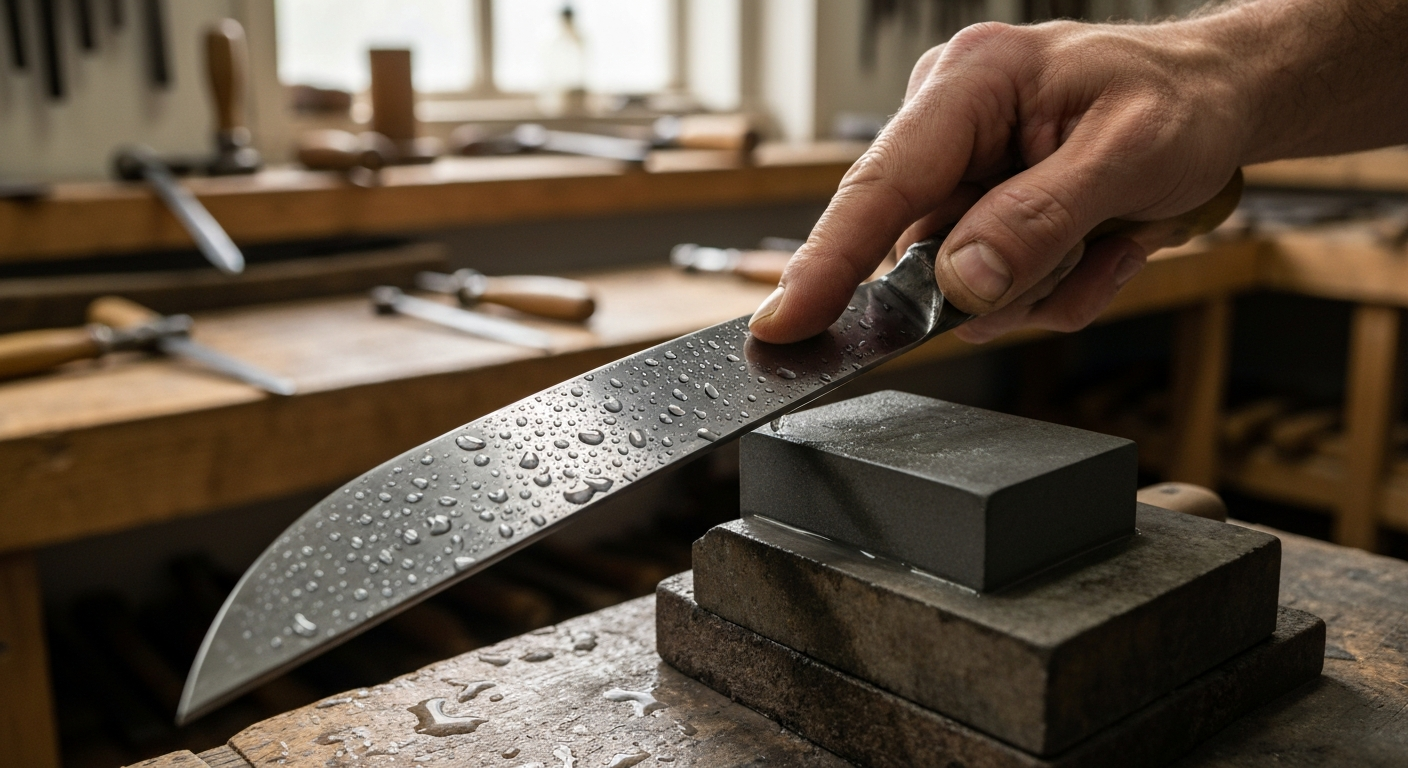
Before and during mowing, sharpen the blade regularly with a wet whetstone. Run the stone along the entire cutting edge with light pressure. This removes small imperfections and keeps the blade sharp. A whetstone is part of every scythe’s basic kit.
Peening: The Art of Maintaining the Cutting Edge
Peening is the process of restoring a scythe’s cutting edge. Use a special hammer on a peening anvil to thin and reshape the edge. This restores sharpness lost through wear. For beginners, a Scythe Peening Machine "Dengelmax Extra" (
) can make the job much easier. It guides the hammer precisely for an even peening result.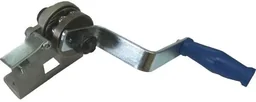
Warning: Never peen on a hard surface such as concrete or stone. The vibrations can damage the steel’s microstructure and make the blade brittle. Always use a proper peening stake or a tree stump as a base.
Scythe Safety
A scythe is a sharp tool that calls for care and respect. Follow these basic safety rules.
Wear the Right Protective Clothing
Always wear sturdy shoes with non-slip soles and long, close-fitting pants. Gloves help prevent blisters and give you a better grip. Clear your work area of tripping hazards such as roots and stones.
Work Safely
Keep a safe distance from other people, animals and solid objects. Be aware of the area your scythe can reach as you swing. Never mow toward your body. After use, set the scythe down so the blade cannot injure anyone, ideally with a blade guard in place.
Note: Never sharpen or repair the scythe while the blade is attached to the snath. Remove it first with the appropriate tool. This helps prevent injuries and lets you secure the blade safely.
Buying Guide: What to Look For
Keep these points in mind before buying a scythe to find the right model for your needs.
Determine Your Main Intended Use
The most important question is: What do you want to mow? A large, level meadow, an overgrown garden or brush? Your answer will help determine which type of scythe you need. Browse our scythes category for an overview.
Choose the Length to Suit Your Height
A snath that is too long or too short makes work less efficient and can cause back pain. Here’s a simple rule: In your working position, the upper handle should sit comfortably in your hand. The snath can often be adjusted or modified to get the right fit.
Consider Accessories and Ergonomics
A good scythe set often includes a whetstone and sometimes a scythe ring for hanging the scythe. Ergonomic handles, such as the Scythe Snath Handles (Pair) (
), can make the scythe more comfortable to use and improve power transfer. They’re especially useful if the standard handles don’t fit you well.
Steel Quality and Overall Workmanship
Invest in quality. A scythe made from good steel lasts longer, holds its edge and is easier to peen. Check that the connection between the blade and the snath (the scythe tang) is secure. High-quality tools in our farm supplies range are built to last.
Think About Maintenance from the Start
Buy sharpening and peening accessories at the same time as your scythe. A dull scythe won’t get the job done. For beginners, a peening set or peening machine can make maintenance easier and help deliver better results. Find everything you need for working the land in our agriculture category.
With the right scythe and proper technique, mowing can be an efficient, low-impact way to care for your land. Our comparison can help you find the tool that best fits your needs. Try different stances and techniques to find your rhythm.
Frequently Asked Questions
- Which scythe is best for tall grass?
- For tall grass, choose a scythe with a long snath (at least 150 cm) and a broad, sturdy blade. A long snath gives you a wider swing and greater reach. Keep the blade sharp and properly peened so it cuts the grass cleanly instead of bending it over.
- How often should I peen a scythe?
- Sharpen your scythe with a whetstone before every mowing session. Full peening, which thins and reshapes the cutting edge, is usually needed every 10 to 20 mowing sessions, depending on how often you use the scythe and the ground conditions. You’ll need to peen the blade more often when mowing on stony ground.
- What’s the difference between a scythe and a sickle?
- A scythe is used with both hands in a sweeping motion and is suited to mowing large areas. A sickle is a one-handed tool for cutting small amounts of grain or removing individual plants. The working positions and effort involved are very different.
- Can I use a scythe to cut brush?
- Brush scythes or clearing scythes are better suited to cutting brush than traditional grass scythes. They have shorter, often sturdier blades that can cut thicker branches. Choose a closed blade that won’t get caught in the brush.
- How do I choose the right scythe length?
- The ideal snath length depends on your height. Stand the scythe upright beside you. With your arm slightly bent, the upper handle should be roughly level with your hand. A scythe that’s too long can cause fatigue, while one that’s too short may force you to hunch over.
You may also be interested in
- Garden Shears Test & Comparison 2026
- Lawn Edgers Test & Comparison 2026: The Best Models Reviewed
- Utility Knives Test & Comparison 2026: The Best Blades Reviewed
- Band Saws Test & Comparison 2026: The Best Models in Practical Testing
- Food Slicers Test & Comparison 2026
- Technology Test & Comparison 2026: The Best Products in Practical Testing