
In brief: The right seed spreader depends on the size of the area and the type of seed. Handheld spreaders work well for small lawns, while large areas call for a motorized broadcast spreader. The best seed spreader offers precise settings and suits your comfort needs.
Even seed coverage is the key to a thick lawn, a colorful wildflower meadow, or a productive vegetable garden. Spreading seed by hand can quickly lead to uneven results. A seed spreader makes the job easier and more consistent. Our 2026 comparison will help you find the right tool for your needs. We look at different models and share practical buying advice.
Contents
What types of seed spreaders are available?
Not every seed spreader is suited to every job. The right type depends on the size of the area, the ground conditions, and the type of seed. Broadly speaking, spreaders are either manual or motorized.
Handheld spreaders for precise work
Handheld spreaders, also called hand-crank spreaders, are compact and versatile. You hold them in one hand and turn a crank with the other to operate the spreading mechanism. They work well for small areas, overseeding, and applying fertilizer. They are lightweight, easy to maneuver, and often affordable.
Broadcast spreaders for large areas
Broadcast spreaders are a good choice for sowing large, level lawns. They have a large hopper and are pushed ahead of you. The wheels drive the spreading mechanism, saving effort and helping distribute seed evenly. One example is the
, which features a rate-control dial.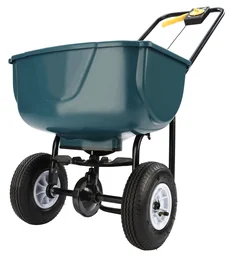
Specialty tools for lawns and soil
Alongside standard spreaders, there are specialty tools for lawn care. Lawn rollers such as the
can do more than level the ground. When filled, they can also improve seed-to-soil contact. A garden roller is a handy way to press seed into the soil on smaller areas.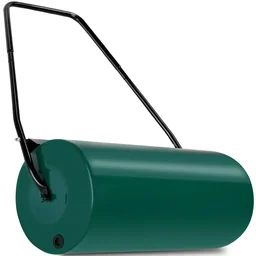
What makes a good seed spreader?
When comparing models, consider a few key factors. The right spreader will meet your needs and keep working well for years.
Precise settings are essential
The most important feature is the ability to set the spreading rate accurately. Different seeds need different amounts per square meter. A clear, finely adjustable rate-control dial, like the one on the , is a major plus. Too much or too little seed can lead to patchy or overly dense growth.
Capacity and ease of use
Think about the size of the area you need to cover. A larger hopper means fewer stops to refill. Check the overall height and how easy the spreader is to fill, too. Ergonomic handles and a comfortable pushing or carrying position help reduce fatigue. With a 12-liter capacity and large wheels, the
offers a good balance of capacity and maneuverability.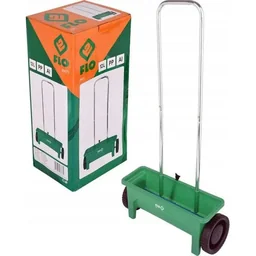
Build quality and durability
A good seed spreader should last for years. Look for sturdy, corrosion-resistant materials. Plastic hoppers should resist UV damage, while metal parts should be painted or galvanized. Check the quality of the wheels and spreading mechanism. A simple design is also easier to clean.
Top picks and recommendations for 2026
Our comparison draws on customer reviews, product specifications, and ease of use. Here are three promising models from our selection.
Best all-around: Broadcast spreader with rate-control dial
The is a practical broadcast spreader. Its rate-control dial lets you adjust the spreading rate precisely, and the 27-liter hopper is large enough for medium-sized and large gardens. The sturdy build and smooth-rolling wheels make it a good choice for spreading grass seed evenly and applying fertilizer.
Easy to handle: The FLO Spreader
If brand quality and thoughtful design matter to you, the is worth a look. Its 12-liter capacity makes it more compact, while its large wheels (18,5 cm) help it move easily over different types of terrain. It is a good fit for medium-sized areas if you want a handy, efficient spreader.
Two-in-one tool: The fillable garden roller
The shows how one tool can handle more than one task. Use it as a lawn roller to press in seed after sowing with a seed spreader. Fill it with water or sand to adjust its weight for the job. Rolling helps close the seed furrow and improves seed-to-soil contact.
How to use your seed spreader correctly
Having the right equipment is the first step. Using it correctly ensures success. Follow these steps for perfect results.
Preparation is everything
Prepare your soil. Remove stones and weeds, then rake the area smooth. Only fill your seed spreader with dry seed or fertiliser. Moisture causes clumping. Set the spread-rate control according to the recommended application rate on the seed packet.
The right sowing technique
Work in strips and slightly overlap the spreading width to avoid gaps. Walk at a steady pace. With handheld spreaders, maintain an even swinging motion. With broadcast spreaders, push continuously without jerky movements.
Cleaning and maintenance
Empty the hopper completely after use. Clean the equipment with a brush or cloth. For stubborn residue, you can rinse it with water, but dry it thoroughly afterwards. Regularly check the moving parts for wear.
Are there alternatives to a seed spreader?
For very small areas or particular types of seed, other methods may also be suitable.
Traditional hand sowing
For small beds or large seeds such as beans or peas, hand sowing is perfectly practical. However, it takes practice to achieve an even distribution. Mix fine seed with sand to make spreading easier.
Specialist precision seeders
Specialist row seeders or precision seeders are available for accurately sowing vegetables in rows. They are an interesting option for keen vegetable gardeners who value precise spacing.
Professional machines for hire
For extremely large areas, such as creating an entire new lawn, you can also hire motorised professional seeders from specialist retailers. This is a cost-effective alternative to buying one if you only need the equipment once.
Conclusion: How to find your ideal seed spreader
Choosing the right seed spreader is not rocket science. Start by answering three questions: How large is my area? What type of seed will I mainly spread? And how much do I want to invest?
For the average home garden with a lawn and flower beds, a sturdy broadcast spreader like the is an excellent choice. It combines precision, convenience and good value for money. For smaller, awkwardly shaped areas, a handheld spreader is often the more practical solution.
Remember that accessories such as a lawn roller can improve the result. Browse our garden tools category and, in particular, explore our seed spreaders to find the model that suits you. With the right equipment, sowing becomes easy and you can soon enjoy a perfect green lawn.
The most highly rated seed spreaders in our range compared directly:
| Model | Customer rating | Availability |
|---|---|---|
| Broadcast spreader with adjustable rate control, 27 l 🏆 Test winner | ★ 4,7 (29) | In stock |
| Canoe, kayak and surf cart, foldable, with strap, pneumatic tires, padded, aluminum, silver, up to 90 kg, L70 x B40 x H42 cm | – | Currently unavailable |
| Canoe, kayak and surf cart, foldable, padded, PU tires, aluminum, silver, up to 45 kg, L65 x B38 x H52 cm | – | Currently unavailable |
| EvenGreen box spreader | – | Currently unavailable |
| FLO lawn roller - 7.3kg - 50cm | – | Currently unavailable |
Frequently asked questions
- What size area is a seed spreader worthwhile for?
- A seed spreader is worthwhile even for medium-sized lawns or vegetable beds from around 50 square metres. It saves time, reduces strain on your back and provides more even coverage than hand sowing, resulting in a better-looking finish.
- Can I also spread fertiliser with a seed spreader?
- Many broadcast spreaders and handheld spreaders are multifunctional and suitable for seed as well as granular fertiliser or road salt in winter. Make sure the spreader is easy to clean so you can remove material residue between uses.
- What is the difference between a broadcast spreader and a handheld spreader?
- A broadcast spreader has wheels and a large hopper, making it ideal for large, level areas. A handheld spreader is carried in front of the body and operated with a crank. It offers more control and is better suited to smaller or uneven areas.
- How do I apply the correct amount of seed?
- You will find the correct dosage in your equipment's operating manual. First test the setting on a hard surface such as your driveway to check the spreading rate. This helps you avoid over- or under-application on the actual area.
- How do I care for and clean my seed spreader after use?
- Clean the spreader thoroughly after every use. Remove all seed or fertiliser residue from the hopper and spreading mechanism. Store the equipment in a dry, protected place to prevent rust and ensure a long service life.