
In brief: Solar electric fence chargers use solar panels for an independent power supply and are ideal for remote pastures without a grid connection. In the 2026 test, models with high pulse energy, efficient panels and rugged weather protection stand out. They save you from changing batteries and provide reliable protection for cattle, horses and sheep. Pay attention to the performance specs and compatibility with your fencing system.
Keeping livestock requires reliable, secure fencing. A solar electric fence charger is a great solution for locations without a grid connection. It runs independently, uses free solar energy and delivers strong pulses for effective pasture protection. Our 2026 test and comparison shows you which models stand out for performance, durability and ease of use.
What makes a good solar electric fence charger?
A high-quality unit combines several key features. Solar panel efficiency is especially important because it determines how quickly the battery charges, even on cloudy days. A powerful battery must be able to store this energy for several days or even weeks. Pulse energy, measured in Joules, must be sufficient for your fence length and livestock.
Tip: Always allow for a reserve of around 20% of the stated maximum fence length. Vegetation, wet grass and poorly conducting insulators reduce the effective range of the pulse.
How do I choose the right output for my pasture?
Choosing the right output is the most important step. Start by considering the total length of your electric fence and the type of animals you keep. Cattle and horses need a noticeable pulse to keep them at a safe distance. Lower output may be sufficient for sheep or goats.
Output levels at a glance
- For small areas and docile animals: Units with low pulse energy (under 1 Joule). Ideal for temporary fencing or young animals.
- For medium to large cattle and horse pastures: Units in the 1 to 4 Joule range. They can handle fence lengths of several kilometers.
- For large areas, tough conditions or stubborn animals: High-output units from 4 Joules. They reliably overcome even dense vegetation.
The best solar electric fence chargers in the 2026 test
Our comparison is based on technical specs, practical reports and overall build quality. We paid particular attention to ease of use and component durability.
: AKO SunPower S3000
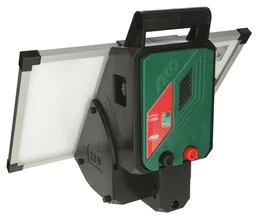
The AKO SunPower S3000 is a powerful all-around choice for modern agriculture. Its large solar panel efficiently charges the built-in battery, even in indirect sunlight. Its high pulse energy makes it a strong choice for large cattle operations and extensive horse pastures.
: Bärenstark B 400 9V battery electric fence energizer

This unit shows that solar technology can perform well in a compact design. It's easy to use and ideal for portable fencing systems or as a backup unit. The optional solar upgrade adds flexibility.
Warning: Check the solar panel regularly and keep it clean. Dust, bird droppings or snow can significantly reduce charging performance and cause the system to fail in winter.
: Mustang electric fence rope 8mm

A complete system needs more than a charger: high-quality accessories are essential, too. Mustang electric fence rope has low resistance per meter, so more energy reaches the end of the fence. It’s an excellent addition to a powerful solar electric fence charger.
Here are the highest-rated solar electric fence chargers in our range:
| Model | Customer rating | Availability |
|---|---|---|
| Arizona B 5000 electric fence energizer without battery | – | Currently unavailable |
| Bison 230V electric fence installation kit - Safe installation | – | Currently unavailable |
| Bison 230V mains adapter for 12V battery-powered units | – | Currently unavailable |
| BisonFlex braided wire 300 m 3 mm Blue/White - electric fence, 0,06 Ohm/m | – | Currently unavailable |
| Broadband clip broadband connector 5-pack for electric fence tape up to 60 mm | – | Currently unavailable |
Buying advice: What should you consider?
Along with output, several other factors play a major role in your overall satisfaction.
Build quality and weather protection
The housing should be fully protected against water and dust (IP67). Look for rugged connection terminals and a sturdy mounting frame. The battery should be protected against deep discharge to maximize its service life.
Additional features and monitoring
Practical features make your work easier. Built-in fence monitoring, with visual or audible alerts, warns you early if performance drops. A battery charge indicator offers peace of mind. Bluetooth connectivity for remote monitoring through an app adds convenience.
Note: Manufacturers' warranty terms can vary considerably. Some cover only the electronic housing, while others also include the solar panel and battery. Read the warranty card carefully.
Installing and maintaining your solar electric fence charger
Correct installation is essential for safe, reliable operation over the long term.
- Location: Choose a sunny spot without shade. Install the unit within reach of the start of the fence.
- Grounding: Proper grounding is essential. It completes the electrical circuit required for the fence to work. Use one or more ground rods at least one meter long.
- Maintenance: Check connections for corrosion every month. In the fall, make sure the solar panel bracket is securely fastened.
Conclusion: Choose the Right Solar Electric Fence Charger for Your Pasture
Investing in a high-quality solar electric fence charger is worthwhile. You’ll be independent of mains power and save on operating costs over the long term. Choose a model that meets your current needs and has enough capacity if you expand your pasture later. With the right components, you can create a reliable, safe fencing system for your animals.
Frequently Asked Questions
- Which animals can use solar electric fence chargers?
- Solar electric fence chargers are suitable for common livestock, including cattle, horses, sheep and goats. The required pulse energy varies: higher-joule chargers are recommended for cattle and horses, while lower-powered models are often sufficient for sheep and goats. The fence length and vegetation also affect the charger you need.
- Do solar electric fence chargers work in winter?
- High-quality solar electric fence chargers also work in winter because they have a battery to store solar energy. Battery capacity and solar panel efficiency are crucial. During periods with little sunlight, the battery should store enough energy to power the fence for several days. Some models also offer an emergency power option.
- What does the joule rating mean on an electric fence charger?
- A joule is a unit of energy. The joule rating indicates the energy in the pulse delivered to the fence. A higher rating provides more power to overcome vegetation or wet grass. For long fences or challenging conditions, choose a charger with a higher joule rating.
- Can I convert my existing 9V or 12V electric fence charger to solar power?
- Yes, conversion is often possible. You’ll need a suitable solar adapter or a separate solar panel with a charge controller. Make sure the voltage (9V or 12V) is compatible and the polarity is correct. A specialist retailer can advise you on the right setup.
- How long does the battery in a solar electric fence charger last?
- The battery in a high-quality charger typically lasts 3 to 5 years. Its service life depends on the battery type (e.g. lead-gel or lithium) and the surrounding conditions. Extreme temperatures can shorten its lifespan.