
In brief: A DIY tomato greenhouse protects against rain, wind and cold, reduces fungal diseases and extends the harvest season. You need a sturdy frame made of wood or metal, a transparent UV-stable covering made of film or polycarbonate, and a foundation for stability. Good ventilation, sufficient space for the plants and an accessible location are essential. With this protection, your tomatoes will thrive more reliably and produce higher yields.
Build a Tomato Greenhouse: Protect Your Crop
A tomato greenhouse of your own extends the season, protects against unpredictable weather and helps secure your harvest. With our guide, you can build an effective shelter that protects your plants from rain, wind and cold. You do not need an expensive complete kit, just simple materials and a weekend.
Why is a tomato greenhouse worthwhile for growing vegetables?
Tomatoes originate from warm regions. Rain, cool nights and strong winds take their toll. A greenhouse creates a controlled microclimate. The temperature is a few degrees higher than outdoors. The leaves stay dry, which effectively prevents fungal diseases such as late blight.
You can harvest earlier and for longer, often into October. Even sensitive varieties grow reliably. A tomato greenhouse is the logical choice for anyone who wants to grow tomatoes successfully.
Growing under film or glass is the safest way to produce healthy tomato plants. Protection from rainfall alone reduces fungal pressure by more than 80 per cent.
What materials do you need to build it?
Your choice of materials determines durability and functionality. Focus on three core components: the frame, the covering and the fasteners.
The frame: wood or metal?
Wood is the classic building material. Use pressure-treated structural timber or durable woods such as larch. The advantage is that you can easily cut and screw the frame together. Metal frames made from hot-dip galvanised steel tubes are more durable and slimmer, but often require special tools for bending and joining.
Wood is recommended for your first build. Plan for posts, crossbeams and roof rafters. All wooden parts that come into contact with the ground should be properly treated.
The covering: film, glass or panels?
Greenhouse film is inexpensive and lightweight. Look for UV stability and a thickness of at least 150 my. It is easy to install but can tear. Polycarbonate twin-wall sheets are shatterproof, provide good insulation and last for many years. They are the best choice for a permanent solution.
Glass provides the best light transmission, but is heavy and prone to breakage. For a mobile tomato greenhouse, film is the most practical option. You can find suitable materials in our Greenhouse Film & Mesh Film category.
Pro tip
Never stretch the film tightly. Allow 5-10 cm of slack per metre. The material contracts in cold weather. If it is tensioned too tightly, it will inevitably tear at the fastening points. Use battens and film clips instead of staples.
How do you build the foundation and frame?
Without a stable foundation, the greenhouse will topple in the first storm. The simplest method is to use concrete footings for the corner posts. Dig holes measuring 40x40 cm and 60 cm deep. Position the posts, align them vertically and fill the holes with concrete.
An alternative is a frame made from treated square timber, resting on evenly laid paving stones and secured with ground anchors. This framework prevents contact with the soil and therefore rot. Screw the upright side posts onto this frame.
Connect the posts at the top with cross battens. The roof can be flat or have a slight slope. A pitched roof drains rainwater more effectively. Reinforce all corner joints with metal brackets.
How do you ensure proper ventilation?
Ventilation is absolutely essential. Without it, heat builds up and humidity rises sharply. This creates ideal conditions for fungi. Include ventilation openings in your plan from the outset.
The most effective ventilation is at the ridge, the highest point of the roof. Warm, humid air rises and escapes there. You also need side ventilation areas close to the ground to allow fresh air in. These can be designed as hinged windows or removable panels.
Automatic window openers based on wax cylinders are a worthwhile investment. They open and close automatically depending on the temperature. This prevents your plants from overheating on hot days when you are not at home.
The biggest mistakes when building your own greenhouse are ventilation areas that are too small and a design that is too airtight. Plan for at least 20 per cent of the floor area to consist of ventilation openings. This is the only way to prevent heat build-up.
Which additional protective measures are useful?
A tomato greenhouse protects from above. Other dangers threaten from below. Slugs can strip an entire plant overnight. Mechanical protection is the most effective solution here.
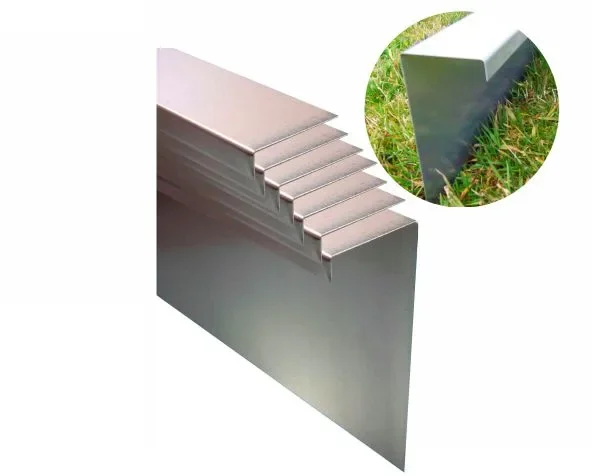
Netting helps protect against birds and strong sunlight.
: The 3x6m pond protection net is versatile. It is tear-resistant and UV-stable. Use it as a temporary shade cover over the greenhouse or drape it loosely over young plants to protect them from birds.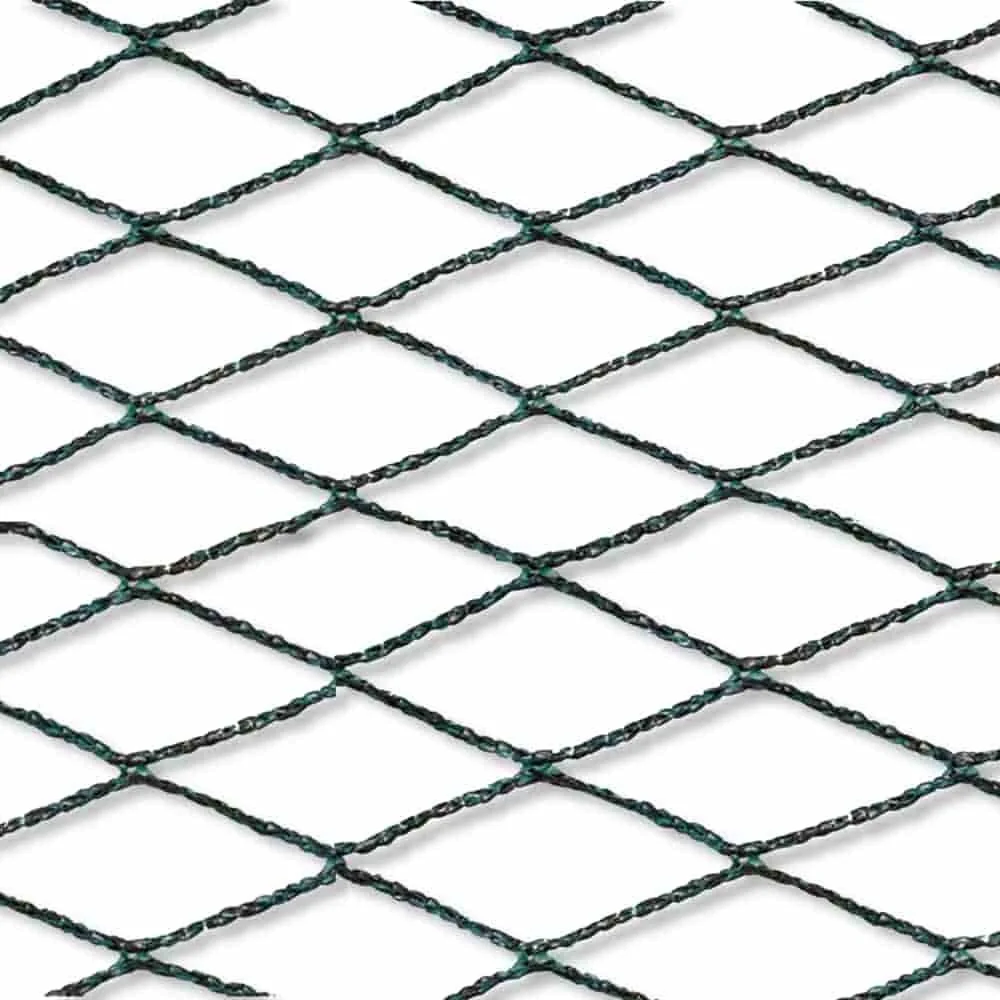
For comprehensive protection for your garden projects, take a look at the Pest & Plant Protection category.
Important note
Never use chemical slug pellets or insecticides close to the fruit in your tomato greenhouse. The active ingredients can be absorbed by the plants. Use mechanical barriers such as slug fences and carry out regular checks.
How do you maintain your DIY tomato greenhouse?
Regular maintenance ensures it lasts for many years. In spring, thoroughly clean algae and dirt from the cover. This gives your plants maximum light. Check the wood for cracks and, if necessary, treat it with an environmentally friendly wood stain.
Check all screw connections to make sure they are tight. Retighten any loose plastic sheeting. In autumn, remove all plant debris from the greenhouse to eliminate pathogens. Store removable plastic sheeting or nets in a dry, dark place over winter.
For cleaning tools and surfaces after your building project, you will find suitable products in our Shop.
Additional advice
Build your tomato greenhouse so that you can easily reach all sides. A narrow path around the greenhouse or a generously sized door makes watering, pruning and harvesting much easier. Plan for easy access right from the start.
Ready-made greenhouse or DIY? A guide to help you decide
Not everyone has the time or desire to build their own greenhouse. Ready-made tomato greenhouses like our
: Polytunnel greenhouses measuring 3.5x2x2m offer a quick solution. They are ready to set up and fully functional. The advantage of a DIY project is that you can customise it to your needs.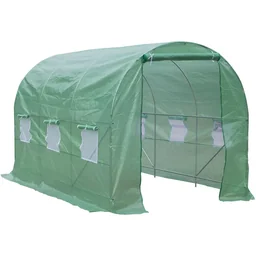
You can adapt the size precisely to your garden. You choose materials to suit your budget. You build it as sturdily as you think necessary. Building it yourself is often more affordable and teaches you a great deal about construction and the needs of your plants.
Whichever option you choose, a sheltered location is the key to success. Choose a sunny spot protected from the wind. You can find more inspiration for protective structures under protective nets.
Building your own tomato greenhouse is an investment in many years of abundant harvests. You protect your plants, extend the growing season and gain valuable growing experience. Start with a simple structure. Over time, you can expand and improve your small greenhouse to suit your needs. Your tomatoes will thank you.
Frequently Asked Questions
- What is the best material for covering a tomato greenhouse?
- Always use UV-stabilised greenhouse film or polycarbonate twin-wall sheets. These materials let in enough light, are weather-resistant and protect against harmful UV radiation. Cheap DIY store film tears quickly and needs to be replaced often. For film, make sure it is at least 150 my thick.
- How big does a tomato greenhouse need to be for 5 plants?
- Allow at least 0.5 m² of floor space and a height of 2 metres per tomato plant. For 5 plants, you therefore need a greenhouse measuring approximately 2.5 m long, 1 m deep and 2 m high. More space makes maintenance easier and improves the growing environment. Allow room for supports and access along the sides.
- Does a DIY tomato greenhouse need a foundation?
- Yes, a foundation is essential for stability and durability. It prevents the structure from sinking and protects it from ground frost. Simple concrete foundations for the corner posts or a frame made from treated timber set on paving slabs are good options. This keeps your greenhouse secure even in stormy weather.
- How can I prevent fungal diseases such as late blight in a tomato greenhouse?
- The best prevention is consistent ventilation. Build large, closable ventilation openings into the sides and roof. Water only the root area, never the leaves. Regularly remove lower leaves and make sure plants are spaced far enough apart for good air circulation.
- Can I also build a tomato greenhouse on a balcony?
- Absolutely. Compact structures made from sturdy planters with a trellis and a removable plastic or net cover are suitable for balconies. Choose a sheltered spot and make sure the structure is securely attached to the balcony railing. You can find suitable solutions in our category for privacy and windbreak nets.
You may also be interested in
- Build your own winter greenhouse: A simple guide
- Growing tomatoes: Your journey from seed to a bountiful harvest
- Build your own garden shed: Create your own perfect retreat
- Planting tomatoes: Step by step to success
- Build your own tool shed: Step-by-step guide
- Creating a raised bed: The ultimate guide for your garden