
In brief: When buying bungee cords, material quality, hook stability and the right length are crucial. Choose bungee cords with a robust latex core and a UV-resistant outer sheath. The ideal length is around 50-70% of the distance to be bridged. A set with different lengths offers the greatest flexibility for various tasks.
Bungee cords, also known as elastic cords, are versatile helpers. They secure tarpaulins, bundle firewood or hold luggage in place on a bike rack. However, the choice is wide and quality differences are significant. A low-quality bungee cord can give way at the wrong moment, quickly lose its elasticity or have hooks that bend. This guide explains how to buy the right bungee cords and what really matters when it comes to materials, length and hooks.
For most everyday tasks at home, in the garden and workshop, a set with different lengths and strengths is the best choice. That way, you always have the right bungee cord to hand. An excellent starting point is the Bungee cord set (). It offers a solid selection for securing tarpaulins and luggage.
Why bungee cord quality matters
The price difference between a cheap bungee cord and a quality product is often small, but the difference in performance and safety is enormous. A good bungee cord retains its elasticity for years, resists UV radiation and weather conditions, and has hooks that do not bend under load. Cheap models, on the other hand, quickly lose their tension, become brittle and have hooks that pose a safety risk.
Quality starts on the inside. The core of the bungee cord determines its stretch and recovery force. A robust, abrasion-resistant outer sheath protects the core from damage and environmental influences. Investing in quality means investing in reliability and durability. A high-quality cord performs its task safely, while a cheap cord can fail in the worst case and cause damage.
A bungee cord is only as strong as its weakest link. This is usually the hook or an outer sheath weakened by UV radiation. When choosing one, you should therefore consider the complete package: the core, sheath and hooks must be properly matched.
How can you recognise high-quality bungee cords? A material check
The performance of a bungee cord is determined by the materials used. Three components are crucial: the core, the outer sheath and the hooks. Pay attention to the details to get a durable and safe product.
The core: The heart of the tension
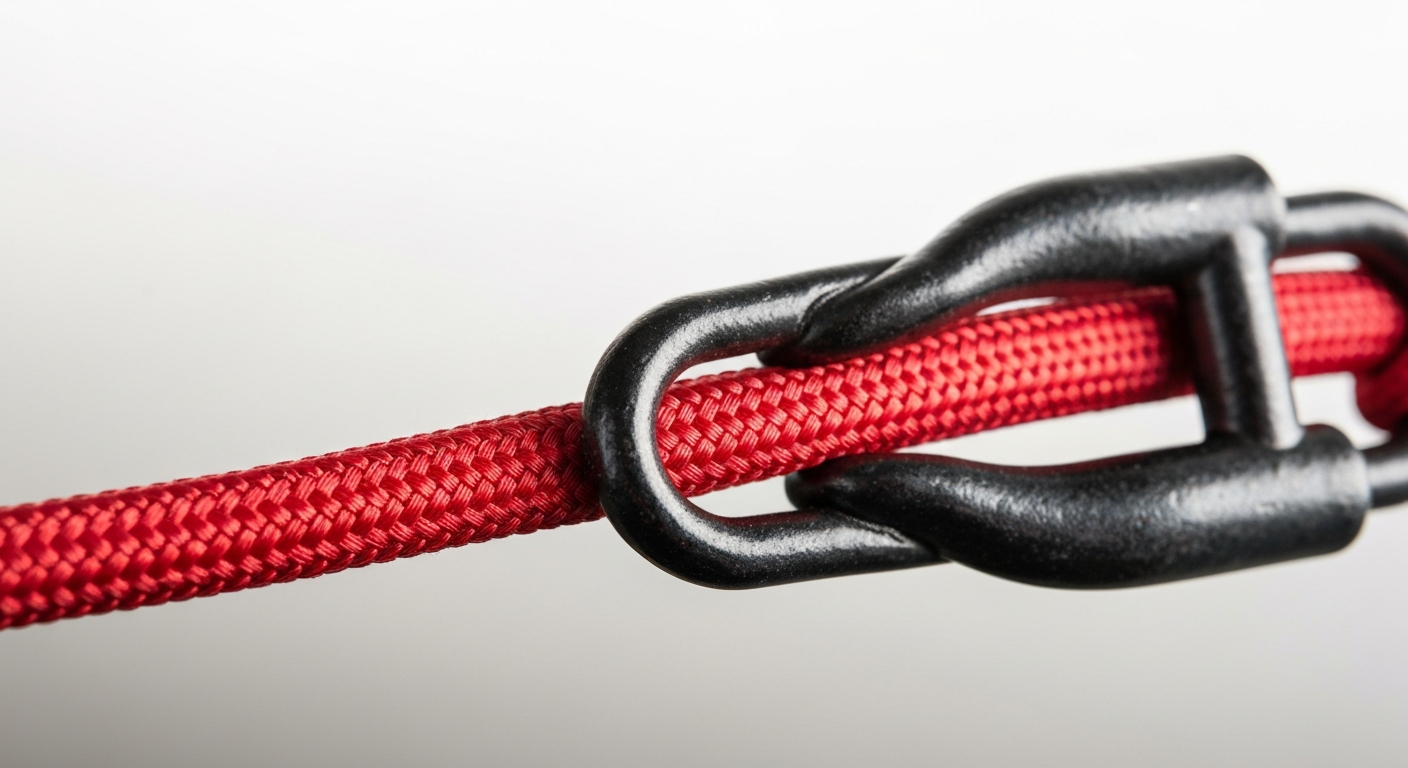
The core is responsible for elasticity. There are mainly two types of material:
- Latex (natural rubber): Bungee cords with a core made from many thin latex strands are considered particularly high quality. Latex offers high elasticity of over 100 % and excellent recovery force. It is more resistant to fatigue and retains its properties even at low temperatures.
- Standard rubber: Cheaper models often use a core made from extruded rubber. These are less elastic and tend to become brittle and lose tension over time, especially when exposed to strong sunlight.
For regular use, especially outdoors, you should always choose models with a latex core. The longer service life justifies the small additional cost.
The outer sheath: Protection from weather and wear
The outer sheath protects the sensitive core from abrasion, cuts and UV radiation. It is usually made from braided synthetic fibres.
- Polypropylene (PP): This is the most common material. It is cost-effective, water-repellent and resistant to many chemicals. However, its UV resistance is limited, so PP-sheathed cords should not be exposed to direct sunlight for extended periods.
- Polyester (PES): Polyester is the higher-quality option. It offers excellent UV resistance and greater abrasion resistance than polypropylene. For permanent outdoor use, such as securing pool covers or boat tarpaulins, cords with a PES sheath are clearly the better choice.
Important note
Never stretch a bungee cord to its maximum. Overstretching can permanently damage the core and reduce its recovery force. There is also a risk that a hook will pull out under extreme tension and snap back uncontrollably, which can cause serious injuries.
The hooks: The critical connection point
The hooks are crucial for secure fastening. Cheap hooks made from thin wire bend easily and do not provide reliable hold. Look for the following features:
- Material: Hardened steel is the best choice. It is robust and does not deform even under high loads.
- Coating: A plastic or rubber coating on the hooks protects attachment points from scratches. It also provides a degree of corrosion protection.
- Safety caps: Small rubber caps on the hook ends reduce the risk of injury and also prevent scratches.
How do you find the right bungee cord length?
Choosing the right length is essential for performance and safety. A cord that is too short creates dangerously high tension, while one that is too long will not provide a secure hold. The rule of thumb is that the unstretched length of the bungee cord should be around 50% to 70% of the distance it needs to span.
Example: You want to stretch a tarp over a 2-metre-wide trailer load. A bungee cord measuring 100 cm to 140 cm would be ideal. It can be stretched sufficiently to hold the tarp securely without putting excessive strain on the material.
Pro tip
Before buying, measure the distances you need to span most often. Then choose several bungee cords in the appropriate lengths. For maximum flexibility, a set with different sizes is recommended, such as the 6-piece set () or, for larger tasks, the 18-piece bungee cord set ().
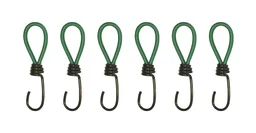
As everyday tasks can vary widely, an assortment of different lengths is the most practical solution. Sets such as the 6-piece bungee cord set () ensure that you always have the right length to hand, from bundling cables to securing garden furniture. This helps you avoid dangerous improvisations such as knotting excessively long cords, which weakens their structure, or joining several short cords together, which creates unnecessary weak points.
Bungee cords in use: Practical examples
High-quality bungee cords are incredibly versatile. Their uses go far beyond simply holding down a tarp. Here are some examples of how you can use bungee cords effectively in industrial supplies, the workshop and your free time.

Securing loads on trailers and in vehicles
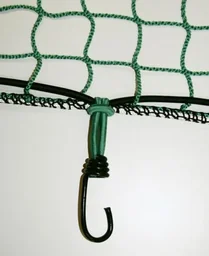
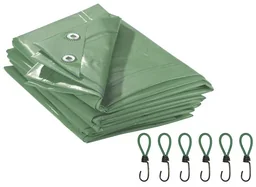
Bungee cords are ideal for holding down lightweight tarps. Stretch the cords across each other to achieve even pressure distribution. When transporting loose items in the boot or on the loading area, they help secure boxes and tools against slipping. Bungee cords are also often offered together with tarps, as with the PE tarp including bungee cords ().
Keeping your workshop and garage organised
In the workshop, bungee cords help keep everything organised. Bundle extension leads, garden hoses or ropes to prevent tangled cables. You can easily and securely fix longer items such as battens, pipes or broom handles to the wall using bungee cords. They are essential tool accessories for any organised tradesperson.
I use bungee cords every day. Whether I am securing a ladder to a roof rack, holding bundles of materials together or stretching a protective tarp over freshly poured concrete, my work would be much more complicated without a good assortment of bungee cords.
Camping and outdoor adventures
Bungee cords are indispensable when camping. They can be used to tension tent lines in strong winds, hang lamps or clothing inside the tent, or attach equipment to a rucksack. A camping tarp can also be quickly turned into a makeshift rain shelter or awning with their help.
Care and storage: How to make your bungee cords last longer
With the right care, you can significantly extend the service life of your bungee cords. Even the best materials suffer from constant strain and improper storage conditions. Follow these simple tips to keep your tools in top condition.
Store the bungee cords in a relaxed state and avoid prolonged exposure to direct sunlight, as UV light damages the outer covering and rubber core. Keep them in a dry, cool place to prevent rust on the hooks and mould from forming on the fabric.
Check your bungee cords for visible damage before every use. Look for cracks, frayed areas in the outer covering or signs of corrosion on the hooks. If the cord has lost its elasticity or feels brittle, dispose of it immediately. A damaged bungee cord is a safety hazard.
Additional advice
Inspection checklist before every use:
1. Outer covering: Is it intact, or are there cracks or abraded areas?
2. Elasticity: Does the cord still feel strong and stretchable, or is it slack?
3. Hooks: Are the hooks straight and undamaged? Are the protective caps firmly in place?
4. Connection: Is the connection between the hook and cord secure and free of play?
A bungee cord is a simple but extremely useful tool. Choosing the right quality, material and length determines its functionality and safety. With a good set of bungee cords, you are well equipped for countless tasks in the workshop, home and leisure time.
Frequently asked questions
- What length should a bungee cord be?
- As a rule of thumb, the length of the unstretched cord should be around half to two-thirds of the distance you want to secure. A cord that is too short creates excessive tension, while one that is too long will not hold securely. Measure the distance before buying.
- How can you tell if a bungee cord is good quality?
- Look for a latex core or high-quality rubber for long-lasting elasticity. The outer sheath should be made from abrasion-resistant and UV-resistant material such as polyester. Sturdy metal hooks with a protective coating against scratches and rust are another clear sign of quality.
- Can bungee cords be extended?
- Yes, you can connect two bungee cords by hooking them together. However, this should only be a temporary solution. The connection is a potential weak point. For maximum safety, it is always better to use a single bungee cord of the correct length.
- When should I replace a bungee cord?
- Replace a bungee cord immediately if the outer sheath shows cracks, cuts or significant signs of wear. If the cord has also lost its elasticity and feels brittle, it is time for a replacement. A damaged bungee cord poses a serious safety risk.
- Are bungee cords approved for official load securing?
- Bungee cords are generally unsuitable for commercial load securing in accordance with VDI 2700. They are primarily intended for holding down lightweight tarpaulins or securing loose items. For heavy loads, you must use certified ratchet straps that can apply a defined pre-tensioning force.
You may also be interested in
- How to use bungee cords correctly: your guide to a secure hold
- Choosing the right pliers: buying tips
- Choosing the right putty knife: tips and tricks
- How to care for rubber & plastic properly: extend their service life
- Buying electrical tape: tips for making the right choice
- Choosing a ratchet wrench: how to find the right one