
In brief: To create a wildflower meadow, choose a sunny site and prepare the soil. Remove the turf and mix sand into rich soil to reduce its fertility. Sow a native wildflower mix in spring or autumn, rake it in lightly and keep the area moist at first. Mow just once or twice a year.
Contents
A perfectly trimmed lawn looks neat, but offers little to wildlife. Swap the uniform green for a sea of colour and the buzz of busy pollinators. A wildflower meadow is a treat for the eyes and a valuable habitat for bees, butterflies and countless other beneficial insects. It brings an easy-care haven for wildlife right to your doorstep.
This guide shows you how to create your own wildlife-friendly lawn, step by step, from preparing the soil to ongoing care. See how your garden can become a thriving ecosystem.
Why a wildflower meadow is a better choice
Choosing a wildflower meadow over a traditional lawn brings significant benefits. You can play an active part in protecting the environment. Wildflowers and herbs provide pollen and nectar for threatened insects and serve as a nursery for butterfly caterpillars. Your garden can become an important stepping-stone habitat for wildlife in urban areas.
You’ll also save time and resources. Forget weekly mowing, constant fertilising and intensive watering. Once established, a wildflower meadow needs mowing just once or twice a year and requires very little extra water. Native plants are well adapted to the local climate and are naturally hardy.
You’ll also enjoy a changing display throughout the seasons. From delicate spring flowers to midsummer blooms and fine seed heads in autumn, a wildflower meadow offers fresh and fascinating sights all year round.
Low-nutrient soil is the foundation of a species-rich wildflower meadow. When grasses don’t take over, delicate wildflowers can thrive and create a lasting paradise in bloom.
Getting ready: turning your lawn into a wildflower meadow
Preparing the soil is key to a successful wildflower meadow. You can’t simply scatter seeds over an existing lawn. Grasses are too dominant and would quickly crowd out the delicate wildflower seedlings.
Choose a site
Choose an area that gets as much sun as possible. Most wildflowers thrive in sunny spots and need at least half a day of direct sunlight to bloom well. Shady sites aren’t suitable for traditional wildflower meadows. Special shade mixes are available, but they usually consist of woodland-edge plants.
Improve the soil: how to reduce its fertility
Wildflowers thrive in poor, low-nutrient soil. Typical garden soil that has been fertilised for years is too rich, so you’ll need to reduce its fertility.
- Remove the turf: Cut away the entire turf with a spade, or use a turf cutter for larger areas. Remove all the grass.
- Loosen the soil: Dig over the area thoroughly or loosen it with a digging fork. Remove perennial weeds such as couch grass and ground elder as thoroughly as possible.
- Reduce soil fertility: Work plenty of unwashed sand or fine gravel into the top 10-15 cm of soil. A layer of 5-10 cm of sand is a good guide. This improves drainage and lowers the nutrient content. If your soil is very clay-rich, it may be useful to check its pH. If needed, applying lawn and garden lime can help improve the soil.
- Let the soil rest: If possible, leave the area fallow for two to three weeks. Any weed seeds left in the soil will germinate during this time. Weed the new growth before sowing.
Pro tip
Covering the area is an alternative to digging it over. Cover it with a thick layer of cardboard or dark plastic sheeting for several months. The grass underneath will die back and the soil will loosen. This method is gentler on soil life, but takes longer.
How do I choose the right seed mix?
Choosing the right seeds is essential. Don’t just pick up the first “bee-friendly” mix you find at a discount store. These often contain non-native species that may produce a quick burst of colour but offer less ecological value and may not establish for the long term.
Look for seeds of native wildflowers, ideally from your region. These plants are adapted to the local climate and wildlife. Good mixes contain a wide variety of flowers and only a small proportion of grasses. Check whether a mix is annual or perennial. Annual wildflower mixes provide quick colour in the first year, but then disappear. True perennial wildflower meadows take longer to establish, but last for years and are a more sustainable choice.
Important note
Check the seed packet carefully to see what the mix contains. High-quality mixes list every species by its Latin name. A proportion of 20-40 % suitable grasses is normal and helps stabilise the meadow. A higher proportion of grasses can be a sign of poor quality.
Sowing seeds: step by step to a garden in bloom
The best time to sow is in spring, from March to May, or in late summer, from August to October. Autumn sowing has the advantage that many wildflower seeds need winter cold to trigger germination.
How to sow
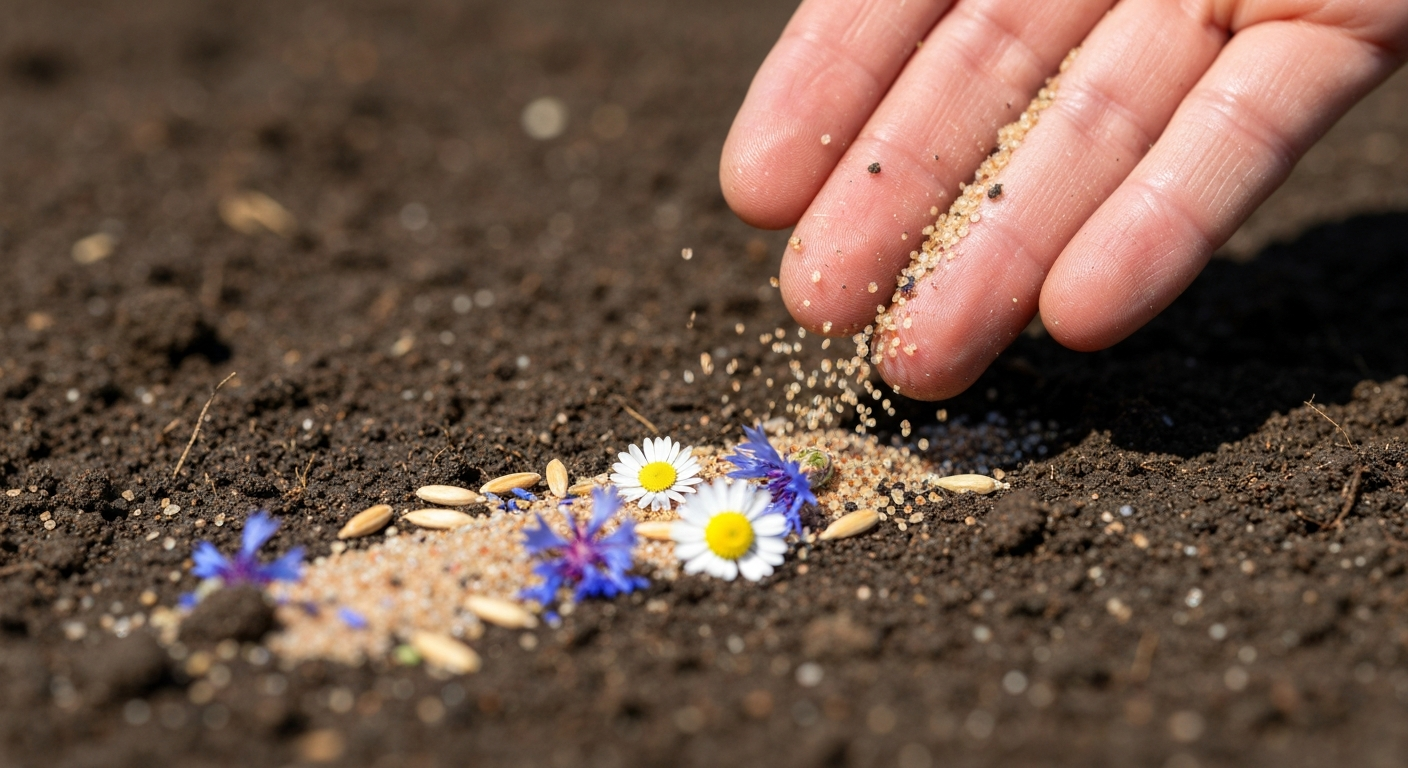
Wildflower seeds are often very fine. To spread them evenly, mix the seeds with dry sand, sawdust or vermiculite at a ratio of about 1:10 (1 part seed to 10 parts filler). This makes it easier to see where you’ve already sown.
Scatter the mix evenly over the prepared area. The recommended sowing rate is low, often just 1 to 5 grams per square metre. Don’t sow too densely.
Then lightly rake the seeds into the top layer of soil. Many wildflowers need light to germinate, so don’t cover them with soil. Just make sure the seeds are in good contact with the soil. Firm the area with a lawn roller or press it down by walking over boards laid on the ground.
Watering for the first time
After sowing, water gently but thoroughly. Keep the area consistently moist, but not waterlogged, for the first four to six weeks. A fine spray from a garden hose or a lawn sprinkler works well. Getting garden watering right at this stage is key to successful germination.
Caring for a Wildflower Meadow: Less Is More
Once established, a wildflower meadow is extremely easy to care for. The motto is: observe and only step in when needed. Patience is your most important ally in the first year. Pioneer plants and weeds will sprout alongside the flowers you want. This is completely normal. Only pull out fast-spreading species such as thistles or dock by hand.
When to Mow
Mowing is the most important maintenance task. It keeps the soil low in nutrients and allows the flowers to self-seed. Mow once or twice a year.
- The first cut (summer cut): Mow between late June and mid-July, when most oxeye daisies have finished flowering. By then, the early bloomers will have produced seeds.
- The second cut (fall cut): This is optional and takes place in September or October. It tidies up the meadow for winter.
How to Mow and Clear Away the Cuttings
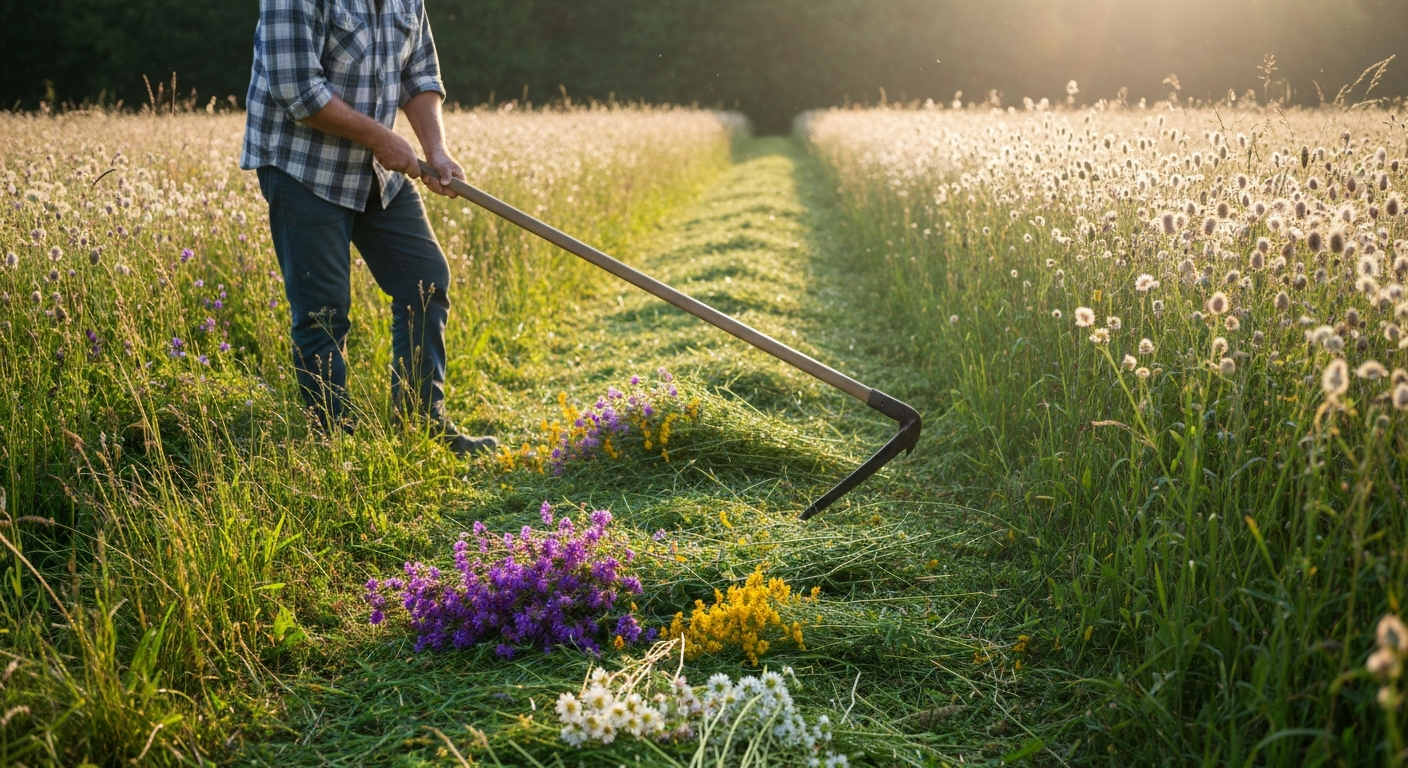
Mow with a scythe or a sickle bar mower set high. A regular lawn mower is unsuitable because it shreds the plants and kills insects. Set the cutting height to 8-10 cm to protect low-growing leaf rosettes and small animals.
Leave the cuttings (hay) to dry on the meadow for a few days. As they dry, ripe seeds will fall out and help grow the next generation. Then be sure to remove the hay. If left in place, it will rot, add nutrients to the soil, and smother the flowers. A sturdy cutting tool such as the
is ideal for cutting back individual spent perennials or removing stubborn brush. With garden tools like these, you can work precisely while protecting nearby plants.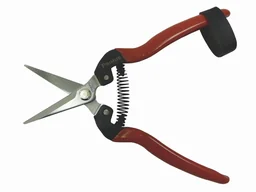
One more tip
Never mow the entire meadow at once. Always leave part of it standing through the winter. These unmown areas provide important places for insects to overwinter and food for birds during the cold months.
Common Problems and How to Solve Them
Even with the best planning, you may run into challenges. With the right know-how, though, they are easy to manage.
Too Much Grass Is Growing
If grasses start to take over, the soil is probably still too nutrient-rich. Regular mowing and removing the cuttings will gradually make the soil less fertile over the years. To give your meadow a head start, you can sow yellow rattle (Rhinanthus alectorolophus) in the second year. This plant is a semi-parasite that taps into grass roots and weakens the grasses, making room for flowers.
Unwanted "Weeds"
What counts as a weed is often in the eye of the beholder. Many wild plants, such as wild carrot and meadow sage, are valuable parts of a wildflower meadow. Only step in if highly dominant or invasive species such as Canadian goldenrod or ragwort appear. Hand-weeding is the best approach.
A wildflower meadow is a living ecosystem that develops over many years. Patience is rewarded with an ever-growing diversity of plants and animals that cannot find a home in a conventional lawn.
Creating a wildflower meadow is an investment in the future of your garden and the natural world. You will create not only a beautiful, ever-changing sea of blooms, but also a valuable habitat. Every square meter counts. Try turning part of your lawn into a meadow and enjoy the buzz of activity that will soon fill your garden. Find everything you need for your project in Garden + Outdoor.
Frequently Asked Questions
- How long does it take for a wildflower meadow to bloom?
- Annual mixes often bloom in their first summer. Native perennial meadows take patience. In the first year, the plants become established and only a few will flower. The meadow usually reaches its full glory in the second or third year, then becomes more diverse with each season.
- Do I need to fertilize my wildflower meadow?
- No, absolutely not. Fertilizer encourages grasses and nitrogen-loving plants to grow, and they can crowd out delicate wildflowers. The goal is poor, nutrient-low soil where a diverse mix of flowers can thrive. That is also why you should always remove the cuttings.
- Can I turn part of my lawn into a wildflower meadow?
- Simply scattering seeds over the lawn will not work. You need to remove the turf completely because grasses are too competitive. Dig over the area and, if needed, mix in sand to make the soil less fertile and give the wildflowers a fair chance to get established.
- When is the best time to mow a wildflower meadow?
- Mow your meadow once or twice a year. Make the first cut late, between late June and mid-July, after most flowers have finished blooming and set seed. You can make a second cut in September or October. This gives the plants a chance to self-seed for the following year.
- What mistakes should I avoid when creating a pollinator meadow?
- Avoid four common mistakes: fertilizing the soil, choosing an unsuitable seed mix without native species, sowing the seeds too densely or too deeply, and giving up too soon. A meadow is an ecosystem that needs time to develop.
You might also like
- Flowering Areas in the Garden: Create a Paradise for Insects
- Create a Biodiverse Garden: Attract Insects and Encourage Abundant Blooms
- Plant a New Lawn: How to Get a Green Garden
- Caring for Annual Summer Flowers: How to Keep Them Blooming
- Garden Flowers: A Practical Guide to Flower Types
- Design a Shade Garden: Enjoy Colorful Blooms Without the Sun