
In brief: You can cut Styrofoam most cleanly with a heated wire or a specialised Styrofoam cutter. A hot-wire cutter is suitable for straight cuts, while a hot knife or thermal cutter works well for complex shapes. A sharp utility knife works for thin boards but creates a lot of dust. The key is to guide the cut cleanly and quickly so the material does not melt or fray.
Why is the right tool for cutting Styrofoam so important?
Styrofoam and EPS insulation boards are popular materials. You can cut them for insulation, models or packaging.
Using the wrong tool makes the job unnecessarily difficult. It creates huge amounts of sticky dust. This dust settles everywhere and is difficult to remove.
A blunt knife or saw tears the material. The edges become uneven and break away. This later affects the insulation performance or appearance.
The right method saves time and effort. You get precise cuts with smooth, sealed edges. This means every piece fits properly straight away.
Which tools are suitable for cutting Styrofoam?
The choice depends on the board thickness, the desired cut shape and the quantity. Here are the most common methods.
The classic utility knife or carpet knife
For thin boards up to around five centimetres, a sharp knife is effective. Mark the cutting line clearly.
Run the knife along the line several times using moderate pressure. Do not try to cut to the full depth in one pass.
Then snap the board cleanly along the scored line. This method is inexpensive but creates dust.
Expert tip
Place the board against a straight edge, such as a piece of wood. Cut along this edge. It guides the knife and prevents slipping. Change the blade frequently. A sharp blade creates less dust.
The hot-wire cutter for straight cuts
This tool produces the cleanest cuts in medium-sized and large boards. A thin metal wire is heated electrically.
Guide the board slowly through the tensioned wire. The wire melts through the Styrofoam precisely. It creates a glass-smooth, sealed edge.
Hot-wire cutters are ideal for long, straight cuts and dividing blocks. You can find suitable equipment and accessories such as power tools in our shop.
The hot knife or thermal cutter
For cut-outs, curves and freehand cuts, a handheld hot knife is perfect. It resembles a soldering iron with a cutting tip.
Mark out the shape and then cut it out with the hot tip. The tool is highly precise and versatile.
It is also suitable for cutting foam or thin plastics. Make sure the area is well ventilated.
“A cold cut tears, while a hot cut melts. For insulation, a hot cut is always preferable because the edge remains sealed. This prevents thermal bridges.”
Saw and angle grinder – the last resort
Sometimes you may reach for a jigsaw or angle grinder. You should really only do this in exceptional circumstances.
These tools tear the material apart. They create an enormous cloud of dust. The dust becomes electrostatically charged and sticks to everything.
Important note
If you have to cut Styrofoam with a saw or angle grinder, work exclusively outdoors. Always wear a particle-filtering mask (FFP3). Cover all surrounding surfaces generously. Otherwise, cleaning up will take longer than making the cut.
For rough cuts in thick blocks, a sharp fine-tooth saw with coarse teeth may work. Proceed carefully.
How do I cut Styrofoam step by step?
Whichever tool you choose, good preparation is essential. Follow these steps systematically.
Preparation and safety
Set up your work area. It should be clean, level and well ventilated. Have an old board or sheet of plywood ready as a work surface.
Wear safety goggles and respiratory protection when using methods that create dust. With hot tools, protect your hands from burns.
Keep a vacuum cleaner with a fine filter within reach. This allows you to remove crumbs immediately.
Measuring, marking and securing
Measure carefully and transfer the dimensions to the board with a sharp pencil. For long, straight lines, use a metal ruler or spirit level.
Secure the board firmly on the work surface. Use locking pliers or position it against a solid stop. Any movement will ruin the result.
For repeated measurements, make a simple wooden template. This speeds up the work when producing several identical pieces.
Additional advice
For complex shapes, draw the outline on paper. Cut out the template and secure it to the Styrofoam. This gives you a perfect guide line. Attach the paper with spray adhesive that can later be removed without leaving any residue.
The cutting process
Guide your tool smoothly and at a constant speed. Moving too slowly allows too much heat to act on the material, while moving too quickly can cause tearing.
Do not apply excessive pressure. Let the tool do the work. With a hot wire, the board glides through almost by itself.
For deep cuts with a knife, work your way through in several passes. Each layer should be a few millimetres deep.
Finishing the edges
After a hot cut, no finishing is usually needed. The edge is smooth and sealed.
Cold cuts can leave burrs or small chips. Carefully smooth these with sandpaper. Work over a bin to collect the dust.
For perfectly square edges, guide the board along garden equipment such as a workbench with a stop.
Which accessories make the job easier?
The main tool is not the only important factor. Small helpers make all the difference.
A sturdy, long aluminium rail serves as a guide for knives and hot knives. It prevents crooked cuts.
Good pliers or clamps hold the board securely. This leaves both hands free to use the tool.
Hot-wire cutters are available with wires in various thicknesses and shapes. A thicker wire is suitable for large blocks, while a thinner one is better for detailed work.
“Investing in a few high-quality guide rails and clamps saves more material and time in the long run than it costs. Clean work starts with secure clamping.”
Specialist workshop supplies such as cutting mats protect your workbench and give the knife a better grip.
Choosing the Right Products for Your Project
For occasional DIY tasks, a good knife is often sufficient. For frequent work or professional applications, investing in a specialist tool is worthwhile.
A stationary hot-wire cutting table is ideal for large quantities of insulation boards. It saves a great deal of time and delivers consistent results.
For creative projects, model making or custom shapes, a handheld hot-wire cutter is the best choice. It offers maximum flexibility.
If you already own a cordless tool system, you can look for compatible hot knives. This saves you from having to buy another battery.
Recommended Products for Precise Work
For projects that also involve other materials such as metal or wood, a powerful angle grinder is a good foundation. Our
, the 18V angle grinder with battery and charger, offers cordless freedom. However, be aware that cutting Styrofoam can create a great deal of dust.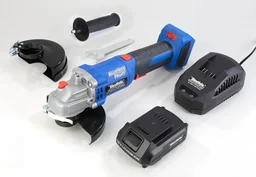
For extensive Styrofoam work, we recommend a cordless multifunctional Styrofoam cutter such as the
. This tool is designed for clean, hot cuts and eliminates dust completely.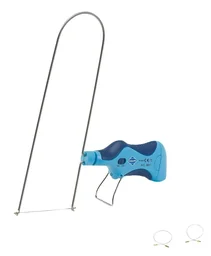
For smaller tasks or as an addition to your toolkit, the 18V angle grinder without battery,
, is a budget-friendly option. For low-dust results, be sure to combine it with a suitable hot-knife attachment.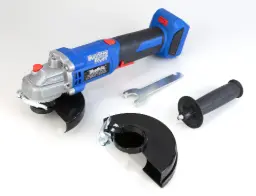
Also remember the necessary garden tools and accessories for preparing and finishing your projects.
Common Mistakes and How to Avoid Them
Impatience is a common mistake. You want to complete the cut in one go. This can result in torn edges or burnt areas.
Instead, work steadily and with control. Take your time with the preparation.
Another mistake is ignoring safety. Styrofoam dust is unpleasant, but you should not inhale the fumes produced during hot cutting. Always ensure good ventilation.
Using the wrong tool for the material thickness leads to frustration. A utility knife cannot handle a 20 cm thick board. Check its suitability beforehand.
Avoid pressing too hard on the tool. Sharpness and heat should do the work, not brute force.
With the right technique and the right tool from our range, you can master any Styrofoam project. From insulating your home to building a model aircraft, you can achieve clean, precise and low-dust results.
Frequently Asked Questions
- What is the best tool for cutting Styrofoam?
- An electric Styrofoam cutter with a heated wire or blade delivers the cleanest results with minimal dust. For simple, straight cuts in thin boards, a sharp utility knife is sufficient. For larger projects, it is worth investing in a specialist tool from our power tools range.
- Can I cut Styrofoam with a jigsaw or angle grinder?
- Yes, but it is not recommended. Rotary tools such as angle grinders tear the material apart and produce large amounts of potentially harmful dust. If you still need to use one, work outdoors, wear an FFP3 mask and protect the surrounding area. A suitable garden tool or specialist cutter is a better choice.
- Why does Styrofoam melt when I cut it with a hot wire?
- This is normal and intentional. The hot wire precisely melts the polystyrene and partially vaporizes it, creating a smooth, sealed cut. The correct temperature and speed are important: moving too slowly melts too much material, while moving too quickly can tear it. Practice on a scrap piece first.
- How do I cut clean curves or openings in Styrofoam?
- For curves, use a hot knife or a soldering iron with a special cutting tip. Mark the shape first, then guide the tool slowly and evenly along the line. For shapes that you need to repeat, make a template. Suitable accessories such as different blades can be found in our workshop supplies range.
- What safety precautions should I take when using Styrofoam cutters?
- Always work in well-ventilated areas, as fumes may be produced. Never touch the hot elements. After use, place the tool on a heat-resistant surface. Wear a dust mask when working mechanically with the material, for example when sawing or cutting. Keep the tool safely out of the reach of children.
You May Also Be Interested In
- How to Use a Jigsaw Properly: Tips and Tricks for Precise Cutting
- How to Cut Porcelain Stoneware and Tiles Properly
- Laminate Cutters: The Best Tool for Laying Laminate Flooring?
- How to Work Safely with Utility Knives and Avoid Accidents
- Sandpaper Grit: Which Sandpaper Is Right for Your Project?
- Cutting Paving Stones: How to Make the Perfect Cuts for Garden Paths