
In brief: You can identify insects in the garden by their body shape, behaviour, habitat and role in the ecosystem. Ladybirds, lacewings, hoverflies, solitary bees and ground beetles are among the most important beneficial insects. They pollinate flowers or help control aphids, caterpillars and slugs. Observe first before removing an insect or using a plant protection product.
Short answer: You can identify insects in the garden by their body shape, behaviour, habitat and role in the ecosystem. Ladybirds, lacewings, hoverflies, solitary bees and ground beetles are among the most important beneficial insects. They pollinate flowers or help control aphids, caterpillars and slugs. Observe first before removing an insect or using a plant protection product.
A garden thrives on more than flowers, vegetables and ornamental shrubs. Countless small helpers work among the leaves, blossoms and ground cover. Some pollinate plants, while others eat aphids, caterpillars or slug eggs. Many go unnoticed because they are only a few millimetres long or become active at night.
Being able to identify beneficial insects helps you take more targeted action. You can leave a small aphid colony in place initially as a food source, protect a solitary bee from unnecessary disturbance and plan beds so that insects find food from spring through autumn. This perspective changes the way you care for your garden: not every nibbled leaf requires treatment.
How can you identify beneficial insects in the garden?
Beneficial insect is not a fixed biological category. The term describes a positive effect from a human perspective, such as pollination or natural pest control. The same species may also nibble on plants under certain conditions. Earwigs, for example, eat aphids, but when food is scarce they may also feed on soft fruit or flower petals.
So do not begin by asking whether an insect is good or bad. Ask yourself first: What exactly am I seeing? Body shape, wings, antennae, legs, colour, size and behaviour provide better clues than a single feature.
Which features help with identification?
Observe the insect from a little distance. A magnifying glass or a sharp photo can reveal details that are not visible to the naked eye. These observations are particularly useful:
- Body shape: A ladybird is round and domed, while a ladybird larva is elongated and clearly segmented.
- Wings: Hoverflies have only one pair of wings and often hover over flowers. Beetles have hard wing cases that meet in the middle.
- Movement: Lacewings flutter slowly, ground beetles usually run along the ground, and hoverflies appear to hang in the air.
- Habitat: Aphid predators often sit directly on young shoots or on the underside of leaves. Solitary bees search for flowers or suitable nesting sites.
- Traces: Empty aphid skins, tiny feeding holes or webbing can indicate which insects are active in the bed.
Colour alone is often misleading. A black-and-yellow hoverfly may look like a wasp, but it has no sting. Many ladybird species are yellow, orange, black or brown. Their markings can also change during the life cycle of some species.
“Insects are indispensable to the functioning of our ecosystems.”
Why the life stage matters
Many beneficial insects look completely different as larvae than they do as adults. The larva of the seven-spot ladybird does not resemble a beetle. It is dark and elongated, with orange spots. On a leaf, it can easily be mistaken for a pest, even though it eats large numbers of aphids.
Lacewings also go through a distinctive juvenile stage. Adult lacewings are delicate green insects with transparent wings and golden eyes. Their larvae have sickle-shaped mouthparts and actively search for aphids. Leave these insects on the leaf if the plant can still cope with the infestation.
With butterflies, it is worth taking a closer look at the plant. Caterpillars are part of a butterfly’s development, but they can cause significant damage to cabbages, fruit trees or ornamental plants. Assess the species and severity of the infestation instead of removing every caterpillar indiscriminately.
Which beneficial insects do you commonly find in the garden?
Insects in the garden perform a variety of tasks. Some clear away organic material, some hunt other animals, and some ensure pollination. You will encounter the following species particularly often in vegetable beds, fruit trees and bushes, hedges and flower beds.
Which insects help against aphids?
Aphids prefer to gather on young shoots, buds and the undersides of leaves. This is also where you will find their natural enemies. Look not only for adult insects, but also for larvae, eggs and shed skins.
- Ladybirds: Adult ladybirds and their larvae eat aphids. The larvae are usually dark with orange or yellow markings.
- Lacewings: The larvae in particular hunt aphids, spider mites and small caterpillars. Their eggs often hang from fine stalks above the leaf.
- Hoverflies: Adult hoverflies pollinate flowers. Their often inconspicuous larvae live on plants and devour aphids.
- Predatory bugs: Some species suck aphids, thrips and other small insects dry. They are often elongated and move quickly.
An aphid-free garden is neither a realistic nor a necessary goal. A small colony may be enough to attract ladybirds, lacewings and hoverflies. Check the shoot tips regularly and only intervene when a plant is visibly suffering or the infestation is spreading rapidly.
Which beneficial insects pollinate flowers?
Wild bees, bumblebees, honey bees, hoverflies and various beetles transport pollen. Wild bees mostly live alone and use a wide variety of nesting sites. Some dig tunnels in sandy soil, while others occupy cavities in plant stems or decaying wood.
- Wild bees: Many species are small, hairy and active on sunny, sheltered flowers. They generally do not sting unless you harass them.
- Bumblebees: Their sturdy bodies and dense hair keep them active even in cooler weather. They visit numerous flowers in a short time.
- Hoverflies: Their yellow-and-black markings often make them look like wasps. They hover in the air, have no sting and like to land on open flowers.
- Flower beetles: Rose chafers and other beetle species eat pollen or nectar and spread pollen as they do so.
Spiders also provide valuable pest control, but they are not insects. This distinction helps with identification: insects have six legs, while spiders have eight. Both groups belong in a nature-friendly garden.
Expert tip
Photograph an unfamiliar animal first on the plant where you found it. The flower, leaf and location provide additional clues. A photo from above and one from the side are usually more helpful for identification than a close-up of the head alone.
Which ground-dwelling animals are useful?
Ground beetles hide during the day under stones, boards, leaves or dense vegetation. Many species go hunting at night. They eat caterpillars, insect larvae and, in some cases, slug eggs. A dark beetle running quickly across the ground is therefore usually a reason to observe it, not remove it.
Rove beetles can be identified by their shortened wing cases, which leave the abdomen exposed. They hunt small ground-dwelling animals and inhabit damp areas with leaves or compost. Earwigs also help to control aphids, but their preference for soft fruit means they are not welcome in every bed.
How can you distinguish beneficial insects from pests?
Accurate identification requires more than a colour photo. Shape, life stage and behaviour must all fit together. Yellow and black does not automatically mean wasp, and green does not automatically mean harmless. Also check whether the animal is actually eating plant tissue or simply sitting on the plant.
The following overview will help you make an initial assessment:
| Observation | Likely identification | Your response |
|---|---|---|
| Elongated dark larva with orange spots | Ladybird larva | Leave it on the plant |
| Delicate green animal with transparent wings | Adult lacewing | Provide flowers and hiding places |
| Yellow-and-black animal hovering at a flower | Probably a hoverfly | Do not remove it |
| Beetle running under leaves or stones at night | Often a ground beetle | Maintain ground cover |
| Small animals clustered closely around a young shoot | Possibly aphids | Check the severity of the infestation and natural enemies |
| Irregular holes in leaves caused by feeding | Several causes possible | Check the underside and surrounding area |
Why colour alone is not decisive
Many harmless hoverflies imitate defensive wasps with their markings. You can distinguish them by their movement and wings. A hoverfly often stays suspended in the air with a vibrating motion and has only one pair of wings. A wasp flies more purposefully and has the typical longer antennae.
With beetles, the larva is often the crucial clue. The ladybird larva has no hard wing cases and looks spiky or warty. The Colorado potato beetle larva, on the other hand, is often found in groups on potato plants or other nightshade plants and causes characteristic feeding damage. Therefore, always check the host plant.
Important note
Biological plant protection products do not automatically affect only pests. Apply
them strictly according to the current product labelling, never on open flowers or while many pollinators are flying. First check whether intervention is actually necessary and, wherever possible, treat individual plants selectively.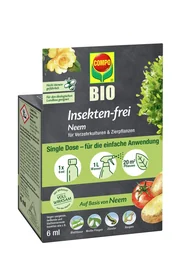
How do you assess possible damage?
Before taking action, answer three questions:
- How severe is the infestation? A healthy plant can usually tolerate individual aphids or a few nibbled leaves without any problems.
- Which plant is affected? Young vegetable plants are more sensitive than established shrubs. More frequent checks are worthwhile for sensitive crops.
- Which natural enemies are present? If you find ladybird larvae, hoverfly larvae or lacewing eggs, the problem may resolve itself.
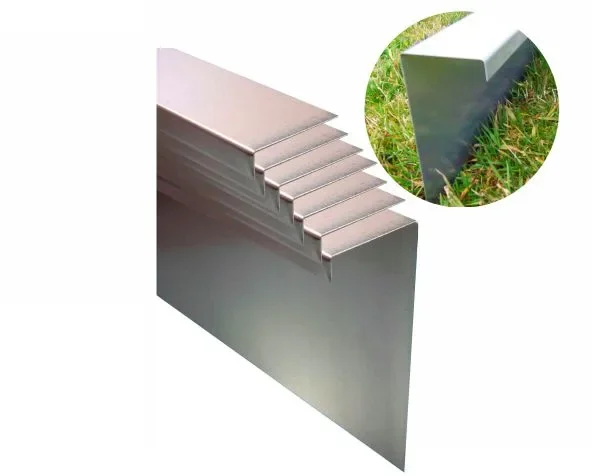
For slugs and snails, a mechanical barrier is often more effective than a broad-spectrum product. A 10-piece slug fence can protect sensitive beds and give you more scope to preserve insect life. The fence targets slugs and snails, not beneficial insects.
How do you create an insect-friendly garden?
An insect-friendly garden does not need to be large. What matters is providing different structures, flowers throughout the seasons and areas that are not constantly tidied. A neatly trimmed flower bed with closely mown grass offers much less food and shelter than a garden with varied heights and small places to hide.
Which plants provide food from spring to fall?
Plan flowering times like a calendar. Early-flowering bulbs, willows and native shrubs give wild bees their first source of energy. In summer, herbs, perennials and annual flowers follow. Ivy, sedum and fall asters fill the gap in late summer and fall.
- Spring: Crocuses, willow, lungwort and blackthorn provide nectar and pollen when few other flowers are open.
- Summer: Thyme, oregano, knapweed, yarrow and single-flowered roses attract pollinators and hoverflies.
- Late summer: Wild carrot, coneflower, fennel and various herbs extend the food supply.
- Fall: Ivy, sedum and late asters provide insects with food before winter dormancy.
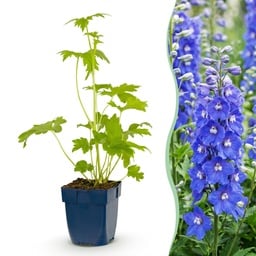
Choose single flowers. In heavily double-flowered varieties, the stamens are often hidden beneath additional petals. Insects then find less pollen and nectar. A hardy bee and butterfly seed mix such as
Do not plant exclusively in a single flower bed. Flowering herbs along a path, a shrub beside the patio and a small wildflower area connect habitats. Suitable garden and plant care supplies make preparation, sowing and maintenance easier.
Which nesting sites and hiding places do insects need?
Many wild bees dig their nests in the ground. Therefore, leave sunny areas with little vegetation undisturbed and do not cover them completely with bark mulch. Other species use pithy or hollow plant stems, decaying wood, loose stones and dry piles of leaves.
An insect hotel supports only certain species. Good models have cleanly drilled, burr-free tubes in different diameters and are placed in a dry, sheltered location. Ideally, the openings face south or southeast, stay protected from rain and are not covered by dense foliage. Find out more when choosing one in the insect hotels category.
- Leave some dry stems standing until spring.
- Stack a small piece of untreated deadwood in a quiet, sunny spot.
- Leave leaves under hedges and shrubs as winter shelter for ground-dwelling insects.
- Keep individual areas of sand or clay open for ground-nesting wild bees.
How can you reduce disturbance and unnecessary treatments?
Avoid leaving lights on throughout the night. Artificial light disturbs moths, beetles and other nocturnal insects while they search for food and reproduce. Switch off outdoor lights when you do not need them, or use warm, downward-facing light with a motion sensor.
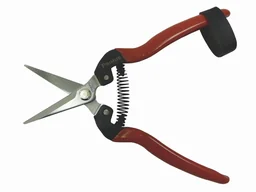
Do not mow an entire meadow in one day. Divide the area and cut sections at different times. This ensures that flowers, cover and escape routes always remain available. For gentle maintenance, you will find suitable garden tools; sharp "Pruning Shears" are ideal for selectively cutting back stems and branches.
Water in the morning or at ground level instead of constantly wetting flowers and leaves. A shallow dish with stones provides insects with a safe drinking spot. The stones must protrude from the water so small creatures do not drown. Suitable garden equipment makes it easy to incorporate these small structures into the garden permanently.
Additional advice
Do not clear everything away at once in the fall. Leave leaves under shrubs, wait until spring before cutting hollow plant stems and leave some dead perennials in place. Only check whether diseased plant parts need to be removed. A tidy garden and nature conservation can coexist in the same space.
“Most wild bee species live solitary lives and do not form colonies.”
How can you safely observe and identify insects?
Good identification starts with staying calm. Do not reach for the insect or shake the plant. Many insects display their typical behaviour for only a few seconds. A brief moment on a flower often tells you more than a captured insect in a jar.
What steps lead to reliable identification?
First observe whether the insect flies, jumps, crawls, sucks sap or collects pollen. - Note the location: Write down whether you found the insect on a flower, under a leaf, in the compost or on the ground.
- Photograph identifying features: Take one photo from above, one from the side and one of the plant.
- Compare its size: Place a coin or ruler next to the insect without touching it. Size information often distinguishes similar species better than colour.
- Consider its life stage: Check whether you are looking at an egg, larva, pupa or adult insect.
- Observe more than once: Return after a few hours or the next day. Behaviour and numbers together provide a more reliable picture.
For wild bees, also note the shape of the flowers and how the insect collects pollen. Does it carry pollen on its hind legs, on its abdomen or not visibly at all? With hoverflies, flight pattern, body shape and wing number are helpful. For beetles, antennae, wing cases and habitat are important features.
When is intervention worthwhile?
Take action when a plant is noticeably weakened, an infestation is increasing rapidly or a crop is at a sensitive stage of development. First remove individual heavily infested shoots, wash aphids off with a strong jet of water or use a physical barrier. These measures protect animals that are not involved.
A nest or a single unidentified insect is not sufficient reason for control measures. Take particular care if a nest is very close to doors, seating areas or play areas. Keep your distance and, if necessary, have the situation assessed by a professional instead of interfering with the nest yourself.
- Observe: Initially leave individual insects and small groups undisturbed.
- Act mechanically: Remove infested shoots or protect plants with a net.
- Treat selectively: Use only approved products and protect flowers, water bodies and active pollinators.
- Check again: After a few days, check whether the damage has stopped and beneficial insects are returning.
How can a small garden journal help?
Set aside ten minutes once a week for a regular observation round. Note three flowering plants, three insects you have spotted and any noticeable feeding damage. After a few weeks, you will see which plants attract particularly large numbers of pollinators, when aphids appear and which beneficial insects respond to them.
This creates a personal calendar for your garden. Next year, you will know when the first wild bee appears, which perennial is still flowering in autumn and which bed lacks a sheltered retreat. This knowledge makes garden care more precise and ensures that insects do not just appear in the garden for a short time.
Conclusion: Identify beneficial insects through observation, not quick judgements based on colour or instinct. Provide flowers, open patches of soil, leaves, deadwood and dark sheltered places. Avoid unnecessary intervention. Your garden will then increasingly work with natural cycles.
Frequently asked questions
- How can I recognise a ladybird larva?
- A ladybird larva is elongated and dark, with orange or yellow spots or stripes. It does not look like the round adult beetle and moves actively across leaves. Do not remove it: the larva eats numerous aphids and is one of the most effective natural helpers in the garden.
- Which insects pollinate garden plants?
- Wild bees, honey bees, bumblebees, hoverflies and many beetles transfer pollen. Wild bees often work in cool weather, bumblebees fly at low temperatures and hoverflies visit open flowers. Plant a variety of open flowers and avoid using pesticides during the flowering period in the garden.
- How can I attract beneficial insects to my garden?
- Provide food, water and shelter throughout the year. Combine native, open flowers with a wild area, patches of bare soil, leaves and dead plant stems. Avoid chemical broad-spectrum products, mow different areas at different times and give beneficial insects time to establish a permanent habitat.
- Are all insects in the garden beneficial?
- No. Many species are neither clearly beneficial nor harmful; their impact depends on their numbers, the plant species and the time of year. Aphids can weaken individual shoots, but they also provide food for ladybird larvae. Identify the insect and assess the damage before taking action.
- What should I do if I find an unidentified insect?
- Photograph the insect from above and from the side without touching it. Note the plant, location, date, time of day and behaviour. Compare several features rather than just the colour. A single insect usually requires no action; observe the population and any possible plant damage over several days.
You may also be interested in
- Year-round insect protection: A garden for beneficial insects
- Insects and spiders: The best helpers for your garden
- Bugs in the garden: Friend or foe? How to recognise beneficial insects
- How to identify and understand beetle species in the garden
- How can I create a wildlife-friendly natural garden?
- Garden pests: How to identify pests and encourage beneficial insects