
In brief: Dried flower table decor works with just a few materials: Combine different flowers, grasses and branches in small vases, use a calm color palette and leave enough space in the center of the table. This creates long-lasting, natural floral decor for breakfast, afternoon tea, weddings, birthdays or a relaxed dinner.
Dried flowers add structure, color and a natural touch to any table. With small vases, matching grasses and a clear color palette, you can create table decor that works just as well for Sunday breakfast as it does for a wedding or dinner with friends.
Why do dried flowers suit every table setting?
Dried flowers look light, yet retain their shape and add plenty of texture to the table. Grasses create visual movement beside sturdy strawflowers, round seed pods add small accents and delicate blooms soften larger branches. This creates floral decor with depth without requiring many materials.
Another advantage is that you can prepare everything in advance. You can assemble the arrangement days or weeks before a celebration and do not need to change the water. This makes dried flowers especially practical for weddings, birthdays, long dining tables and spontaneous invitations.
The natural look works well with wood, linen, ceramic and glass. Warm beige and brown tones complement rustic tables, while white, sage green and soft pink create a more modern feel. A few individual colorful flowers are often enough to coordinate the table decor with napkins or dishes.
Which colors and shapes create a harmonious look?
Limit yourself to two to four main colors. A calm base of cream, sand or natural brown lets bold accents such as rust, mustard yellow, violet or burgundy stand out clearly. Too many colors divide the eye and can quickly make small arrangements look busy.
Also work with different heights. A compact bouquet of small flowers fills the lower area, while individual grasses or curved branches draw the eye upward. Repeat one flower shape in several places so the table decor feels cohesive.
For a long dining table, distribute several small groups along its length. On a round table, a central bouquet surrounded by two or three low vessels works well. Leave open spaces between the groups. These pauses give the arrangement a sense of calm.
Small bowls, wooden figures and ceramic vessels enhance the natural look. Matching decorative objects can be arranged around the vases as long as they do not block plates, cutlery or sightlines.
“Dried flowers last longest in a warm, dry, dark and well-ventilated place.”
How do you plan DIY table decor with dried flowers?
Start with the table surface rather than the bouquet. Measure how much space needs to remain free for plates, glasses, cutlery and serving platters. Then plan the decoration zones. This helps you avoid creating a beautiful but impractical centerpiece.
For a longer table, three to five small arrangements are usually better than one large bouquet. On a small table, one vessel with a few carefully chosen branches is enough. Match the size of the arrangement to the table shape and the number of guests.
What materials do you need?
- Dried flowers: Choose two or three flower shapes and add grasses or branches.
- Vessels: Small glass bottles, ceramic vases, bowls or narrow wooden stands support the stems.
- Tools: Sharp floral shears cut dry stems cleanly and prevent unnecessary breakage.
- Textiles: Linen napkins, table runners and natural placemats enhance the warm look.
- Additional accents: Place cards, ribbons, wooden slices or small ceramic bowls add a personal touch.
- Base: A tray or shallow bowl groups several small vessels together and makes them easier to move.
Sort the materials by color and height before setting everything up. Place the longest branches on one side and decide which flowers will serve as focal points. Only then cut the stems. This saves material and keeps the proportions under control.
Pro tip
First arrange the branches loosely on the tablecloth. This lets you see the heights, gaps and sightlines before cutting anything. Leave about 55 to 60 centimeters of table width per person and keep the center low.
How do you choose a suitable color palette?
Use one base color, one complementary natural color and a small accent. Cream, beige and dried green create a subtle foundation. A single terracotta branch or blue flower adds interest without overwhelming the natural decor.
Coordinate the flowers with existing elements. Repeat the color of the napkins in two or three flower heads. A wood tone from the chairs or tabletop can also be echoed in branches, coasters or a stand.
Metallic tones can be added to a festive table. Gold feels warm, silver cooler and black more graphic. Use metal sparingly, for example in place card holders, candle holders or small vessels. This keeps the floral decor as the focal point.
Which dried flower ideas work on a dining table?
Good dried flower ideas serve a clear purpose. Small vessels mark place settings, elongated arrangements connect several table areas and individual branches add height. Choose one approach before adding further details.
How do you arrange individual mini vases?
Mini vases are suitable for round tables, narrow dining tables and individual place settings. Fill each vessel with three to seven stems. A single branch can be just as effective as a small mix of gypsophila, Lagurus and dried oats.
Do not place the vases exactly in a line. Slight gaps and different heights give the table decor a relaxed look. For particularly small arrangements, the wooden dried flower stand S with arrangement, , works well at an individual place setting or on a narrow sideboard beside the table.
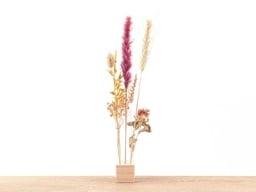
You can also use mini vases as place card holders. Tie a narrow paper label to a sturdy stem or place the card directly in front of the vessel. Make sure that dried flowers do not hang over the plate.
How do you create a long centrepiece?
A long arrangement connects several place settings and is particularly suitable for rectangular tables. Use low, repeating clusters. Leave enough space between the clusters so that plates, bowls and carafes remain accessible.
Start by placing the supporting branches. Then add medium-height flowers and finish with small filler flowers. The longer lines should not extend across the sightline. It is better to cut individual stems shorter than to bend them sharply.
A medium wooden dried flower stand with a flower and herb arrangement, , works well as a compact centrepiece. For a longer table, you can repeat several elements. The wooden stand L with arrangement, , adds more volume to wide tables and can be balanced with smaller vessels.
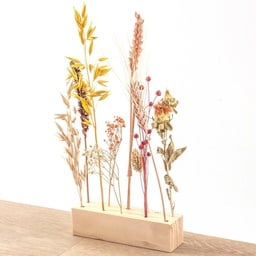

How do you use individual branches in a minimalist way?
A single branch needs space. Place it in a narrow vessel and put just one small object beside it, such as a stone, a card or a low bowl. This style suits modern tables with clean lines.
The wooden dried flower stand - Tube M - Flowers and herbs + dried flower arrangement, , complements this pared-back look. Its slim shape draws the eye upwards without taking up much table space. Only combine several tubes if the colours match.
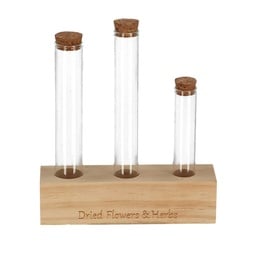
Which vessels go well with dried flowers?
Glass keeps the stems visible and looks light. Ceramic adds weight and suits rustic or Scandinavian tables. Wood emphasises the natural feel, while metal creates a clear contrast.
Choose a stable vessel for lightweight dried flowers. Narrow vases need a firm base and should not be placed at the edge of the table. A tray groups several vessels together and prevents individual elements from shifting while serving.
Important note
Never place dried flowers directly next to open flames. Dried flowers, grasses and branches can catch fire easily. Keep them a safe distance from candles, fireplace heat and hot lamps, or use LED candles.
How do you create dried flower decor for weddings, birthdays and everyday occasions?
The same basic idea can be adapted to different occasions. Change the colours, container materials and density of the arrangements. The structure stays the same: clear sightlines, stable containers and recurring colour accents.
Which dried flowers are suitable for a wedding?
Light natural tones, white, blush pink and muted green are ideal for a wedding. Pampas grass, baby's breath, lagurus and delicate branches create a romantic look without becoming overly whimsical. Complete the table decor with linen, handwritten place cards and a few gold details.
For long tables, repeat the same arrangement at regular intervals. Small bottles or wooden stands connect each place setting with the centre of the table. Additional decorative garlands can be used on an adjacent wall or at the buffet. Keep them away from candles and warm lights.
How can dried flower decor make a birthday more personal?
A birthday can handle bolder colours. Mustard yellow, orange, violet or blue add a cheerful accent alongside natural tones. Repeat the colour in napkins, cake toppers or small place cards.
Instead of decorating every place setting identically, you can distribute different mini vases within a shared colour scheme. This makes the table feel lively while still looking planned. A small name tag on the stem turns each arrangement into a personal greeting as well.
How does natural decor work for breakfast or dinner?
For everyday use, a single vase with three to five stems is all you need. Choose a shape that you can quickly move aside when setting the table. A wooden tray groups the decor together and creates space when you serve food.
If light hanging decor is already suspended above the table, keep the centre of the table low. Repeat one of the colours from the decor in the dried flowers. This connects the room and the table without adding more objects.
Which seasonal accents work well?
In spring, choose light blooms, delicate grasses and small branches. In summer, strawflowers, oats and vibrant yellow tones create a light and welcoming look. For autumn, choose eucalyptus, lagurus, dried leaves and warm rust tones.
In winter, pine cones, branches and a few white blooms complement the table. Avoid using too many shiny elements. A calm colour palette lets the natural structure of the dried flowers stand out.
“Dried plant materials should be protected from moisture and direct sunlight.”
How can you keep natural decor beautiful and safe for longer?
Dried flowers require little care, but they are sensitive to moisture, direct sunlight and rough handling. Choose a dry spot for the arrangement and move the containers as little as possible. This prevents unnecessary breakage of the stems.
Which location extends their lifespan?
- Direct sunlight: It fades colours. Do not place the table permanently directly in front of a south-facing window.
- Moisture: Steam from the kitchen and bathroom can make flowers soft. Ventilate regularly and keep the containers dry.
- Radiators: Strong heat makes stems brittle. Do not place the decor directly above a radiator.
- Dust: Remove it with a soft brush or a hairdryer set to the lowest cool-air setting.
Wipe dry containers with a slightly damp cloth and let them dry completely before putting the stems back in. Do not spray the flowers with water. For very delicate blooms, gently blowing away the dust is sufficient.
How do you combine dried flowers and lighting?
Warm light brings out the colours of grasses and blooms particularly well. Place a small LED string light in a glass container or position individual LED candles between the arrangements. Matching decorative lights create a calm atmosphere in the evening.
Pay attention to cable management. Cables must not lie between plates and glasses or become a trip hazard. Also check that the lights are suitable for the intended indoor area.
How can you keep the table practical?
Place tall branches at the sides or at the end of the table. The arrangements in the centre should stay low so your guests can see one another. Check the sightlines while seated, not just while standing.
Leave enough space between the decor and the tableware for hands, serving utensils and carafes. An arrangement works well when it frames the table without getting in the way. Remove individual branches as soon as they become too dense.
Extra tip
Photograph the finished table decor from several seating positions. The photos will immediately reveal hidden faces, branches that are too tall and uneven spacing. Correct the height first, then the colour distribution and finally the small accessories.
Your next step: Choose a colour palette, three types of dried flowers and one container. Start by creating a small arrangement and check the sightlines. Then transfer the idea to the entire table. This creates natural table decor that suits the occasion and works well in everyday life.
Frequently asked questions
- How long do dried flowers last as table decorations?
- Dried flowers usually last for several months to several years indoors. A dry location, little direct sunlight and regular, gentle dusting are key. As soon as stems become brittle, flowers fade significantly or signs of moisture damage appear, replace individual stems and reuse the arrangement.
- Which dried flowers are suitable for low table decorations?
- Gypsophila, lagurus, oats, phalaris, statice and small strawflowers are suitable for low arrangements. Combine two or three varieties in similar colours and cut the stems to a height of around 15 to 25 centimetres. This keeps the person opposite visible and ensures that plates and glasses can be placed safely.
- How do I combine dried flowers with candles?
- Place dried flowers and candles in separate areas and keep at least 30 centimetres away from open flames. Choose stable, heavy candle holders and trim any overhanging grasses. LED candles provide the same warm glow without the risk of fire and are especially well suited to delicate arrangements.
- Can I use dried flowers for a wedding table?
- Yes, dried flowers are ideal for wedding tables because they are lightweight, long-lasting and easy to coordinate by colour. Match the flowers to the stationery, napkins and colours of the room. Place tall stems outside the line of sight and secure small bouquets in heavy vessels. This keeps the table decor elegant and practical.
- How do I make dried flower table decorations myself?
- Start with a vessel, three to five varieties of dried flowers and a limited colour palette. Cut the stems, add sturdy branches first and then fill in with smaller flowers. Finally, check the sightlines, stability and distance from crockery, drinks and flames.
You might also be interested in
- DIY dried flower bouquets: Trendy decor for your home
- Artichokes as decor: Stylish ideas for your home
- Autumn table decor: Ideas for atmospheric table settings
- Make your own Christmas table decor with evergreen branches
- Make your own Easter decor: Creative ideas with natural materials
- DIY: Make natural Christmas decorations from garden materials