
In brief: Dust mites in bed are usually house dust mites that feed on dead skin cells and prefer warm, damp mattresses. Their allergens are mainly found in their droppings. You can reduce exposure by washing at 60 °C, keeping indoor air dry, using allergen-proof covers and vacuuming thoroughly. If a runny nose or breathing problems persist, a medical practice can investigate the cause.
Dust mites in bed are usually house dust mites that feed on dead skin cells and prefer warm, damp mattresses. Their allergens are mainly found in their droppings. You can reduce exposure by washing at 60 °C, keeping indoor air dry, using allergen-proof covers and vacuuming thoroughly. If a runny nose or breathing problems persist, a medical practice can investigate the cause.
If you sneeze in the morning, wake up with a blocked nose or have itchy eyes, your bedroom may be making your symptoms worse. House dust mites do not just live in dust; they especially like mattresses, pillows, duvets and upholstered furniture.
The mites themselves are tiny and usually harmless to healthy people. The main problem is allergens from mite droppings and decomposing body parts. Consistent hygiene, dry indoor air and suitable covers can significantly reduce exposure.
How do dust mites get into your bed?
House dust mites belong to the arachnid family. In Central Europe, the main species are Dermatophagoides pteronyssinus and Dermatophagoides farinae. They measure around 0.1 to 0.4 millimeters and are barely visible to the naked eye.
What do house dust mites need?
Mites find almost ideal conditions in a bed. People release heat and moisture at night. At the same time, dead skin cells accumulate in mattresses, pillows and duvets. These organic particles provide food for the mites.
- Warmth: A heated bedroom and body heat encourage activity.
- Moisture: Sweat and humid indoor air create a favorable climate.
- Food: Dead skin cells collect in textiles and upholstery.
- Places to hide: Mattress cores, seams and textile surfaces protect mites from light and drying out.
House dust mites have nothing to do with poor cleanliness. They are also found in well-maintained homes. However, frequent washing and a dry sleeping environment limit their numbers and remove some of the allergens.
How can you tell the difference between dust mites and bed bugs?
House dust mites do not bite and do not leave typical lines of bites. If itchy red spots, dark dots on the bed sheet or visible insects appear, bed bugs or other causes may also be responsible. A mite vacuum cleaner will not solve this problem.
Also pay attention to the timing. If symptoms occur only in bed or shortly after getting up, this suggests exposure in the bedroom. However, only a medical examination can provide a reliable diagnosis.
Important note
Do not spray insecticides, essential oils or disinfectants on your mattress or duvet. These products can irritate the airways and skin. If you suspect bed bugs or other pests, a professional pest control company can identify the cause and choose a suitable treatment.
What symptoms does a dust mite allergy cause?
With a dust mite allergy, the immune system reacts to proteins in the animals' excretions and body remains. The allergens enter the air when you move bed linen or vacuum. Symptoms can occur throughout the year but often become worse at night and in the morning.
Typical symptoms in the morning
- Sudden bouts of sneezing immediately after getting up
- A runny or persistently blocked nose
- Itchy, red or watery eyes
- Scratchy throat and coughing
- Wheezing or a feeling of pressure in the chest
- Worsening eczema due to dry, irritated skin
A dust mite allergy can feel similar to a cold. Fever and aching limbs are more likely to indicate an infection. If a runny nose lasts for weeks, symptoms regularly return in the bedroom or breathing problems occur, you should have the cause investigated.
Children also often react with a blocked nose, restless sleep or coughing at night. Pay attention to the sleeping environment without prematurely attributing the symptoms to mites. Allergy tests and a detailed medical history can provide clarity.
House dust mites are not parasites. They do not bite or transmit diseases. Allergic symptoms are mainly caused by allergens from droppings and body remains.
How can you control house dust mites?
If you want to control house dust mites, combine several measures. Vacuuming alone is not enough because the mites remain deep inside mattresses and textiles. The most effective approach combines washing, drying, covering, airing and regularly removing dust.
What washing temperature helps?
Wash bed linen at 60 °C if the care label allows this temperature. This treatment reliably reduces mites and removes a large proportion of the allergens. Include pillows, duvets and fitted sheets, not just pillowcases.
If you have a diagnosed allergy, wash your bed linen weekly whenever possible. Without an allergy, a regular change is usually sufficient depending on use; change it more often if you sweat heavily or are ill. Dry the textiles completely before making the bed.
Delicate duvets and pillows require special care. Follow the care label or take them to a suitable cleaning service. Briefly airing them does not replace washing because it does not remove the allergens.
Pro tip
Wash your bed linen in the morning and air the mattress and bedroom while it is being washed. Do not remake the bed until the mattress, pillows and duvet are dry. Damp textiles increase humidity directly around the sleeping area.
How do allergen-proof covers help?
Allergen-proof mattress, pillow and duvet covers create a fine barrier between you and the allergens. The cover must close completely and fit the mattress size. Wash it according to the manufacturer's instructions and use normal bed linen over it as well.
For a child's bed, choose covers without loose ties and with the correct dimensions. You can find suitable baby bedding for your setup. For older children, it is also worth looking at durable, washable children's bedding by material.
How much airing is useful?
Air the bedroom in the morning after getting up and in the evening before going to bed by opening the window wide. Brief, thorough airing removes moisture faster than leaving a window permanently tilted open. A hygrometer shows whether relative humidity remains above 50 percent.
Avoid using humidifiers in the bedroom. Dry laundry in a well-ventilated room and do not place furniture directly in front of radiators. A dry, well-ventilated environment makes it harder for house dust mites to survive.
How do you keep your bed hygienic?
Keeping your bed hygienic involves more than fresh bed linen. Clean the entire sleeping environment and release moisture into the room air as quickly as possible. This includes the mattress surface, bed frame, slatted base, pillows, duvet and the floor around the bed.
The daily routine
- Pull back the duvet after getting up so that moisture can escape.
- Air the bedroom for at least five to ten minutes with the window wide open.
- Make the bed only once the mattress and duvet no longer feel damp.
- Do not shake out bed linen vigorously in the bedroom, as this can stir up allergens.
A bedspread protects against dust, but does not replace washing. Wash it regularly or do without one if it cannot be cleaned often enough. Soft toys, decorative cushions and heavy curtains also collect allergens.
Weekly cleaning
Thoroughly vacuum the floor, underneath the bed and around the edge of the bed. If you have allergy symptoms, use a vacuum cleaner with a suitable filter and empty the dust container outside the bedroom. Then clean the container according to the manufacturer's instructions.
Wipe smooth surfaces on the bed frame with a damp cloth. Remove the mattress cover only if you can dry it completely afterwards. Moisture in the mattress core encourages odours and can promote mould growth.
Use washable bed linen for children's beds. In our shop, you will find a selection of bed linen for different sizes. For frequent washing, choose a durable material and follow the care instructions.
What you do not need to replace regularly
You do not need to replace a mattress immediately just because of dust mites. An allergen-proof cover and regular cleaning often solve the problem more effectively and affordably. Replace the mattress if it is sagging, damaged, permanently damp or can no longer be kept clean.
Carpets and upholstered furniture do not automatically have to be removed from the bedroom either. However, reduce unnecessary textiles if you still have symptoms despite taking all other measures. Smooth, easily accessible surfaces are easier to clean.
A practical weekly schedule
- Monday: Change the bed linen and wash it at a suitable temperature.
- Wednesday: Air the bedroom, vacuum the floor and wipe the bed frame with a damp cloth.
- Friday: Vacuum the mattress and check the seams.
- Monthly: Clean pillows, duvet, mattress protector and bedspread according to the care instructions.
Which cleaning tools can help?
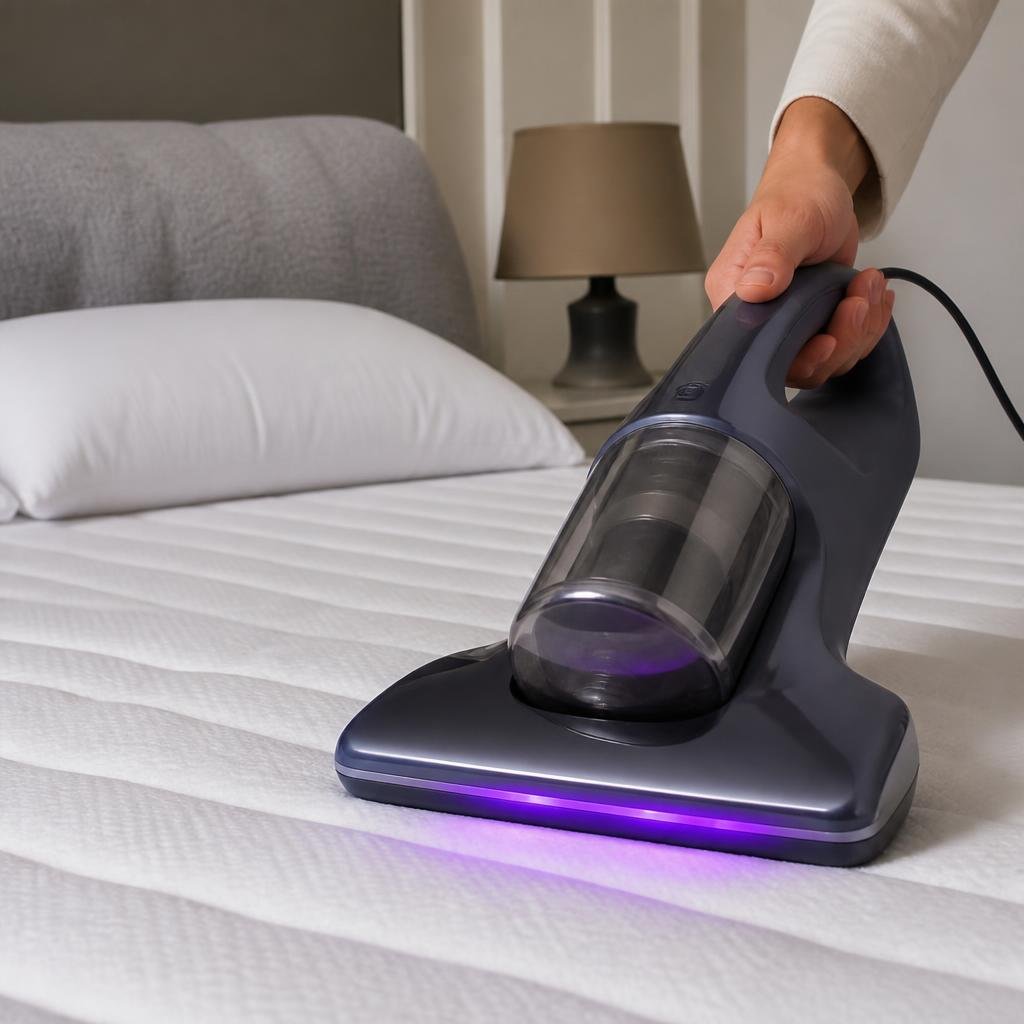
A handheld mattress vacuum cleaner can make cleaning easier. It removes skin flakes, dust and loose allergens from the surface. Work slowly and run the device several times over seams, edges and the sleeping surface.
UV-C light may provide additional benefits under suitable conditions. The distance, exposure time, lamp power and an unobstructed surface are crucial. Moving devices with a short contact time do not automatically reach every area and cannot replace washing or an allergen-proof cover.
- : The cordless mite vacuum cleaner with UV-C light is suitable for short cleaning sessions on mattresses, pillows and upholstery.
- : The mite vacuum cleaner with UVC light and 300 Watt is designed for thorough mechanical cleaning.
- : The mite vacuum cleaner with UV-C light offers another compact option for mattresses and textile surfaces.

Additional advice
Move a mite vacuum cleaner slowly over the surface and follow the operating instructions carefully. Never look directly into UV-C light or point it at skin or eyes. Clean the filter and container regularly.
What should you bear in mind when vacuuming?
First remove the bed linen and mattress protector. Vacuum the mattress in strips, paying particular attention to the edges. Turn the mattress only if recommended by the manufacturer and if the underside is also dry.
A HEPA filter can prevent fine particles from being released back into the room air. Check the condition of the filter and replace it according to the manufacturer's instructions. A full or damaged filter reduces performance.
Do not shake or beat mattresses out in the bedroom. This spreads allergens around the room. If you turn the mattress, do so with the window open and then allow it to air thoroughly.
When should you have symptoms checked by a doctor?
Occasional sneezing after getting up is not proof of a dust mite allergy. Have recurring symptoms checked if they last for several weeks, disturb your sleep or become noticeably worse in the bedroom. A GP or allergy specialist can distinguish between an allergy, infection, asthma and other causes.
Assessment includes a discussion of the timing and progression of symptoms, an examination of the nose, eyes and airways and, depending on the situation, a skin prick test or blood test. A confirmed diagnosis helps you choose targeted measures. Avoid unnecessary products and cleaning agents while the cause remains unclear.
Low humidity and regularly washing bed linen reduce exposure to allergens. However, if symptoms persist, these measures do not replace medical treatment.
When is immediate help needed?
Severe shortness of breath, wheezing, facial swelling or a rapid deterioration require immediate medical attention. If children have a night-time cough, breathing problems or significantly disturbed sleep, parents should contact a paediatrician promptly.
The best strategy for dealing with mites in bed remains consistent but simple: wash bed linen appropriately, keep the bedroom dry, vacuum up allergens and have symptoms assessed medically. This reduces exposure over the long term without replacing the mattress and bed unnecessarily.
Frequently Asked Questions
- Are dust mites in bed dangerous?
- House dust mites do not sting or bite. They are usually harmless to healthy people. However, their droppings and body fragments can trigger a dust mite allergy. Typical symptoms include sneezing, a blocked nose, itchy eyes or coughing. Shortness of breath, wheezing or persistent symptoms should be assessed by a doctor.
- How often should I wash bedding to get rid of dust mites?
- If you have a dust mite allergy, wash your bedding weekly if possible, or at least regularly at 60 °C, provided the care label allows it. Include pillow and duvet covers as well. Wash mattress covers according to the manufacturer's instructions. Lower temperatures remove dirt but do not reliably kill mites.
- What does a dust mite vacuum with UV-C light do?
- A dust mite vacuum removes skin flakes, dust and some allergens from mattress surfaces and seams. UV-C may provide additional benefits with sufficient exposure time, but it is no substitute for washing at 60 °C or using allergen-proof covers. Vacuum slowly and follow the instructions. Do not rely on advertising claims of complete mite eradication.
- How do I lower the humidity in my bedroom?
- Ventilate in the morning and evening by opening the window wide, and measure the relative humidity with a hygrometer. Aim for around 40 to 50 percent. Do not dry laundry in the bedroom and avoid using humidifiers there. Heating alone does not replace air exchange.
- Do I need a new mattress because of dust mites?
- A new mattress does not automatically solve the allergen problem. Clean the surface, use a suitable allergen-proof mattress cover and keep the indoor air dry. Replace the mattress if it is sagging, damaged or can no longer be cleaned hygienically. If you have an allergy, seek medical advice.
You might also be interested in
- How to get rid of dust mites and prevent them effectively
- How to get rid of spider mites: Identification and home remedies
- How to get rid of bed bugs: Effective methods for your home
- How to get rid of chiggers: Effective protection for people & garden
- How to get rid of booklice: Effective remedies & prevention
- How to clean a mattress: Natural tips for dust mites and stains