
In short: A sharp chain, the right cutting technique on a sawhorse and an optimised workflow are crucial for efficient firewood cutting. Use the bumper spike as a pivot point, let the chainsaw do the work and process the wood in separate stages to save time and energy.
A well-stocked woodpile promises cosy warmth throughout the winter. But getting there can be hard work. Hours of sawing can drain your energy and put strain on your equipment. It doesn't have to be that way. With the right technique and preparation, you can turn the job into an efficient process that produces results quickly. Forget the feeling of fighting against the wood. Learn to work with it.
This guide gives you seven tried-and-tested pro tips. They will boost your productivity, protect your body and improve safety. At the heart of your work is a reliable and powerful chainsaw. A powerful tool such as the Petrol Chainsaw Titanium “TITAN” - FM BK 4545 () is the foundation for efficient work. Its power and robust construction make it the ideal partner for your firewood project.

Tip 1: How can you prepare your work area properly?
Efficiency starts before the chain touches the wood for the first time. A tidy, well-organised work area is the basis for fast and safe sawing. Make sure you have firm footing and remove any trip hazards, such as loose branches, tools or uneven ground, from the surrounding area. Every unnecessary step you avoid saves time and energy.
A stable sawhorse is not a luxury but an essential tool. It raises the wood to an ergonomic working height, protecting your back and preventing fatigue. You can secure the log safely without having to bend down. Position the sawhorse so that you can reach your logs with just a few movements and the cut pieces can fall straight onto a pile or into a wheelbarrow.
Important note
Never work without full personal protective equipment (PPE). This must include a helmet with face and hearing protection, chainsaw trousers, safety boots with steel toecaps and cut protection, and sturdy work gloves. Your safety is non-negotiable.
Tip 2: Why is a sharp chain essential for productivity?
The sharpest saw is the fastest saw. A blunt chain turns a powerful cut into laborious pushing and rubbing. You can recognise a blunt chain by several telltale signs: instead of producing coarse, clearly defined wood chips, it produces fine sawdust. The saw no longer pulls itself into the wood, you have to apply force, and smoke may come from the guide bar.
A sharp chain does more than dramatically increase your cutting speed. It also reduces fuel consumption and the strain on your saw's engine. Above all, it improves safety. A sharp chain cuts in a controlled manner and reduces the risk of kickback because it does not catch in the wood. Check the chain's sharpness before every use and sharpen it when necessary.
A sharp chain is not just about speed; it is about control. It bites into the wood and pulls the saw through, instead of forcing you to push the saw.
Tip 3: Which cutting technique saves the most time and effort?
The right technique makes the difference between hard work and efficiency. The most important principle is: let the saw do the work. Do not apply excessive pressure. A well-maintained saw with a sharp chain pulls itself almost effortlessly through the log. Your job is to guide and stabilise the saw.
Use the bumper spike on your chainsaw. These are the metal teeth on the housing where the guide bar begins. Place the spike against the wood and use it as a lever and pivot point. Guide the running chain down through the log in a gentle arc. This allows you to use the full power of the engine and achieve a clean, fast cut.
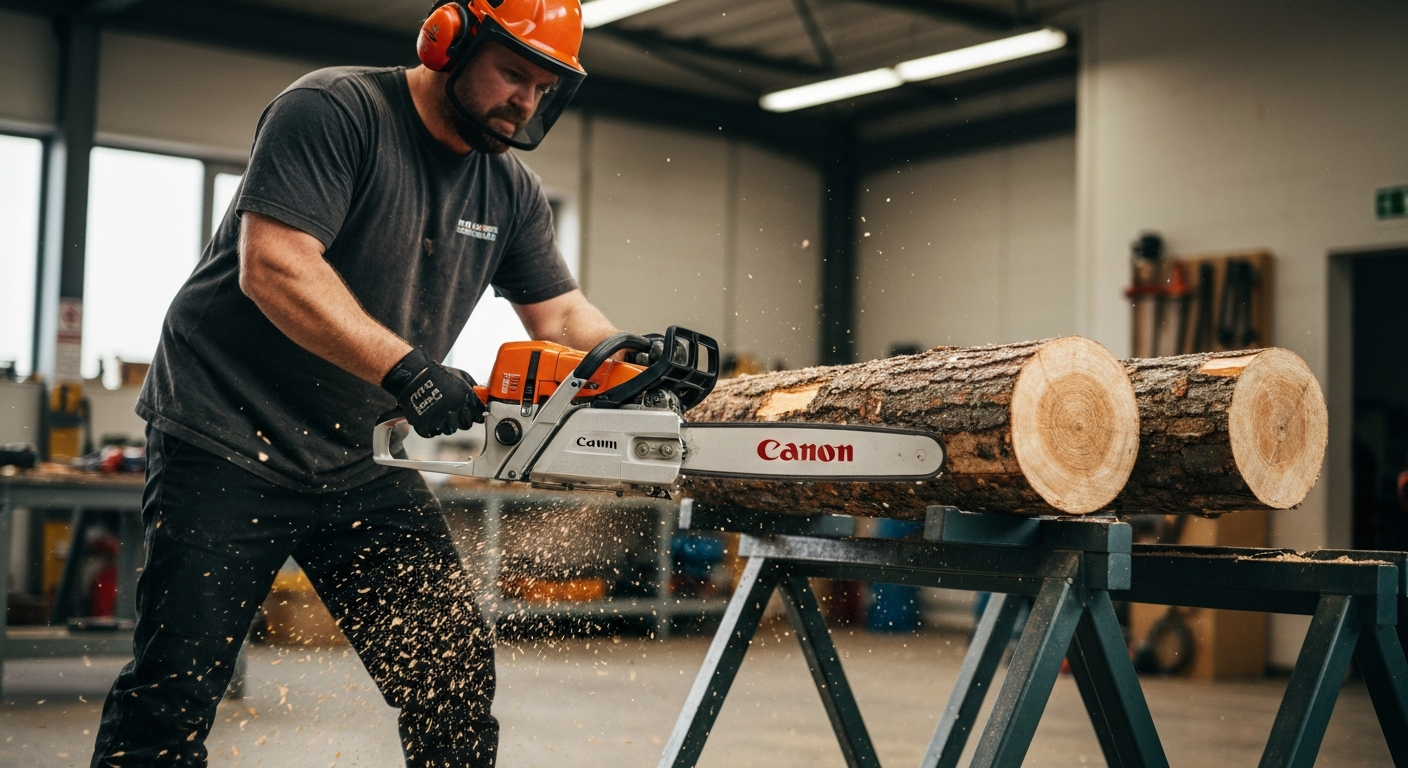
If you have several logs on the sawhorse, use the batch-cutting method. Cut all the logs at the same mark to around three-quarters of their depth. Then turn all the logs 180 degrees and complete them with a second cut. This saves unnecessary movements and significantly speeds up the process.
Pro tip
Mark your logs before sawing. Use a measuring stick and chalk to mark all the cutting points at once. This ensures that all the pieces are the same length and suitable for your stove, so you do not have to measure each one again. The result is uniform and the work is much faster.
Tip 4: How can you optimise your entire workflow?
Think in terms of processes, not individual cuts. A well-planned workflow, from delivering the logs to stacking the finished firewood, minimises walking distances and unnecessary handling. Set up your work area as a “production triangle”: the supply of long logs on one side, the sawhorse in the middle and the area for the finished pieces on the other side.
Avoid switching between tasks. Work in batches. First saw a large quantity of wood, then move on to splitting or stacking. Every switch between sawing and stacking interrupts your rhythm and costs time. A firewood big bag makes it much easier to move the sawn pieces. Place it directly next to the sawhorse so that the pieces fall into it. This saves you the chore of collecting them from the ground.
Additional advice
Plan your sawing for the cooler parts of the day. Working in the midday sun uses up far more energy than necessary. Regular short breaks, plenty of water and a small snack help you maintain your concentration and performance for longer.
Tip 5: What should you look out for when adjusting chain tension?
Chain tension is an often underestimated factor in performance and safety. An incorrectly tensioned chain causes excessive wear and poses a significant safety risk. If the chain is too loose, it can jump off the guide bar during operation. This can cause serious injuries and damage to the saw.
If the chain is too tight, on the other hand, it creates excessive friction. This puts strain on the engine, sprocket and guide bar and leads to premature wear. Checking it is easy: with the engine switched off, you should still be able to pull the chain easily by hand along the guide bar. Lift the chain at the underside of the guide bar. There should be a gap of around 3-4 millimetres between the chain and the bar. The drive links must not come completely out of the groove.
Tip 6: How should you store and dry the sawn wood?
The work is not finished with the final cut. Proper storage and drying are what turn your wood into high-quality firewood. Freshly cut wood contains up to 50 % water, burns poorly, produces a lot of smoke and leaves tar deposits in the chimney. The aim is to reduce the water content to below 20 %.
Stack the wood in a sunny, well-ventilated place protected from rain. A south-facing wall of your house is ideal. Keep the wood off the ground, for example by placing it on pallets, so that air can circulate underneath as well. Leave enough space between the individual logs and rows of the stack to allow air to circulate. Cover the stack only from above to protect it from rain. A firewood tarp is perfect for this purpose. Never wrap the entire stack in plastic, as this traps moisture and can lead to mould growth.
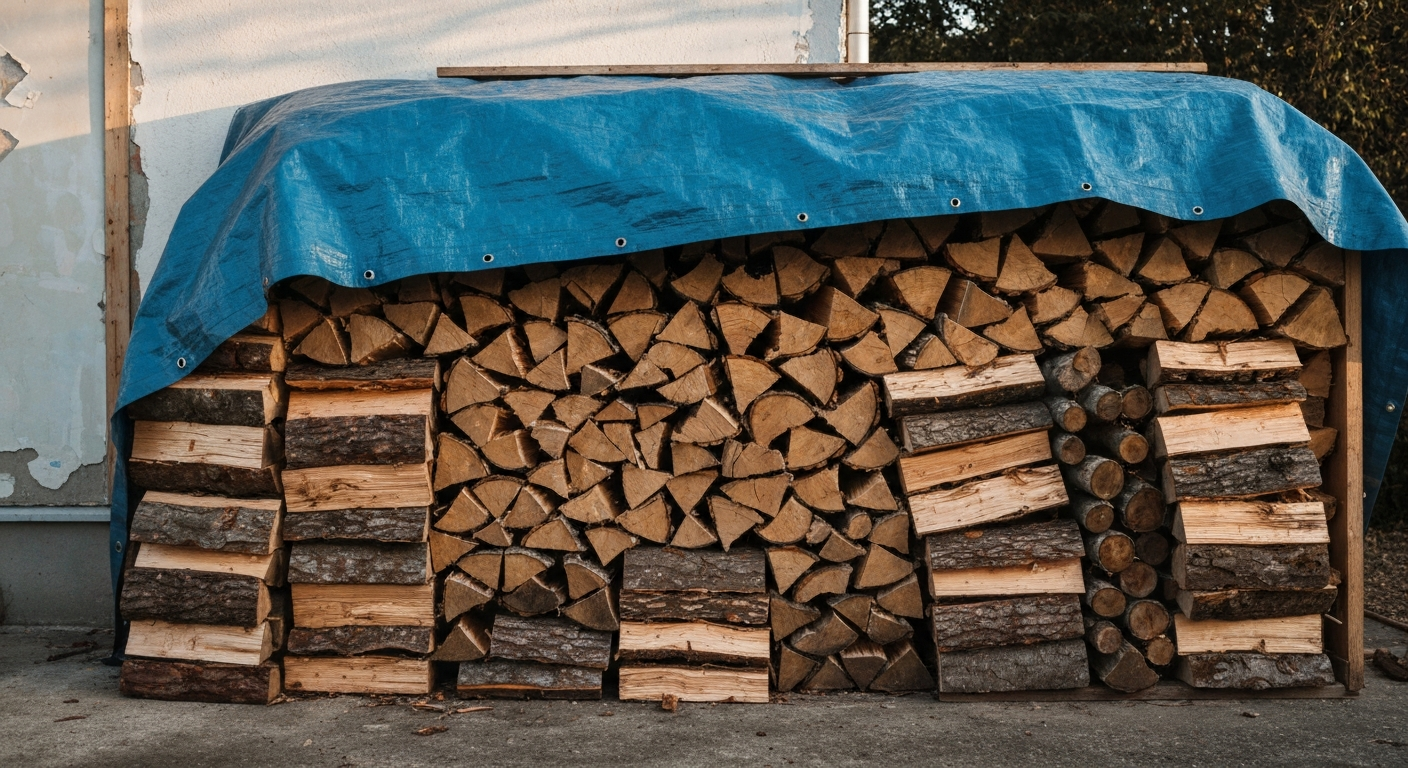
Freshly sawn wood is only the beginning. Patient drying is what transforms it into the high-quality fuel that reliably warms your home and protects your fireplace.
Tip 7: How should you maintain your chainsaw after finishing work?
Good maintenance after every use ensures that your chainsaw remains durable and reliable. A short routine lasting just a few minutes prevents expensive repairs and ensures that your saw is ready for immediate use next time. Start with a thorough cleaning. Remove sawdust and resin with a brush or compressed air, especially from the cylinder cooling fins, the area around the sprocket and the chain brake.
Check the air filter and clean it if necessary. A clean filter ensures optimum engine performance. Top up the chain oil and fuel so you can start working straight away next time. Check the guide bar and chain for wear and damage. Deburr the guide bar and sharpen the chain so that it is ready to make clean, efficient cuts the next time you use it.
Efficiently cutting firewood is a skill you can perfect with practice and the right knowledge. It is the combination of a powerful tool such as the TITAN gas chainsaw, careful preparation and the right technique. This turns the work from a chore into a satisfying project. Discover the right tools and accessories at Westfalia now and make this firewood season your most productive yet.
Frequently Asked Questions
- How often do I need to sharpen a chainsaw chain?
- Sharpen the chain as soon as it produces fine sawdust instead of coarse chips, smoke appears or you have to apply pressure. During continuous use, this may be necessary several times a day. A sharp chain is essential for efficiency and safety.
- What protective equipment is essential when cutting firewood?
- Always wear complete personal protective equipment (PPE). This includes a helmet with face and hearing protection, chainsaw protective trousers, safety boots with cut-resistant inserts and steel toe caps, as well as non-slip work gloves. Safety should always be your top priority.
- What is the ideal length for firewood logs?
- The most common lengths are 25 cm and 33 cm. Measure your stove or fireplace to determine the ideal length. Mark the logs before sawing to produce evenly sized pieces that are easier to stack later.
- Can I cut firewood in the rain?
- Avoid cutting in the rain. Wet wood is more slippery, which increases the risk of accidents. Moisture can also damage your chainsaw and make the work unnecessarily difficult. Wait for dry conditions for maximum safety and efficiency.
- Gas or electric chainsaw for firewood?
- For larger quantities of firewood outdoors, a gas chainsaw is ideal because it is powerful and portable. Electric and battery-powered saws are quieter and produce no exhaust fumes, but are better suited to smaller jobs near a power source.
You might also be interested in
- Making firewood: How to find the perfect chainsaw chain
- Chainsaw chain dull? 5 tips for clean cuts and more power
- Using a chainsaw safely: 7 pro tips for your chainsaw chain
- 5 common mistakes with a gas chainsaw & how to avoid them
- Chainsaw use in autumn: The guide to firewood & tree care
- How to use a gas chainsaw safely: The TITAN beginner's guide