
In brief: Healthy ficus plants need a bright, draft-free location, consistent watering without waterlogging and loose, well-drained soil. Check the top layer of soil before each watering. Fertilize during the growing season, repot when the root ball is crowded and keep the ficus away from radiators.
Healthy ficus plants need a bright, draft-free location, consistent watering without waterlogging and loose, well-drained soil. Check the top layer of soil before each watering. Fertilize during the growing season, repot when the root ball is crowded and keep the ficus away from radiators.
Ficus plants bring lush greenery and a clear, upright or spreading growth habit to living spaces. The best-known species include Ficus benjamina, the rubber plant Ficus elastica, the fiddle-leaf fig Ficus lyrata and the African fig Ficus cyathistipula. Each variety responds slightly differently to light, water and pruning.
The most important houseplant care tips for ficus plants focus on four points: plenty of light, controlled watering, loose soil and a stable location. If you follow these basics, the plant will stay healthy for many years. You can find more suitable products for your home, balcony and plants in the Garden + Outdoor section.
How do you find the right location for a ficus?
Ficus plants originate in tropical or subtropical regions, where they grow with plenty of diffuse or filtered light. For this reason, the plant needs a bright spot indoors. Dark corners, hallways without windows and locations several meters from a window often lead to thin shoots, small leaves and slow growth.
Bright light without heat stress
An east- or west-facing window suits many ficus species well. At a south-facing window, a light curtain protects the leaves from intense midday sun, especially in spring after winter. Acclimate the plant to direct sunlight gradually. Initially, place it closer to the window for only short periods and extend the time over several days.
- Ficus benjamina: Bright, indirect light and some morning or evening sun encourage dense growth.
- Ficus elastica: It tolerates a very bright location and develops particularly strong leaves there.
- Ficus lyrata: It needs plenty of light so its large leaves remain stable and do not lean toward the window.
- Ficus cyathistipula: It prefers a bright, warm location but is sensitive to cold drafts.
Turn the pot slightly every one to two weeks. This helps the crown grow more evenly toward the room and prevents the plant from developing a one-sided shape toward the window. After a change of location, a ficus needs time to adjust. Do not make major changes to the light and watering at the same time.
What temperature and humidity does a ficus need?
During the growing season, 18 to 25 degrees Celsius is usually ideal. In winter, the temperature should not remain below about 15 degrees for extended periods. Do not place the pot directly above a radiator and avoid positioning it next to an air conditioner. Dry heated air causes the soil to dry out faster and can encourage spider mites.
Normal indoor air is sufficient for many ficus plants. If the air is very dry, a humidifier or a bowl of water nearby can help. Do not spray the leaves as a long-term solution. Water droplets only relieve the problem of dry indoor air briefly and leave spots when the water is hard.
Pro tip
After buying a ficus, place it first in a bright but sheltered spot. Wait two to three weeks before repotting or pruning. This helps you determine whether leaf drop is caused by transport or an unsuitable location.
How do important Ficus varieties differ?
Choose the right Ficus varieties based on available space, light and the desired growth habit. Ficus benjamina fits into many living spaces as a slender houseplant. With its large, glossy leaves, Ficus elastica has a calmer, more compact appearance. The fiddle-leaf fig, on the other hand, needs more space and a consistently bright location.
| Variety | Features | Special care |
|---|---|---|
| Ficus benjamina | Fine branches, small leaves, often a dense crown | Keep the location consistent; expect leaf drop after moving |
| Ficus elastica | Large, firm leaves, upright growth | Bright location, regularly remove dust from the leaves |
| Ficus lyrata | Large, fiddle-shaped leaves, striking specimen plant | Place in a very bright spot; do not turn or move frequently |
| Ficus microcarpa Ginseng | Thickened trunk, compact crown, bonsai appearance | Avoid waterlogging, check the crown regularly |
| Ficus cyathistipula | African fig tree with sturdy, dark leaves | Keep warm, bright and evenly moist |
Which Ficus plant is suitable for each room?
A compact Ficus microcarpa Ginseng is suitable for a windowsill or small shelf. A Ficus elastica makes an attractive specimen plant in the living room. Taller African fig trees are suitable for large, bright rooms. No Ficus variety is suitable for a low position directly next to a radiator.
When choosing an African fig tree, you can match its size to the room. A specimen around 105 centimetres tall, such as
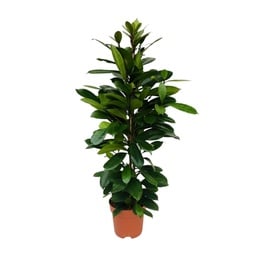
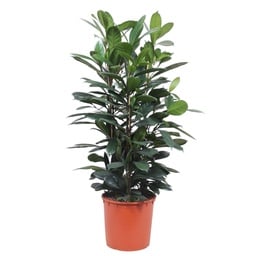
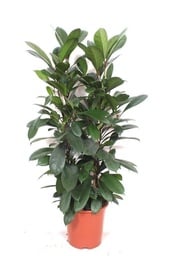
When buying, do not just check the height. Look for a sturdy trunk, several healthy shoots and leaves without sticky residue. A dense but not excessively soft root ball indicates that the plant has not been kept permanently wet.
Ficus benjamina often responds to a change of location by dropping leaves. Consistent conditions help the plant produce new leaves.
How do you water a Ficus correctly?
When watering, the condition of the soil matters, not the day of the week. Push a finger two to four centimetres into the substrate. If the soil still feels moist there, wait. If the surface is dry and the pot feels noticeably lighter, the plant needs water.
Water thoroughly and allow excess water to drain
Water slowly and evenly until the first drops run out of the drainage hole. Wait a few minutes, then empty the cachepot or saucer. This allows the water to reach the entire root ball without leaving the roots standing in water.
A pot without a drainage hole makes monitoring more difficult. Excess water collects in the lower section and often remains unnoticed. The roots lose oxygen, start to rot and can no longer absorb water properly. Yellow leaves and a musty smell from the soil often indicate this problem.
How does water consumption change throughout the year?
In spring and summer, the Ficus grows more actively and uses more water. On bright, warm days, a small plant may be dry again after just a few days. In autumn and winter, its needs decrease because it receives less light and grows more slowly. Still, check the soil regularly.
- Use room-temperature water to prevent the roots from suffering a cold shock.
- Water thoroughly and less often rather than adding small amounts to the surface every day.
- Reduce the amount of water in a dark location, at low temperatures and during periods of little growth.
- Occasionally flush highly chalky soil with soft water if pale deposits form.
Looking after several houseplants is easier if you check their pots by weight and soil moisture. You can find suitable products for water and irrigation solutions in the garden irrigation category. For an individual Ficus, checking with your finger or a wooden stick is usually sufficient.
Important note
Never leave a Ficus standing in water permanently. Check the cachepot after every watering and remove any remaining water. If the roots are soft and dark or the plant is losing a lot of leaves, remove it from the pot and cut away rotting root sections with a clean tool.
How do you fertilise, repot and prune a ficus?
A ficus does not need nutrient-rich soil all the time. The key is a structurally stable mix that retains water while still allowing air to reach the roots. High-quality houseplant soil with mineral components such as pumice, perlite or expanded clay is better suited than heavy garden soil.
Which soil and pot are suitable?
The new pot should be only two to four centimetres larger than the old one. A much larger pot holds too much water and takes longer to dry out. Do not add a thick layer of gravel as a substitute for a drainage hole. An opening in the bottom of the pot remains essential.
You can find suitable accessories for pots, saucers and plant care in the Garden + Plant Accessories category. Rock dust can be used as a soil improver for plants. Use it sparingly on houseplants and follow the manufacturer's instructions. It does not replace liquid houseplant fertiliser or resolve waterlogging.

When and how should you fertilise?
From March to September, a liquid houseplant fertiliser applied every two to four weeks is usually sufficient. Follow the dosage instructions on the label. A higher concentration does not reliably speed up growth, but it can damage the roots and cause salt deposits on the soil.
After repotting, wait around four weeks before fertilising if the new soil already contains nutrients. In winter, a ficus normally does not need fertiliser in a dark, cool location. If the plant continues growing in a very bright spot, you can fertilise sparingly at a reduced dosage at most. You can find a selection in the Fertilisers category.
How do you repot a ficus?
The best time is in spring, shortly before the new growth phase. Carefully remove the plant from its old pot and inspect the root ball. Healthy roots are light to medium brown and firm. Trim back black, soft or unpleasant-smelling roots with a clean, sharp tool.
- Cover the drainage hole with a loose piece of terracotta or a suitable mesh.
- Add some fresh soil and place the root ball at the same level as before.
- Fill in the gaps without pressing the growing medium down too firmly.
- Water thoroughly once and allow the water to drain away completely.
- Place the plant in a bright spot protected from strong midday sunlight for a few days.
How do you prune shoots and leaves?
It is best to prune ficus plants in spring or early summer. Shorten long shoots just above a leaf node so that new branches can develop there. First remove dead, diseased or inward-growing branches. When pruning heavily, remove no more than around one third of the canopy at a time.
Ficus plants produce a milky sap that can irritate the skin. Wear gloves and wipe away any sap with a damp cloth. Allow the cut surfaces to dry and clean the secateurs after use. You can take cuttings from healthy shoot tips provided they have at least one or two leaves and a visible node.
Ficus species need well-drained soil and are sensitive to persistently wet roots. Water again only once the surface has dried out.
Why is a ficus losing leaves and what can help?
Leaf loss does not automatically mean that the plant is dying. Ficus plants often react to changes in light, temperature or humidity. Observe when the leaf drop occurs in relation to these changes and check the roots before increasing the amount of water.
How to interpret common symptoms correctly
- Many green leaves fall shortly after moving the plant: The ficus is probably reacting to changed light levels or draughts. Keep the new location consistent.
- Yellow leaves and wet soil: Check for waterlogging and inspect the roots. Let the root ball dry out before watering again.
- Dry, brown leaf edges: The plant is often too dry, the air is very warm or the soil contains too many salts.
- Pale, small new leaves: The location may be too dark or the pot may contain very few nutrients.
- Sticky patches and fine webbing: Check the undersides of the leaves for scale insects, mealybugs or spider mites.
How do you identify and treat pests?
Check new plants when you buy them and do not place them directly next to your other houseplants during the first few weeks. Once a week, inspect the undersides of the leaves, shoot tips and leaf axils. Pests often appear there before they are visible on the upper surface of the leaves.
For a light infestation, isolate the ficus and gently rinse the leaves with lukewarm water. Remove visible scale insects or mealybugs with a damp cotton bud. Check the plant again after a few days. For a heavier infestation, use an approved product exactly as directed on the label and follow the safety precautions specified there.
Which care routine keeps a ficus healthy in the long term?
A regular routine helps without treating the plant according to a rigid calendar. Check the soil moisture and undersides of the leaves weekly. Remove dust with a soft, slightly damp cloth. Do not use leaf shine products, as they can make the leaf surface sticky and affect the pores.
- Weekly: Check the soil moisture, undersides of the leaves and outer pot.
- Every two weeks: Turn the pot slightly and check the leaves for dust or marks.
- Monthly during the growing season: Assess the need for fertiliser and space for new shoots.
- In spring: Check the roots, pot size and need for pruning.
- In winter: Check the distance from radiators and adjust the amount of water to the slower growth.
Additional advice
Briefly note the location, last watering date and fertilising date for each ficus. This makes it easier to identify whether leaf loss follows a change of location, overly wet soil or a pest infestation. This simple record is particularly helpful for large plants with slow growth.
Good ficus care does not require complicated specialist equipment. Give the plant enough light, check the soil before every watering and change its location only with care. With a suitable pot, moderate fertilising and clean pruning, a ficus will remain healthy and attractive for a long time.
Frequently Asked Questions
- How often should I water a ficus?
- Do not follow a fixed weekly schedule. Water as soon as the top layer of soil is dry by a few centimetres. Water thoroughly and remove excess water from the outer pot or saucer. A ficus usually needs less water in winter and significantly more in summer in warm, bright locations.
- Why is my ficus suddenly losing leaves?
- Sudden leaf drop often follows a change of location, draughts, cold window panes, waterlogging or major fluctuations in watering. First check the light, temperature and roots. Remove yellow leaves, allow the soil to dry out and then keep the plant in the same location for several weeks.
- What is a suitable location for a ficus?
- A ficus needs a bright to very bright location, but should initially be kept out of direct midday sun. East- or west-facing windows are usually a good choice. Gradually acclimatise the plant to direct sunlight. Keep it away from radiators, air-conditioning units and frequently opened doors, as dry or cold air can encourage leaf drop.
- When should I repot a ficus?
- Repot in spring when roots are growing out of the drainage hole, the root ball is completely filled with roots or water runs straight through the pot. Choose a pot only a few centimetres larger. Use loose, well-draining soil and do not fertilise for around four weeks after repotting.
- Is a ficus suitable for households with pets?
- Many ficus species contain milky sap that can irritate the skin and mucous membranes; the sap of Ficus benjamina is also considered problematic for animals. Keep the plant out of reach of children and pets. Wear gloves when pruning and wash your tools and hands afterwards.
You may also be interested in
- Ficus has yellow leaves: causes and first aid
- Rubber plant care: how to help your Ficus elastica thrive
- How do I care for houseplants properly? Top tips for healthy greenery
- Fiddle-leaf fig care: location, watering and special considerations
- Monstera care: how to help your trendy houseplant thrive
- Caring for houseplants properly: avoid these 7 common mistakes