
In brief: The Friesia floribunda rose delights with bright yellow, intensely fragrant flowers and excellent disease resistance. To produce abundant blooms, it needs a sunny location, nutrient-rich soil and regular watering. Correct pruning in spring and targeted feeding during the growing season are essential for its care and longevity.
The Friesia floribunda rose is a shining star in any garden. Its pure yellow, double flowers compete with the sun and release an intense, fruity fragrance. Since being bred by Kordes in 1973, it has become one of the most popular yellow rose varieties. Its robust nature and willingness to bloom make it an ideal choice for rose lovers and those who want to become one. With the right care, Friesia will reward you with an abundance of sunny yellow blooms from June well into autumn.
What makes the Friesia floribunda rose so special?
Friesia, also known as 'Sunsprite', is more than just a beautiful flower. It combines several qualities that set it apart from the many other rose varieties. Its flower colour is a pure, rich yellow that does not fade even in strong sunlight. The medium-sized, cup-shaped flowers appear in clusters and open gradually, ensuring a long flowering period.
Another outstanding feature is its strong fragrance. It is often described as a blend of citrus fruit and classic rose notes. This intense fragrance has earned it international recognition and awards. Its leaves are dark green and glossy, creating a wonderful contrast with the yellow flowers and highlighting its excellent leaf health. The petals are so delicate, almost like the finest soft toys, which should be handled with care.
A rose is a rose is a rose.
Growth habit and uses in the garden
As a floribunda rose, Friesia grows bushy, compact and well branched. It reaches a height of about 60 to 80 centimetres and a similar width. This harmonious growth habit makes it versatile:
- In group plantings: Plant three to five specimens together to create a bright, expansive display in the flower bed.
- As a standalone plant: Even on its own, it creates a radiant focal point in smaller gardens or front gardens.
- In mixed borders: Combine Friesia with perennials such as lavender, sage or delphiniums. The blue and violet tones of the companion plants create a fascinating contrast with the rose’s yellow flowers.
- In containers: Thanks to its compact growth, it is ideally suited to growing in large pots on a balcony or patio.
How do you plant the Friesia rose correctly?
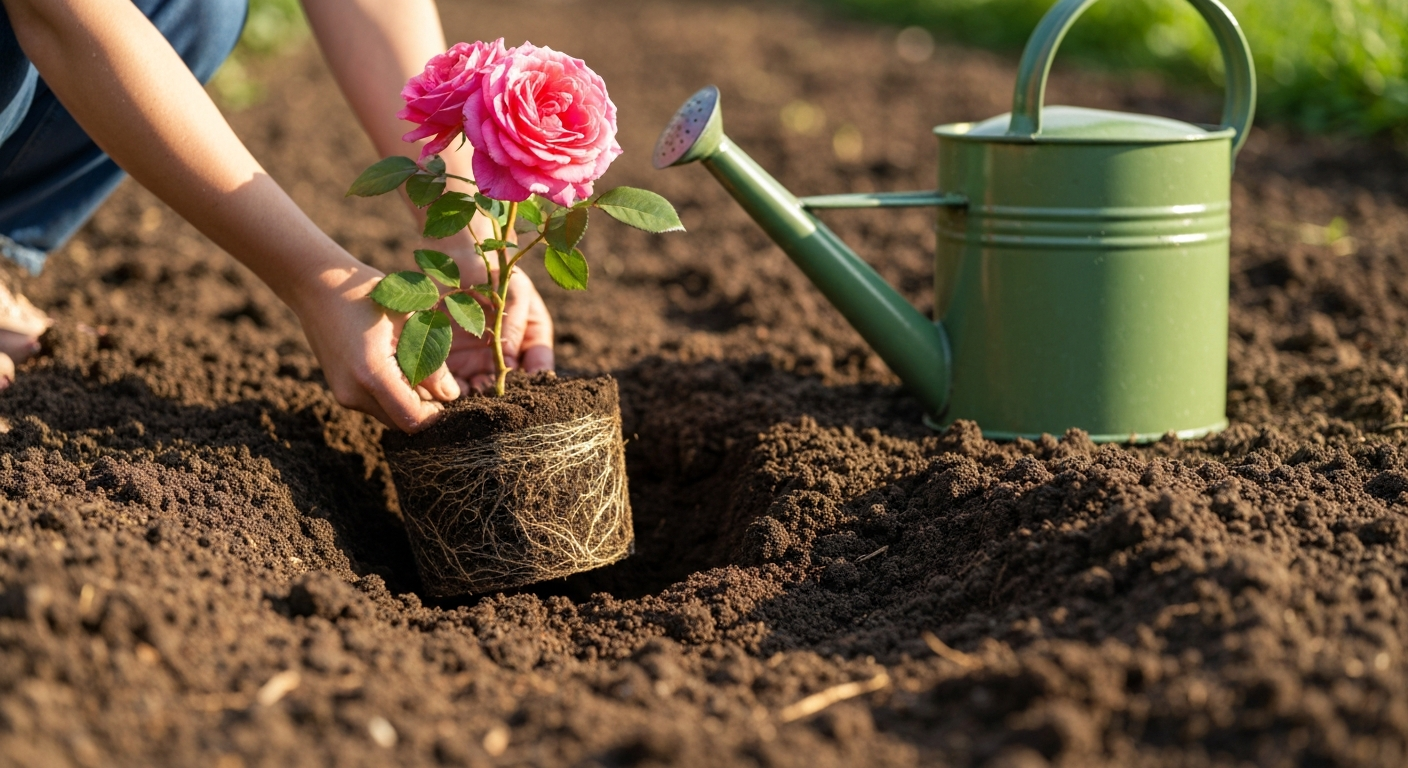
Careful planting lays the foundation for healthy growth and abundant flowering. The right time and correct preparation of the planting hole are crucial. Container-grown roses can be planted almost all year round, while bare-root roses are best planted in autumn or early spring.
Step-by-step planting guide
- Prepare the roots: For bare-root roses, trim the roots slightly and place the plant in a bucket of water for several hours. For container-grown roses, soak the root ball in water until no more air bubbles rise to the surface.
- Dig the planting hole: The hole should be twice as wide and deep as the root ball. Loosen the base of the planting hole thoroughly to prevent waterlogging.
- Improve the soil: Mix the excavated soil with mature compost or specialist rose fertiliser. This provides valuable nutrients to help the plant get started.
- Plant the rose: Place the rose in the hole so that the graft union (the thickened area between the roots and shoots) is about five centimetres below the soil surface. This protection is crucial for winter hardiness.
- Backfill and water: Fill the hole with the prepared soil, firm it lightly and create a watering rim. Then water the rose thoroughly with at least 10 litres of water.
Additional advice
After watering, mound soil or compost around the freshly planted rose to a height of about 15 cm. This protection prevents the shoots from drying out and shields them from late frosts until the rose is well established.
What is the ideal location for Friesia?
Choosing the right location has a direct impact on the health and abundance of flowers produced by your Friesia. As a sun lover, it prefers bright and warm spots. An ideal location meets the following criteria:
- Sun: At least five to six hours of direct sunlight per day are ideal. Morning sun is especially valuable because it quickly dries dew from the leaves and helps prevent fungal diseases.
- Air: A well-ventilated spot is important. Good air circulation also helps the leaves dry quickly after rain. However, avoid draughty corners.
- Soil: The soil should be deep, rich in humus and nutrient-rich. Roses prefer a slightly acidic to neutral pH. Improve heavy clay soils with sand and light sandy soils with compost or bentonite.
How do you feed your yellow floribunda roses for the best results?
To produce its many flowers and healthy foliage, Friesia needs a regular supply of nutrients. Balanced feeding is the key to a vigorous plant. Apply the first feed in spring when the forsythia is in bloom. This signals the start of the growing season.
Feeding strategy throughout the year
A combination of organic and mineral fertiliser has proved effective. Organic fertiliser, such as compost or horn shavings, works slowly and improves soil structure. Mineral rose fertiliser provides nutrients that are quickly available.
Apply the first main feed in March or April. Lightly work a specialist rose fertiliser into the soil around the plant. A second, lighter application after the first flowering period in late June or early July gives the rose energy for a second flush of flowers. After the end of July, do not use any more nitrogen-based fertilisers. The plant needs to prepare for winter and allow its shoots to mature.
Expert tip
An autumn feed with a potassium-rich fertiliser (Patentkali) in September strengthens the rose’s cell structure and improves its frost resistance. Potassium makes the shoots more resistant to winter frosts.
When and how should you prune the Friesia rose?
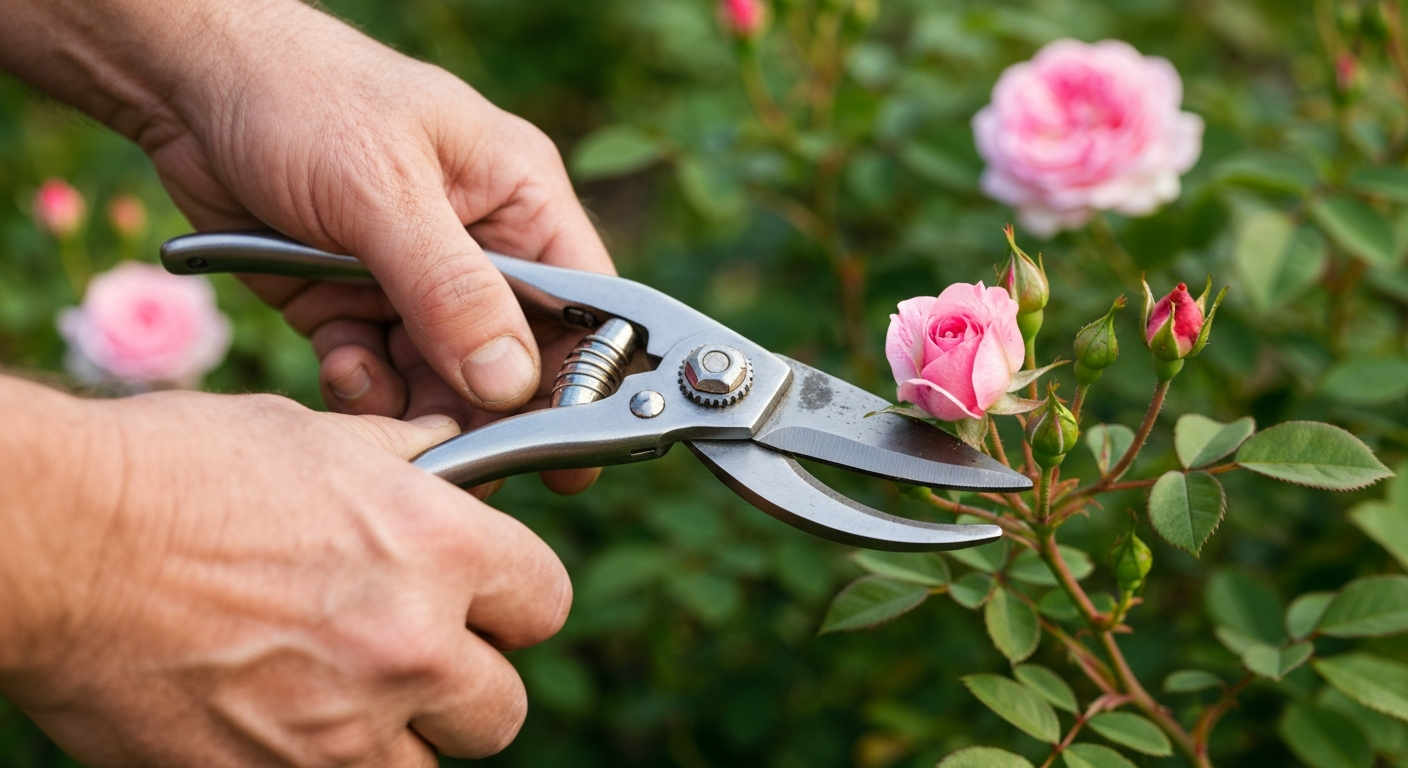
Proper pruning is one of the most important care tasks for floribunda roses. It encourages bushy growth and abundant blooms while keeping the plant healthy. Prune in spring, once the risk of hard frost has passed, usually around the time forsythia blooms.
Spring pruning in detail
For pruning, you’ll need sharp, clean pruning shears. A complete set such as the 3D Tree and Hedge Care Set with Telescopic - Multi-Handle
has all the tools you need. For bigger gardening projects, the 3D Tree and Hedge Care Set may also be a good choice.

- Remove old and dead wood: First, cut any frost-damaged, diseased, or dead shoots back to healthy wood. You can recognize healthy wood by the white to light green pith inside the shoot.
- Remove weak shoots: Cut thin, weak shoots off at the base. They use energy without producing attractive blooms.
- Shorten strong shoots: Cut the remaining strong main shoots back to three to five eyes (buds). This leaves them approximately 15-20 cm above the ground.
- Make the cut: Always cut at a slight angle, about half a centimetre above an outward-facing bud. This encourages new shoots to grow outward and keeps the center of the plant open and well ventilated.
Older, woody roses may need larger cuts. Seal these wounds with a wound sealant such as "Lac Balsam" New, 385 g - Tree Care
to help keep pathogens out.
Summer pruning for continuous blooms
Remove spent flowers regularly throughout the summer. Cut off the entire flower head just above the first fully developed leaf with five leaflets. This encourages the rose to quickly produce new flowering shoots and keeps the blooms coming into fall.
How can you protect the Friesia from diseases and pests?
Friesia is a very resilient rose variety with naturally strong resistance to two common rose diseases: black spot and powdery mildew. Problems can still arise in unfavorable weather or when the plant is stressed, so prevention is the best protection.
Important note
Avoid getting the leaves wet when you water your rose. Water directly at the base instead. Leaves that stay wet overnight create ideal conditions for fungal diseases such as black spot.
Common pests and how to control them
- Aphids: These pests often gather on young shoots and buds. For a light infestation, spray them off with a strong stream of water. For a severe infestation, products made with rapeseed oil or insecticidal soap can help while being gentle on beneficial insects.
- Rose leafhoppers: Look for small white speckles on the upper sides of leaves. The larvae feed on sap from the undersides. Treatment is usually only needed for a severe infestation.
- Spider mites: These pests are most common in hot, dry weather. Fine webs around shoot tips are a sign of infestation. Regularly rinsing the plants can help prevent an outbreak.
A healthy, well-fed rose bush in a suitable location is the best defense against pests and disease. You can give your Friesia extra support with plant-strengthening treatments such as horsetail or nettle tea.
How can you safely overwinter the Friesia rose?
Friesia is considered reliably hardy, but winter protection is a good idea in colder regions. The most important step is protecting the sensitive graft union. When you’re already thinking about the best Christmas toys, it’s time to get the garden ready for winter.
In late fall, around November, mound a mixture of garden soil and compost around the base of the rose to a height of approximately 20 cm. This layer insulates the graft union and lower buds against hard frost. Cover the mound with fir branches for extra protection. They shield the rose from winter sun, which can dry it out when the soil is frozen. This protection is just as important for the garden’s most sensitive plants as warm baby textiles.
In spring, after the last hard frosts, remove the fir branches and carefully spread the mounded soil back over the surrounding bed. The rose can then start the new season at full strength.
The garden is the last luxury of our time, because it demands what has become most precious in our society: time, care and space.
With these care tips, you’ll give your Friesia floribunda rose the best chance to reward you year after year with a sea of fragrant, bright yellow blooms. This easy-care rose adds a sunny touch to any garden.
Frequently Asked Questions
- How hardy is the Friesia rose?
- Friesia is hardy down to approx. -20 °C. Even so, light winter protection is recommended in harsher locations: mound soil or compost around the base and cover it with conifer branches to protect the graft union from severe frost and encourage strong growth in spring.
- Is the Friesia rose susceptible to disease?
- No, Friesia is known for its excellent foliage health. It has good resistance to common rose diseases such as black spot and powdery mildew. This resilience makes it an easy-care choice for beginners and experienced gardeners who value healthy plants.
- How fragrant is the Friesia rose?
- Friesia has an intense fragrance often described as fruity and lemony. It is one of the most fragrant roses and has received awards for its scent. Its aroma is especially noticeable on warm, sunny days, making it a wonderful addition to any fragrance garden or seating area.
- Can you grow the Friesia rose in a container?
- Yes. With its compact growth and mature height of 60-80 cm, Friesia is well suited to container growing. Choose a planter with a capacity of at least 20-30 liters and good drainage. In a pot, make sure it gets regular water and nutrients, and protect the root ball in winter.
- When is the best time to plant the Friesia rose?
- The best time to plant bare-root Friesia roses is in fall (October/November) or early spring (March/April). Container-grown roses can be planted throughout the growing season as long as the ground is not frozen. Planting in fall gives the rose time to establish roots before winter.