
In brief: A successful renovation starts with detailed planning. Define clear goals, set a realistic budget including a contingency and create a schedule. The correct order of work is crucial: from major demolition work and the installation of building services to fine painting and finishing work. This helps you avoid duplicate work and unnecessary costs.
A new colour scheme in the living room, a modern bathroom or the complete stripping back of an old building – every project starts with an idea. However, the journey from vision to finished result is often complex. This guide takes you through every phase of renovating and refurbishing. You will find practical renovation tips, from careful planning to final completion.
Planning is half the battle: How do you start your renovation project?
An ill-considered start can quickly lead to frustration and spiralling costs. Take the time to prepare properly. This is the foundation of every successful project, whether you are simply redesigning one room or planning a complete house renovation.
Assessing your needs and setting goals
What exactly do you want to achieve? At the outset, ask yourself what problem the renovation is intended to solve. Is it purely about visual improvements, greater functionality or fixing defects? Define clear, measurable goals. Create a list of all the changes you want to make, room by room. This list will help you keep track of everything and set priorities.
Calculate your budget and schedule realistically
Estimate the expected costs for materials and any tradespeople. Get several quotes and compare them. Add a contingency of 15-20 % to your estimate for unexpected expenses. A realistic schedule that also allows for possible delays will prevent stress and ensure a smooth process.
The correct order of trades is crucial to the success of a renovation. Planning mistakes often lead to dismantling, duplicate work and unnecessary costs.
The correct order of work
The golden rule is: work from dirty to clean and from top to bottom. This sequence minimises damage and cleaning effort.
- Phase 1: Demolition and stripping back. Old wallpaper, tiles, floor coverings and non-load-bearing walls are removed.
- Phase 2: Structural work and building services. Structural changes, roof work and the installation of new windows. Specialists then install new pipes and cables for water, wastewater and electricity.
- Phase 3: Plaster and screed. Walls and ceilings are plastered, and screed is poured as the base for the floor covering.
- Phase 4: Drywall and finishing work. Install partition walls and fill the joints.
- Phase 5: Floors and walls. Tiles, parquet or other floor coverings are installed. The walls are then painted or wallpapered.
- Phase 6: Final installation. Doors are fitted, and sockets, light switches, lamps and sanitary fixtures such as toilets and washbasins are installed.
Redesigning walls: More than just a coat of paint
Fresh paint on the walls is one of the most effective and affordable ways to give a room a new look. However, preparation is crucial for a professional result. This turns simply painting walls into a lasting success.
The surface must be right
A wall must be clean, dry, sound and smooth before you reach for the brush. Remove old, loose wallpaper remnants. Clean dust and grease from the surface. Fill small holes or cracks and sand the areas smooth once dry. Applying primer will then ensure that the paint covers evenly and adheres well, especially on highly absorbent surfaces such as plasterboard.
Pro tip
Test how absorbent your wall is with a wet sponge. If the area darkens quickly and significantly, the surface is highly absorbent and should definitely be primed. If the water beads up, you may need to lightly sand the surface so the paint adheres.
Tools and techniques for perfect results
Choosing the right tools has a major impact on the result. Use a paint roller for large areas and a brush for corners and edges. Carefully mask windows, doors, skirting boards and sockets with painter's tape. First, cut in the corners and edges with the brush. Then roll the large areas using the so-called “cross-hatch technique”: first vertically, then horizontally and finally vertically once more without adding more paint. This creates an even, streak-free finish.
Hard-to-reach areas such as behind radiators can also be painted neatly with the right tool. Special radiator brushes have a long, angled handle. The
radiator brush, the slightly wider 75mm radiator brush and the narrower 50mm radiator brush are ideal for painting these niches perfectly.


What is involved in a full-scale house renovation?
A full-scale renovation goes far beyond cosmetic fixes. It affects the building’s structure and fundamentally restores its condition. The aim is often to bring an old house up to new-build standards, both technically and in terms of energy efficiency.
Structural work: roof, façade and windows
The building envelope is crucial for energy efficiency. Roof renovation often includes a new roof covering and, above all, modern insulation. Thermal insulation is also added to the façade, which can drastically reduce heating costs. Replacing old windows with triple-glazed models is another key element of an energy-efficient home renovation.
Important note
If you alter a building’s structural integrity, for example by removing load-bearing walls, you must consult a structural engineer and obtain planning permission. Work on electrical installations may only be carried out by certified specialist contractors.
Modernising home systems: heating, plumbing and electrics
Outdated heating systems are inefficient and expensive to run. Switching to a modern heat pump, combined heat and power unit or pellet heating system pays for itself over the years. Water and wastewater pipes are often replaced at the same time. Our range of house drainage pipe systems offers the right components for this work. Renewing the electrical installation, including the consumer unit and wiring, improves safety and creates the foundation for modern applications such as a smart home.
A comprehensive energy renovation can reduce the energy consumption of an older building by up to 80 percent. This not only saves money, but also protects the climate.
Modernising an apartment: smart upgrades for greater comfort
You do not always need a full-scale renovation to increase the value and quality of life offered by your property. A targeted apartment renovation focuses on improving comfort, functionality and aesthetics.
Bring your kitchen and bathroom up to date
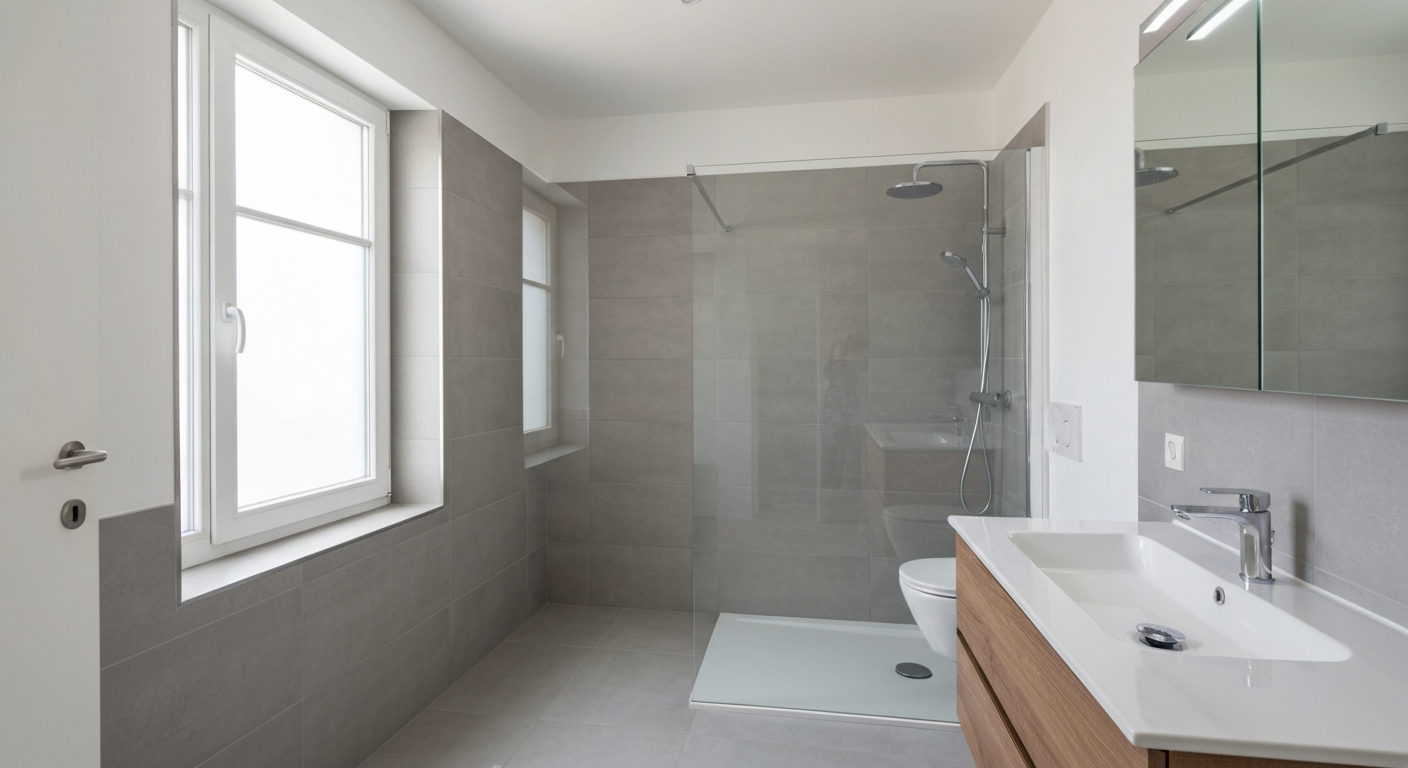
The kitchen and bathroom are the rooms that benefit most from modernisation. New water-saving taps, a level-access shower or modern tiles can transform a bathroom. In the kitchen, energy-efficient appliances, an ergonomic layout and ample storage can make everyday life noticeably easier. You can find the right tools for projects like these, from drills to saws, in our power tools category.
Accessibility and smart living
Think about the future when modernising your home. Accessibility improvements such as wider doors or eliminating thresholds increase comfort for people of all generations. Smart home technology is no longer a luxury. Smart thermostats that regulate the heating and app-controlled lighting save energy and enhance comfort. Many of these systems can also be retrofitted without major building work.
Additional advice
Before starting major renovation or modernisation work, check the current funding programmes offered by KfW and BAFA. The government supports many energy-efficiency measures through low-interest loans or direct grants. This can significantly ease the pressure on your budget.
Costs and financing: what should you expect?
The cost of renovating or refurbishing a property varies considerably depending on the scope of the work and the standard you choose. A simple cosmetic renovation involving paint and new flooring can cost as little as 50-150 euros per square metre. A comprehensive bathroom and kitchen modernisation is more likely to cost 500-1.000 euros per square metre. A full-scale renovation of an older building can quickly cost 1.500 euros per square metre or more.
Careful planning is the key to transforming your home successfully. Whether you are simply painting the walls or undertaking a complete renovation, the right home renovation tips, a clear strategy and suitable supplies from our business supplies range, such as dust sheets and gloves, will help make your project a success. Start your project well prepared and look forward to the results.
Frequently asked questions
- What is the difference between renovating, refurbishing and modernising?
- Renovating means improving the appearance of something through superficial work, such as painting walls. Refurbishing addresses serious defects in the building fabric, such as a damp basement. Modernising brings a property up to current technical or energy-efficiency standards, for example by installing a new heating system or smart home technology.
- What order should you renovate a house in?
- Always work from rough to fine and from top to bottom. The usual order is: 1. Demolition, 2. Roof and façade, 3. First-fix installations (heating, plumbing, electrics), 4. Windows and doors, 5. Internal plaster and screed, 6. Flooring, 7. Painting and decorating, 8. Final installation of sockets and sanitary fittings.
- How much should I budget for unexpected costs?
- Always set aside a financial contingency of 15 to 20 percent of the estimated total cost. Unexpected problems are particularly common in older buildings, such as hidden damage in walls or outdated wiring and pipes, and fixing them can result in additional costs.
- Do I need planning permission for my renovation?
- You do not need permission for purely cosmetic renovations such as painting or laying flooring. However, if you alter the building’s structural integrity (e.g. by removing walls), change its external appearance (e.g. by installing differently shaped windows) or change its use, planning permission from the relevant building authority is generally required.
- Can I claim energy renovation costs against my tax?
- Yes, in Germany you can claim tax relief for energy-efficiency improvements to owner-occupied residential property. Alternatively, funding programmes from KfW Bank or BAFA offer low-interest loans or grants. Check the current conditions before starting the work.
You might also be interested in
- Renovating a House: Your Complete Guide from Planning to Completion
- Renovating Walls: The Complete Guide for Your Home
- Renovating Made Easy: Your Path to a Modern Apartment
- Painting Over Brightly Coloured Walls: The Complete Guide
- Painting Walls: How to Mask Edges and Corners Cleanly
- Smart Renovation: Modernising Your Home Systematically