
In brief: To get your poinsettia to bloom again, it needs pruning and fresh soil after a dormant period in spring. From autumn onwards, a short-day treatment is crucial: place the plant in complete darkness for at least 12 hours every day for six to eight weeks to encourage the development of colourful bracts.
Proper Care After Christmas: The Foundation for New Blooms
Your poinsettia has brightened up the festive season, but it is now slowly losing its colourful leaves. That is no reason to throw it away. With the right care, you can turn this seasonal decoration into a perennial houseplant. The path to renewed flowering begins immediately after the festive season.
The Right Location After the Festive Season
After flowering, place your poinsettia in a bright spot away from direct sunlight. A windowsill with morning or evening sun is ideal. The temperature should be a moderate 15 to 18 degrees Celsius. A cooler bedroom or a bright hallway are both suitable for this dormant phase.
Watering and Feeding During the Dormant Phase
Significantly reduce watering from January onwards. Water only enough to prevent the root ball from drying out completely. Allow the top layer of soil to dry thoroughly between waterings. Do not fertilise at all during this period. This period of limited resources signals to the plant that it should recover and gather strength for new growth.
How Do You Prune Your Poinsettia Correctly?
Pruning is a crucial step in promoting bushy growth and abundant flowering in the next season. Without pruning, the plant often grows sparsely and produces only a few new shoots. Use clean, sharp secateurs to avoid crushing the stems.
Important note
The white milky sap released by poinsettias can cause skin irritation. It is best to wear gloves when pruning and avoid contact with your eyes. You can stop the flow of sap by briefly dipping the cut surfaces in lukewarm water or sealing them with a candle flame.
The Best Time to Prune
The ideal time to prune is in spring, around March or April, before the plant enters its main growth phase. By this time, it has completed its dormant period and starts to mobilise new energy. A thorough cut encourages strong, well-branched new growth.
Step-by-Step Pruning Guide
A radical cut may initially seem harsh, but it is necessary for a compact shape. Shorten all the plant's stems to about 10 to 15 centimetres. Leave three to four buds, known as eyes, on each remaining stub. These eyes develop into the new, strong shoots that will later carry the colourful bracts. Find suitable garden tools in our range.
Summer Outdoors: How Your Poinsettia Gathers Strength
After pruning, the growth phase begins. Your poinsettia now needs more water, warmth and nutrients. Summer is when the plant lays the foundations for its winter display of flowers and colourful bracts.
Repotting in Spring
Immediately after pruning is the perfect time to repot. Choose a pot that is only a few centimetres larger in diameter than the old one. Use high-quality, well-draining potting soil. Good drainage at the bottom of the pot, for example from expanded clay, prevents waterlogging and root rot. When repotting, you can carefully remove old, depleted substrate from the roots. A wide range of garden and plant care supplies will help you provide the best possible care.
Can You Put It Outdoors? What to Bear in Mind
From the end of May, after the Ice Saints, you can move your poinsettia to a sheltered spot outdoors. A partially shaded location on a balcony or patio is ideal. Protect the plant from direct midday sun, strong winds and prolonged rain. Start feeding it regularly again, about every one to two weeks, with a liquid fertiliser for flowering plants. Bring the plant back indoors in September, before the nights become too cold.
Spending summer outdoors in a partially shaded, sheltered spot strengthens the plant and encourages vigorous growth. This allows it to gather the energy it needs for later flower formation.
The Secret Behind Red Leaves: How Do You Get a Poinsettia to Bloom?
The bright red, white or pink leaves of a poinsettia are not its actual flowers. They are so-called bracts. The true flowers are the small, inconspicuous yellow buds in the centre. The plant needs special treatment for these bracts to change colour.
Short-Day Treatment: Darkness Is the Key
Poinsettias are short-day plants. This means they only develop colourful bracts when they receive less than 12 hours of light per day over an extended period. In their native Mexico, this happens naturally. In our illuminated homes, you need to control the process yourself.
Expert tip
In the evening, simply place a large lightproof cardboard box, bucket or black plastic bag over the plant. Make sure the leaves are not bent and that there is some air circulation to prevent rot. Remove the cover at the same time every morning.
The Exact Schedule: 6-8 Weeks of Darkness
Start the blackout procedure around the end of September or beginning of October. Place the plant in complete darkness every day for at least 12, preferably 14 hours, for six to eight weeks. This means from around 6 pm to 8 am. Be consistent. Even a brief interruption from a room light or street lamp can disrupt the entire process and prevent the bracts from changing colour.
Colour formation in poinsettia bracts is a classic short-day response. Without a consistent dark period of at least 12 hours every day, the plant will grow but remain green.
Proper Care During Flower Induction
Continue caring for the plant during the short-day treatment. Water regularly, but avoid waterlogging. Continue fertilising every two weeks. As soon as the bracts begin to develop a noticeable colour, you can stop the blackout treatment and move your poinsettia to its final bright spot for the festive season.
Common Problems and How to Solve Them
Problems can occasionally occur even with the best care. Most can be quickly resolved with a few minor adjustments.
Yellow Leaves and Leaf Drop
If your poinsettia loses yellow leaves, this is often a sign of incorrect care. The most common cause is waterlogging. Check the moisture level of the soil and only water once the top layer is dry. Cold draughts or a location that is too dark can also cause leaf drop. Provide a bright, sheltered spot.
Additional advice
It is best to water poinsettias from below. Place the pot in a bowl of room-temperature water for about 15 minutes so the root ball can absorb enough water. Be sure to pour away any excess water from the cachepot afterwards to prevent root rot.
Identifying and Treating Pest Infestations
Spider mites or whiteflies can appear in dry indoor air during winter. Check the undersides of the leaves regularly. For a light infestation, rinsing the plant with lukewarm water is often enough. For a more severe infestation, use a suitable plant protection product.
Festive Glow for the Dark Season
Caring for a poinsettia throughout the year is a rewarding project for any plant lover. It shows how much life there is in plants that are often treated as disposable items. While you wait for your plant to develop its new colourful display, you can decorate your home with other festive elements. Long-lasting and atmospheric decorations perfectly complement the natural greenery.
A beautiful addition or alternative that creates a magical atmosphere year after year is the
. It shines reliably and brings festive sparkle to any room. For particularly flexible decorating, the is also a great choice. If you prefer a modern look, the lets you create smart lighting accents that can even be controlled via an app. This creates a welcoming festive atmosphere throughout your Garden + Outdoor area.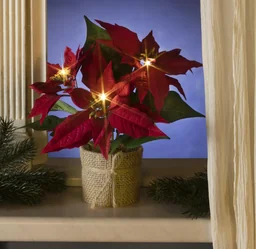


Frequently Asked Questions
- Why does my poinsettia lose its leaves after Christmas?
- Leaf drop is often a reaction to stress. Common causes include cold draughts during transport or ventilation, too much or too little water, and a location that is too dark after flowering. A dormant period with less water is normal after the holidays and helps the plant recover.
- Is poinsettia sap poisonous?
- Yes, the white sap (latex) of a poinsettia is mildly toxic. It can cause irritation if it comes into contact with the skin. Avoid contact with the eyes and mucous membranes, and wear gloves as a precaution when pruning the plant. Keep the plant away from young children and pets.
- When should I repot my poinsettia?
- The best time to repot is in spring, around April or May, after pruning and the first dormant period. Choose a pot that is only slightly larger and use fresh, high-quality potting compost to prevent waterlogging and encourage new root growth.
- My poinsettia has no red leaves, only green ones. What am I doing wrong?
- The plant needs consistent short-day treatment. This means it must be kept in complete darkness for at least 12 hours every day for about eight weeks from September or October. Even the smallest light sources, such as a streetlamp or room light, can prevent the bracts from changing colour.
- Can I put my poinsettia outside in summer?
- Yes, spending the summer outdoors is good for a poinsettia. From the end of May, once there is no longer any risk of frost, place it in a partially shaded spot protected from wind and rain. Bring it back indoors in good time before the first frost in autumn.
You may also be interested in
- Overwintering a Poinsettia: How to Make It Bloom Again Next Year
- Poinsettia Care: Why Are the Leaves Curling?
- Are Poinsettias Poisonous? Facts About Risks to People & Pets
- How to Make Orchids Bloom: Tips for Long-Lasting Flowers
- How to Decorate Poinsettias Beautifully
- African Violet Not Blooming? Tips for Beautiful Flowers