
In brief: You can solve noise problems by choosing a quiet appliance, implementing soundproofing measures at the installation site and optimising its position. You can overcome limited space with compact split systems, by using roof areas or basement rooms, and through intelligent integration into the house façade. Careful planning with a qualified installer is essential.
Heat Pump for a Terraced House: Solve Noise & Space Issues
You are planning to install a heat pump in your terraced house. The technology offers excellent efficiency and independence from fossil fuels. However, two specific challenges arise in densely built-up terraced housing: where can you find enough space for the outdoor unit? And how can you prevent operating noise from disturbing your neighbours? We answer these questions with practical solutions.
Why are noise and space critical issues for terraced houses?
Terraced houses share property boundaries. The garden area is often narrow and long. The distance to the neighbours may be just a few metres. As a result, installing a conventional heat pump against the house wall can quickly lead to conflicts. The noise from the fan and compressor is transferred directly.
At the same time, there is often no ideal installation location. You want to keep the patio clear, while the garage wall may be too close to a bedroom window. You need creative approaches to position the unit in a way that is both functional and considerate of your neighbours. The good news is that modern technology and careful planning can overcome both problems.
How can you reduce the operating noise of your heat pump?
The noise is primarily generated by the fan, which draws in outdoor air, and the compressor inside. Your first step is to choose the right appliance. Pay particular attention to a low sound power level when buying. This is given in decibels (dB). Compare the values for different models.
Expert tip
Ask the manufacturer or specialist retailer for sound measurements at distances of one and three metres. Datasheet figures alone can be misleading. A trial run of a demonstration unit at your installer’s premises will give you the most reliable acoustic assessment for your property.
The second adjustment is the installation method. Do not mount the unit directly on a rigid house wall. Use special sound-insulating wall brackets or place it on a concrete foundation in the garden. The latter increases the distance from the wall and reduces sound transmission into the masonry.
The third option is active soundproofing. A soundproof fence or noise barrier between the unit and the property boundary can interrupt sound waves. Make sure that this construction does not obstruct air circulation. The heat pump always needs a clear intake and discharge area.
The biggest noise problems are not caused by the appliance itself, but by unsuitable installation locations. Reflections from smooth house walls or positioning in a narrow courtyard corner can significantly increase the sound level. Simply moving the unit by two metres can sometimes work wonders.
What space-saving installation locations are available?
Have you run out of space in the garden? Consider alternative locations. A flat roof is often suitable. You must check the structural integrity and use a vibration-damping base. The advantage is that the sound spreads upwards and is less disruptive to neighbours at the same height.
Split heat pumps are another solution. With these systems, the noisier compressor is located in the indoor unit, for example in the basement or utility room. Only the quiet fan remains outside. This requires longer refrigerant lines, but saves valuable outdoor space. For many terraced house owners, this is the most elegant solution.
Important note
Installing the unit on a balcony or loggia is usually not a good idea. The vibrations can be transferred into the building as disturbing structure-borne noise. Operation can also restrict how you use the outdoor area. Always clarify such plans with a structural engineer and your buildings insurer.
You can also make use of niches. Is there a side passage beside the house or a narrow strip next to the garage? Unused space often remains here. With a slim heat pump design or vertical wall mounting, you can make this area usable. Information about suitable installation accessories can be found in our range.
How can you integrate the heat pump visually into the façade?
The technology should not dominate the appearance of your home. Many manufacturers offer coloured casings or panels that match the house façade. You can also conceal the unit behind a slatted cover. It is important to ensure that air can circulate freely from front to back.
Planting climbing plants at a suitable distance can also provide some sound absorption and help integrate the unit into the garden. However, prevent plants from growing directly into the airflow or leaves from clogging the fins. Regular trimming is essential.
Neighbours are significantly more accepting when the heat pump is perceived not as a technical eyesore, but as a thoughtfully integrated part of the house. A brief conversation with residents and an introduction to the planned covered installation can prevent complaints later.
What do you need to consider during installation?
Choose an installer with experience in terraced house renovations. They will understand the typical space constraints and local regulations. Ask for a detailed installation plan, including a noise assessment. This document can also help with any required approval procedures.
Plan the pipework route at an early stage. Where will the heating pipes run from the outdoor unit to the buffer tank inside the house? Short, well-insulated routes are efficient. Can you use existing service or installation shafts? Our domestic drainage pipe system section offers solutions for building services.
Additional advice
Do not forget maintenance. Even the quietest heat pump will become louder if the fins are dirty or a bearing starts to wear. Plan easy access for the annual inspection. A unit enclosed by a fence should have a service-friendly door.
Which products can help with your project?
We offer suitable products to help you prepare and maintain your property and home. A clean surroundings and an intact house façade are the foundation for any installation.
: The electronic UV insect trap MK06 twin pack keeps annoying flying insects away from your patio and the heat pump installation area. This allows you to plan and work in peace. and : Clean windows and façade surfaces are important for maintaining the overall appearance. FENOPLAST Fenosol S cleaners can also be used to care for the glazed or painted parts of your new heating system and the surrounding masonry.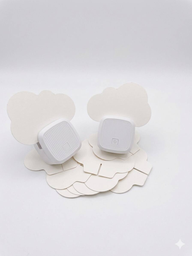


Find more inspiration for your home, including ideas beyond technology, in categories such as Garden + Outdoor or BBQ + Smoking for the cosy side of your garden.
Conclusion: Planning leads to success
Installing a heat pump in a terraced house is a challenge you can overcome with the right expertise. Approach the project systematically: choose a quiet unit, find the ideal installation location with sufficient clearance and plan an effective noise and privacy screen from the outset. An experienced specialist installer is your most important partner.
The investment is worthwhile. You gain long-term energy independence, protect the climate and can continue heating your terraced house efficiently and cost-effectively in the future. Start planning your home in detail today.
Frequently Asked Questions
- How loud can a heat pump be in a terraced house?
- Modern units often reach only 35-45 dB(A) at a distance of 1-3 metres during operation. The sound power level stated in the data sheet is crucial. Plan for a distance of at least three metres from the nearest property boundary and take night-time noise levels into account.
- Where can I install a heat pump at my terraced house?
- Installation is usually possible in the rear garden, on a side wall or on a flat roof. You must comply with the boundary clearance requirements under your local building regulations, often 3 metres. Avoid installing the unit directly next to a patio door. Discuss the location with a specialist planner.
- Can I install a heat pump in the basement?
- Yes, indoor installation in the basement is possible, but it requires an adequate air supply and an exhaust air duct to the outside. The room must be frost-free and dry. This solution minimises outdoor noise but requires space inside the house and professionally designed air routing.
- Which heat pump is the quietest for a terraced house?
- Ground-source heat pumps are installed indoors and are therefore silent outside. For air-source heat pumps, units with inverter technology and special sound dampers are considered particularly quiet. Check the sound power level LWA in the data sheet. Values below 60 dB are good.
- How much does additional heat pump noise protection cost?
- A simple acoustic fence costs from 500 euros. Custom-made acoustic enclosures or walls cost between 1,500 and 3,000 euros. Having an acoustician incorporate the solution into a comprehensive noise protection plan incurs additional costs, but is often worthwhile in densely built-up areas.
You may also be interested in
- Running a heat pump quietly: How to avoid disputes with neighbours
- Installing a heat pump indoors: Make the most of the benefits
- High-temperature heat pumps in older homes: Renovating for efficient heating
- Installing a heat pump: Clearance, safety and installation location
- Air-to-air heat pumps: Pros and cons for your home
- Heat pumps in new builds: Efficient heating without gas