
In brief: If you do your own home improvement projects, knowing the basics of home electrical systems helps you work safely. Learn about the three main conductors (live, neutral and ground), how circuit breakers and GFCIs work, and which tasks involving junction boxes and outlets require a licensed electrician. Always turn off the power before you begin and follow the five safety rules.
Home Electrical Basics: What DIYers Need to Know
You want to connect a light, replace an outlet or install a switch. Electrical work in your home can seem complicated, but the right basic knowledge can help you understand what’s involved and work safely. This article covers the essential principles.
How is electricity distributed throughout my home?
Electricity enters your home through the service connection and reaches your meter. From there, it goes to the main electrical panel, the heart of your home electrical system. This is where the circuit breakers and GFCI breakers are located. Each circuit breaker protects its own circuit, such as the living room outlets or hallway lights.
The circuits run to individual appliances through three-conductor cables. A cable has a live wire (which carries current), a neutral wire (the return path) and a ground wire (for safety). The GFCI continuously monitors the flow of electricity. If some current takes an unintended path, for example through your body, it interrupts the flow within milliseconds.
“The GFCI is one of the most important devices for protecting people in residential electrical systems. It can save lives when a conventional fuse cannot.”
Understanding this basic layout helps you see why you must turn off the correct circuit at the electrical panel before starting work. Checking the panel can help you identify each circuit. Label any breakers that are unclear so you can identify them later.
Which safety rules must I always follow?
Safety comes first. The five safety rules for electrical work are essential. They apply to every job, even something as simple as replacing a light fixture.
- Disconnect the power: Turn off the circuit at the electrical panel (remove the fuse or switch off the circuit breaker).
- Prevent reconnection: Lock the electrical panel or clearly label it.
- Verify that all poles are de-energized: Use a two-pole voltage tester (Duspol) to test at the work location.
- Ground and short-circuit: This is usually unnecessary in a home, but required when working on the electrical panel.
- Cover or put up a barrier around adjacent live parts.
Important
Never work on live circuits. An electric shock from 50 volts AC can be fatal. Test instruments can be faulty. Check your Duspol against a known live source before and after testing. The safety rules work as a chain, and every link must hold.
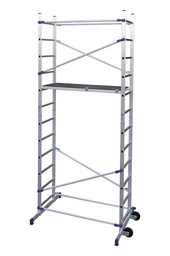
Use the right protective equipment. This includes insulated footwear, a nonconductive ladder such as the and VDE-tested tools. Be realistic about your abilities. Some electrical tasks are for a licensed electrician.
How do I read wiring diagrams and connect wires correctly?
A wiring diagram is a map of your electrical system. For basic DIY projects, it helps to recognize simple symbols: a circle with a cross represents a lamp, a semicircular arc represents a switch, and a rectangle with plugs represents an outlet. The connecting lines show how the cables are routed.
Wiring colors follow a code. Since 1965, the standard has been: live (L) = black or brown, neutral (N) = blue, ground (PE) = green-yellow. In older buildings, you may find gray for neutral and red for live. If in doubt, always check with a meter.
Pro tip
When routing cables through conduit, use installation wire marked NYM-J. This sheathed cable is durable and approved for fixed installations in walls. For flexible connections to light fixtures, use appliance wire (H05VV-F). Crimp the correct wire-end ferrule onto the cable end; never insert bare copper into the terminal.
When connecting an outlet, the live wire goes to the right terminal (usually marked “L”), the neutral wire to the left (“N”) and the ground wire to the central, upper terminal (ground symbol). Tighten the screws firmly, but do not overtighten them. A loose connection can generate heat and create a fire hazard.
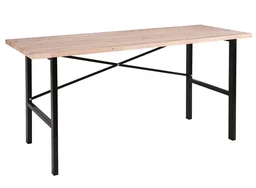
A sturdy gives you a steady work surface for this kind of precise work. Staying organized and working systematically helps prevent mistakes.
Which tools and materials do I need?
Quality tools are essential. They help protect you while you work. The basics for your electrical tool set include a two-pole voltage tester (Duspol), a wire stripper for crimping or twist connectors, side cutters and screwdrivers in various sizes, all with VDE insulation rated up to 1000 volts.
For routing cables, you will also need a cable detector to locate existing wiring in the wall, a rotary hammer with chisels for flush-mount electrical boxes, and a cable puller. A often provides the essential tools in a practical storage case.
“Even the most expensive tool costs less than a hospital stay. VDE insulation is not a marketing gimmick; it is protection that has been physically tested. Use it.”
When buying materials, follow the current VDE standard. For new installations, use only devices and cables bearing the VDE, GS or CE mark. Choose the correct cable cross-section. For outlet circuits, 1.5 mm² for lighting and 2.5 mm² for outlets are common. Find suitable equipment in the electrical tools section.
What can I do myself, and when do I need a professional?
The Low-Voltage Connection Ordinance and DIN VDE 0100 define what you can do. As a DIYer, you may carry out work needed to "maintain operational readiness". In practice, this means you can replace or connect permanently wired devices such as lights, switches and outlets on existing circuits.
You can also run and connect cables in pre-installed conduits (empty conduits). Installing a new flush-mounted box in an existing wall is also within your scope, as long as you do not create a new circuit.
Additional advice
Document all your changes. Draw an updated wiring diagram or take photos of the wiring before closing the boxes. This will save time and frustration during your next repair or upgrade. Keep the documentation by the breaker panel.
Work on the main service box and meter cabinet is strictly off-limits and must be left to a qualified electrician. The same applies to expanding or modifying the breaker panel (installing new circuit breakers), creating new circuits from the breaker panel, and first-time installations in a new build. You should also leave work in particularly hazardous areas, such as bathrooms (protection zones 0 and 1), to qualified professionals.
When in doubt, always call a professional. The cost of an electrician is an investment in safety and peace of mind. For other projects in the garden and outdoor area, you will find the right equipment here.
How do I plan a simple installation?
Good planning helps prevent mistakes. Start with a sketch. Mark the positions of switches, outlets and lights. Think about practical needs: outlets in the kitchen for small appliances, plenty of light in the hobby room, and switches beside the bed.
Plan the cable routes. Ideally, cables should run vertically and horizontally from the junction boxes. This helps prevent you from drilling into a cable when hanging pictures later. Use installation conduits (empty conduits), even if you do not fill them completely at first. They make future upgrades much easier.
Calculate the load. Add up the wattages of the appliances planned for each circuit. A standard outlet circuit is protected by a 16 Ampere circuit breaker and handles around 3680 Watt. A washing machine and tumble dryer often need their own circuit. Do not overload any cables.
Gather all the materials before you start. Nothing is more frustrating than discovering halfway through an installation that you are missing a cable or box. With a systematic approach and good preparation, you can safely complete projects such as installing a garden irrigation system with its own power connection.
In short, understanding the basics of home electrical systems means greater safety, independence and control over costs. You can spot hazards, complete simple tasks correctly and know when to call an expert. Start with small projects such as replacing a switch. Work methodically, use the right tools and always follow the safety rules. Your home will be more functional, and you will gain valuable know-how.
Frequently asked questions
- Can I install an outlet myself as a DIYer?
- Connecting an outlet to an existing circuit is permitted for DIYers, provided they follow the VDE regulations. You must follow the five safety rules, understand the correct wiring (live, neutral and protective earth) and use a Duspol to verify that the circuit is de-energised. First-time installations and modifications to the breaker panel must be carried out by a qualified electrician.
- When do I need to install an RCD?
- An RCD is now required for almost all household circuits, particularly in wet rooms such as bathrooms and kitchens and in outdoor areas. It helps protect against potentially fatal electric shocks by switching off immediately when it detects even a small residual current. Test it regularly using the test button. Retrofitting an RCD is advisable and can significantly improve safety.
- What do the colors of electrical wires mean?
- In new installations, black or brown indicates the live wire (phase/L), blue indicates the neutral wire (N), and green-yellow indicates the protective earth (PE). This color coding is mandatory. In older buildings, you may find different colors, such as red for live and grey for neutral. Always use a measuring device to verify the wiring before starting work.
- Why does my circuit breaker keep tripping?
- A circuit breaker that keeps tripping indicates an overload or short circuit. Check whether too many appliances are connected to the same circuit at once. Unplug all devices and switch the breaker back on. If it trips again immediately, there may be a fault in the cable or a permanently connected installation. Call an electrician.
- What tools do I need for basic electrical work?
- Essential tools include a voltage tester or two-pole Duspol, insulated wire strippers, side cutters and screwdrivers with VDE insulation. Basic personal protective equipment, including insulating gloves and a stable ladder, is essential. Invest in quality tools—they are your most important safety barrier.
You may also be interested in
- Home electrical installation: Safe DIY tips for homeowners
- Electrical wire colors: What they mean for DIY safety
- Solar power for your home: Photovoltaics basics
- Remodeling and renovating your home: A homeowner's guide
- Workplace safety: Working safely on DIY projects
- Learn to weld: Basics and tips for DIYers