
In brief: Ideally, charge your 18V Li-Ion battery when it is between 20 % and 80 % charged. Avoid extreme temperatures and deep discharge. When not in use, store the battery in a cool, dry place at around 40-60 % charge to significantly extend its lifespan.
A powerful 18V battery is the heart of your cordless tools. It gives you the freedom to drill, screw and saw anywhere without being tied to a cable. However, this freedom comes at a price. A battery is a consumable component whose lifespan depends heavily on proper care. With the right knowledge about charging, using and storing your battery, you can get the most out of it and save money in the long term.
This guide shows you the key steps and essential background knowledge. You will learn how to avoid common mistakes and significantly extend the lifespan of your lithium-ion batteries.
The heart of your tools: A reliable battery
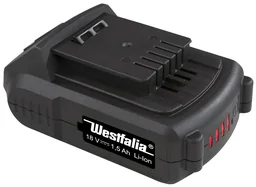
Reliable tools are the foundation of every successful project. This is especially true of the power source. A good battery delivers consistent performance, charges quickly and will not let you down halfway through a job. If you are looking for a solid foundation for your 18V tools or need a replacement battery, the is an excellent choice. With its 1,5 Ah capacity, it offers a good balance of weight and runtime for most jobs around the home and garden.
How does a lithium-ion battery actually work?
To care for your battery properly, it helps to understand the basics of how it works. Inside a Li-Ion battery, lithium ions move between two electrodes: the anode and the cathode. During discharge (that is, when the battery is in use), they move from the anode to the cathode and release energy. When charging, external electrical current reverses this process.
This technology offers high energy density at a low weight and does not suffer from the dreaded memory effect found in older battery types such as NiCd. You can therefore recharge it at any time without having to worry about a loss of capacity.
Additional advice
The myth of the “memory effect” persists. With old nickel-cadmium batteries, you had to discharge them completely before charging, otherwise they would treat the “remembered” charge level as the new capacity limit. This no longer applies to modern 18V lithium-ion batteries. In fact, they benefit from partial charging.
The charging process: What you really need to know
The charger is the most common point of contact with your battery. This is where you set the course for a long or short battery life. Incorrect charging is one of the main causes of premature wear.
First charge: A special ritual?
The idea that a new battery needs to be charged for hours before first use also dates back to the days of NiCd batteries. A modern Li-Ion battery is ready to use straight from the factory. It usually arrives with a partial charge of 30-50 %. You can insert it straight into your tool and get started. A one-off full charge can help calibrate the charging electronics, but it is not essential.
The golden range: Why 20 to 80 per cent is ideal
The greatest strain on battery cells occurs at the extremes: at 100 % charge and at 0 % charge (deep discharge). Continuously charging to 100 % and storing the battery fully charged places the cells under high voltage and accelerates chemical ageing. A complete discharge can even damage the cells irreparably.
The solution: Keep your battery's charge level between 20 % and 80 % whenever possible. Simply recharge the battery after use until around three out of four charge LEDs are lit. For maximum performance just before a major project, you can of course charge it to 100 %. Just avoid storing it at this level permanently.
Modern charging electronics are intelligent, but physics cannot be fooled. Every charging cycle at the voltage limits puts strain on the cell chemistry. Keeping your battery in the middle range can easily double the number of possible charging cycles.

Why temperature is your battery's biggest enemy
Alongside the charge level, temperature is the key factor affecting battery lifespan. Extreme heat and cold are harmful to sensitive cell chemistry. As with humans, the ideal operating temperature is in the comfort zone between 10 °C and 40 °C.
Charging in heat and cold: An absolute no-go
Never charge your battery at temperatures below 5 °C or above 40 °C. Has the battery been left in a hot car in summer or in a freezing shed in winter? Bring it indoors and allow it to reach room temperature before connecting it to the charger. Modern chargers often have temperature protection and will not start charging at all, but relying on this is not a good strategy.
Important note
A battery that is very hot after intensive use must never be charged immediately. Allow it to cool down for at least 30 minutes. Charging a hot battery causes massive, irreversible capacity loss. A swollen or externally damaged battery must under no circumstances be charged or used. There is a risk of fire!
How should you store your 18V battery?
Proper storage over several months is especially important for seasonally used tools such as hedge trimmers or lawn trimmers. Anyone who makes mistakes here may face an unpleasant surprise in spring.
Preparing the battery for storage
Never store a battery when it is fully charged or completely empty. A fully charged battery ages faster because of the high cell voltage. An empty battery risks harmful deep discharge due to natural self-discharge. The ideal charge level for storage is around 40-60 %. So charge the battery to around two charging LEDs, then remove it from the charger.
The perfect place: cool, dry and safe
The ideal storage location is cool (approx. 10-15 °C), dry and frost-free. A cellar, unheated garage or workshop cabinet is ideal. Store the battery separately from the tool and charger. A simple cabinet or box protects it from dust and moisture. For clearly organised storage of several batteries and chargers, a dedicated workshop chest of drawers with suitable drawer units can even be useful, keeping everything in one place.
If you know that certain batteries or sets, such as the
"EasyFlex" Value Set, will not be available for a longer period, you can sign up for an EMAIL NOTIFICATION to be informed as soon as the item is back in stock.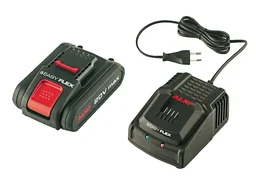
Pro tip
Occasionally clean the contacts on the battery and tool with a dry cloth or soft brush. Dirty or corroded contacts create higher resistance at the connection. The tool receives less power and the battery heats up more, shortening its service life.
How to get the most from your battery in everyday use
The way you use the battery also affects its service life. The most important rule is: avoid deep discharge. Modern tools switch off before the battery is completely empty. Do not ignore this signal by repeatedly switching the tool on briefly to extract the last spark of energy. This puts enormous strain on the battery.
When carrying out demanding tasks that put the battery under heavy load (e.g. sawing hardwood), plan in breaks. Give yourself and the battery a short cooling-down period. Using a second battery in rotation is the ideal solution here. While one is in use, the other can cool down and charge. For very large projects or energy-intensive tools, a set with a more powerful battery, such as the
"EnergyFlex" Value Set with 4,0 Ah, is recommended.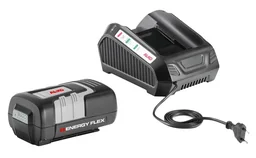
To safely use up residual energy without deeply discharging the battery, use a device with low power consumption. A
10 Watt Multiposition Battery Light is ideal for bringing an almost empty battery to the optimal storage level of approx. 40 %.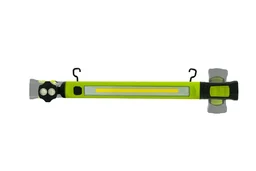
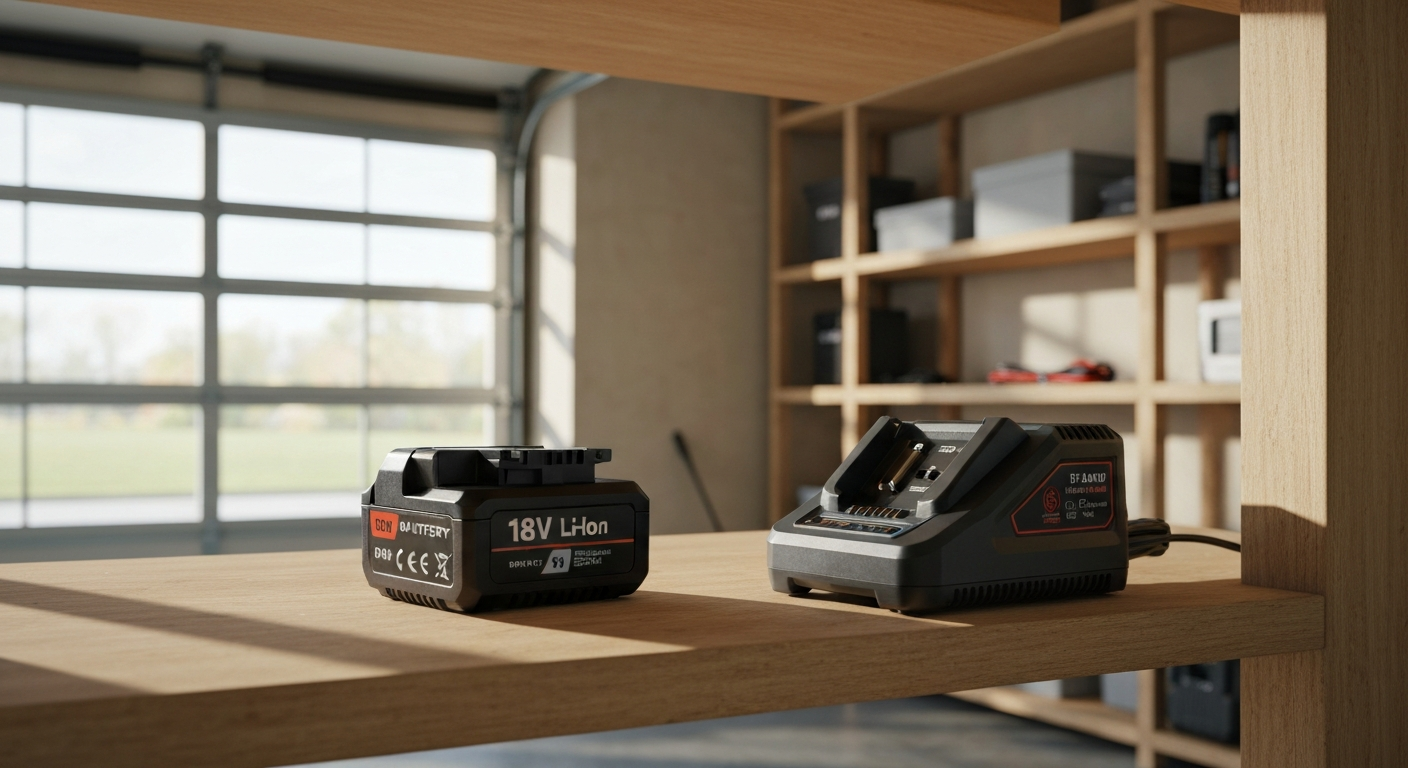
The long service life of a lithium-ion battery is not a matter of chance, but the result of consistent care. Anyone who pays attention to the three pillars—charge level, temperature and gentle use—will be rewarded with consistently high performance and a significantly longer service life.
How can you tell when a battery is losing power?
Despite the best care, every battery eventually reaches the end of its service life. These signs indicate that a replacement will soon be needed:
- Significant loss of capacity: The battery is fully charged but now lasts only a fraction of its original runtime.
- Rapid self-discharge: You put the battery away fully charged, but after just a few days it is already empty without having been used.
- Excessive heat generation: The battery becomes unusually hot during normal use or even while charging.
- External damage: The casing is cracked, deformed or swollen. In this case, dispose of the battery safely immediately!
If these points apply, it is time for a new power source. Invest in a quality battery to restore the full performance and safety of your tools.
Proper care of your 18V Li-Ion battery is simple and requires only a few conscious steps. By avoiding extreme temperatures, keeping the charge level in the middle range and storing the battery correctly, you are directly investing in the longevity and reliability of your valuable tools. This means you can enjoy cordless freedom for longer.
Frequently Asked Questions
- Do I need to fully charge a new 18V Li-Ion battery before using it for the first time?
- No, this is not absolutely necessary. Modern lithium-ion batteries have no memory effect and are often supplied partially charged. You can use it straight away. However, an initial charging cycle does no harm and can help calibrate the electronics.
- What is the ideal charge level for storing a battery?
- Never store your battery fully charged or completely empty. The ideal charge level for longer-term storage is between 40 % and 60 %. This minimises the chemical ageing process of the battery cells and preserves capacity.
- Does it harm the battery if I only charge it for a short time?
- No, quite the opposite. Short, partial charging cycles are actually better for Li-Ion batteries than constantly charging and discharging them fully. Keep the charge level in the middle range (20-80 %) wherever possible to protect the cells.
- At what temperatures should I charge my battery?
- Only charge your battery at moderate temperatures between 10 °C and 30 °C. Charging in freezing conditions or extreme heat can permanently damage the battery cells and drastically shorten their service life. Allow the battery to cool down after intensive use.
- How can I tell if my battery is faulty?
- Clear signs include a significantly reduced runtime even though the battery was fully charged, rapid self-discharge or the battery becoming unusually hot during charging or operation. A deformed or damaged casing is also a clear warning sign.
You may also be interested in
- 18V battery not charging? Causes & solutions
- 18V fast charger: charging time & proper use
- Cordless working: 7 pro tips for using your 18V battery
- How to care for a 12V Li-Ion battery: maximise its service life
- How to charge a 10.8V battery correctly: longer tool life
- How to charge a battery correctly: 5 mistakes that shorten its service life