
In brief: Find the right ladder by carefully considering the working height, weight, material and intended use. For roof work, you need a step ladder with sufficient standing height or a leaning ladder with roof hooks. Safety rests on three points: stable positioning on firm ground, climbing correctly without overloading the ladder, and regularly checking for damage.
Contents
- Which ladder do I need for my tasks?
- Choosing the material: aluminium, wood or plastic?
- How do I set up my ladder safely?
- How can I work safely on a ladder?
- Caring for and storing your ladder correctly
- Find the right ladder for your project
Which ladder do I need for my tasks?
Start by considering the working height. Measure the maximum height you need to reach safely. For jobs such as changing a ceiling light, a small 4-step step ladder is often enough
.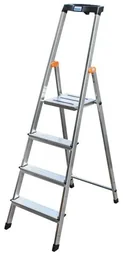
For garden tasks such as trimming tall hedges, you need greater reach. A 5- or 6-step step ladder
, provides the necessary standing height. Remember: never stand on the top step.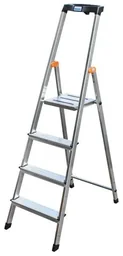
Pro tip
Add your height to the height of the third-highest step of your ladder. This total should clearly exceed the working height you need. This helps you maintain a safe stance.
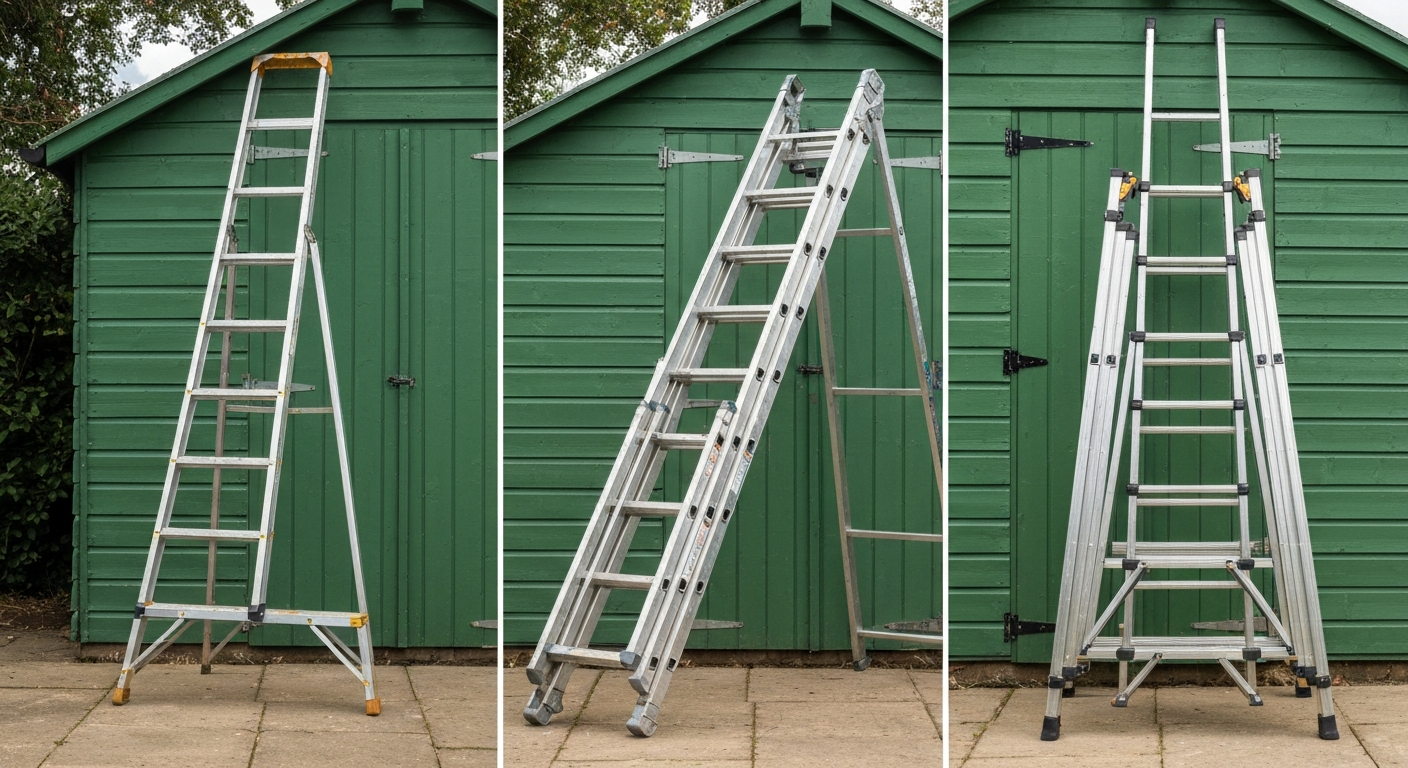
For roof work such as cleaning gutters, two types are suitable: a tall step ladder or a leaning ladder with roof hooks. With step ladders, the standing platform is crucial. Wider models offer greater stability on uneven ground.
The step ladder: an all-rounder for the home and garden
Step ladders can stand independently. They are ideal for tasks where there is no suitable surface to lean against, such as painting in the centre of a room or picking fruit. Make sure the spreader lock is stable.
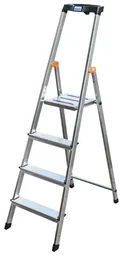
Models such as the offer a good compromise between load capacity and ease of handling with 5 steps. If you regularly work at greater heights, it is worth investing in a 6-step ladder ().
The most common cause of accidents is working from the top step or standing platform. This raises the centre of gravity too high and destabilises the entire structure.
Leaning ladders and extension ladders for special applications
Leaning ladders require a stable wall or edge. They are slimmer and often reach greater heights than step ladders. They are essential for painting a house façade.
Extension and telescopic ladders combine both principles. They are suitable for adjustable heights and confined spaces such as stairwells. In our range of garden equipment, you will find suitable solutions for complex tasks.
Choosing the material: aluminium, wood or plastic?
Aluminium is lightweight, weather-resistant and robust. An aluminium ladder often weighs only half as much as a wooden model of the same size. It does not rust, making it ideal for use in the garden and outdoors.
Disadvantage: aluminium conducts electricity. Never work near overhead power lines or unsecured electrical equipment with an aluminium ladder.
Important note
Electrical work or work near power lines requires a special non-conductive ladder made of fibreglass or wood. Never use a metal ladder.
Wooden ladders are traditional, provide good insulation and have a high load capacity. However, they are heavier, require more care and can become slippery when wet. Always store them in a dry place.
Plastic is often used for small step stools for indoor use. These are lightweight and easy to maintain, but have limited load capacity and stability.
How do I set up my ladder safely?
The surface determines how safe the ladder is. Always place your ladder on firm, level ground. On soft surfaces such as grass or soil, use a wide, non-slip base.
With step ladders, check that all four feet are firmly on the ground and that the spreader lock is fully open. For leaning ladders, follow the 1:4 rule: for every 4 parts of height, move the foot 1 part away from the wall.
Almost one in three ladder accidents is caused by an incorrect setup angle or a yielding surface. The first three seconds after setting up the ladder are the most critical.
Check the surroundings. Keep the area around the ladder free of tools, children and pets. Watch out for doors that could open. Secure them if necessary.
Additional advice
For work on paved or concrete surfaces, you can fit the ladder feet with rubber caps. They improve slip resistance and protect the floor. You can find this type of accessory in the Workplace Safety & Security section.
How can I work safely on a ladder?
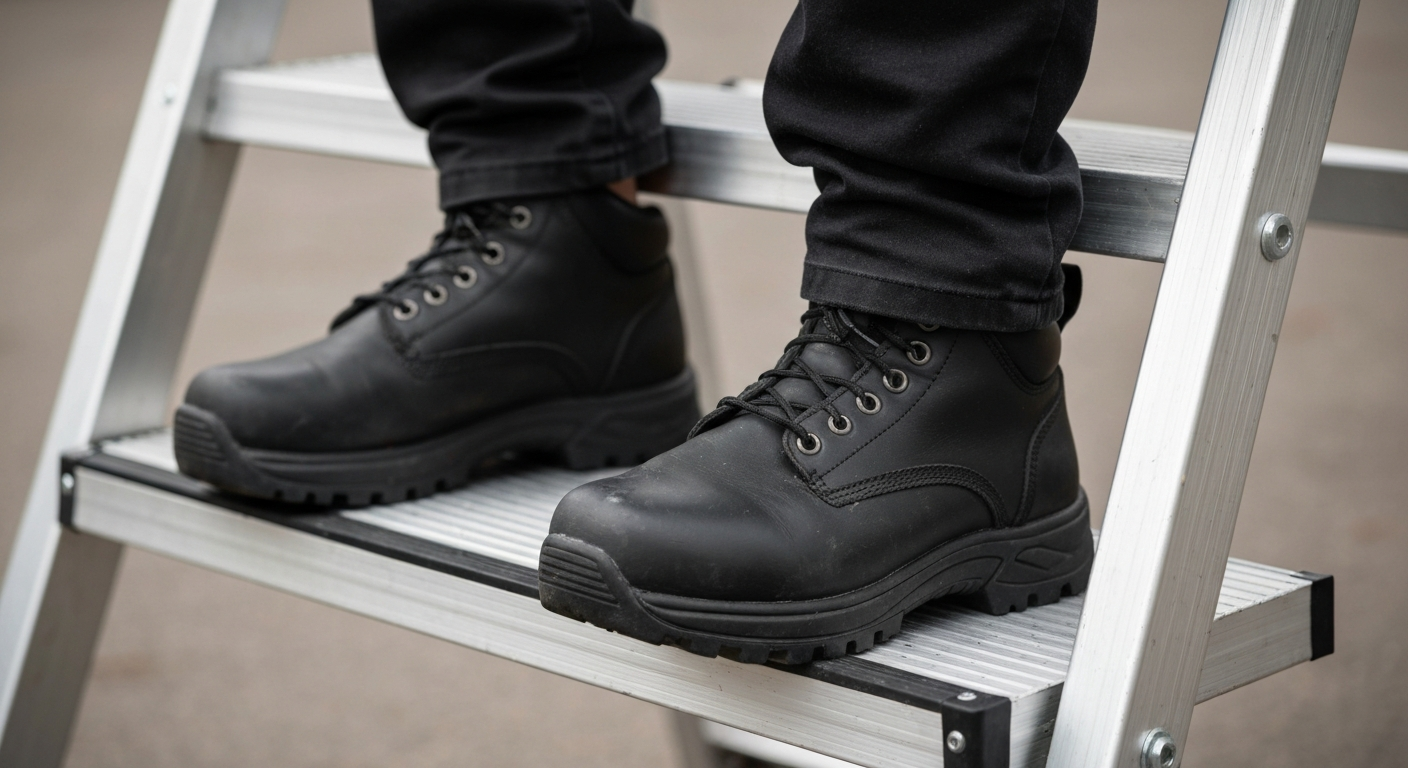
Wear sturdy, closed-toe footwear with a good-grip sole. Avoid soft slippers or sandals. Always maintain three points of contact: two feet and one hand, or two hands and one foot.
Carry tools and materials in a belt or bag. Never hold tools in your hand while climbing up or down. For larger quantities of materials, use a workshop trolley.
Do not overreach. Never move your hips beyond the side rails. If you need to reach further, climb down and reposition the ladder. That extra minute could save your health.
Know the load limits
Every ladder has a maximum load rating. This weight includes you, your clothing, tools and materials. Never exceed this limit.
The common EN131 standard for professional ladders divides them into classes. For home use, Class 1 (100 kg) is often suitable. Check your ladder's rating plate before carrying heavy paint buckets or machinery.
Caring for and storing your ladder correctly
Clean your ladder after every use, especially after gardening. Remove soil, leaves or paint splashes. For aluminium ladders, warm water and a soft cloth are sufficient.
Store the ladder in a dry place, away from direct sunlight and protected from extreme temperatures. Hang long ladders horizontally or stand them upright against a wall. Avoid bending or warping.
Carry out regular visual inspections. Look for cracks, deformation, sharp edges and loose connections. The joints and treads in particular are subject to wear.
Find the right ladder for your project
Think about your typical tasks. Do you mainly need the ladder for small repairs around the house, gardening or DIY projects? The answer determines the type, size and material.
For occasional use around the home and garden, a medium-height aluminium step ladder with 4-5 steps is a solid choice. It is easy to carry and versatile. Our or cover this area.
For regular work at heights above three metres, such as on trees or gutters, plan for a larger ladder. A sturdy 6-step step ladder () provides the necessary safety and reach.
Remember the accessories. A sturdy tool platform, special roof hooks or a ladder stabiliser can make your work safer and more efficient. Browse our load securing category for these products.
Investing in a high-quality ladder that suits your needs is worthwhile. It is a tool that can last for decades and the foundation for safe work at height. Choose carefully.
Frequently asked questions
- Which ladder do I need for painting in a stairwell?
- For tall, confined spaces such as stairwells, an extension ladder is ideal. It can be extended to different heights and requires little floor space. Make sure it has sufficient stability and non-slip rungs.
- Can I use an aluminium ladder in the garden on soft ground?
- No. On grass, soil or loose ground, any ladder can easily tip over. Always use a stable, wide base such as a ladder board, or secure the ladder with ground spikes. Stability is the top priority.
- How many steps should my step ladder have for roofing work?
- The required number of steps depends on your working height. Stand securely on the third step from the top. For guttering work on a detached house, step ladders with 5 or 6 steps (PRODUCT_122031, PRODUCT_82671) are often suitable. Always allow for one spare step.
- What does a ladder's maximum load rating mean?
- The load rating (e.g. EN131) specifies the permitted total weight, including the person, tools and materials. For private use, Class 1 (100 kg) is usually sufficient. Professional users choose Class 2 (115 kg) or 3 (150 kg) for heavy equipment.
- How often should I check my ladder for damage?
- Before every use, visually check your ladder for deformation, cracks, loose connections and sharp edges. After a fall or visible damage, take it out of service immediately. A thorough annual inspection is mandatory.
You may also be interested in
- Choosing the right step ladder: The ultimate guide
- Aluminium ladders: Reliable help for every height
- How to position an extension ladder correctly: Safety tips
- Buying a multi-purpose ladder: How to find the right one
- Scaffold safety: Regulations & tips for DIY enthusiasts
- Step ladder review & comparison 2026