
In brief: You can control leatherjackets successfully by interrupting the pest's life cycle. The key is targeting the larvae, known as Tipula larvae, in the soil. Nematodes of the species Steinernema carpocapsae are the most effective biological control. A combination of lawn care, soil cultivation and targeted use of beneficial organisms helps protect your lawn.
Table of contents
How can I identify craneflies and their larvae?
The adult cranefly (Tipula) resembles a large, harmless mosquito with long, slender legs. It is grey-brown and flies awkwardly. It does not cause any damage itself.
The problem is its larvae. They live in the soil and grow up to four centimetres long. They are grey-brown, have no clearly visible legs and possess leathery skin. At the rear end, they have six finger-like projections.
You can identify an infestation by examining your lawn. Irregular yellowish patches appear first. Later, these develop into brown, bare areas. The turf can then be rolled up like a carpet because the roots have been eaten away.
“A classic symptom is a ‘turf island’ that can be easily lifted from the ground. Underneath, you will often find dozens of the cylindrical larvae.”
How to tell them apart from other lawn pests
Chafer grubs, the larvae of garden chafer beetles, also feed on roots. However, they are noticeably thicker, whitish and usually lie curled up in the soil. Wireworms, the larvae of click beetles, are yellowish-brown, slender and hard.
The Tipula larva is soft, cylindrical and considerably longer than the pests mentioned above. Accurate identification is important when choosing a control method.
Why is the cranefly's life cycle important?
You can control craneflies effectively when you understand their life cycle. Adult insects emerge in late summer, mate and soon afterwards lay eggs in the moist lawn soil.
The larvae hatch from these eggs after about two weeks. They pass through four stages and overwinter in the soil. The main damage occurs in the following spring and summer, when the larvae are largest.
In late summer of the following year, they pupate briefly and the cycle begins again. The critical time for control is the early larval stage, immediately after hatching.
Pro tip
Target your control measures at early autumn (September/October). At this time, the young larvae are small, close to the surface and most vulnerable to nematodes and mechanical measures. Treatment in spring does target the overwintered larvae, but they are already more resilient by then.
Which natural remedies control leatherjackets?
Nematodes: the biological specialists
Nematodes of the species Steinernema carpocapsae or Steinernema feltiae are by far the most effective natural control. These microscopic roundworms actively enter Tipula larvae and release a bacterium.
The larva dies within two to three days. The nematodes reproduce inside the dead host and then seek out new victims. They are completely harmless to people, pets and other garden inhabitants.
Mechanical soil cultivation
You can cultivate heavily infested areas thoroughly in autumn or early spring. Digging over the soil or scarifying deeply brings the larvae to the surface.
There, they fall prey to birds or dry out. Combine this measure with sowing fast-germinating lawn seed to quickly fill the gaps that have appeared. You can find the right tools for lawn care in our garden tools category.
“In practice, combining nematode treatment with subsequent overseeding using robust grass mixtures delivers the most sustainable results. This allows the turf to regenerate quickly and form a denser, more resilient sward.”
Encouraging natural predators
Create a garden that attracts natural enemies. Ground beetles, whose larvae are predatory, need hiding places under stones or leaves. Hedgehogs are also happy to eat the larvae.
Avoid chemical broad-spectrum insecticides, which also kill these beneficial organisms. A wildlife-friendly garden is the best long-term strategy against many pests.
Important note
‘Home remedies’ such as plant feeds or salt are often recommended. They severely damage the soil and soil organisms and are ineffective against larvae living deep in the ground. Instead, use scientifically tested and targeted biological methods such as nematodes.
How do I apply nematodes against leatherjackets?
Applying nematodes is easy, but timing is critical. You receive the nematodes as a powder or in a clay suspension. Only order them when you can apply them immediately.
Mix the product with cold tap water in a watering can according to the instructions on the packaging. Do not use hot water or a high-pressure pump, as this will kill the beneficial organisms.
Apply the suspension in the late evening or in overcast weather. Direct UV radiation from the sun damages the nematodes. The soil must already be moist and should not dry out for the next two weeks.
A well-planned garden irrigation system will help you maintain this level of moisture. For application, use a rose attachment on the watering can or a special garden sprayer.
Additional advice
Water your lawn thoroughly the evening before applying the nematodes. Work the suspension into the soil within a maximum of two hours after mixing. A soil temperature above 12°C is essential for nematode activity, making early autumn or late spring ideal.
Products for optimal application
A good watering can with a fine rose is important for distributing the nematode solution precisely. Reliable equipment is also needed for watering beforehand.
Which lawn care practices help prevent an infestation?
A dense, healthy lawn gives larvae fewer opportunities to attack and is better able to withstand feeding damage. The foundation is good soil preparation and choosing the right seed.
The right mowing height and scarifying
Never mow your lawn shorter than four centimetres. Longer grass shades the soil, keeps it cooler and prevents it from drying out as quickly. This makes it more difficult for crane flies to lay their eggs.
Scarify once a year, ideally in spring, to remove thatch. This thatch provides an ideal hiding place and moisture reservoir for pests. A sharp tool is essential for this.
: The 'Wonder Scissors' are a versatile helper for the home and garden. They can be used not only for precise cutting, but also for trimming thin branches or overhanging lawn edges after mowing, ensuring a neat finish.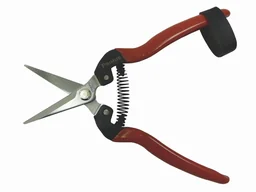
Optimal fertilising and aeration
In autumn, use a special autumn lawn fertiliser with a high potassium content. Potassium strengthens the cell walls of grass and increases its frost resistance and resilience.
Aerate compacted soil with a digging fork or special lawn aerator shoes. This improves drainage, as waterlogging loosens the soil and makes it more attractive for egg-laying. Well-aerated soil dries out more quickly.
Are there chemical alternatives for control?
Chemical insecticides are occasionally used in professional turf management. For home gardens and allotments, the choice of approved active ingredients against crane fly larvae is extremely limited and continues to shrink.
Most chemical products work as stomach poisons or contact insecticides. However, they also harm many beneficial soil organisms such as earthworms and can accumulate in the garden.
Biological control with nematodes is comparable in effectiveness, but more targeted and environmentally friendly. It offers the more sustainable solution and preserves the ecological balance in your garden.
The legal framework
Plant protection products are subject to strict approval procedures. Many products that were formerly used are no longer approved for garden use. Before using a chemical product, be sure to check the current approval status for allotments.
The trend is clearly towards biological pest control. It is better to invest your effort and resources in strengthening your lawn and using beneficial organisms. The result is a resilient garden that can also cope better with other challenges.
Frequently asked questions
- How can I tell if my lawn is infested with leatherjacket larvae?
- You can identify an infestation by brown, bare patches in the lawn that spread in late summer and autumn. The turf lifts easily, with no roots visible underneath. Small, grey-brown larvae up to 4 cm long can be found on the soil surface. Another indication is an increase in harmless crane flies in late summer.
- When is the best time to control leatherjacket larvae?
- The optimal time to treat them is in early autumn, roughly from late August to October. At this stage, the larvae are still young, small and particularly susceptible to nematodes. A second treatment opportunity is available in spring from mid-April, as soon as the soil remains consistently above 12°C. Treatment must be carried out in damp conditions.
- What natural enemies do crane flies have in the garden?
- Natural enemies include predatory ground beetles, birds such as blackbirds and starlings, hedgehogs and shrews. However, the most important biological control is provided by SF nematodes (Steinernema feltiae). These microscopic roundworms enter the larvae and kill them. Encourage beneficial organisms with a garden rich in structure and hiding places.
- Can lawn care help prevent an infestation?
- Yes, a healthy, robust lawn is the best protection. Scarify regularly in spring to remove thatch and improve aeration. Do not mow too short; 4-5 cm is ideal. Apply a potassium-rich autumn lawn fertiliser to strengthen the grass cell walls. Avoid waterlogging by ensuring good drainage.
- Do crane flies also damage my garden plants?
- Adult crane flies are completely harmless and do not feed. The damage is caused exclusively by the larvae in the soil. They feed on grass roots, but in large numbers they can also damage shallow-rooted plants such as strawberries, lettuce and seedlings. A healthy lawn is the main focus of control.
You may also be interested in
- Controlling slugs in the garden: Effective & natural methods
- Effective pest control in the garden: Tips & tricks
- Controlling mosquitoes in the garden: Effective strategies against biting mosquitoes
- Mosquito and fly control: Natural tips for your home and garden
- Controlling box tree moth: Effective products for your garden
- Natural aphid control: How to avoid chemical sprays