
In brief: The most effective way to get rid of ants in walls is to locate the nest and treat it directly with bait or a pour-on treatment. Worker ants carry these products back to the nest, where they affect the entire colony. Mechanical barriers and home remedies such as baking soda only provide short-term relief. For lasting results, eliminating the queen in the nest is essential.
How to Get Rid of Ants in Walls: Effective Methods
Ant trails along your house wall are a clear warning sign. The insects have taken over your masonry as a nesting site or passageway. The problem is not limited to the garden but can extend into your home. Targeted treatment is necessary.
You need to understand why ants find masonry attractive. Cavities, warmth and protection from predators provide ideal conditions. Effective control focuses on two areas: eliminating the colony and permanently sealing off the building.
Why do ants settle in walls?
Masonry offers ant colonies several advantages. The materials retain heat, warming the nest quickly in spring. Hollow bricks, porous stones and loose joints are easy for ants to work through. The insects expand these gaps into extensive tunnel systems.
From there, they can easily reach food sources inside the building. Crumbs in the kitchen, pet food or sugary drinks on the patio attract worker ants. Once established, the colony fiercely defends its trails.
Pro tip
Inspect the masonry on a sunny day. Ants love warm south- and west-facing walls. Nest entrances are often hidden below ground level, directly beside the foundation. Patiently follow the trails back to their source.
How do I find the nest in the wall?
Start by observing the ants. Look during rainy weather or in the cooler morning and evening hours. This is when traffic along the ant trails is usually heaviest. Follow the line back to its source.
Typical nesting sites include:
- Cracks in the render or facade
- The junction between the foundation and the masonry
- Cavities beneath patio slabs bordering the house
- Areas around recessed pipes or cable entry points
Fine piles of sand often reveal activity. Ants carry excavated material out of the joints as they dig. These piles are smaller than those made by wasps or mice.
“Ants in masonry are often a symptom of structural weaknesses. Where ants can get in, moisture may later follow. Treatment should always be accompanied by an inspection of the building fabric.”
What methods are available for getting rid of ants?
You have several options. The right choice depends on the location of the nest and the time you have available. Here are the most effective methods.
1. Targeted treatment with bait
Bait stations are the first choice for hard-to-reach nests in masonry. Worker ants carry the poisonous gel back to the nest, where they feed it to the queen and brood. The entire colony dies off.
Place bait such as
directly beside the ant trails. Do not wipe away the trails. The ants need to find the bait and accept it as food. This process takes several days. Be patient and do not replace the bait too soon.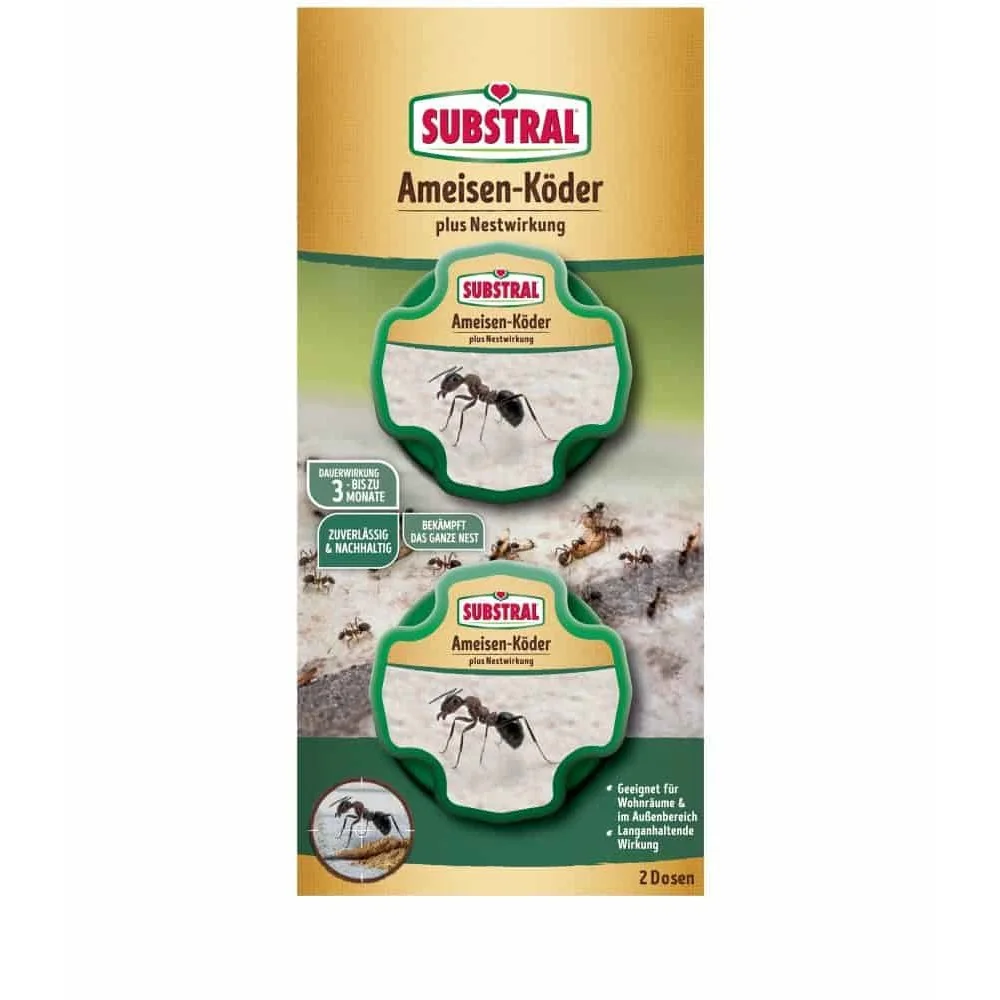
Important note
Keep bait products out of the reach of children and pets. Position the stations so that curious animals cannot access them. Always read the manufacturer's instructions before use.
2. Using pour-on and scattering treatments
Pour-on treatments are suitable for nest entrances in areas touching the ground. Products such as
or are mixed with water. Pour the solution into the entrance and the surrounding soil.
The active ingredient penetrates deep into the tunnel system. This method works quickly but requires precise knowledge of the nest location. Scattering treatments create a barrier around the house. Ants avoid the treated areas.
For a complete range of products, visit our pest control category.
3. Mechanical barriers and home remedies
Barriers can provide short-term help. Sprinkle chalk powder, lime or diatomaceous earth in a fine line in front of potential entry points. The fine particles damage the ants' chitin exoskeleton.
Baking soda mixed with icing sugar acts as a stomach poison. However, the ants often die outside the nest, leaving the queen unaffected. Barriers and home remedies alone are therefore rarely successful in the long term.
They are better used as a supplement. Combine them with bait for a comprehensive approach.
“The biological effectiveness of bait is often underestimated. What matters is not an immediate effect but the later collapse of the colony. Successful baiting only becomes apparent after one to two weeks, when ant activity has come to a complete standstill.”
How can I prevent a new infestation?
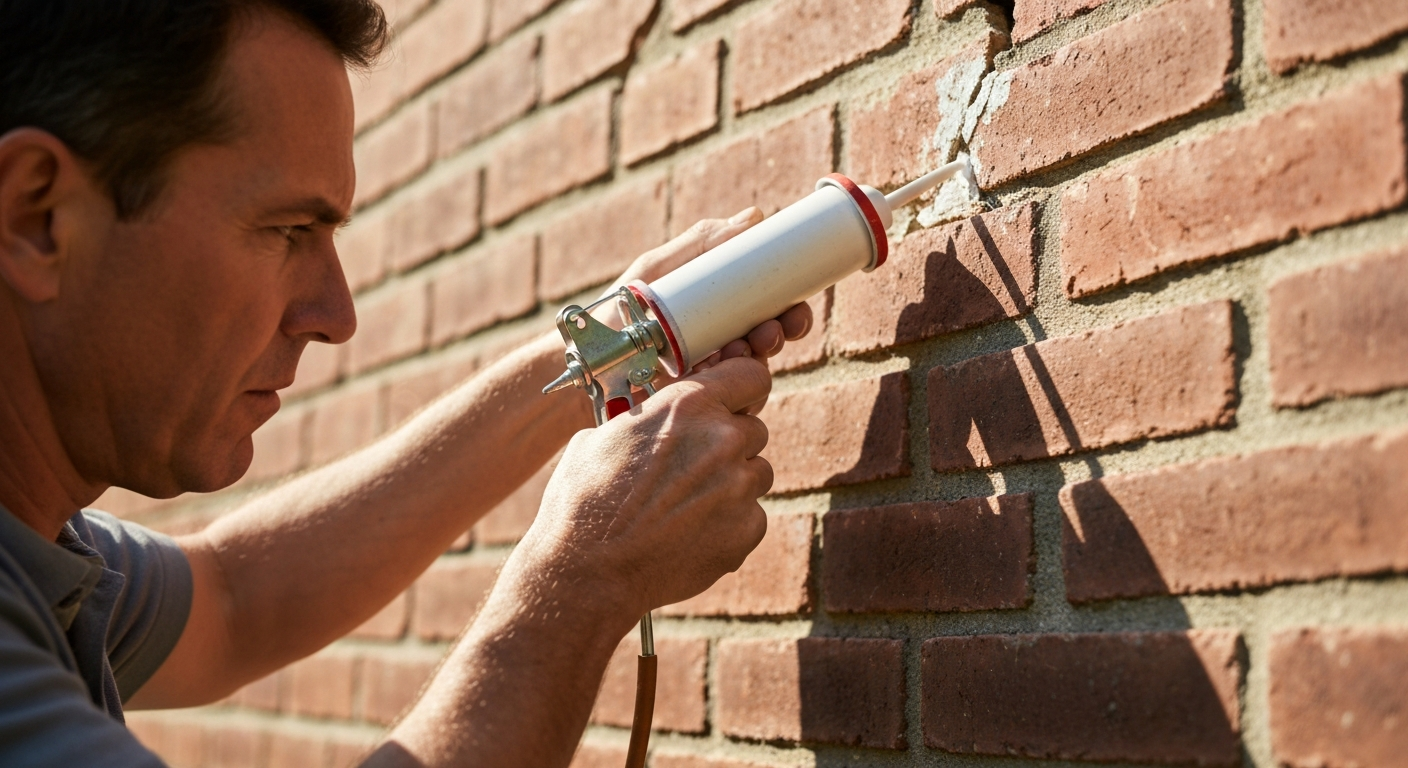
Prevention begins after successful treatment. Seal all access points you have found. Use silicone or cement-based acrylic for this purpose. These materials are flexible and weather-resistant.
Remove anything that attracts ants around the house. This includes:
- Fruit that has fallen from trees
- Open rubbish and compost bins
- Pet food bowls that have not been emptied
- Sugary drink residue on patio furniture
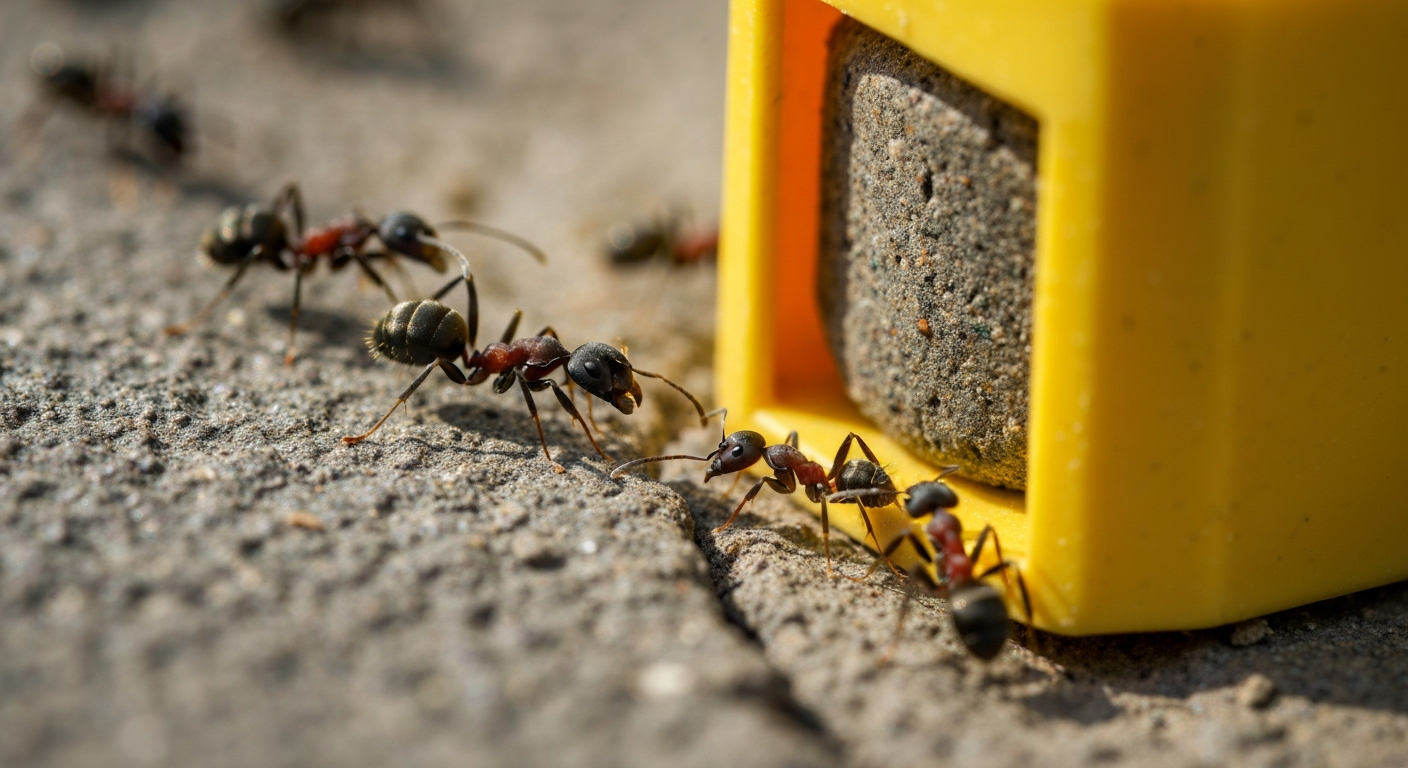
A clean, dry area directly beside the masonry helps deter ants. Cut back plants that touch the house wall. They act as living bridges for the insects.
Additional advice
Check your water drainage regularly. Blocked house drainage systems cause dampness around the masonry. This not only attracts ants but can also damage the building fabric in the long term.
When should you call a pest control professional?
Some situations are beyond what you can handle yourself. Call in a professional pest control expert if you notice any of the following:
- The infestation keeps returning despite correct application.
- You suspect a nest in the insulation or inside cavity walls.
- The ants are pharaoh ants, which can transmit diseases.
- The colony is very large and has formed several satellite nests.
Professionals have access to stronger active ingredients and specialist tools. They can use dust applicators to deliver treatments deep into cavities. The investment is worthwhile for persistent problems.
Conclusion: Take a systematic approach for lasting results
Getting rid of ants in masonry requires a systematic approach. Start by locating the nest. Then choose the right method: bait for hidden nests and liquid treatments for accessible entrances.
Combine treatment with preventive measures. Seal entry points and eliminate food sources. You can also browse our Garden + Outdoor section for more useful solutions.
With patience and the right strategy, you can get rid of these unwanted housemates. Your masonry will remain intact and your home ant-free.
Frequently Asked Questions
- How do I find an ant nest in the masonry?
- Follow the ants' trails to their source. Nests are often located in cavities, beneath loose stones or near heat-radiating areas such as heating pipes. Activity centers can often be identified by small piles of sand or tiny bits of expelled material around joints. In severe infestations, you can listen with a flashlight at night, as many species are particularly active then.
- Which ant killer works best in masonry?
- Ant bait stations with a delayed-action effect are ideal for masonry because worker ants carry the active ingredient back inside the nest. Liquid and granular treatments such as PRODUCT_111397 or PRODUCT_101726 are suitable for access points and nest entrances. The right choice depends on the ant species. Sugar-based baits attract many species, while protein-based baits work better for pharaoh ants or pavement ants. Consistency is more important than quantity.
- Do ants damage the masonry of my house?
- Direct damage to intact masonry is rare. The greater risk comes from ants working their way through it: their activity can loosen joints and insulating layers, which may allow moisture to enter. They can also carry other pests, such as aphids, into living spaces. Nest building in insulation materials can significantly reduce the effectiveness of your thermal insulation.
- Can I get rid of ants in masonry myself, or do I need a professional?
- For localized infestations and accessible nests, DIY treatment with products from a specialist retailer, such as pest control, is often successful. If there are several nests, the nest location is unknown or the ants are pharaoh ants that pose health risks, you should call a pest control professional. They have access to stronger treatments and in-depth knowledge of ant biology.
- How can I stop ants from getting into the masonry again?
- Seal all visible entry points, such as cracks and joints, with suitable silicone or acrylic sealant. Remove food sources near the house: store pet food such as bird food in airtight containers, clean grill areas after use and dispose of food waste regularly. A clean, dry environment without accessible food is the best preventive measure.
You may also be interested in
- How to Get Rid of Ants in the House: Effective Solutions for Ant Problems
- Ants in the Lawn: The Best Home Remedies and Tips
- How to Get Rid of Mice in Your Home: Effective Tips & Remedies
- How to Get Rid of Ants in Your Home and Garden
- Ants in the House: How to Find the Nest Without Following the Trail
- Ants in Flower Pots: Effective Home Remedies to Get Rid of Them