
In brief: A hydrogen-powered gas boiler could offer a CO2-neutral way to heat your home. It uses green hydrogen made with renewable electricity and produces no direct CO2 emissions when burned. For homes already connected to the gas network, it could serve as a practical transitional option. However, green hydrogen is not yet widely available, and converting the entire network will take time.
Hydrogen Heating: A Future-Proof Heating Solution?
Many homeowners are looking for climate-friendly ways to heat their homes, and hydrogen heating is drawing particular interest. It promises to make familiar gas heating CO2-neutral. Here, we look at how the technology works, what it requires, and when it might become widely available.
How does a hydrogen boiler work?
A hydrogen heating system uses a gas condensing boiler. Hydrogen takes the place of natural gas as the fuel. When it burns, hydrogen reacts with oxygen to produce heat, with water vapor as the main exhaust product.
That is the key difference from natural gas. Burning methane releases CO2, while burning hydrogen does not. The technology used in your home is very similar to that of a modern gas boiler, which could make conversion easier.
Expert tip
If you are planning to replace your heating system, check whether the boiler you are considering is "H2-ready." This means it is designed to use a certain percentage of hydrogen in the gas supply and can often be converted to run on 100% hydrogen later. That leaves you with options for the future.
The three types of hydrogen: gray, blue, and green
Not every hydrogen heating system is automatically climate-neutral. Its carbon footprint depends on how the hydrogen is produced. Gray hydrogen is made from natural gas, a process that releases CO2.
Blue hydrogen is made in the same way, but the CO2 is captured and stored. Green hydrogen is produced by splitting water through electrolysis powered by renewable electricity. Only green hydrogen makes your heating system genuinely CO2-neutral.
The source of the hydrogen is therefore crucial to the energy transition at home. Gray hydrogen currently dominates the market, while production capacity for green hydrogen is growing.
Why is hydrogen a promising heating technology for the future?
Existing infrastructure is a major advantage. Millions of homes are connected to the gas network and have gas pipes inside the building. Switching to hydrogen could allow this infrastructure to keep being used.
This could avoid major investments compared with replacing the entire system. Little would change for heating pipe installation. Existing pipes and radiators could often remain in use.
Hydrogen can also store surplus renewable electricity. It offers a way to address fluctuations in power generation from wind and solar. This kind of seasonal storage is a key part of the energy transition.
Hydrogen will play a role in the heating market, particularly where other technologies such as heat pumps reach their limits. Its major advantage is compatibility with existing gas networks and heating systems.
What does your home need for a hydrogen heating system?
The technical requirements for your home are manageable. You need a gas connection. Your existing house drainage pipe system is not affected, but your gas pipes are.
Steel and certain specialty plastics are suitable for carrying pure hydrogen. A qualified professional must inspect your home's gas installation. A hydrogen-compatible gas boiler needs a special burner and corrosion-resistant components.
The biggest challenge right now is availability. Pure green hydrogen is not yet available to consumers nationwide. For now, you would need to rely on a pilot project or wait for a future conversion of the gas network.
Important note
Do not confuse "H2-ready" with "hydrogen-powered." An H2-ready boiler can often use only a hydrogen blend of 20-30% and still runs primarily on natural gas. To run on pure hydrogen, it needs a technical conversion. Make sure you understand the difference before buying.
Blending hydrogen into natural gas: the first step
The rollout of hydrogen heating is expected to start with blending. Hydrogen is gradually added to the natural gas in the network. Blends of up to 10% are currently permitted. Many new gas boilers can handle this percentage without a problem.
Adding hydrogen to the mix can reduce emissions from your existing heating system. It is a first, tangible contribution to the energy transition at home. A switch to 100% hydrogen could come later.
How does hydrogen heating compare with other heating technologies?
Heat pumps are its main competitor. They run on electricity and are highly efficient. In well-insulated new homes, a heat pump is often the more efficient choice.
Hydrogen heating may be a good fit for existing homes with less insulation. It can provide high flow temperatures without losing efficiency, making it an option to consider for renovation projects.
Operating costs are still uncertain. The price of green hydrogen is hard to predict, and electricity prices can fluctuate too. Any firm comparison of costs would be unreliable at this point.
For workshops, smokehouses or large halls in the Garden + Outdoor category, a portable gas heater such as the
can be a practical stopgap until stationary systems are widely available.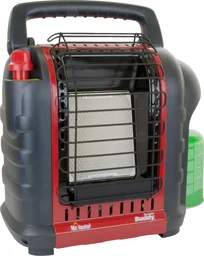
Pure hydrogen heating is unlikely to play a major role in new builds, as heat pumps are clearly superior there. In existing buildings, particularly in densely built-up urban areas with existing gas infrastructure, hydrogen could be an important bridging and complementary technology.
What should you consider when planning and installing?
Plan ahead. If you’re replacing your heating system, choose an H2-ready appliance. This helps protect your investment from becoming obsolete too soon.
Consult an energy advisor or heating specialist. Ask specifically whether the system can be converted to run on 100% hydrogen and what that would cost. Get written confirmation that your home’s pipes are compatible.
Find out about current funding programs. The government supports investments in climate-friendly heating technology, which can help offset the higher purchase cost.
Additional advice
Whatever heating technology you choose, good insulation is always the foundation. Consider insulating your exterior walls, roof, and heating pipes. Every kilowatt-hour you save is one that doesn’t need to be generated—making insulation one of the most efficient and cost-effective steps in your home’s energy transition.
Practical additions for your home and garden system
The energy transition affects more than your heating system. An efficient overall system is essential. That includes smart controls and a reliable water supply for your garden and home.
Products such as the
and are essential components of a functional plumbing and irrigation system. Whether you need a drinking water supply or garden irrigation, stable connections are the foundation.

Also consider ways to stay cool in summer. A shaded garden or a patio with an awning can reduce the need for air conditioning. Tarps and netting from our selection can help.
When will hydrogen heating become part of everyday life?
It’s important to have realistic expectations about the timeline. The technology exists, but it isn’t yet ready for widespread use in single-family homes. The 2020s are a period for pilot projects and hydrogen blending.
Green hydrogen could become more widely available in the 2030s. At that point, existing H2-ready heating systems could also be converted to run entirely on hydrogen. Until then, these systems will run on natural gas blended with hydrogen.
Keep this timeline in mind when making your decision today. Choose a flexible solution that can adapt as technology changes, and avoid options that could limit you later. Hydrogen heating is a promising candidate for a future-proof heating solution, but it isn’t the only option.
The heating systems of the future will be shaped by improved efficiency, renewable energy, and new fuels such as hydrogen. Prepare your home for these changes.
Frequently asked questions
- Can I convert my old gas heating system to hydrogen?
- Not all existing gas heating systems can run on pure hydrogen. Many modern gas condensing boilers are already “H2-ready” and can handle a certain proportion of hydrogen in the natural gas network. Running on 100% hydrogen usually requires special burners and components. Conversion is technically possible, but it requires an investment.
- Is hydrogen heating really CO2-neutral?
- Hydrogen heating is CO2-neutral only when it runs on green hydrogen. Green hydrogen is produced through electrolysis using electricity exclusively from renewable sources. Producing hydrogen from fossil fuels such as natural gas (gray hydrogen) generates significant CO2 emissions. Its climate impact therefore depends on where it comes from.
- How much does a hydrogen heating system cost?
- A hydrogen-compatible gas heating system currently costs more to buy than a conventional gas heating system. Future operating costs for green hydrogen are a key factor, and its price is still volatile. Government funding programs such as the BEG can help reduce the upfront investment. It’s difficult to provide an exact cost estimate while the market is still developing.
- Is there already hydrogen in Germany’s gas network?
- Yes. Germany’s gas network already contains a small proportion of hydrogen. By law, blending of up to 10% is permitted. Initial pilot projects such as “H2vorort” are testing 100% hydrogen networks in designated areas. However, a nationwide pure hydrogen network or consistently high blending is still years, or even decades, away.
- What’s a future-proof alternative to hydrogen gas heating?
- Heat pumps are currently considered one of the most efficient and widely used alternatives for climate-friendly heating. They use ambient heat and electricity. In poorly insulated existing homes, a hybrid system combining a heat pump with a hydrogen-compatible gas condensing boiler can be a practical transitional solution. Good insulation is the foundation of any future-proof heating system.
You may also be interested in
- Upgrade your gas heating: cut energy use and costs
- Gas boiler with hot water tank: efficient heating
- Gas heating at home: costs, benefits, and efficiency
- Heat pumps: a climate-friendly alternative to gas heating
- Reliable gas heating: a guide to durable models
- Gas heating ban: alternatives and heating systems for your home