
In brief: Identify butterflies by three main features: antenna shape, wing position and activity time. Butterflies have club-shaped antenna tips, fold their wings vertically when resting and fly in sunny conditions. Use a sharp multi-purpose cutter such as PRODUCT_121467 to selectively leave food plants such as nettles standing. Observe size, base colour and markings. A wildlife-friendly garden with native flowers is the best support.
Identify Garden Butterflies: A Practical Guide
A garden full of fluttering butterflies is a living sign of a healthy natural environment. But which butterfly is visiting your flowers? This guide will help you reliably identify and distinguish common butterflies. You will learn about the key features to look for.
We will show you how to approach observations systematically. With a little practice, you will soon be able to identify the species in your green space yourself. Identifying butterflies is fun and sharpens your eye for the details of nature.
What makes a butterfly? The basic features
Butterflies belong to a family within the order of moths and butterflies. They are not simply all the colourful insects that fly during the day. Three key features clearly define them. Check these features the next time you encounter one.
The first and simplest feature is the antennae. Butterflies always have antennae with club-shaped, thickened tips. This club is often easy to see. Moths, by contrast, have thread-like, comb-shaped or feathery antennae without this thickening.
The second feature is the wing position at rest. Most butterflies fold their wings vertically upwards. This often reveals only the inconspicuous underside. Moths usually hold their wings flat over their body or in a roof-like position.
Expert tip
Use midday for your first identification attempts. Many butterflies bask then with their wings spread on leaves or stones. This gives you the best view of the upper wing surfaces with their distinctive patterns and colours.
The third feature is the time of activity. True butterflies fly only in daylight, preferably in sunshine. They are not active in rain or strong winds. A butterfly with club-shaped antennae that flies at dusk or at night is a rare exception.
How should you identify a butterfly? A system
Start with the size. Estimate the wingspan. Is the butterfly as small as a fingernail, medium-sized or as large as your palm? This initial classification greatly narrows down the possible species. Compare it with familiar objects.
Analyse the base colour. Are orange, white, yellow or brown the dominant colours? Is the upper surface plain or patterned? Look for eyespots, bands or dots. These markings are often specific to the species and remain the same throughout its life.
Look at the wing shape. Are the wing edges jagged, wavy or smooth? Does the butterfly have tails on its hindwings like a swallowtail? The shape provides further clues. Record your observations in a garden journal.
The best identification aid is a good digital camera or smartphone. Take several photos from different perspectives: from above, from the side and of the underside of the wings. This allows you to identify the butterfly later at your leisure.
Which common butterfly species can you find in the garden?
Start by getting to know the five most common visitors. You will encounter these species in almost every wildlife-friendly garden. They are hardy and have different requirements. Their caterpillars feed on different plants.
Small tortoiseshell: This butterfly is orange with black and blue spots. Its wing edges are deeply scalloped. You will find its caterpillars exclusively on nettles. The small tortoiseshell overwinters as an adult butterfly in sheds or cellars.
Peacock butterfly: Unmistakable thanks to the large blue-black eyespots on its reddish-brown background. Its caterpillars also live together on nettles. The peacock butterfly is a frequent visitor to butterfly bush. It also overwinters as a butterfly.
Brimstone: The male is bright lemon yellow, while the female is pale greenish white. Both have a pointed forewing. The butterfly flies in a fluttering, erratic manner. Its caterpillar feeds on alder buckthorn or common buckthorn. It overwinters exposed in shrubs.
Red admiral: Deep black wings with a striking red band and white spots. It is a migrant butterfly from southern Europe. You will often see it feeding on fallen fruit. The caterpillar rolls up nettle leaves.
Marbled white: Its name perfectly describes the pattern: a black-and-white chequered design on the wings. This butterfly loves flower-rich meadows. Its caterpillars feed on various grasses. It flies from June to August.
Why is searching for caterpillars important for identification?
Each butterfly species lays its eggs on specific food plants. The caterpillar is often more noticeable and easier to find than the flying butterfly. If you know the caterpillar, you know which butterfly it will become.
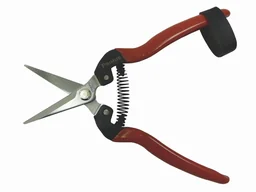
Nettles are a nursery for many species. So leave a corner with nettles growing in your garden. Do not cut them down with a brushcutter. For precise maintenance cuts, use a sharp multi-purpose cutter such as the
.
Important note
Never handle caterpillars with your bare hands. Some species have urticating hairs that can cause skin irritation. Instead, observe the animals from close by. Use a cup magnifier to see the details.
You can find swallowtail caterpillars on plants in the carrot family, such as fennel, dill or carrot tops. The large green caterpillar with black transverse stripes and red spots is unmistakable. Protect these plants in your herb garden.
Orange-tip caterpillars feed on cuckoo flower or garlic mustard. They are green and perfectly camouflaged. Look for feeding marks on the leaves. This is how you can discover these well-hidden animals.
How can you specifically support butterflies in your garden?
Create a continuous supply of flowers from March to October. Plant early-flowering species such as crocuses and pussy willow. In summer, lavender and knapweed are important. In autumn, asters and ivy flowers provide nectar.
Choose single-flowered varieties. Double flowers often no longer produce nectar or pollen. Butterflies cannot reach the hidden nectar. Native wild perennials are the best choice.
Completely avoid chemical pesticides and insecticides. These poisons kill caterpillars and butterflies directly. They also damage the food chain. If necessary, use mechanical methods or biological products.
A perfectly tidy garden is a desert for butterflies. Leave withered perennial stems standing over winter. Chrysalises overwinter inside hollow stems. Piles of dead wood and gaps between stones provide protection from frost and predators.
Provide sunny spots and shelter from the wind. Butterflies are cold-blooded animals. They need sun-warmed stones or pieces of wood to warm up. Plant native shrubs to create sheltered areas. Wildlife-friendly garden design starts with planning.
Which tools make identification easier?
A good field guide to Central European species is essential. Choose one with clear photos of the adult butterfly, caterpillar and chrysalis. Look for up-to-date distribution maps. The books published by Ulmer Verlag or Haupt Verlag are recommended.
Use smartphone apps such as "Butterflies of Europe" or "iNaturalist". These apps offer image recognition. Upload your photos and receive suggestions. The community can help with difficult identifications.
A hand lens with 10x magnification reveals details. Examine the antennae, wing scales or eyes. A small pocket mirror helps you see the underside of the wings without touching the butterfly.
Additional advice
Start a species diary. Record the date, time, weather and species observed. Document the flowering plants visited. Over the years, this will help you identify patterns and changes in your garden.
Buying insect hotels provides help during the winter. Some butterflies, such as the small tortoiseshell, look for cavities in which to overwinter. Place the hotel in a sunny, sheltered spot at garden height.
Where can you find support and more detailed information?
Local nature conservation organizations such as NABU or BUND offer guided field trips. With expert guidance, you will learn quickly and confidently. There are often special butterfly walks in midsummer. Sharing your observations with others is enjoyable.
Visit butterfly gardens or butterfly houses. There you can see many species up close in good light. You can study their behavior and flight patterns. This makes them easier to remember than any photograph.
Report your observations to portals such as "Tagfalter-Monitoring Deutschland". Your data contributes to scientific analyses. You help identify population trends and develop conservation measures.
Use online forums such as "Schmetterlinge-Raupe.de". Post your photos and have experts identify them. Read discussions about similar finds. This will help you expand your knowledge continuously.
The right garden equipment supports your work. With sharp, clean tools, you can maintain food plants precisely without harming other insects. A wildlife-friendly garden requires thoughtful action.
Start now. Go into your garden and observe. Every butterfly you discover is a success. With each butterfly you identify, your understanding of nature's complex network grows. Your garden will become livelier and more diverse.
Frequently Asked Questions
- What is the easiest way to tell a butterfly from a moth?
- Look at the antennae. Butterflies always have club-shaped tips on their antennae. Moths, by contrast, have thread-like, comb-like or feathery antennae. A second distinguishing feature is how they hold their wings at rest: butterflies usually fold them upright over their backs.
- Which plants attract the most butterflies to the garden?
- Plant native, nectar-rich perennials with single flowers. Butterfly bush (Buddleja), lavender, phlox, viper's bugloss and thyme are particularly attractive. Caterpillar food plants such as nettles, alder buckthorn and bird's-foot trefoil are also important. Avoid pesticides.
- Can I identify butterflies by the way they fly?
- Yes, flight style is a useful distinguishing feature. The red admiral and peacock butterfly fly powerfully and purposefully. The brimstone has a fluttering, irregular flight. The painted lady has a fast, straight, darting flight. Observe these characteristics in sunny weather.
- Are all brightly colored butterflies true butterflies?
- No, coloration is not a reliable feature. There are also very colorful moths, such as the emperor moth. The antennae and resting position are decisive. Learn to confidently recognize common species such as the small tortoiseshell or marbled white by their characteristic markings.
- How can I make my garden butterfly-friendly?
- Create varied areas with sunny spots, sheltered corners and native flowering plants. Leave caterpillar food plants such as nettles in one corner of the garden. Avoid insecticides completely. An insect hotel provides places for overwintering.
You might also be interested in
- Identifying garden birds: Which species visit your garden?
- Butterflies in the garden: How to attract them
- Garden wasp species: How to identify the most common species
- Types of garden flowers: A practical overview
- Identifying and understanding garden beetle species
- Identifying plants: Recognizing garden and wild plants