
In brief: To keep laying hens successfully, you need a dry, draught-free and secure coop. Plan for at least 0,3 m² of coop space and 10 m² of run space per hen. A consistent daily routine, high-quality feed such as PRODUCT_55097 and clean drinking water are essential for your hens' health and egg production.
Contents
Planning: What to consider before building a chicken coop
The idea of having your own eggs is tempting. But before you buy materials, clarify the basics. Check your local building regulations. Some councils only allow small flocks in rural areas, while others regulate the minimum distance from neighbouring properties.
Hens need your time every day. Allow 15 minutes each morning and evening for checking on them, feeding and collecting eggs. You will also need to carry out weekly cleaning. Do you have cover for holidays or illness? Hens are living animals, not machines.
Choose the breed carefully. Laying hybrids such as Lohmann Brown produce almost one egg a day, but are less demanding to keep. Heritage breeds such as Vorwerk hens lay fewer eggs, but are robust, friendly and attractive to look at.
Start with a small group of three to four hens. This allows you to learn about the animals' needs without becoming overwhelmed straight away. You do not need a rooster for egg production, and one can cause disputes with neighbours.
Space requirements: More is better
Allow at least 0,3 square metres per hen in the coop. The run should provide 10 square metres per bird. Overcrowding causes stress, feather pecking and illness. The location must be dry, sheltered from strong winds and partially shaded.
Important note
Tell your immediate neighbours about your plans. Discuss any concerns about noise (clucking or possibly a rooster) or flying feathers. An open conversation helps prevent later conflicts and builds acceptance.
The ideal chicken coop: Function over design
A chicken coop has three main jobs: protection from the weather, safety from predators and a hygienic environment. Build the coop raised off the ground or with a floor that is easy to clean. Use breathable materials such as wood. Avoid plywood without ventilation.
Ventilation is critical. Install ventilation slots beneath the roof edge, positioned to prevent draughts at the hens' head height. Stale air encourages respiratory diseases. Draughts make the animals ill. A dry coop is a healthy coop.
The interior is simple. Allow 15-20 cm of perch space per hen, at different heights. Fill nesting boxes (1 nest for 3-4 hens) with clean bedding. Hang or position drinkers and feeders so they cannot become contaminated.
Pro tip
Build the roof with a generous overhang and fit a droppings board beneath the perches. This makes daily cleaning much easier. For building, you need suitable garden tools and possibly an for precise cuts.

Bedding and cleaning
Straw, wood shavings or hemp bedding are good choices. The material must be dry and low in dust. Replace damp bedding in the nests weekly and the entire coop floor every four to six weeks. Compost the used bedding; it makes excellent fertiliser.
The secure run: Space and protection for your hens
A run gives hens something to do, promotes their wellbeing and improves egg quality. Above all, the run must be secure. Foxes and martens are active during the day too. Use sturdy, close-mesh wire (mesh size max. 2 cm).
Bury the wire 30 cm deep or bend it 50 cm outwards. This prevents predators from digging underneath. Cover the run overhead with netting or wire to keep sparrowhawks and buzzards out.
Make the run interesting with dust-bathing areas, fallen tree trunks to jump onto and bushes that provide shade. Hens are curious and need stimulation to prevent behavioural problems such as feather pecking.
Rotate the areas where possible. Leave sections of the run unused from time to time so the grass and soil can recover. This reduces parasite pressure and prevents muddy conditions.
Additional advice
Plant robust shrubs or perennials as natural wind and visual protection. You can find everything you need for planting in plant accessories. Dense vegetation gives hens a sense of security and provides insects as natural food.
Daily care: Feeding, cleaning and observing
Consistency is everything. Open the coop at the same time and feed your hens regularly. Hens love routine. They recognise you as their carer and become more trusting. Take time to observe them calmly. This helps you notice quickly when one of them seems ill.
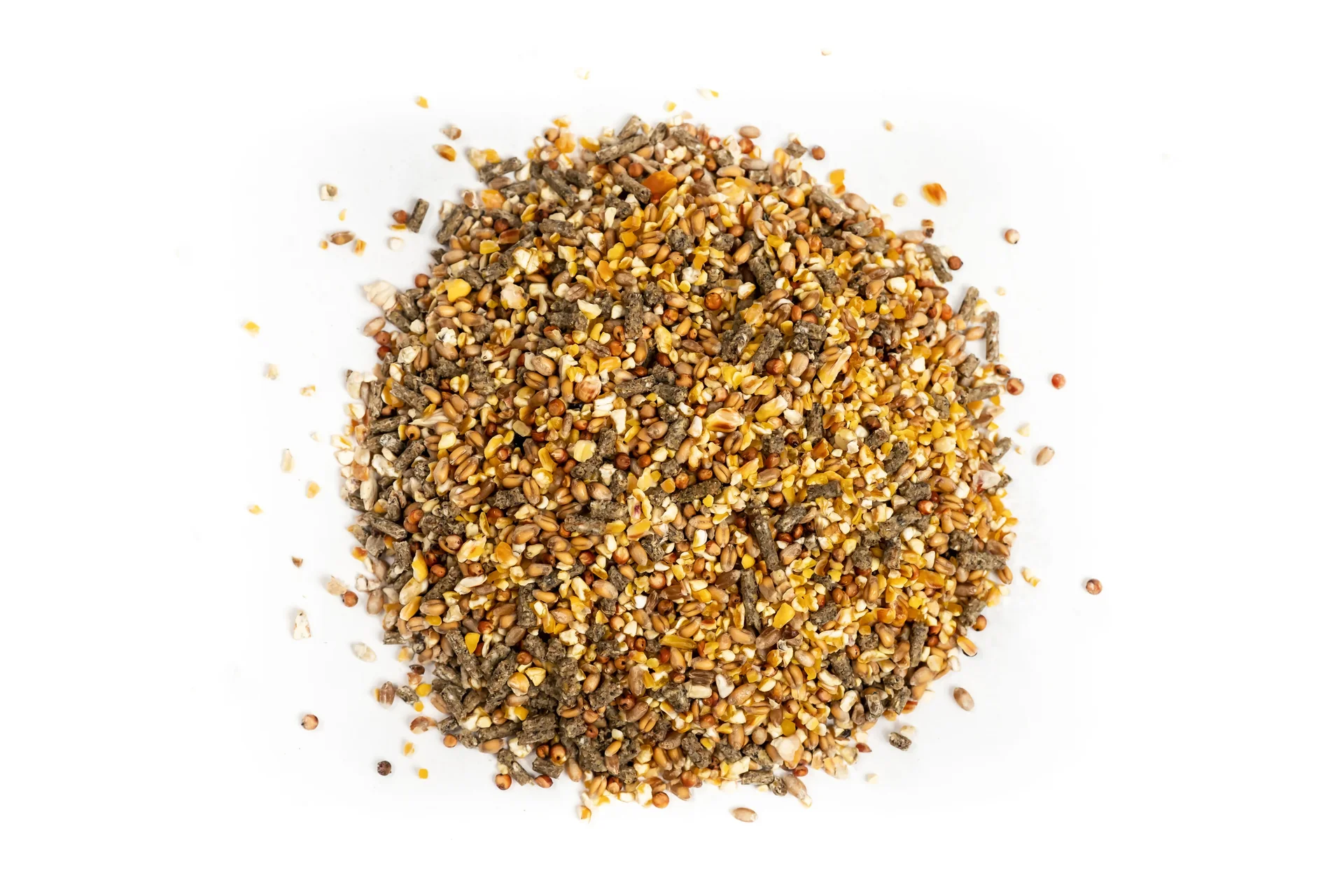
Feed a complete layer feed such as . It contains enough calcium for strong eggshells and all the necessary nutrients. Give grain mixes only as enrichment in the afternoon. Always provide fresh water.
Collect the eggs at least once, or preferably twice, a day. This helps prevent breakage and discourages egg eating. Only clean heavily soiled eggs dry with a brush. Washing destroys the natural protective coating.
The morning coop check
Open the coop. Check that the water is clean. Remove any eggs laid overnight. Check the bedding—is it dry? Observe each hen's behaviour as it leaves the coop. Is one of them trailing behind apathetically?
Recognising Health Problems and Preventing Illness
A healthy chicken is active, has shiny feathers, clear eyes and a red comb. It eats and drinks normally. Learn to recognise this appearance. Any deviation is a warning sign. Lethargy, sitting fluffed up, blocked nostrils or diarrhoea require immediate action.
The biggest health risks are parasites. Check regularly for mites in the cracks of the perches and for lice on the skin, especially around the vent. Set up a dust-bathing area filled with fine sand and a little diatomaceous earth. This is the best way to prevent parasites.
Keep the coop clean. Damp bedding provides a breeding ground for bacteria and worms. Remove droppings regularly. Disinfect the coop after completely changing the bedding and before introducing new birds.
When should you call the vet?
For severe symptoms such as breathing difficulties, open wounds or paralysis, or if a bird has not eaten anything for more than a day, consult a specialist vet. Set aside a fresh stool sample beforehand in case a parasite examination is needed.
Practical Helpers for the Coop and Garden
The right equipment makes keeping chickens easier. High-quality is the basis for healthy birds and plenty of eggs. The 20 kg pack is economical and ensures a small flock has enough feed for weeks.
When building and maintaining the run, a sturdy is essential. It loosens the soil, distributes sand in dust-bathing areas and helps with cleaning. For precise wood and metalwork on the coop, the offers power and flexibility.
Remember to care for your garden all year round. In the garden equipment range, you will find everything from watering solutions to practical storage to support your garden project.
With these basics in place, nothing stands in the way of your adventure of producing your own eggs. Plan carefully, build safely and maintain everything consistently. The reward is not only fresh eggs, but also the joy of having these lively, fascinating animals in your garden.
Frequently Asked Questions
- How many chickens do I need for a 2-person household?
- Three to four laying hens are ideal for a 2-person household. A hen lays around 250-300 eggs a year. This covers your needs while leaving enough eggs if production drops. Remember: chickens are social animals and should never be kept alone.
- What licence do I need to keep chickens in my garden?
- Always check with your local council before keeping chickens. In many cases, up to 20 chickens can be kept without a licence. However, check local development plans and setback rules for neighbouring properties. The veterinary authority may also have requirements for keeping chickens in suitable conditions.
- How can I protect my chickens from martens and foxes?
- Secure the coop and run with strong, close-mesh wire (mesh size ≤ 2 cm), burying it in the ground as well. Lock doors with proper locks, as martens can open simple latches. An electric fence around the run provides additional protection from predators on the ground.
- Can I feed my chickens kitchen scraps?
- Yes, but with caution. Only give them fresh, unseasoned vegetable scraps, lettuce or cooked potatoes. Always avoid avocado, onions, citrus fruit, salt and sweets. Kitchen scraps should only supplement a balanced main feed such as PRODUCT_55097.
- What should I do with the chickens in winter?
- The coop must be frost-free, dry and well ventilated. If necessary, insulate the walls with insulation mats. Provide long hours of artificial light (14-16h) with a timer to stabilise egg production. Check the water regularly for ice.
You might also be interested in
- Keeping Chickens in Your Garden: Everything You Need to Know
- Build Your Own Chicken Coop: Your Guide to the Ideal Coop
- Keeping Chickens for Beginners: How to Maximise Egg Production
- Wild Birds in the Garden: How to Create Nesting Boxes and Feeding Stations
- Build Your Own Garden Shed: Your Little Garden Retreat
- What Do Chickens Eat? The Best Feed for Healthy Birds