
In brief: The best choice depends on your project. Plastic lawn edging is flexible, affordable and ideal for curved flower beds. Metal lawn edging offers greater stability, a premium look and is perfect for straight-lined, modern gardens, but costs more.
A well-maintained garden stands out through its clear structure. The lawn grows exactly where it should. The flower bed stays free of grass roots. The key is a clean separation. Lawn edging creates this order and makes garden maintenance much easier. But before you buy, there is one crucial question: Which material is right for you? Plastic and metal dominate the market, each with specific advantages and disadvantages. This garden and plant accessories guide compares both options and helps you make the perfect choice for your project.
The flexible all-rounder: plastic lawn edging
Plastic is often the first choice when flexibility and good value for money matter. Lawn edging made from this material is lightweight, easy to transport and simple to install. Its flexibility makes it ideal for curved paths, round flower beds or organic shapes in your garden design.
A prime example of a versatile helper is this black plastic lawn edging. At a height of 4,5 cm and a length of 100 cm per element, it provides a discreet yet effective barrier. It can be effortlessly adapted to the desired shape and is a quick solution for creating clear lines in the garden.
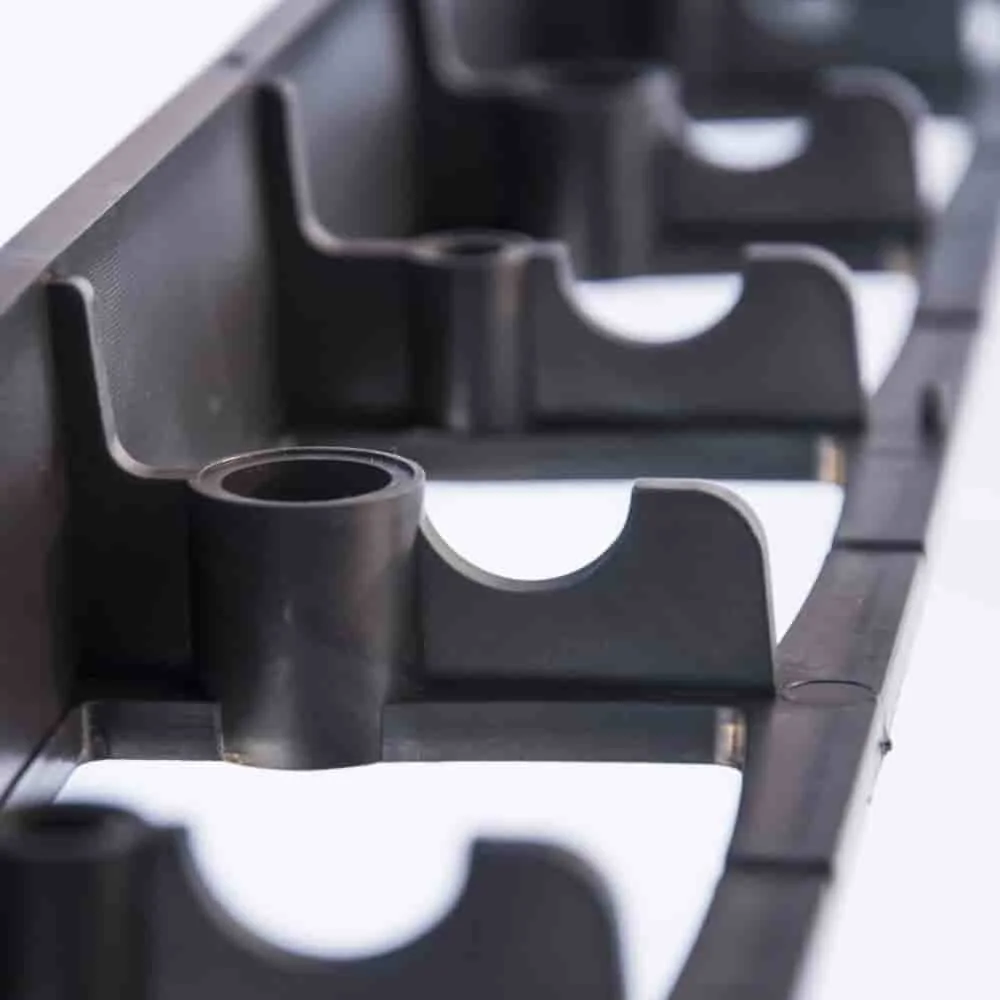
Advantages of plastic lawn edging
The biggest advantage is its flexibility. You can easily create tight curves and wide arcs without having to cut or bend the material. This makes plastic unbeatable for creative and natural-looking gardens. Another benefit is the price. Plastic edging is significantly cheaper to buy than its metal counterparts.
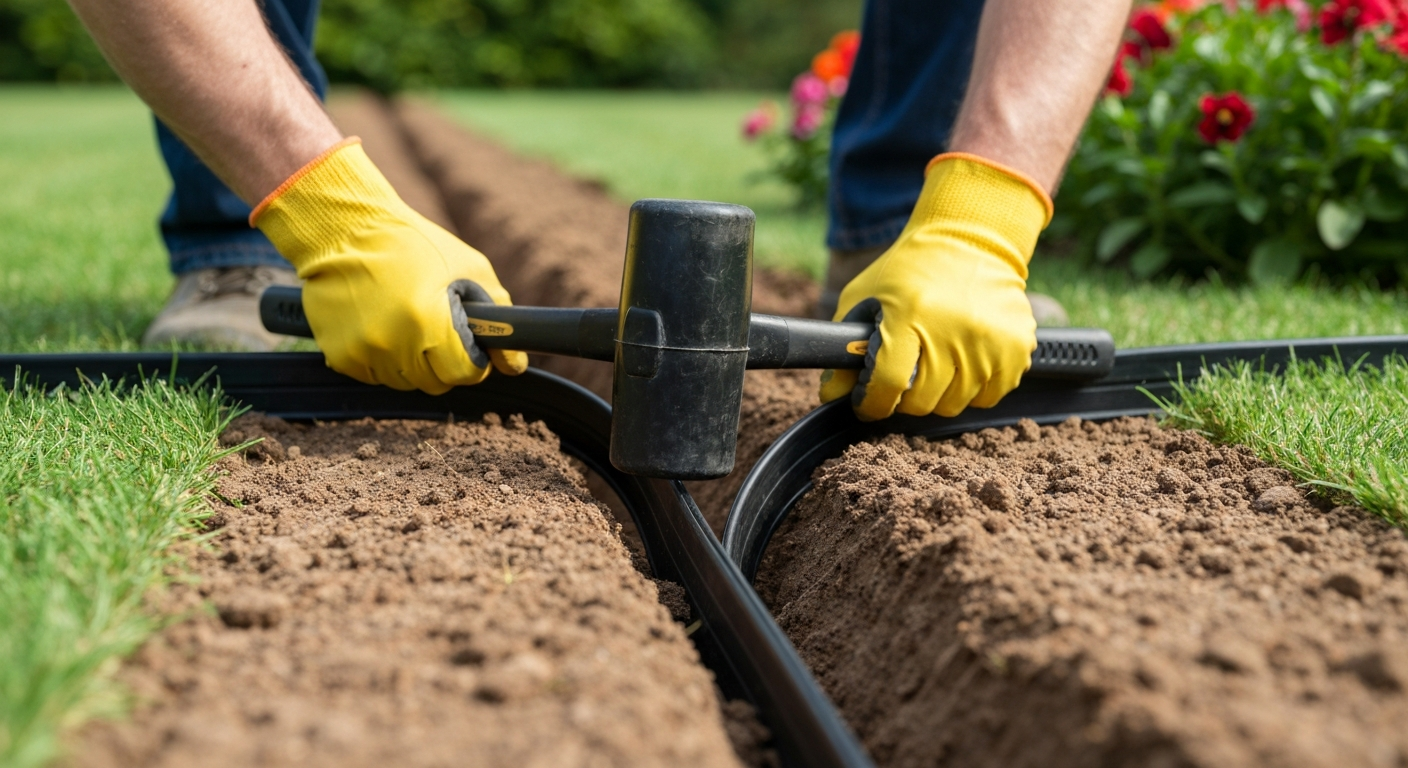
It is also weather-resistant and does not rot. Water, frost and soil acidity cannot harm the material. Installation is extremely simple and usually requires no special tools. A spade to prepare a trench and a rubber mallet are often all you need.
Disadvantages and what to look out for
Durability can be a weak point. Cheaper plastic without UV protection becomes brittle over time due to sunlight and may break. When buying, look for information about UV resistance. In terms of stability, plastic does not match metal. An accidental impact from a lawn mower or wheelbarrow can damage thin plastic edging. Its appearance is also a matter of taste. While black or green plastic blends discreetly into the garden, it looks less premium than metal.
Expert tip
Place flexible plastic lawn edging in the sun for a few hours before installation. The material will become softer and can be bent into the desired shape more easily, especially around tight curves.
The robust classic: metal lawn edging
If you are looking for durability, stability and a premium appearance, metal is hard to beat. Metal flower bed edging creates extremely sharp, precise borders and gives the garden a modern, professional structure. It is the first choice for straight-lined designs, but can also handle gentle curves.
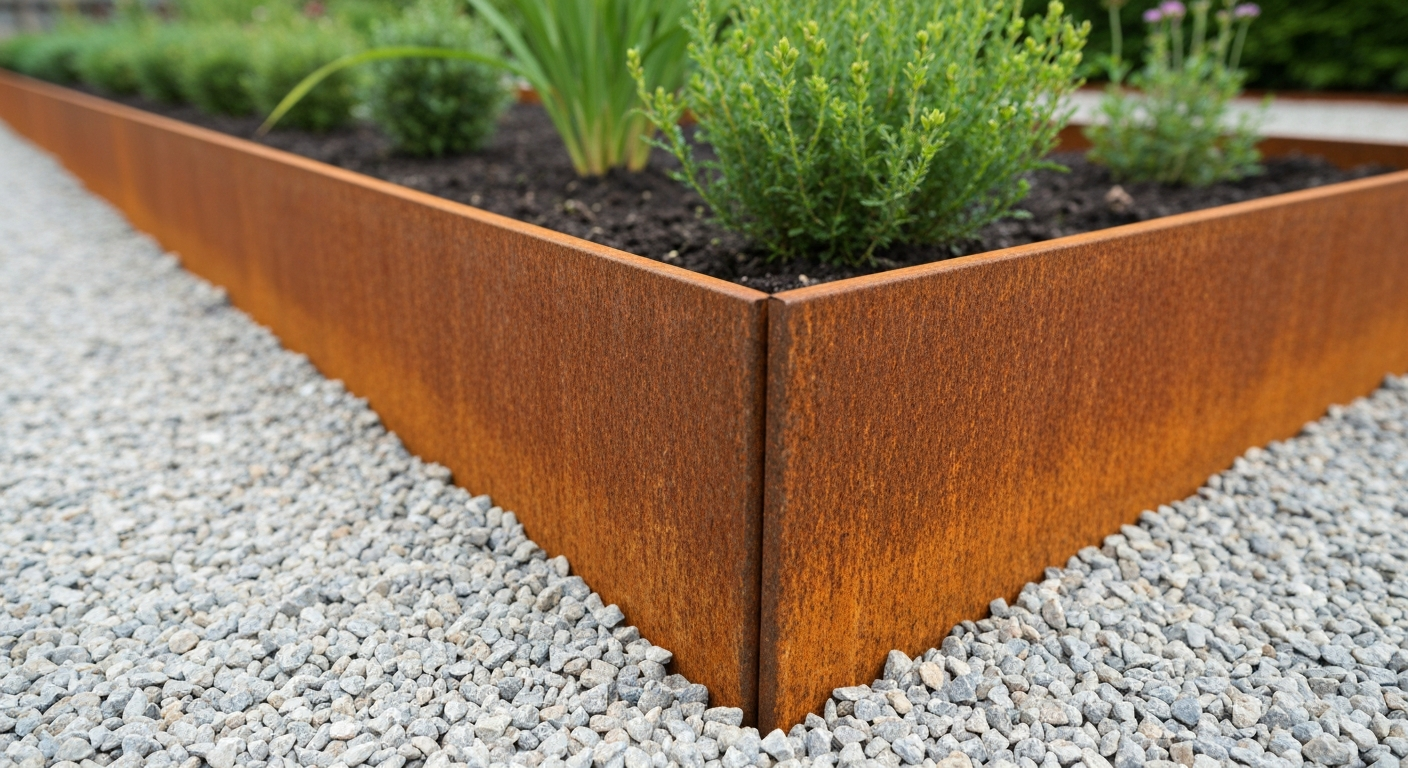
The strengths of metal flower bed edging
Durability is second to none. Metal edging easily withstands mechanical stress, such as contact with a lawn mower. Depending on the material, it can remain dimensionally stable and weather-resistant for decades. There are different types of metal:
- Galvanized steel: Offers good corrosion protection and a silvery-matt appearance. A solid and affordable metal option.
- Stainless steel: Completely rust-proof and very elegant in appearance, but also the most expensive option.
- Corten steel: Develops a controlled, protective layer of rust (patina) in a warm earthy tone. This weathered steel look is especially popular in modern gardens and is highly durable. One example is this 10-piece Corten steel lawn edging set.
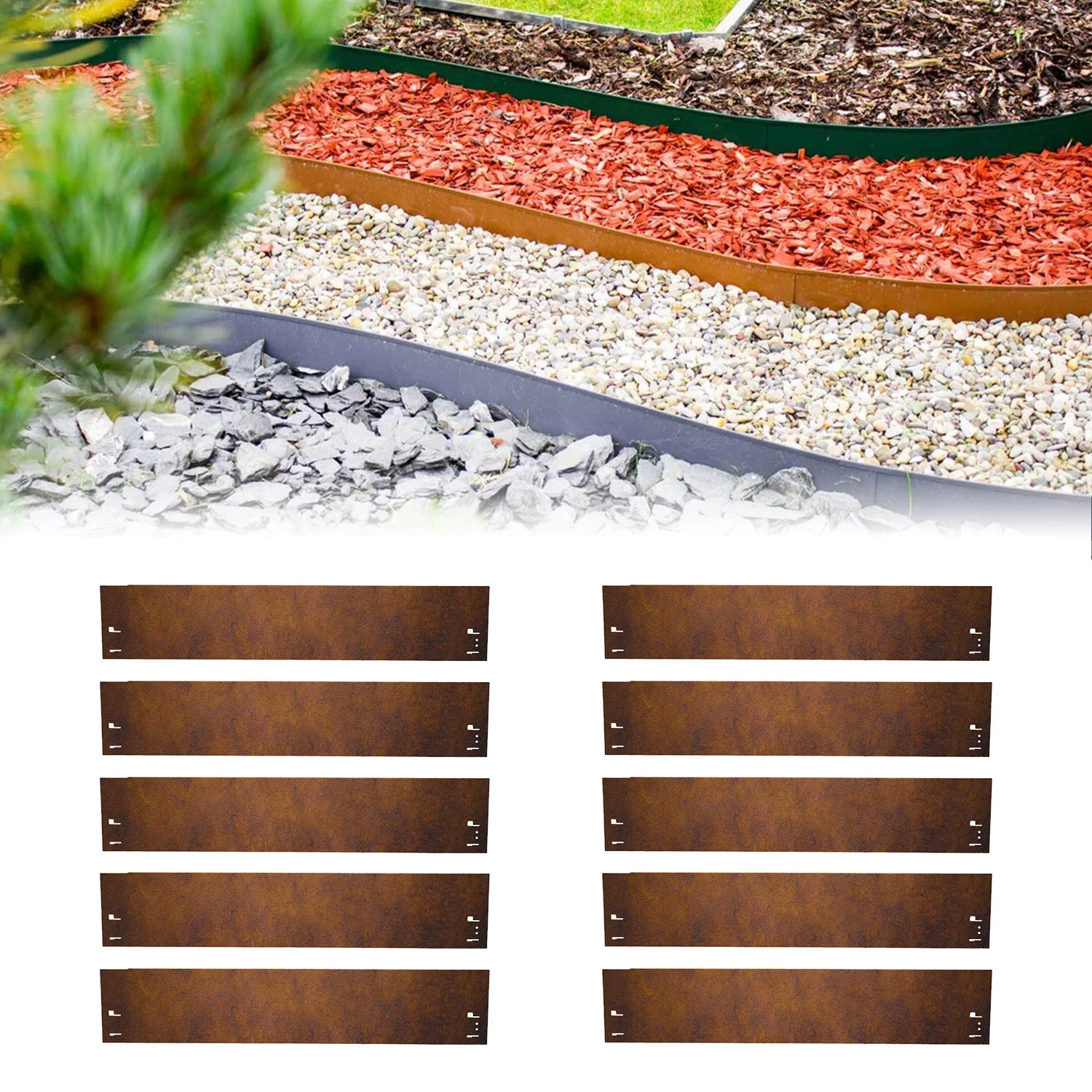
A clean edge is like a picture frame for the garden. It directs the eye, creates order and highlights the beauty of the planting.
Potential weaknesses of metal
The higher price is the most obvious disadvantage. Although the investment pays off through its durability, the initial cost is higher. Installation can also be more involved. Metal is more rigid, cutting it to size requires a hacksaw and the individual elements are often connected using screw systems. The edges can also be very sharp, especially with thin sheet metal. Take care when handling it and in gardens where children play.
How do I install lawn edging correctly?
Correct installation is crucial for the stability and longevity of your lawn edging, regardless of the material. Good preparation makes all the difference. The basic steps are similar for both materials, but there are some differences in the details.
Important note
Always wear sturdy work gloves when working with lawn edging, especially metal edging. The edges can be sharp and cause cuts.
Step-by-step guide to installing plastic edging
Installing plastic edging is beginner-friendly. You will need a spade, a rubber mallet and, if necessary, garden shears for trimming.
- Mark out the layout: Mark the desired path of the edging with string (for straight lines) or a garden hose (for curves).
- Dig a trench: Use a spade to cut a narrow trench along the marked line. The trench should be approximately two-thirds as deep as the edging is high.
- Insert the edging: Place the plastic edging in the trench. For longer sections, connect the individual elements together.
- Align and secure: Carefully tap the edging to the desired height with a rubber mallet. The top edge should protrude only minimally above the ground or be flush with the turf to make mowing easier. For additional stability, especially in loose soil, you can use ground anchors.
- Backfill the trench: Refill the trench with soil on both sides and firm it down well.
Installing metal edging – what is different?
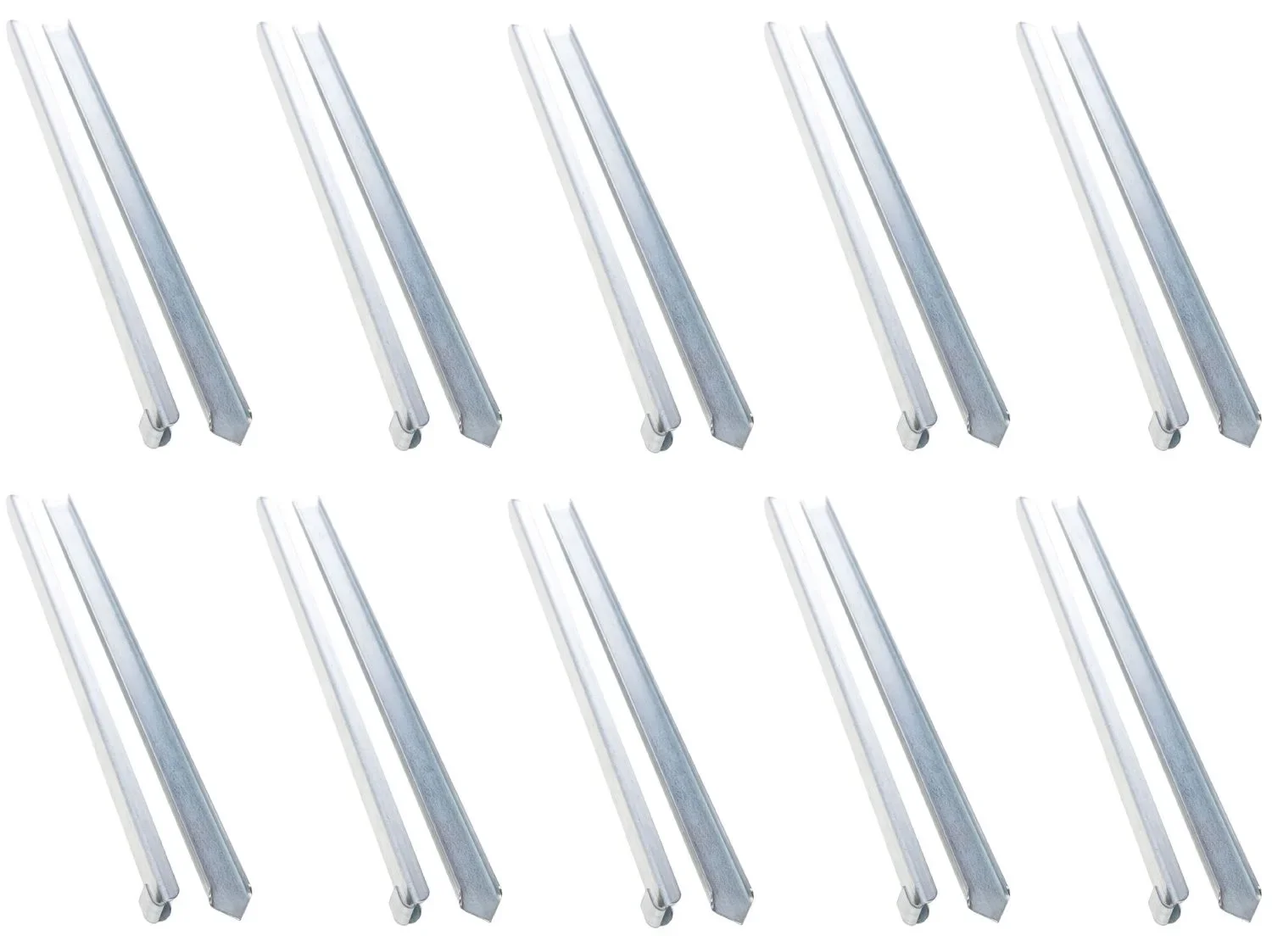
Precision is important when installing metal edging. The ground should be level. The edging is often fitted together or screwed into place, creating a very stable connection. Driving it into the ground may sometimes require more force. Here too, use a rubber mallet and a piece of wood as a buffer to avoid damaging the material. Cutting metal elements to the required length requires a hacksaw or an angle grinder.
How can I recognize high-quality lawn edging?
The market for garden equipment is vast. Not all lawn edging is created equal. Look for specific quality features to find a durable and functional solution for your garden.
Quality features of plastic edging
For plastic edging, the material composition is crucial. Look for the terms “UV-stabilized” or “weather-resistant”. This prevents the material from becoming brittle due to exposure to sunlight. Material thickness also plays a role. Thicker edging is more resistant to mechanical stress. Products made from recycled plastic are an environmentally friendly choice, but be sure to check the durability information here too.
Additional advice
When choosing lawn edging, consider not only the material but also its height. Taller edging is well suited for separating raised beds or acting as a root barrier for shallow-rooted plants. For simply separating a lawn from a flower bed, a lower option is often sufficient.
Quality features of metal edging
For metal edging, material thickness (sheet thickness) is the most important criterion. A thickness of 1 mm or more provides high stability and prevents the edging from bending easily. With galvanized steel, the thickness of the zinc coating indicates how long the corrosion protection will last. With Corten steel, the alloy is crucial for forming an even, protective patina. A good connection system that joins the elements seamlessly and securely is also a sign of high quality.
Good lawn edging is a one-time investment. Paying attention to the quality of the material and workmanship saves you hassle and effort in the years to come.
Conclusion: The best choice for your garden
Choosing between plastic and metal is not a question of which is “better” or “worse”, but a matter of balancing your requirements, budget and personal style. Plastic offers flexibility and affordability, making it ideal for curved beds and quick projects. Metal impresses with superior stability, durability and an elegant appearance, making it perfect for modern, straight-edged gardens. Assess your project, compare the features and choose the lawn edging that will structure and enhance your garden and outdoor area for years to come.
Frequently Asked Questions
- How deep should lawn edging be installed?
- Lawn edging should be installed deep enough to remain stable without becoming a tripping hazard. As a general rule, two-thirds should be in the ground and one-third should remain above it. This effectively prevents grass roots from growing across the boundary.
- Can you drive a lawn mower over lawn edging?
- This depends on the material and installation height. Sturdy metal edging or plastic edging installed flush with the ground can withstand this. You should be careful with thinner plastic edging. Ideally, install the edging flush with the turf.
- Is plastic lawn edging UV-resistant?
- High-quality plastic lawn edging contains UV stabilizers to protect it from sunlight. Check the product description. Cheaper models can become brittle and lose their color over time, which reduces their service life.
- What are the advantages of Corten steel lawn edging?
- Corten steel develops a protective layer of rust (patina) that protects the material underneath from further corrosion. This gives it a unique, warm appearance and makes it extremely durable and weather-resistant, without the need for painting.
- Do I need special tools to install lawn edging?
- For most lawn edging, standard garden tools such as a spade, shovel and rubber mallet are sufficient. Depending on the system, metal edging may require a hacksaw for trimming or a wrench for connecting the elements.
You may also be interested in
- Buy lawn edging: The ultimate guide for your garden
- Caring for plastic lawn edging: Tips for long-lasting performance
- 5 creative lawn edging ideas: More than just a boundary
- Stop grass from spreading into flower beds: The benefits of flexible lawn edging
- Installing flexible lawn edging: An easy step-by-step guide
- Redesigning your garden: The perfect time to install lawn edging