
In brief: Don’t simply dispose of leaves—make good use of them instead. Rake them off lawns to prevent rot. Under trees and shrubs, they can remain as natural winter mulch. Use them for compost or to protect sensitive plants. Leaves are not waste but a valuable resource for healthy garden soil.
Leaf removal: Why it’s about more than just tidying up
Autumn transforms your garden into a colourful sea of leaves. But while it’s a feast for the eyes, it means work for many garden owners. Leaf removal is on the agenda. However, don’t think only about disposal—instead, focus on making good use of the leaves. They are a free resource that improves your soil and provides shelter for animals.
The key is to differentiate. Not every area of the garden needs to be free of leaves. Leaves are a problem on lawns but often a solution in garden beds. With the right strategy, you can save yourself work while doing something good for your garden. We’ll show you how.
How do I remove leaves efficiently from lawns and paths?
On closely mown lawns, a thick layer of leaves cuts off the grass from air and light. Moisture builds up and, in the worst case, causes rotting patches. This is where you need to remove the leaves. The traditional method is a rake. It is quiet, gentle on the soil and provides a good workout.
For larger lawns or paved paths, it’s worth using a leaf blower. Cordless models are particularly practical. They are quieter than petrol-powered machines and give you maximum freedom of movement. Our
is a 3-in-1 tool that can be used as a blower, vacuum or shredder, depending on your needs.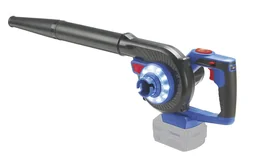
Expert tip
Rake leaves in dry weather. Wet leaves stick to the ground and are much harder to move. Work with the wind rather than against it. This lets you push the leaves towards a collection point with less effort.
For the final removal of leaves from paths or patios, a broom with sturdy bristles is ideal. Collect the leaves on a tarpaulin or in a large sack. This makes it easy to transport them to the compost heap or wherever you intend to use them.
Why should I make use of leaves in the garden?
Disposing of leaves in the food waste bin or at a recycling centre should be the last resort. It’s better to keep the cycle going in your own garden. Leaves improve soil structure, retain moisture and provide a habitat for countless small creatures. The motto is: reuse rather than dispose.
The simplest way to reuse leaves is as mulch. Spread shredded leaves under shrubs and hedges and over harvested vegetable beds. They suppress weeds, protect the soil from frost and erosion, and turn into valuable humus by spring. Browse our range of garden tools to find the right equipment for the job.
A layer of leaves in winter is like a warm blanket for the garden soil. It protects the living world beneath it from extreme temperature fluctuations and preserves soil life.
A special way to reuse leaves is to make leaf mould. Mix the leaves with some mature compost or nitrogen-rich material such as grass clippings. This kick-start speeds up decomposition. After one to two years, you’ll have fine, nutrient-rich leaf mould.
How do I protect sensitive areas from leaves?
Not every area of the garden can tolerate a layer of leaves. Protect sensitive perennials that are prone to rot from wet leaves. Examples include Mediterranean herbs such as lavender and plants with hairy leaves.
However, the most important area to protect is the garden pond. Leaves that sink to the bottom rot, remove oxygen from the water and increase nutrient concentrations. The result is often an algae problem the following spring. The solution is a pond net.
Important note
Stretch the pond net tightly and keep it sufficiently far above the water surface. This prevents birds or hedgehogs from getting caught in it. Check the net regularly and empty it before the weight of wet leaves causes it to sag.
Our
is a tear-resistant, UV-stable pond net designed precisely for this purpose. It reliably catches leaves, is easy to install and can be reused. Discover more practical helpers in our tarpaulins and nets category.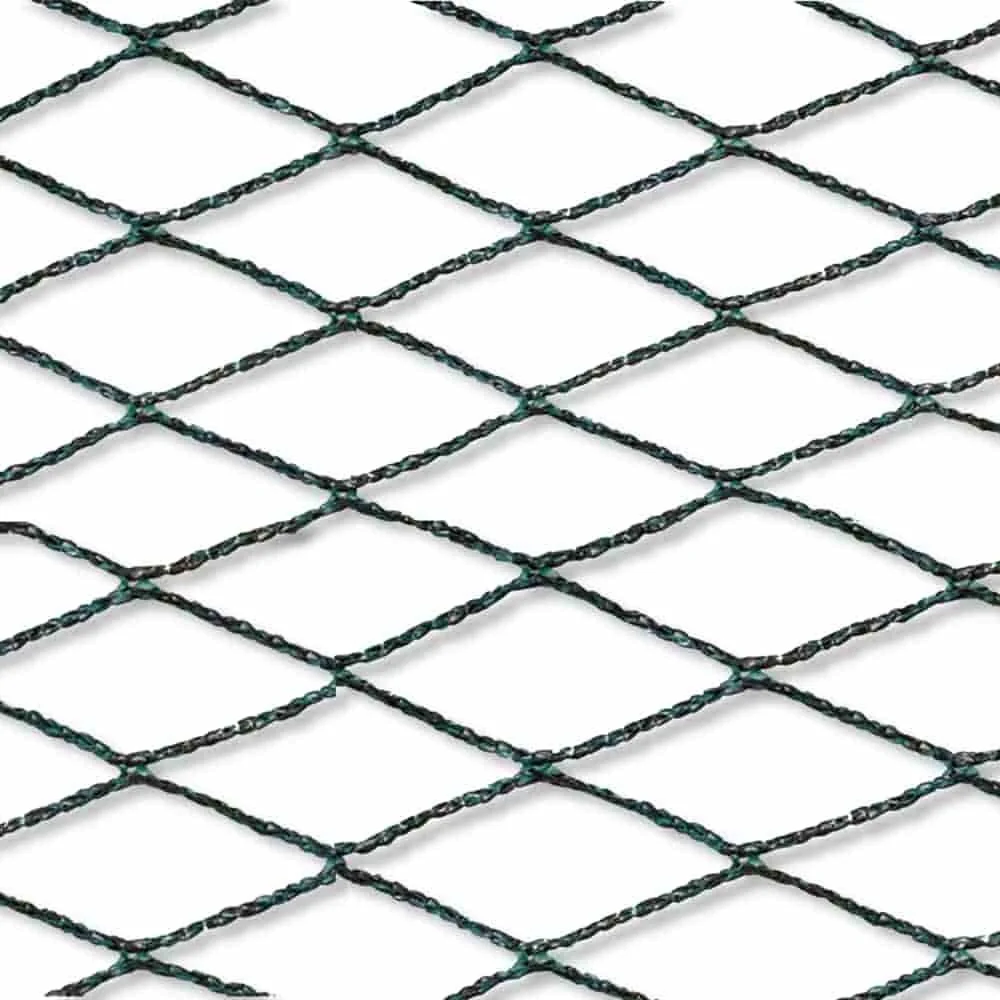
Gutters and drains also need protection from blockages caused by leaves. Special grilles or leaf guards fitted in downpipes are a worthwhile investment.
What should I do with the leaves I've collected?
Got a big pile together? Perfect. Now the creative phase begins. The classic route is to put it on the compost. Add the leaves in layers and mix them with coarser material such as chopped-up branches. This prevents them from clumping.
For hedgehogs, a large, loosely piled heap of leaves in a quiet corner of the garden is the perfect winter shelter. Please do not disturb this area until spring. Alternatively, fill the leaves into wire baskets or burlap sacks. Place these around young shrubs as windbreaks, or simply store them until the leaves have decomposed into soil.
A garden without a pile of leaves is like a house without a roof. You deprive your animal helpers, such as hedgehogs, of vital protection from the cold and deny insects a place to overwinter.
You can also work shredded leaves directly into empty vegetable beds. By the next planting season, much of them will already have decomposed. After the strenuous work of removing leaves, don't forget the last important gardening task of the year: fertilizing your lawn in fall.
Additional advice
A special fall lawn fertilizer such as our
supplies the grass with potassium in fall. This strengthens the cell walls and makes the lawn more resistant to frost, snow mold and winter cold. This allows your lawn to start the next season stronger.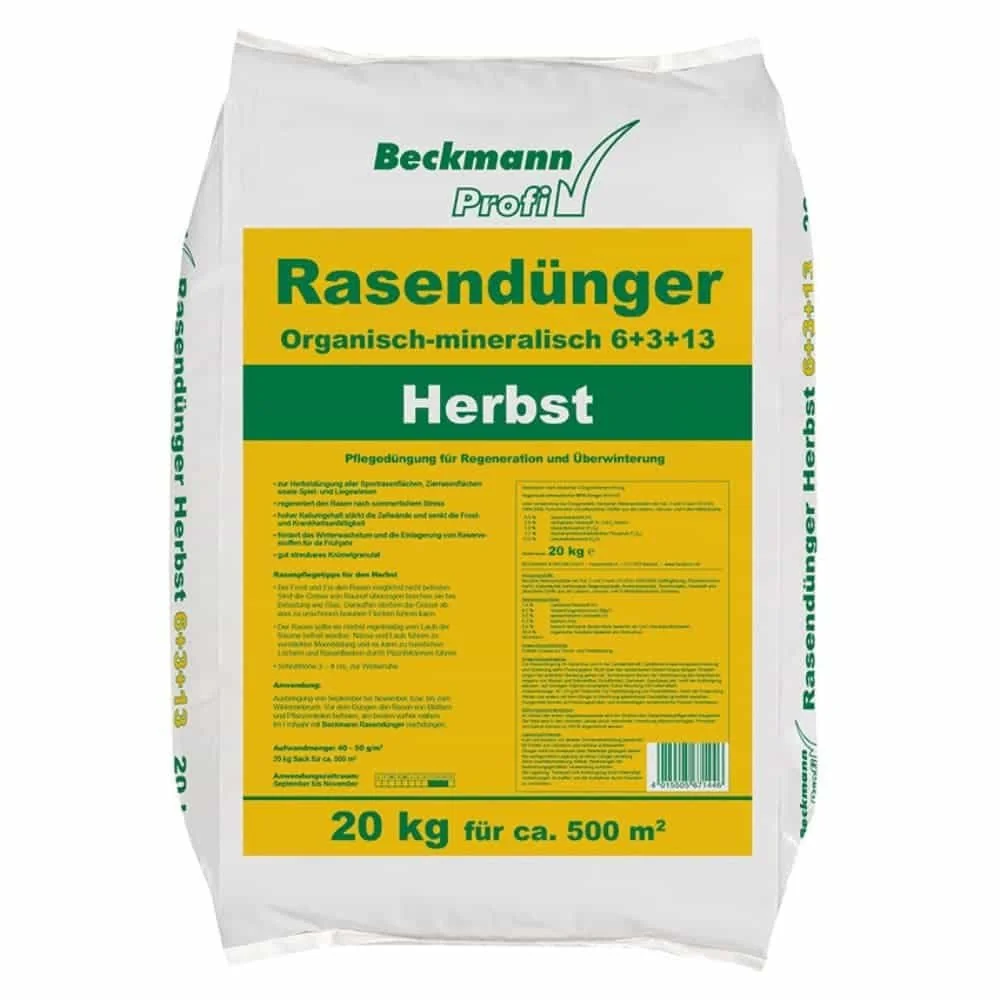
You will find a wide selection of suitable products in our fall lawn fertilizer category. Combine fertilizing with one final, not-too-short cut of the lawn before winter arrives.
When is the right time for leaf removal?
Don't wait until the last tree has lost its foliage. Start collecting leaves regularly at an early stage, especially from the lawn. One or two sessions per week are more efficient than one huge cleanup at the end of fall.
The ideal time for completely removing leaves from sensitive areas is after the first hard frost and before the first sustained snowfall. By then, most of the leaves will have fallen, and you can clear everything away at once. Make use of the golden days of fall to get this job done.
Remember: not every leaf needs to be removed. Simply leave leaves under trees and shrubs. They form a natural, low-maintenance mulch there and save you work. With this smart combination of removal and deliberately leaving some leaves in place, you can easily manage fall in your garden. For all other questions about garden care, our entire range is available in the Garden + Outdoor section.
Frequently Asked Questions
- Do I need to collect every leaf in the garden?
- No. Remove leaves primarily from the lawn, as they block light and air and encourage lawn diseases. Under trees and shrubs, in perennial beds and as winter protection for sensitive plants, leaves are very useful. Here, they act as an insulating layer of mulch.
- Which tools are best for removing leaves?
- For small gardens, a traditional leaf rake is sufficient and quiet. For larger areas, a leaf blower or vacuum saves time. A cordless electric tool such as PRODUCT_73026 offers great flexibility without tangled cables.
- Can I put diseased leaves in the compost?
- Leaves with severe fungal infections (e.g. powdery mildew, rose rust) should not be composted but disposed of in the household waste bin. This breaks the cycle of infection. Healthy leaves, on the other hand, are an excellent addition to compost and improve the soil structure.
- How can I protect my pond from falling leaves?
- Cover your pond with a special net early on. A pond protection net such as PRODUCT_5684 catches the leaves before they sink and rot. This prevents algae growth in spring and protects the pond pumps.
- What should I do with very large amounts of leaves?
- Pile the leaves in a secluded corner of the garden or fill them into wire baskets. This provides hedgehogs and insects with the perfect winter shelter. Alternatively, you can shred them and spread them as mulch under hedges or ask your local municipality about disposal options.
You may also be interested in
- Fall leaves in the vegetable garden: From waste to garden gold
- Disposing of garden waste: The seasonal guide
- Preparing your garden for winter: Fall tips
- How to use a garden waste bag properly: The ultimate guide
- Get your sweeper ready: Maintenance for spring & fall
- Harvesting and decorating pumpkins: Tips for the fall garden