
In brief: Modern LED light bulbs offer enormous variety. They differ in colour temperature, shape, brightness and intended use. A grow light such as PRODUCT_73541 meets different requirements than a reflector bulb or decorative filament lamp. This test compares the types for living spaces, workplaces and specialist applications. Choosing the right bulb saves energy and creates perfect lighting.
The LED light bulb market is confusing. New shapes, technologies and promises make choosing more difficult. Our 2026 test and comparison brings clarity. We present different types, show their strengths and help you find the right product for your needs. Forget wattage. Focus on light quality, efficiency and the intended use.
Table of contents
What types of LED light bulbs are available?
LED light bulbs are not all the same. Their shape determines how the light is distributed and where they can be used. Classic bulb shapes such as round or candle bulbs replace incandescent and halogen bulbs in open fixtures. They emit light in all directions.
Reflector bulbs, often designated R50, R63 or R80, focus the light forwards. They are suitable for ceiling spotlights or recessed spotlights to create accents or illuminate pictures. One example is the reflector type.
Filament LEDs imitate the appearance of classic filaments. They are decorative and are often used in exposed fittings. Their light output is somewhat lower than that of modern Chip-On-Board LEDs, but aesthetics take priority.
Specialist lights such as grow lights or bulbs for industrial lighting have a light spectrum optimised for their purpose. They are not intended for general living spaces.
Classic replacement bulbs
These models are designed to replace old light bulbs directly. They fit existing sockets and provide similar or better brightness while using significantly less energy. Make sure you choose the right socket size (E27, E14, GU10 etc.).
Reflector and spotlight bulbs
They produce a focused beam of light. The number in the name (e.g. R80) often indicates the diameter in millimetres. PAR bulbs have a pre-shaped parabolic reflector housing for precise light direction.
Tip: Plan your lighting around the desired effect. Use reflector bulbs for targeted accents and general-purpose bulbs for a room's overall brightness. Combine both types to create an appealing lighting scheme.
The most important buying criteria compared
Compare LED light bulbs using objective specifications. Wattage now says very little. Modern LEDs produce a great deal of light with very little power.
Luminous flux in lumens (lm): This is the most important figure. It indicates the overall brightness. 400-600 lm is enough for a cosy reading chair. Central room lighting requires 1000-1500 lm or more.
Colour temperature in Kelvin (K): This determines the colour of the light. Warm white (2700-3300K) feels cosy. Neutral white (3300-5300K) is functional. Daylight white (from 5300K) appears very bright and stimulating.
Colour rendering index (CRI/Ra): A value above 80 is good, while above 90 is very good. The higher the Ra value, the more naturally colours appear under the light. This is important for wardrobes, dressing tables or artists' studios.
Switching cycles and dimmability: How often can you switch the light on and off? Good LEDs withstand hundreds of thousands of switching cycles. Dimmability is an additional feature that not every model supports.
Socket and shape
The socket must physically fit the fitting of your light. E27 is the large screw socket, while E14 is the small one. Pin bases such as GU10 or G9 are common for spotlights and recessed lights. The shape (bulb, candle, round, reflector) determines how the light spreads throughout the room.
Lifespan and warranty
The lifespan is given in operating hours. 15.000 hours is standard, while 25.000 hours indicates high quality. Check the manufacturer's warranty. It is an indicator of how much confidence the supplier has in its products.
Warning: Avoid cheap products without a recognisable brand or CE marking. They may flicker, have poor colour rendering or fail prematurely. The initial saving is offset by a short lifespan and poor light quality.
Selected LED Bulbs in Detail
We took a closer look at a range of available LED bulbs. The selection highlights the breadth of LED technology.
: Specialised light for plants
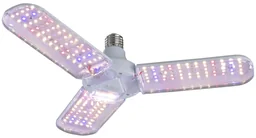
The 36W Plant Grow Light LED Bulb with an E27 base is a specialist product. It emits a light spectrum that promotes plant growth. Use it in conservatories, for houseplants or in small indoor gardens. It is not suitable for general lighting.
: Decorative filament bulbs
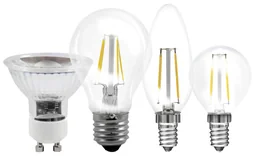
The 4 Watt Filament LED Bulb in GLS shape stands out with its design. The visible "filament" creates a nostalgic look in pendant lights or open fittings. With 470 lumens per bulb, it provides enough light for cosy areas. The two-pack is practical for lights with multiple sockets.
: Precise reflector bulb for spotlights
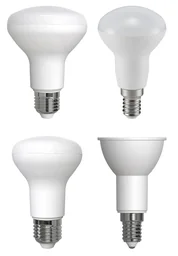
The 4,2W E14 WW PAR16 LED reflector bulb is a compact spotlight. With 320 lumens and a warm white light colour, it is perfect for small recessed or accent lights with an E14 fitting. The PAR shape directs the light efficiently. Ideal for display cabinets, shelves or background lighting.
Our range of LED bulbs is extensive. Find the right model for every application.
Note: The availability of specific models may change. Modern LED technology is developing rapidly. Focus on the key criteria described here and you will still be able to find an equivalent or better product when buying at a later date.
The Right Application for Every Bulb Type
Use LED bulbs for specific applications. The right choice improves comfort and energy efficiency.
Living rooms and bedrooms: Warm white (2700K) general-purpose bulbs in GLS shape or decorative filament LEDs are the most popular choices here. Choose dimmable models to adjust the mood. Low to medium brightness is usually sufficient.
Kitchens and bathrooms: Choose neutral white light (4000K). It creates a clean feel and supports focused work. Above sinks or mirrors, narrow-beam reflectors or spotlights provide bright, low-shadow illumination.
Home offices and workbenches: Daylight white or neutral white LEDs with high lumen output and excellent colour rendering (Ra >90) are ideal. They reduce eye strain and make colours appear realistic.
Hallways and staircases: Long-lasting bulbs that withstand frequent switching are important here. Models compatible with motion sensors or featuring integrated sensors save additional energy. The light colour can be warm white or neutral white.
Special applications
For display cabinets, pictures or architectural lighting, directional reflector bulbs are the first choice. Make sure the beam angle is suitable. A narrow angle (e.g. 25°) creates precisely focused accents, while a wider angle (e.g. 60°) illuminates surfaces.
Trends and Developments for 2026
LED technology continues to evolve. New developments are emerging.
Human Centric Lighting (HCL): Bulbs that automatically adjust their colour temperature and brightness to the time of day. They are designed to improve wellbeing and support the sleep-wake cycle. These smart systems are becoming more affordable for home use.
Even greater efficiency: Efficiency, measured in lumens per watt, continues to improve. This means more light for the same energy consumption or the same amount of light using even less energy. The limits of physics continue to be pushed.
Integrated smart home functions: Bulbs with built-in Wi-Fi or Zigbee that do not require a separate bridge. App or voice control is becoming standard in higher-end models.
Sustainability: The focus is increasingly on recyclable materials, longer service life and repairable designs. The circular economy is making its way into lighting technology.
Care and Disposal of LED Bulbs
LED bulbs are easy to maintain. Only clean the glass or plastic housing when the light is switched off and has cooled down, using a dry, soft cloth. Do not use chemical cleaners.
Faulty LED bulbs must not be disposed of with household waste. They are classified as waste electrical and electronic equipment. Take them to a collection point at a retailer or to a recycling centre. This allows valuable raw materials to be recycled and hazardous substances to be handled properly.
Store spare bulbs in a dry place protected from extreme temperatures. This helps ensure their full service life.
Choosing the right LED bulb is an investment in comfort, ambience and energy efficiency. Use our comparison to understand the technology. Then choose the types that suit your rooms and habits. Good lighting makes all the difference.
The highest-rated LED bulbs from our range compared directly:
| Model | Customer rating | Availability |
|---|---|---|
| 36W Plant Grow Light LED Bulb E27 🏆 Test winner | ★ 5,0 (27) | In stock |
| 11W E27 WW R80 1055 LM LED Reflector Bulb | – | Currently unavailable |
| 2x Anouk XL Pendant Light with Grid 93680/70 Concrete 48cm incl. 2x Warm Bulbs | – | Currently unavailable |
| 2x Anouk Industrial Pendant Light 93678/70 Concrete 40cm incl. 2x Warm Bulbs | – | Currently unavailable |
| 3 Watt LED Bulb - E27, Teardrop Shape, Warm White, 245lm, 2700K, 45 x 74 mm | – | Currently unavailable |
Frequently Asked Questions
- Which light colour (colour temperature) is suitable for which room?
- Warm white (2700-3300K) creates a cosy atmosphere in living rooms and bedrooms. Neutral white (3300-5300K) is suitable for kitchens, bathrooms and workspaces, as it helps you see clearly and stay focused. Daylight white (from 5300K) is used in workshops or for tasks requiring a high level of concentration.
- What does the lumen (lm) rating mean for LED bulbs?
- Lumens measure luminous flux, or the total amount of light emitted. The higher the lumen value, the brighter the LED bulb. So don't compare wattage; compare lumens instead. An old 60W incandescent bulb produces approximately 800 lm. Check the required light output for your room.
- Can I dim every LED bulb?
- No. Only LED bulbs explicitly marked as dimmable are suitable for this. Your dimmer must also be compatible with LED technology. Conventional trailing-edge dimmers may flicker or fail to work. Check the compatibility of the bulb and dimmer before buying.
- How long does a high-quality LED bulb really last?
- High-quality LEDs often last 15,000 to 25,000 operating hours. With average use of 3 hours a day, this equates to 15 to 25 years. The service-life rating (L70 or L80) indicates when the light output falls to 70% or 80% of its initial value.
- What is the difference between an E27 and an E14 socket?
- The difference is the size of the screw base. E27 (27 mm diameter) is the standard for ceiling and floor lamps. E14 (14 mm) is the smaller base, typically used for chandeliers, bedside lamps or some uplighters. Always check which socket your light fitting requires before buying.