
In brief: Evergreen honeysuckle (Lonicera nitida) is an ideal hedge plant for low-maintenance, year-round privacy. It grows quickly, tolerates heavy pruning exceptionally well and is a robust alternative to boxwood. With regular pruning, you can create dense, screening hedges that provide shelter for birds and add structure to your garden all year round.
Table of contents
Are you looking for a hedge that grows quickly, stays dense all year round and has few requirements? Then evergreen honeysuckle, Lonicera nitida, is the perfect choice for your Garden + Outdoor area. This robust shrub has become established as a low-maintenance and resilient alternative to disease-prone boxwood. With its small, dense leaves and fast growth, it creates an effective privacy screen in a short time.
Why is evergreen honeysuckle so popular?
Lonicera nitida, also known as box honeysuckle or shrub honeysuckle, combines several qualities that make it ideal for hedges and topiary. Its popularity is no coincidence, but the result of clear, practical benefits.
Its most obvious advantage is its evergreen foliage. Unlike deciduous hedges, it provides reliable privacy and wind protection even in the depths of winter. The small, glossy leaves create a fine, elegant texture very similar to that of boxwood. This makes it an ideal replacement if you are dealing with box tree moth.
Its growth rate is impressive. Growing up to 40 centimetres per year, it quickly fills gaps and forms a dense green wall. At the same time, it tolerates pruning exceptionally well. Even severe cuts into old wood cause no problems, and it reliably produces new growth. This makes it easy to care for and forgiving if you make the occasional pruning mistake.
Honeysuckle is also undemanding and robust. It thrives in both sunny and shady locations and copes with most garden soils. Its high resistance to diseases and pests keeps maintenance to a minimum.
Additional advice
The dense branching of Lonicera nitida provides native birds such as wrens and robins with an ideal nesting and sheltering place. A honeysuckle hedge therefore creates not only privacy, but also valuable habitat for wildlife in your garden.
How do you plant Lonicera nitida correctly?
Careful planting lays the foundation for a healthy, dense hedge that you can enjoy for many years. Just a few steps will give your honeysuckle the best possible start.
The ideal location and soil
Lonicera nitida is highly adaptable. It grows in full sun as well as deep shade. A partially shaded location is ideal. It is equally undemanding when it comes to soil. Normal, well-drained and nutrient-rich garden soil is perfect. What it cannot tolerate is waterlogging. If you have heavy clay soil, ensure good drainage by mixing sand or fine grit into the planting hole.
Careful soil preparation is the key to success when planting any hedge. Loosen the soil deeply and work in mature compost to give young plants the best possible start.
Planting time and spacing
The best times to plant are spring and autumn. This gives the plants enough time to establish good roots before summer stress or winter frost. Container-grown plants can theoretically be planted all year round, as long as the soil is not frozen.
For a dense hedge, plant around three to five plants per metre. The exact spacing depends on the starting size of the plants. Dig a planting trench twice as wide and deep as the root ball. Loosen the bottom of the trench and water the plants thoroughly before planting. Plant the Lonicera at the same depth as it was previously in the pot, fill the trench with soil and firm it down gently. Water generously to complete the planting.
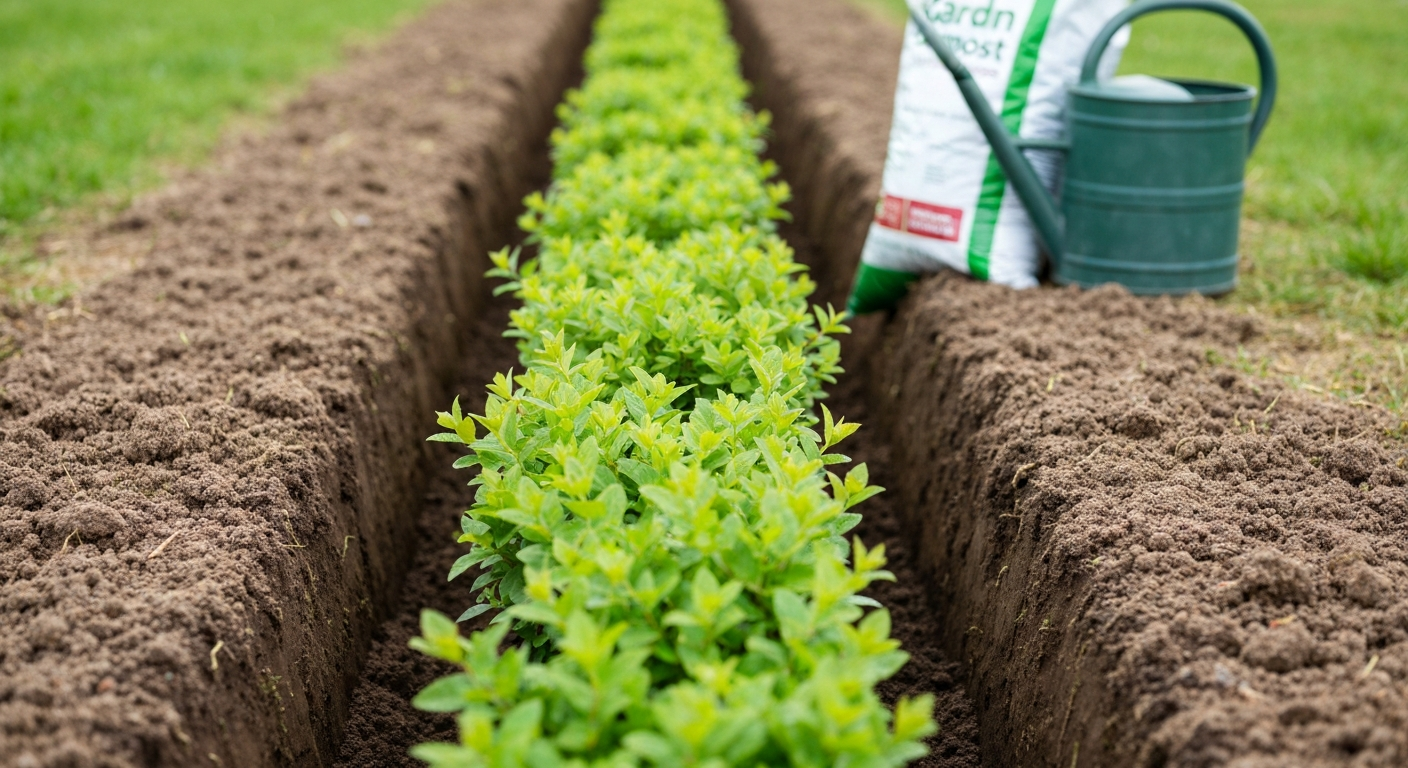
The right care for a dense hedge: here's how
Once established, evergreen honeysuckle is extremely easy to care for. With minimal effort, you can maintain a healthy, dense and attractive hedge.
Watering and water requirements
Regular watering after planting is essential to help the roots establish well. Keep the soil consistently moist during the first few weeks, but not wet. Once the hedge is well established, it copes well with drier periods. During prolonged drought, especially in summer, you should provide additional water. Also remember to water occasionally on frost-free days in winter, as evergreen plants continue to lose water through their leaves during the cold season.
Fertilising for strong growth
Honeysuckle is not a heavy feeder, but it benefits from a supply of nutrients in spring. A layer of mature compost or a handful of organic fertiliser, lightly worked into the soil, is quite sufficient. This encourages strong growth and rich leaf colour. Excessive fertilising is unnecessary and can even cause harm.
Expert tip
A mulch layer of bark mulch or grass clippings beneath the hedge not only looks neat, but also offers many benefits. It suppresses weeds, retains moisture in the soil and slowly releases nutrients as it decomposes. For young plants, you can also use a coconut plant protection mat
to protect the soil and help the plants establish.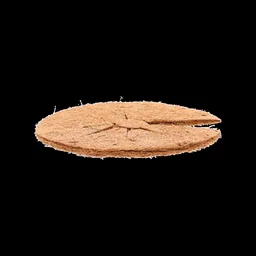
Protection from pests and diseases
One of the greatest advantages of Lonicera nitida is its robustness. It is largely resistant to the common diseases that affect hedges. Even the dreaded box tree moth leaves it alone. Aphids may occasionally appear, but they can usually be removed with a strong jet of water. In very damp weather and shady locations, powdery mildew can become an issue. An airy pruning style helps here, allowing the leaves to dry quickly. Targeted Pest + Plant Protection is only necessary in rare cases.
When and how often should you trim honeysuckle?
Regular hedge trimming is the most important part of maintenance and determines whether your hedge becomes sparse and patchy or dense and compact. Thanks to its excellent tolerance of pruning, this is easy to achieve with Lonicera nitida.
To keep the hedge in shape and encourage branching, you should trim it two to three times a year. The first, more vigorous trim is best carried out after the first growth spurt at the end of June. A further, lighter shaping trim can be done at the end of August or beginning of September. Avoid trimming in strong sunlight to prevent burns at the cut surfaces, and do not trim during frosty conditions.
Important note
When trimming hedges, observe the German Federal Nature Conservation Act. Radical pruning is prohibited between 1 March and 30 September to protect nesting birds. Gentle shaping and maintenance cuts are permitted, however. Carefully check the hedge for nests before every trim.
For a healthy hedge that remains dense at the bottom, a trapezoidal shape is recommended. Trim the hedge so that it is slightly wider at the base than at the top. This allows sufficient light to reach the lower leaves and prevents the hedge from becoming bare at the bottom. With a good hedge trimmer from our range of garden tools, the job is easy.
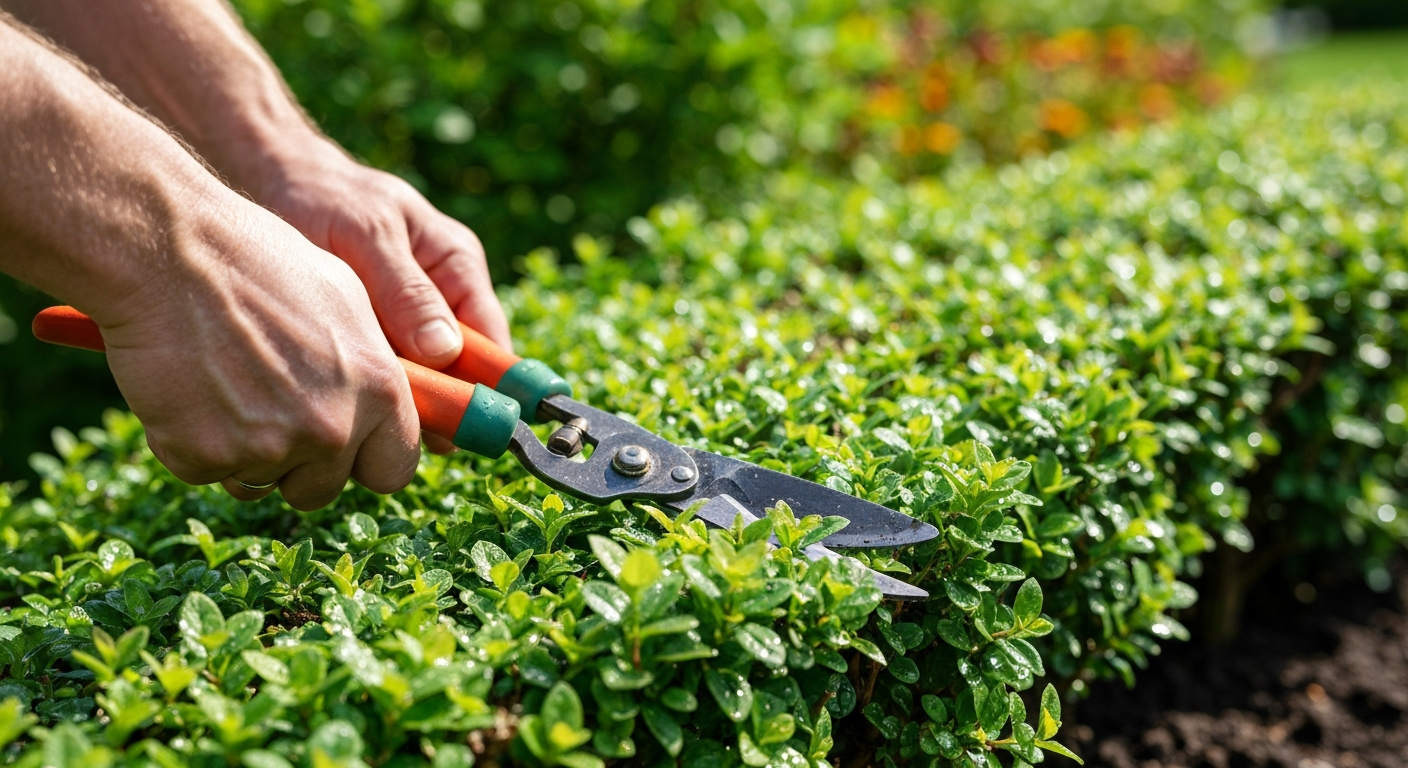
A trapezoidal shape, where the hedge becomes narrower towards the top, is not just an aesthetic choice. It ensures that the lower branches also receive sufficient light, keeping the hedge dense from the ground up.
Lonicera nitida as a versatile privacy screen in the garden
The main purpose of a hedge is often to create privacy. This is where evergreen honeysuckle really shows its strengths. Its fast, dense growth creates an impenetrable green wall within just a few years, keeping prying eyes out and transforming the garden into a sheltered retreat.
But what can you do until the hedge reaches its full height? For an immediate solution, you can use temporary privacy screening. A green construction fence privacy screen
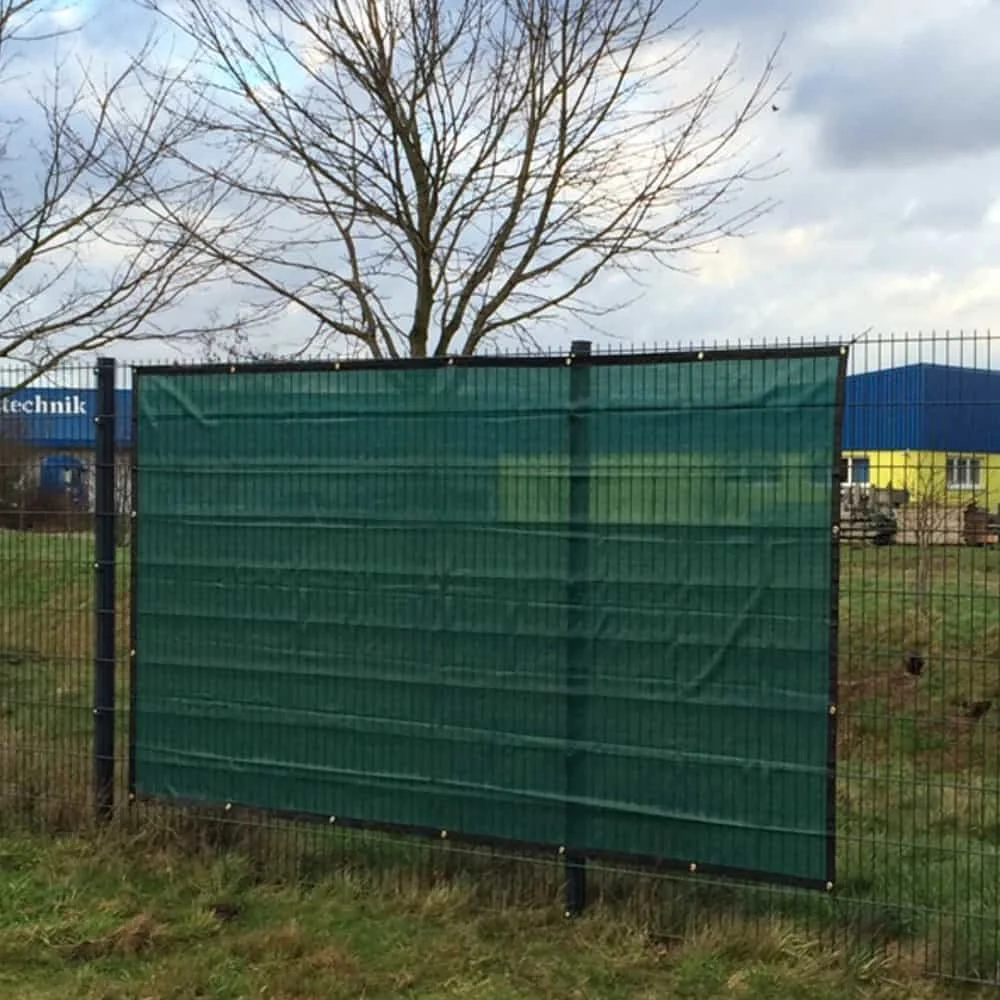
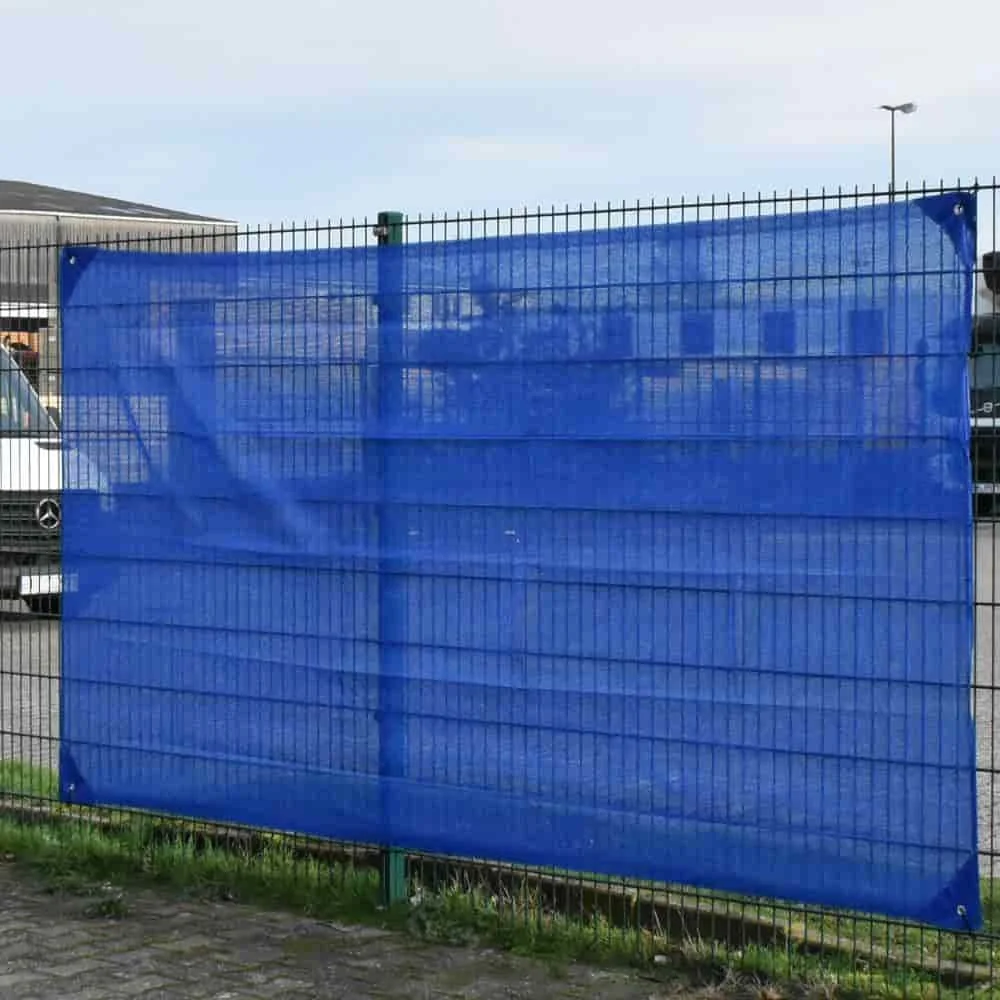
Lonicera nitida is not only suitable as a classic hedge. Thanks to its excellent tolerance of pruning, it is also an excellent plant for topiary. Balls, cones and other geometric shapes are easy to create and add accents to the garden. Cut into a flat shape, it serves as a robust, hard-wearing ground cover that effectively suppresses weeds. It also looks great in large containers on the patio or balcony.
Alternatives and popular varieties of honeysuckle
There are several varieties of Lonicera nitida, differing slightly in leaf colour and growth habit. The most popular include:
- 'Maigrün': As the name suggests, this variety stands out with its fresh green, bright new growth. It grows very compactly and densely.
- 'Elegant': This variety has a slightly trailing, arching growth habit, giving it an especially graceful and natural appearance.
- 'Baggesen's Gold': A variety with yellow-green leaves that creates particularly bright splashes of colour in sunny locations.
Compared with other hedge plants, Lonicera nitida is an uncomplicated all-rounder. It grows more vigorously than yew (Taxus), has finer foliage than cherry laurel (Prunus laurocerasus) and is considerably more robust than boxwood (Buxus). Only privet (Ligustrum) is similarly tolerant when it comes to location. If you are looking for a fast-growing, low-maintenance and attractive evergreen hedge, honeysuckle is an excellent choice.
Frequently asked questions
- How quickly does Lonicera nitida grow?
- Depending on the variety and growing conditions, evergreen honeysuckle grows between 20 and 40 centimetres per year. This fast growth allows you to establish a dense, privacy-providing hedge in a short time. Regular pruning also encourages the plant to branch more densely.
- Is Lonicera nitida honeysuckle poisonous?
- Yes, the berries of Lonicera nitida are mildly poisonous. If eaten, they can cause gastrointestinal problems. However, as the plant rarely produces flowers and fruit when pruned regularly, the risk is low. Nevertheless, households with small children should exercise caution.
- When is the best time to prune honeysuckle?
- The best time for the main pruning is in late spring, around the end of June. A second, lighter trim can be carried out in late summer. Avoid pruning in bright sunshine or frost to prevent damage to the freshly cut shoots and protect the plant.
- How many Lonicera nitida plants should you plant per metre?
- For a dense hedge, you need around three to five plants per metre. The exact spacing depends on the size of the plants you buy and the desired density. Closer spacing produces a closed hedge more quickly, but also requires more plants.
- Is Lonicera nitida a good alternative to boxwood?
- Yes, Lonicera nitida is an excellent alternative to boxwood. It is more resistant to diseases and pests such as the box tree moth, grows faster and tolerates pruning just as well. Its small, dense leaves look very similar to those of boxwood, making it ideal for topiary.
You may also be interested in
- 'Herbergii' cherry laurel: planting and caring for the hedge
- Choosing and planting hedge plants correctly: the complete guide
- Planting and caring for thuja: the ultimate guide
- Privacy screen mesh or hedge: a direct comparison for your garden
- Planting & caring for a beech hedge: robust privacy screening
- Blackthorn (sloe): the robust all-rounder for your garden