
In brief: The right lubricant depends entirely on the application. Specialist greases such as PRODUCT_144720 are suitable for precision instruments, while approved oils such as PRODUCT_143514 are required in the food industry. Robust universal oils are the first choice for general agricultural machinery. We compare the key properties and help you make the right choice.
Choosing the right lubricant determines the performance, efficiency and service life of your machines and equipment. Whether in agriculture, food processing or high-precision instruments, every application has specific requirements. Our 2026 test and comparison presents the most important product types and provides clear buying advice.
Table of contents
What types of lubricants are available?
Lubricants are generally divided into lubricating oils and greases. Their consistency determines their application.
Lubricating oils at a glance
Lubricating oils are liquid. They are ideal for systems with circulating lubrication, such as gearboxes or hydraulic systems. Their viscosity, or resistance to flow, is a key parameter. A low-viscosity oil flows better in cold conditions, while a high-viscosity oil provides a more stable lubricating film at high temperatures and pressures.
Greases and their properties
Greases consist of a base oil, a thickener and additives. They remain where they are applied, protecting bearings from drying out and keeping water and dirt out. They are indispensable for agricultural machinery.
Tip: When choosing grease, pay attention to the consistency class (NLGI). A low number (e.g. 1) means soft, while a high number (e.g. 3) means hard. NLGI 2 is often suitable for standard bearings.
Buying criteria compared
Compare lubricants based on these key properties. A product does not need to excel in every area, only in those that matter for your application.
- Application: The most important point. Is the product approved for food contact, high-precision applications or heavy agricultural machinery?
- Temperature range: The product must work both at the minimum starting temperature and under maximum operating heat.
- Load-carrying capacity (pressure resistance): Bearings and gearboxes are exposed to high contact pressures in particular. Special EP (Extreme Pressure) additives provide protection here.
- Water resistance: In damp environments or during cleaning, the lubricant must not be washed out.
- Material compatibility: Is the product compatible with the plastics, seals or specific metals used in your application?
Warning: Do not mix different types of lubricants! Incompatible base oils or additives can separate, lose their lubricating properties or damage seals. Clean the components thoroughly before changing products.
Applications in detail
Lubrication in agriculture
Lubricants for agricultural machinery must withstand extreme conditions: dust, moisture, high mechanical loads and changing temperatures. Universal greases with good water resistance and EP properties are standard here. Tailored products are available for specific applications such as mower gearbox drives or hay press chains.
Food-industry applications
The strictest regulations apply here. Lubricants must be food-grade, meaning they must be odourless, tasteless and harmless to health in the event of incidental contact. A product such as meets these requirements and reliably protects machinery in bakeries, breweries and packaging plants.

Precision and fine mechanics
High-quality measuring instruments, medical devices and optical systems require minimal friction and long-term stability. Specialist greases such as are designed to enable precise linear and rotary movements for years without ageing or hardening.

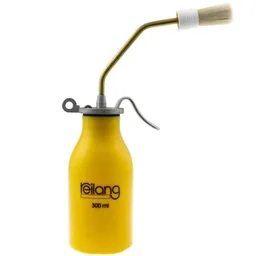
Note: During machine maintenance, do not forget to lubricate hinges, spindles and rails manually. A (brush oiler) enables precise and clean application for such targeted tasks.
Application and maintenance
The best choice of lubricant is of no use if it is applied incorrectly. Always follow the manufacturer's instructions regarding the quantity and replacement interval. Too much grease can cause bearings to overheat, while too little oil can lead to wear.
How to lubricate correctly – a guide
Before lubricating, clean the grease nipples or oil inlets to prevent contaminants from entering. Use clean tools. When applying grease, continue until fresh grease emerges at the seal, displacing old, contaminated material. When changing oil, drain the used oil completely and refill to the marked level.
Planning maintenance intervals
Make lubricant maintenance a fixed part of your machine maintenance schedule. Document all work carried out. Extreme loads, such as harvest periods in agriculture, may make early maintenance necessary.
Product Comparison 2026
In our overview, we compare selected lubricants for a range of key applications. The table below helps you compare the most important features at a glance.
The highest-rated lubricants from our range compared directly:
| Model | Customer rating | Availability |
|---|---|---|
| Aesculap Special Grease 20ml - High-performance lubricant for precision instruments | – | Currently unavailable |
| Agropa Steering Handle with Ball Bearing for Agricultural Machinery - Improved Control | – | Currently unavailable |
| Allweiler L5 Pressure Flap for Valve System - Robust Design for Agricultural Applications | – | Currently unavailable |
| Ballistol H1 Food-grade Oil 200ml - Lubricant for the Food Industry | – | Currently unavailable |
| Brush Oiler with Single Pump | – | Currently unavailable |
Conclusion and Buying Advice
Choosing the right lubricant is an investment in the reliability and cost-effectiveness of your equipment. First ask yourself: Where will it be used? When food contact is possible, approved special oils are essential. For demanding agricultural applications, robust and versatile greases are the foundation. Sensitive precision equipment requires high-quality specialist products.
Carefully compare the technical specifications and approvals. An apparently cheaper multipurpose product can become costly over time due to increased wear and downtime. Choose quality that suits the application and consistently follow the maintenance intervals. This will provide your machines with long-term protection.
Frequently Asked Questions
- Can I use a multipurpose lubricant for all applications?
- No. A multipurpose product is often a compromise. Special greases for precision bearings withstand extreme pressures, food-grade oils are toxicologically safe, and lubricants for agricultural machinery must be highly resistant to contamination. Always use the product recommended for the intended application.
- How often should I change the lubricants in my agricultural machinery?
- The replacement interval depends on the load, operating hours and surroundings. Dusty conditions shorten the intervals. Follow the machinery manufacturer's maintenance schedules closely and regularly check the lubricant level and consistency.
- What is the difference between lubricating oil and lubricating grease?
- Oils are fluid and are suitable for closed systems with circulating lubrication or for reaching difficult-to-access areas. Greases are viscous, adhere better and protect against leakage and the ingress of water and dirt. They are used for bearings and joints.
- Can I use any oil-based lubricant in food production?
- Absolutely not. Only specially approved lubricants with food-grade compliance, such as PRODUCT_143514, may be used. They are odourless, tasteless and harmless to health in the event of accidental contact with food.
- Why is proper lubrication so important for machine service life?
- Lubricants reduce friction and wear, protect against corrosion and can often dissipate heat. Incorrect or neglected lubrication leads to increased energy consumption, premature failure of bearings and other expensive components, and consequently high repair costs.