
In brief: The 2026 open-end wrench test and comparison shows that a good wrench has precisely made, hardened jaws and an ergonomic, non-slip handle. Choosing the right size for your bolts and nuts is especially important. Look for sturdy construction and a slim head for tight spaces. Here are our picks for the best models.
An open-end wrench is an essential tool in any workshop. Whether you’re repairing a bicycle, working on an engine or assembling furniture, this hand tool reliably loosens and tightens hex bolts and nuts. But not all open-end wrenches are created equal. Our 2026 test and comparison helps you spot quality differences and find the right model for your needs.
Table of contents
What makes a good open-end wrench?
You can tell the quality of an open-end wrench by the details. High-quality models are forged from a single piece, with no welds at critical points. The jaws are precisely milled and often induction-hardened. This adds hardness exactly where the most pressure is applied.
The handle should feel comfortable in your hand. A non-slip, rubberized or ribbed surface gives you a secure grip, even with sweaty hands. Look for a slim wrench head so you can work in tight spaces.
Tip: Check how the handle feels. A good open-end wrench should feel natural in your hand, with no sharp edges on the handle.
The most important buying criteria at a glance
Before choosing an open-end wrench, consider the following points. They determine whether the tool is right for the job.
Wrench size and choosing the right fit
Wrench size is the key measurement. It corresponds to the distance between the two jaws. Metric sizes such as 8 mm, 10 mm and 13 mm are widely used. Check which sizes you need most often. A single wrench may be enough for a standard nut. For a wider range of jobs, an open-end wrench set is a practical choice.
Material and hardness
The material affects how long the wrench will last. Chrome vanadium steel (Cr-V) is standard for professional hand tools. Look for terms such as "tempered" or "induction-hardened." This treatment makes the steel hard without making it brittle, helping prevent the wrench from breaking under full load.

Workmanship and tolerances
The jaws need to be precise. Inexpensive wrenches may have excessive clearance, causing them to slip and round off bolt heads. High-quality open-end wrenches meet the ISO standard and provide a secure fit with minimal play.
Warning: Never use an open-end wrench that doesn’t fit properly. Even a small amount of play can damage the bolt edges and make the connection unusable.
Compare the best open-end wrenches
There are plenty of options on the market. Our comparison highlights three models worth considering, with different levels of quality and features.
For specific jobs such as installing or maintaining faucets, a basin wrench is a good choice. This model,
, is designed for tight spaces behind sinks and toilets. Its slim design is a key advantage.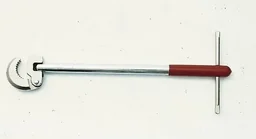
Sets are handy for general use around the home and workshop. An
offers a useful selection of common sizes. The eight wrenches cover many standard jobs.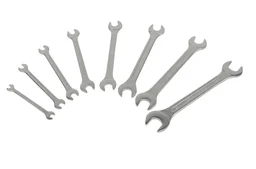
Another set,
, may stand out for its especially sturdy construction or ergonomic handles. Compare the details to find the right one for you.
Here are the highest-rated wrenches in our range, compared side by side:
| Model | Customer rating | Availability |
|---|---|---|
| Basin wrench 🏆 Test winner | ★ 4,8 (10) | In stock |
| "XXL Master-Wrench-Set" | – | Currently unavailable |
| 1/2" 12-piece socket set | – | Currently unavailable |
| 21-piece metric 3/4" wrench set | – | Currently unavailable |
| 25-piece socket set 6 - 32 mm | – | Currently unavailable |
Note: Availability of the sets listed may vary. Check the store for current delivery options.
Uses and tips for getting the job done
Open-end wrenches are versatile tools for loosening and tightening hex fasteners.
How to use an open-end wrench
Place the wrench fully and straight onto the nut or bolt. Apply force toward the fixed jaw to help keep the wrench from slipping off. For tight connections, you can use a second wrench as a lever extension. Be careful not to apply too much force.
Common uses
- Bicycle repairs: For pedals, seat posts or headsets.
- Automotive: For work on battery terminals or certain engine covers.
- Furniture assembly: For large locknuts on hinges or connecting bolts.
- Plumbing: For tightening union nuts on angle valves or using a basin wrench on sink faucets.
Care and storage
Well-maintained tools last longer. Wipe your open-end wrenches with a dry cloth after use to remove dirt and moisture. Store them in a dry place. A toolbox or wall rack protects them from damage and loss.
For long-term storage, you can coat the steel parts with a light corrosion-protection oil. Avoid getting oil on the handles so they don’t become slippery.
Alternatives to the classic open-end wrench
Other wrenches are better suited to some tasks. A box-end wrench fully surrounds the nut and provides more contact area, reducing the risk of slipping. A ratchet with a socket and extension is more efficient in tight spaces because you do not need to reposition the handle after each turn.
An adjustable wrench, often called a crescent wrench, is versatile. However, it rarely matches the quality and precision of a fixed open-end wrench. It is a useful temporary solution, but it is no substitute for a properly fitting tool.
Conclusion and buying recommendation
Choosing the right open-end wrench depends on your needs. For occasional DIY projects, a sturdy set with common sizes is a good investment. Look for well-made jaws and a comfortable grip.
For professional use or specialized tasks such as plumbing installation, it is worth investing in individual wrenches or high-quality specialty models. Ultimately, precision matters. A high-quality, properly fitting open-end wrench protects your nuts and bolts and gets the job done reliably and safely.
Frequently Asked Questions
- What is the difference between an open-end wrench and a box-end wrench?
- An open-end wrench has an open, U-shaped head and grips a nut or bolt on two sides. A box-end wrench has a closed head that completely surrounds the hexagonal sides. An open-end wrench is better for quickly loosening fasteners and working in tight spaces, while a box-end wrench can transfer more force and is less likely to slip.
- How do I find the right open-end wrench size?
- An open-end wrench size indicates the distance between the jaws in millimetres, measured at the narrowest point. To determine the size you need, measure across the flats of the hexagonal head of your bolt or nut. For an accurate measurement, use a vernier caliper. Always make sure the wrench fits snugly to prevent rounding off the edges.
- What material should a good open-end wrench be made from?
- High-quality open-end wrenches are made from chrome vanadium alloy steel (Cr-V). This material is tempered or induction-hardened for high hardness and resistance to breakage. The handles are often coated with plastic or rubber for a secure grip. Avoid plain carbon steel, as it wears out and can break more quickly.
- Can I use an open-end wrench to loosen rusted bolts?
- Use caution. Open-end wrenches do not grip as fully as box-end wrenches and can slip more easily when you apply a lot of force. For rusted fasteners, a ratchet or box-end wrench is often a better choice. If you use an open-end wrench, make sure it is fully engaged and straight, and avoid extensions that can increase leverage too much.
- How should I clean and store my open-end wrenches?
- Wipe dirt and grease off your wrenches after use. Applying a light coat of oil to the jaws and moving parts helps prevent rust. Store the wrenches in a dry, organized place, ideally in a toolbox or on a wrench rack. This helps prevent damage and makes it easy to find the size you need.