
In brief: Monstera thrives in a bright location without direct midday sun. Water moderately and let the top layer of soil dry out. Feed it every two weeks from March to September with houseplant fertilizer. Repotting every two to three years in loose, well-draining soil is recommended. This supports its characteristic leaf growth and aerial roots.
Monstera Care: How to Help Your Houseplant Thrive
Monstera, also known as the Swiss cheese plant, is one of the most popular houseplants. Its large, characteristically perforated leaves make it an eye-catching feature. With the right care, it grows into an impressive houseplant.
What is the perfect location for my Monstera?
Choosing the right location is the first step towards a healthy plant. Monstera are originally rainforest plants and prefer bright conditions.
Light conditions: Bright, but no direct sunlight
Place your Monstera in a bright spot. A window facing east or west is ideal. The morning or evening sun will not harm it. However, avoid direct, hot midday sun behind a south-facing window. This can scorch the leaves.
A location that is too dark slows growth. The leaves remain small and develop fewer or none of their characteristic holes and splits. If the location is very dark, a grow light from our range of Garden + Outdoor products can help.
Expert tip
Turn your Monstera by a quarter turn every few weeks. This helps it grow evenly instead of reaching only towards the light. It prevents one-sided, crooked growth.
Temperature and humidity
Monstera love warmth. Room temperatures between 18 and 25 degrees Celsius are perfect. Below 15 degrees, growth stops. It does not tolerate draughts at all.
High humidity is good for it. Mist the leaves regularly with low-lime water. Alternatively, place a bowl of water and pebbles nearby. This is especially important in winter, when indoor heating makes the air dry. Humidifiers or regularly showering the leaves can help.
Monstera deliciosa is a forgiving beginner-friendly plant that immediately attracts attention with its spectacular leaves. Its secret is adaptability—it even tolerates occasional care mistakes, as long as it is not overwatered.
How should I water and feed my Monstera?
Water and nutrients are the foundation of healthy growth. This is where most care mistakes occur.
The art of watering
Water your Monstera moderately. Let the top layer of soil, around two to three centimetres, dry out between waterings. Check by inserting your finger into the soil.
In spring and summer, during the growing season, it needs more water. Reduce the amount of water significantly in winter. Waterlogging is its biggest enemy and quickly leads to root rot and yellow leaves. A pot with a drainage hole and a drainage layer of expanded clay are essential. Discover suitable cache pots and watering aids in our Garden + Plant Care category.
Important note
Whenever possible, use room-temperature, standing or filtered water. Hard tap water can leave unattractive white spots on the leaves. These are difficult to remove.
Feeding for vigorous growth
Feed your Monstera every two weeks from March to September. Use a liquid houseplant fertilizer and follow the dosage instructions on the packaging. Stop feeding completely in autumn and winter. The plant is dormant then.
Too much fertilizer does more harm than good. It causes salt deposits in the soil and can burn the roots. Every few months, thoroughly flush the root ball by allowing plenty of water to run through the pot.
When and how should I repot my Monstera?
Repotting Monstera is an important care step. Young plants grow quickly and need a new pot every year. Older specimens do well when repotted every two to three years.
The right time and the right potting mix
Spring is the best time to repot. The plant is then entering its growing season and can recover quickly. Repotting is necessary when roots grow out of the drainage holes or the pot clearly seems too small.
Choose a new pot that is only around two to four centimetres larger in diameter. A pot that is too large encourages waterlogging. High-quality, loose potting soil is suitable as a growing medium. You can loosen it with some coconut fibre, perlite or bark pieces to improve drainage. Find everything you need to improve your soil in Fertilizers and potting soil.
Extra tip
Add a climbing support when repotting. Monstera are climbing plants. A moss pole or coir pole gives the aerial roots support and encourages upright, compact growth. Carefully tie the main stems to it.
Take care when repotting. Gently loosen the root ball. Only cut off roots that are clearly dead or rotten. Place the plant in the new pot and fill it with fresh soil. Press the soil down lightly and water it thoroughly once.
How do I care for the aerial roots and leaves?
The aerial roots and large leaves give Monstera its distinctive appearance. They need special attention.
Aerial roots: cut or guide?
Do not simply cut off your Monstera's aerial roots. They help absorb additional nutrients and water from the air. Instead of removing them, carefully guide them back into the potting soil. They will grow into it and supply the plant.
Alternatively, you can guide the aerial roots into a small glass filled with water next to the plant. This increases the local humidity and allows the root to absorb moisture. Long, troublesome roots can also be carefully guided upwards along the climbing support.
Many people are afraid to prune their Monstera. However, targeted pruning in spring is often the key to a denser, bushier plant. Every cut encourages branching. Do not be afraid to give it a try!
Leaf care and cleaning
The large leaves collect dust. This blocks light and inhibits photosynthesis. Wipe the leaves regularly with a damp, soft cloth. Do not use leaf-shine spray, as it clogs the pores.
Brown leaf tips are often a sign of air that is too dry or excess lime in the watering water. Yellow leaves usually indicate overwatering. Cut unattractive or dead leaves off at the base of the stem with clean scissors. For all pruning tasks, you will find sharp and precise garden tools in our shop.
What problems can Monstera plants develop, and how can I solve them?
Even with the best care, problems can arise. Most of them are easy to fix.
Identifying and controlling pests
Spider mites, scale insects and thrips can infest Monstera plants. Spider mites can be identified by their fine webs, especially on the undersides of the leaves. Scale insects look like small brown bumps.
Isolate an infested plant immediately. Shower it thoroughly. For persistent infestations, treat it with a biological product based on rapeseed oil or neem oil. Repeat the treatment as directed. Also check neighbouring plants.
Diseases and physiological problems
The most common disease is root rot caused by waterlogging. The leaves become limp and yellow, and the soil smells musty. Repot the plant immediately, remove all rotten roots and place it in dry, fresh soil. After that, water very sparingly.
Small, pale green leaves without holes are a sign of insufficient light. Too much direct sunlight causes brown, dry patches on the leaves. Simply move the plant to a more suitable location.
Our recommendations for Monstera care
With the right tools and equipment, caring for your Monstera houseplant becomes even easier. Here are three selected products that are perfect for your green companion.
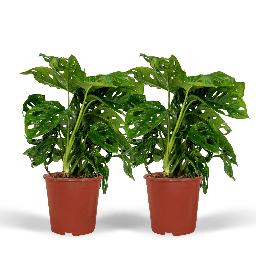
Start with a healthy plant: The offers you two healthy Monstera Monkey Leaf plants. At a height of 30 cm, they are ideal for getting used to caring for Monstera plants or creating a small indoor green oasis.
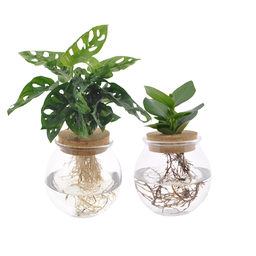
Plant your Monstera Adansonii in style: The is an elegant Bolglas duo. It consists of two glasses that are perfect for hydroponics or as decorative cachepots. This gives your plants a modern and airy presentation.
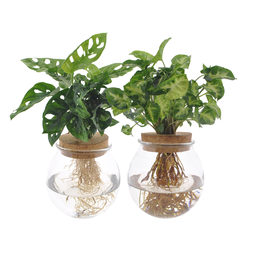
Another beautiful combination for lovers of distinctive leaf shapes is the . Monstera Adansonii and Syngonium Green complement each other perfectly in this glass duo. Their different leaf structures create a lively display.
For everything else related to plant care, from watering to soil, take a look at our Plumbing + Irrigation category. There you will find practical solutions for your green treasures.
With these basic care guidelines, your Monstera will remain a robust and impressive houseplant for many years. Observe it, respond to its signals and enjoy the tropical flair it brings to your home.
Frequently Asked Questions
- Why is my Monstera getting yellow leaves?
- Yellow leaves on your Monstera usually indicate overwatering. Waterlogging causes root rot. Check the substrate and only water when the top few centimetres of soil are dry. A nutrient deficiency or a location that is too dark can also be the cause.
- How often should I repot my Monstera?
- Repot your Monstera every two to three years. The best time is spring. A new, slightly larger pot is needed when the roots grow out of the drainage holes or the plant has increased noticeably in size. Use high-quality, loose potting soil.
- Can I propagate a Monstera?
- Yes, Monstera plants are easy to propagate from cuttings. Cut off a shoot with at least one leaf and an aerial root node. Place the cutting in water or put it directly into moist propagation soil. New roots will soon develop in a warm, bright location.
- What should I do with my Monstera's aerial roots?
- Do not cut off your Monstera's aerial roots. They help absorb nutrients and water. Instead, carefully guide them back into the pot or along a climbing support. You can also guide them into a glass filled with water to support the plant.
- Is Monstera toxic to cats?
- Yes, Monstera is mildly toxic to cats, dogs and humans. Ingestion can cause irritation of the mucous membranes, drooling and vomiting. Keep the plant out of reach of pets or choose non-toxic alternatives such as spider plants or cat grass.