
In brief: Beckmann iron fertilizer fights lawn moss quickly and effectively. The iron(II) sulfate it contains damages moss on direct contact, causing it to die and turn black. At the same time, the fertilizer strengthens the grass, helping it quickly fill the available space and creating a rich, green color.
A lush, green lawn is the pride of every garden owner. But an unwelcome guest often starts to spread: moss. It crowds out the grass, forms a dense layer of thatch and makes the lawn look unkempt and patchy. The good news is that you can take effective action against it. The secret lies in targeted nutrient supply, which weakens the moss and strengthens the lawn. This is where a tried-and-tested helper for large areas comes in: the 25 kg granulated Beckmann iron fertilizer. This bulk pack covers approx. 900 m² and is an economical solution for a moss-free lawn.
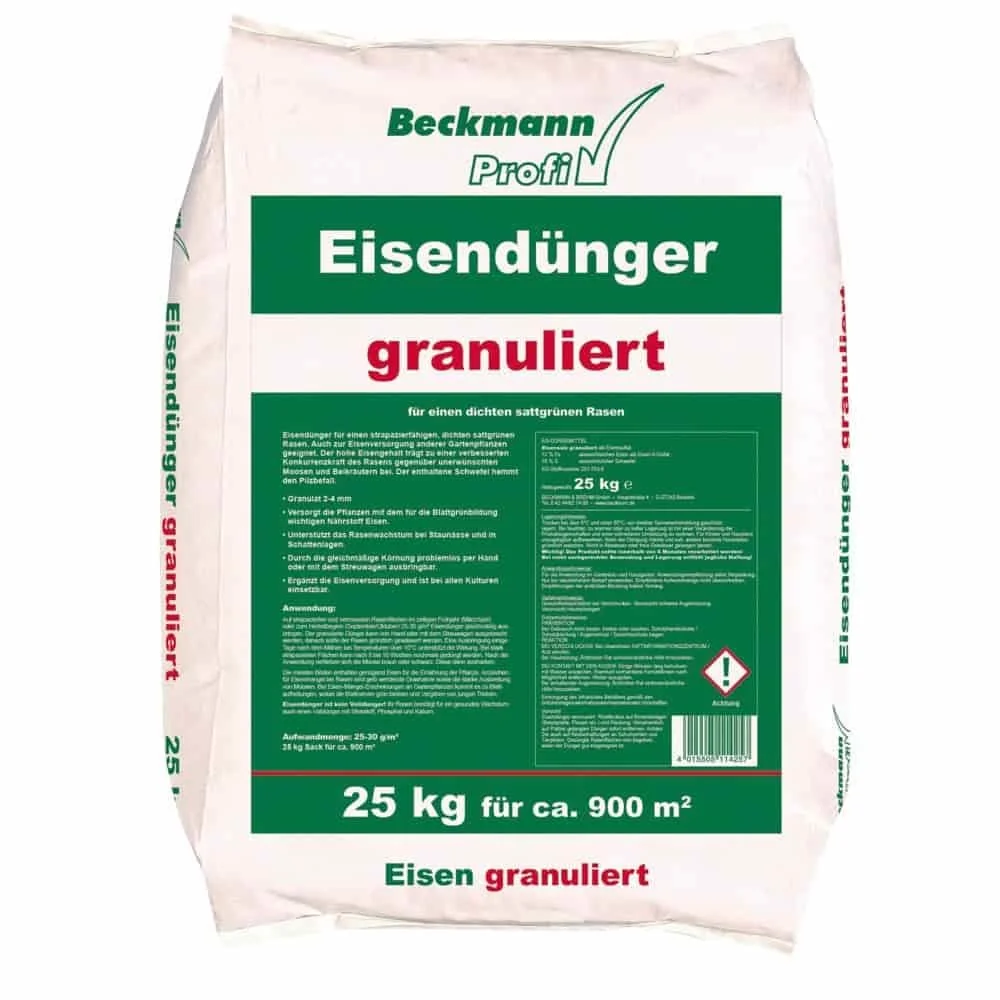
A mossy lawn is not inevitable; it is usually a cry for help. It signals that the growing conditions are not ideal for the grass. With the right intervention, you can give your lawn the strength to hold its own again.
Why do I have moss in my lawn in the first place?
Moss is a symptom, not a disease. It settles where grass is struggling. Before taking action, it helps to understand the causes. This allows you not only to remove the moss, but also to prevent it from returning in the long term.
Nutrient deficiency: The lawn is starving
The most common cause of moss growth is a lack of nutrients, especially nitrogen and iron. While grass needs plenty of nutrients for strong growth, moss is far less demanding. When the lawn is starved of nutrients, it cannot compete with vigorous moss and is gradually crowded out.
Shade and moisture: A paradise for moss
Moss thrives in damp, shady locations. Beneath trees, on the north-facing sides of buildings or in poorly drained hollows, it finds ideal conditions. Lawn grasses, on the other hand, need plenty of sunlight to produce energy through photosynthesis. In the shade, they grow thinner and weaker, giving moss an open invitation.
Acidic soil and soil compaction
A low pH value (below 5.5) makes the soil acidic. Mosses thrive in this kind of environment, while grass has increasing difficulty absorbing nutrients. Compacted soil, for example from frequent foot traffic, is equally problematic. Grass roots do not get enough oxygen, waterlogging develops, and shallow-rooted moss has an easy time taking over.
How does iron fertilizer work against moss? The science behind it
Iron fertilizer is an effective weapon in the fight against moss. Its active ingredient is iron(II) sulfate. When moss comes into contact with it, it has a corrosive effect on the plant's delicate cell structures. The moss can no longer absorb water, effectively gets “burned” and dies. You can tell it has worked when the green moss turns brown-black within a few days.
Iron also has a positive effect on your lawn grass. Iron is a key component in the production of chlorophyll, the green pigment in leaves. A good supply of iron produces a deep green, healthy color and promotes photosynthesis. Your lawn will not only be free of moss, but also visibly healthier and more resilient. With its fine granules, Beckmann iron fertilizer offers ideal spreadability for even results across the entire area.
Expert tip
For completely even distribution of granules over large areas, we recommend using a broadcast spreader. This prevents overapplication, which can burn the lawn, and ensures consistent results without patchy areas.
Step-by-step guide: How to fight lawn moss with Beckmann iron fertilizer
Application is straightforward. With the right preparation and technique, you will achieve the best results.
1. Preparation: Mow the lawn and check the weather
Mow your lawn to a height of about four centimeters two to three days before application. This allows the granules to reach the moss directly instead of getting caught in long grass blades. Choose a day with overcast, mild weather. The soil should be slightly moist, but the lawn should be dry.
2. Use the right dosage
Follow the dosage recommendation on the packaging exactly. For Beckmann iron fertilizer, this is generally around 25-30 g per square meter. Weigh out the required amount for a test area to get a feel for how to distribute it.
3. Apply evenly
Spread the granules by hand (wear protective gloves!) or, preferably, with a broadcast spreader. Work in overlapping passes, first lengthwise and then crosswise, to ensure complete coverage.
Important note
Iron fertilizer causes unsightly, stubborn rust stains on concrete, paving stones and clothing. Sweep up spilled granules from paved surfaces immediately. Do not walk on the lawn wearing leather shoes after application, and keep pets away until the fertilizer has been watered in and the area has dried.
4. Water the lawn to activate the fertilizer
Water the lawn thoroughly after spreading the fertilizer. This dissolves the granules and allows the iron(II) sulfate to take effect. If light rain is forecast for the next few hours, you can skip this step.
5. Wait, then remove the dead moss
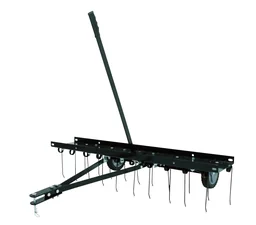
After about 10 to 14 days, the moss will have turned black and died. This is the perfect time to remove it mechanically. Use a sharp rake or, much more effectively and with less strain on your back, a dethatcher. For lawn tractor owners, the dethatcher attachment is an ideal addition for quickly working on large areas.
How do I know when it is the right time to apply it?
The best time to fight moss with iron fertilizer for moss is spring (March to April) or early fall (September to October). During these periods, moss is actively growing, and the lawn is vigorous enough to quickly fill the gaps that appear. The soil temperature should remain consistently above 8-10 °C. Avoid applying it during frost, extreme heat or prolonged dry spells.
After Treatment: What to Do Now to Strengthen Your Lawn
Removing the moss is only half the job. Now it is important to quickly fill any bare patches and strengthen the lawn so that moss no longer has a chance to take hold.
Reseeding Bare Patches
Larger gaps caused by scarifying should be repaired with high-quality lawn seed. Lightly loosen the soil in these areas, distribute the seeds and keep the surface consistently moist over the following weeks.
The Right Fertilizer for Strong Growth
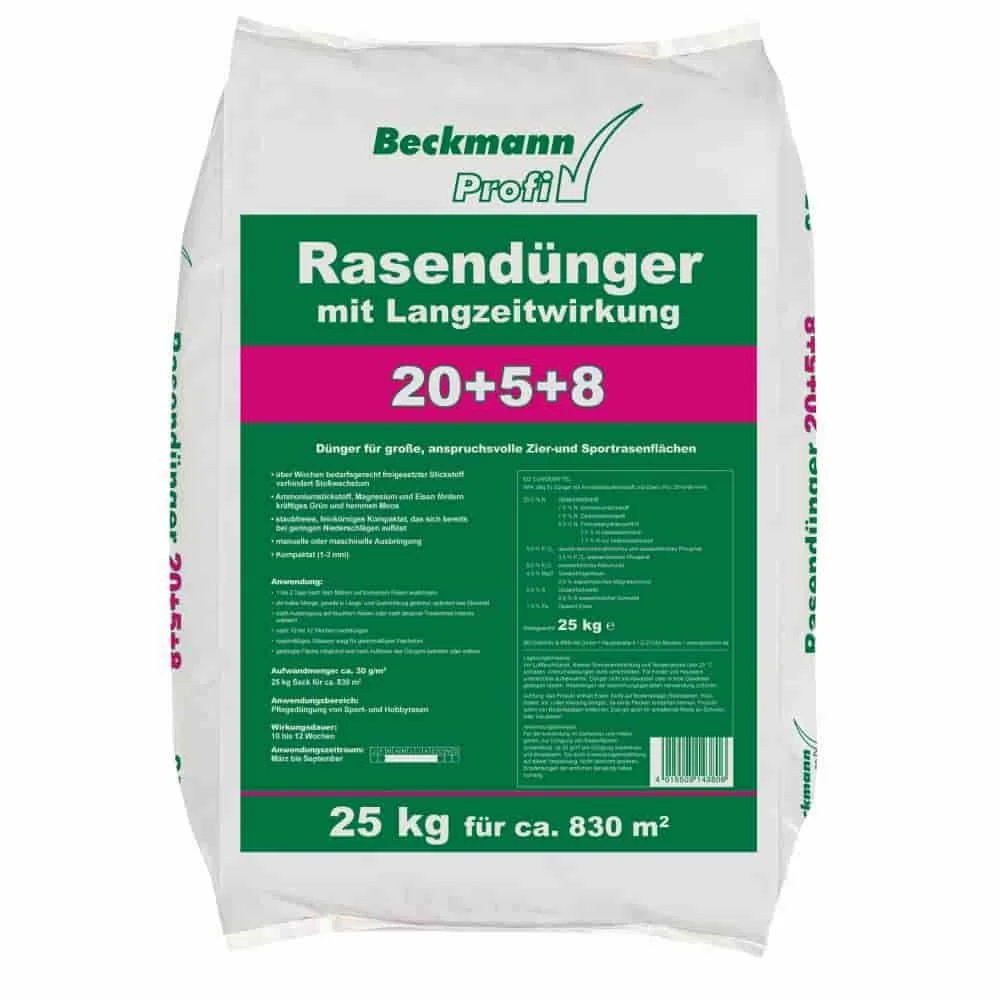
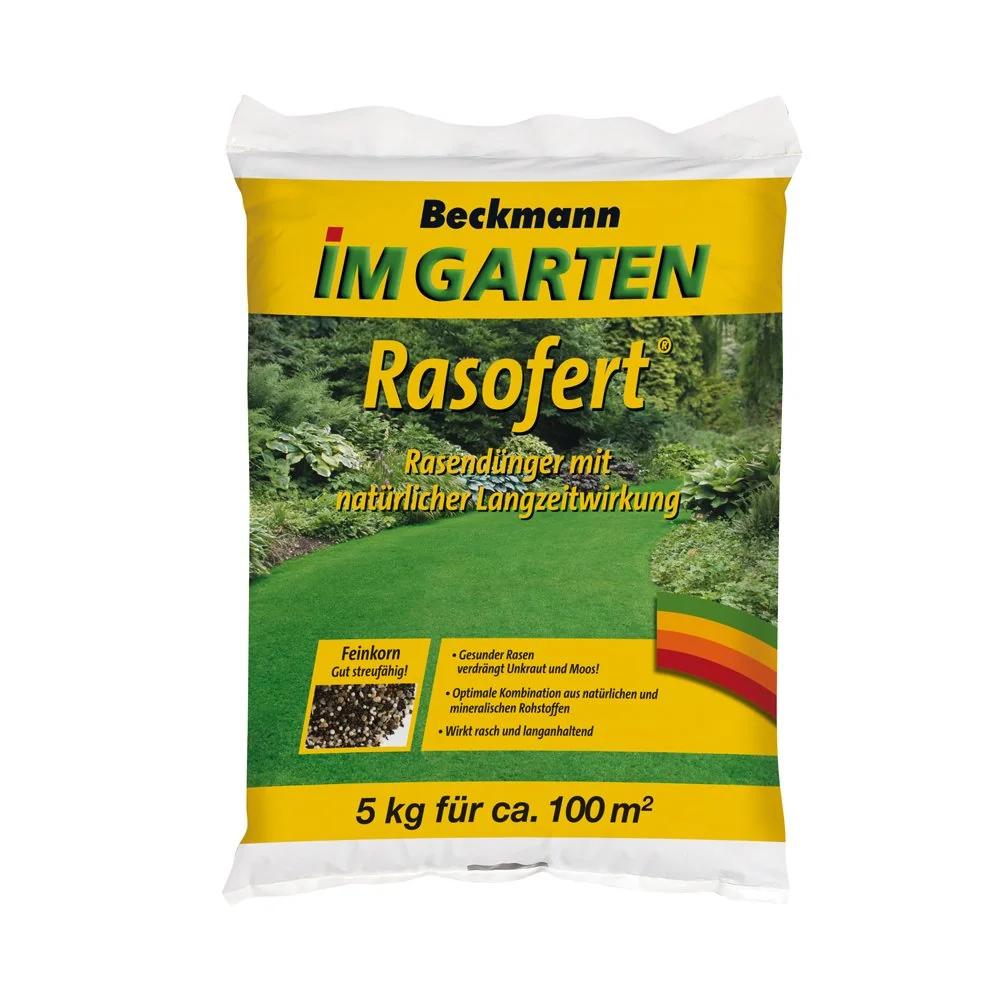
About two to three weeks after applying the iron fertilizer, your lawn needs a strong growth boost. High-quality lawn fertilizer provides the necessary energy. The 25 kg Beckmann long-term lawn fertilizer is ideal for this purpose, as it continuously supplies the grass with nutrients for months. If you prefer a more natural approach, choose the Beckmann Rasofert® organic-mineral fertilizer, which also activates soil life.
Additional advice
To address the cause of acidic soil, a soil pH test from a specialist retailer is recommended. If the value is below 5.5, apply lawn lime in fall or early spring. This raises the pH level and improves nutrient availability for the grass.
Improve Soil with Lawn Sand
For heavy, clay soils that tend to become compacted and waterlogged, incorporating lawn sand can work wonders. Applied after scarifying, the sand loosens the soil structure, improves drainage and provides better aeration for the grass roots.
Prevention Is Better Than Aftercare: How to Keep Your Lawn Moss-Free
A one-time treatment is often not enough. Consistent, proper lawn care is the key to keeping your lawn moss-free in the long term. A well-nourished, dense lawn prevents moss from taking hold in the first place.
- Fertilize regularly: Feed your lawn three to four times a year with a suitable long-term fertilizer.
- Mow correctly: Do not cut the lawn too short (ideal mowing height: 4-5 cm). Longer blades shade the soil and inhibit moss spores from germinating.
- Water sufficiently: During dry periods, water less often but thoroughly. This encourages deep root growth.
- Scarify annually: Remove thatch and dead material in spring to aerate the soil.
Think of your lawn as a small ecosystem. Every action, from fertilizing to mowing, affects the balance. A healthy, well-nourished lawn is the best and most natural defense against moss and weeds.
The fight against moss is a marathon, not a sprint. With Beckmann iron fertilizer, you can quickly and effectively win the crucial first stage. The subsequent, well-planned care using the right fertilizer and appropriate measures will secure your long-term success: a dense, resilient and beautifully green lawn that attracts envious looks.
Frequently Asked Questions
- How quickly does iron fertilizer work against moss?
- Iron fertilizer works very quickly. You will often see the first results after just a few days. The moss begins to turn dark or black and dies off. The process is complete within one to two weeks, after which you can remove the dead material.
- Is iron fertilizer harmful to pets?
- Yes, the granules can be harmful to pets. Keep dogs and cats off the lawn until the fertilizer has been thoroughly watered in and the lawn has dried completely. After that, it is generally safe for animals to be on the lawn.
- Can I apply iron fertilizer and lawn fertilizer at the same time?
- No, this is not recommended. Apply the iron fertilizer separately. After treating the moss and then scarifying, wait about two to three weeks before applying regular lawn fertilizer. This allows you to specifically support grass growth in the cleared areas.
- Why does the lawn turn black after applying iron fertilizer?
- It is not the lawn that turns black, but the moss. The grass benefits from the iron and often becomes an even more vibrant green. The black coloration shows that the iron(II) sulfate is working and the moss is dying successfully. This is a good sign.
- When is the best time to scarify after applying iron fertilizer?
- Only scarify once the moss has completely died and turned black. This is usually the case 10 to 14 days after applying the iron fertilizer. This allows you to remove the dead material most effectively and make room for new grass.
You may also be interested in
- How to Apply Beckmann Iron Fertilizer: Instructions for 900m² of Perfect Lawn
- Moss in Your Lawn? Identify the Causes and Fight It Effectively with Lime
- Identify and Effectively Treat Lawn Diseases
- Yellow Lawn? Immediate Help for Lush Green Grass
- Find the Right Lawn Fertilizer
- Lawn Fertilizer with Weed Killer: An Effective Combination for a Flawless Lawn