
In brief: The right accessories make all the difference to comfort and safety on the road. Our 2026 test and comparison shows what to look for in CEE plugs, battery disconnect switches and stabilizing equipment. The right gear completes your RV and helps make every day at the campground or off the grid worry-free.
An RV is more than just a vehicle. It is your home on the road. To keep it safe, comfortable and reliable, the right accessories are essential. There are plenty of products to choose from, but not every one lives up to its promises. Our 2026 test and comparison focuses on the essentials that can make a real difference to your travels.
We take a close look at quality, safety and practical benefits. We focus on durable gear that will accompany you on many trips. From power supply to stability, we show you which products perform well in real-world use.
Contents
- Power supply and safety: Your RV's lifeline
- Choosing the right CEE plug for the campground
- CEE couplers and adapters: Making safe connections
- Managing your battery safely: Isolator switches compared
- Stability and support: Accessories for extended stays
- Jack stands tested: Taking the strain off your suspension
- Jockey wheels and maneuvering aids: Easier positioning
- Buying guide: How to find the right accessories
Power supply and safety: Your RV's lifeline
Without a reliable power supply, life in your RV comes to a standstill. The refrigerator stops working, the lights go out and the water pump stops running. High-quality accessories in this area are essential. We compare the key components for a safe power supply.
Choosing the right CEE plug for the campground
A CEE plug connects your RV to an external power supply. A poorly made plug can cause connection problems, overheating and, in the worst case, a fire. Look for a sturdy housing and corrosion-resistant contacts.
One product that stands out for its solid construction is the
. It is built for the demands of everyday camping and provides a secure connection.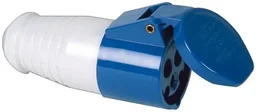
Important: Never use ordinary household Schuko plugs with bent contacts in your RV. They are not designed for continuous loads or the often damp conditions and pose a significant safety risk.
CEE couplers and adapters: Making safe connections
A CEE coupler provides a secure connection to your RV. Paired with a high-quality extension cord, such as the
, it creates a safe connection between the power supply and your vehicle. Cord quality is crucial: it should be weather-resistant and durable.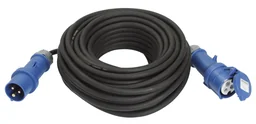
Adapters can be useful, but use them with caution and only as a temporary solution. Make sure they are rated for the full current (16A) and have a sufficient wire gauge.
Managing your battery safely: Isolator switches compared
The house battery is the heart of your off-grid power supply. A battery disconnect switch protects this valuable component by disconnecting it from the electrical system and preventing deep discharge from parasitic loads or appliances left on.
Our comparison highlights differences in ease of use and maximum current capacity. Manual switches offer full control, while automatic systems are convenient. A reliable model is the
. It is easy to operate and works reliably with 12V and 24V systems.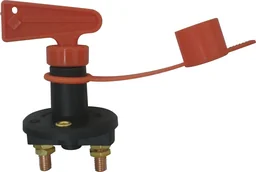
Tip: Install the disconnect switch as close to the battery as possible, in an easy-to-reach spot. That way, you can operate it easily when leaving the vehicle for an extended period without having to climb deep inside.
Stability and support: Accessories for extended stays
If your RV stays in one place for weeks, it needs extra support. This reduces the load on the tires and suspension while noticeably improving comfort inside. We test equipment designed to keep your vehicle stable.
Jack stands tested: Taking the strain off your suspension
Jack stands support some of the weight of your parked vehicle, helping protect the leaf springs or air suspension bellows. The
can support many vehicles, with a capacity of 2 tonnes per pair. Look for a non-slip surface and continuously adjustable height.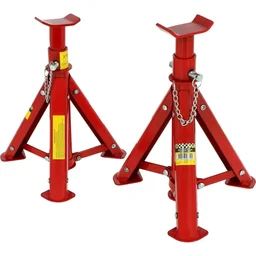
Always place the stands on firm, level ground. On soft ground, put a sturdy board underneath to keep them from sinking.
Jockey wheels and maneuvering aids: Easier positioning
A jockey wheel makes positioning your RV much easier. It is especially helpful in tight spaces or when parking. Choose one that fits your drawbar and has a sturdy fork.
Note: A jockey wheel makes the job easier, but you still need to take care. Always make sure there is enough clearance when maneuvering, and have someone guide you if needed.
Buying Guide: How to Choose the Right RV Accessories
Make the right choice by taking a systematic approach instead of leaving it to chance. Start by listing the key functions the product needs to perform. Then check that it’s compatible with your vehicle. Read customer reviews and check the manufacturer’s warranty.
For essential components such as your power supply, it’s worth investing in quality from the start. Cheap products can lead to costly damage. For less critical items, you can look for more affordable options that are still reliable.
Think about storage, too. Well-designed accessories can be stored without taking up much space. Browse our RV accessories category to see more options. You’ll find more inspiration for your vehicle in our extensive selection.
Our most-reviewed RV accessories, compared side by side:
| Model | Customer rating | Availability |
|---|---|---|
| Adapter - Plug - Coupler/ CEE Plug H07RN-F | – | Currently unavailable |
| Axle stands, 2 pieces - 2-ton capacity - 23x23x37 cm | – | Currently unavailable |
| Battery disconnect switch | – | Currently unavailable |
| Battery isolator NATOKNOCHEN 12/ 24 V | – | Currently unavailable |
| Jockey wheel, ø48 mm. | – | Currently unavailable |
Good accessories are what make your RV feel complete. Small and large essentials alike can turn an ordinary drive into a worry-free trip. Choose quality for safety-critical components, and select the rest to suit your needs. That way, you’ll be ready for every adventure on four wheels.
Frequently Asked Questions
- Why do I need a battery disconnect switch in my RV?
- A battery disconnect switch cuts power to your house battery. This helps prevent parasitic drain and deep discharge during long periods in storage. It protects your expensive battery and helps ensure there’s enough power for the lights and refrigerator when you return.
- What’s the difference between a CEE plug and a CEE socket?
- The CEE plug is the male connector that you plug into the campground’s power supply. The CEE socket is the female connector, fitted to your RV or extension cord. Both must have the same current rating (e.g., 16A) to ensure a safe connection.
- When do I need axle stands for my RV?
- Axle stands take some of the strain off the suspension during long periods in storage. They’re especially useful for heavy vehicles, helping prevent the suspension from compressing. They also add stability when you move around inside the RV and can help extend the life of the springs.
- Can I use any CEE adapter?
- No. Check that the adapter has the correct voltage (230V), current rating (16A or 32A), and cable quality (at least H07RN-F for outdoor use). An unsuitable adapter can overheat and pose a serious safety risk.
- How do I choose the right jockey wheel?
- The jockey wheel must fit the opening in your trailer’s front support (often 48mm). Look for a sturdy construction and high-quality wheel to make maneuvering over different surfaces easier.