
In brief: Proper care for newly sown lawn seed during the first few weeks is crucial. Keep the seedbed consistently moist, but not wet. Do not walk on the area until the grass is 8-10 cm tall. Then mow it for the first time, removing no more than one third of the blade length.
You have prepared the soil, spread the seed and rolled the area. The work seems done. But the truly crucial phase is only just beginning. The first four to six weeks determine whether your careful sowing develops into a robust, lush green carpet or a patchy, weak grass area. Caring for newly sown lawn seed is not difficult, but it does require consistency and the right knowledge.
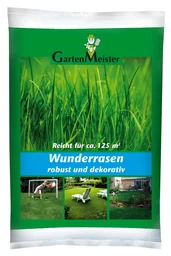
High-quality seed is the foundation of every successful lawn. A quality seed mix gives you the best conditions for a dense and resilient turf. The lawn seed "Wunder Rasen", 2,5 kg () is ideal for this purpose. It combines fast-germinating and robust grass varieties to provide quick, long-lasting results. This mix is forgiving of minor care mistakes and establishes reliably in a wide range of soils.
The foundation is in place: What happens immediately after sowing?
After you have spread the lawn seed evenly and worked it lightly into the top layer of soil, the biological germination process begins. Each seed contains a tiny embryo and a supply of nutrients. The seeds need two things to activate this process: warmth and consistent moisture. Direct contact with the soil, ensured by lightly rolling the area, is essential. It protects the seeds from drying out and from birds.
Depending on the grass variety, soil temperature and weather conditions, you will see the first green shoots after about 7 to 21 days. A great deal is already happening beneath the soil during this phase. The seeds swell, the shell splits open and the first delicate root, known as the radicle, pushes into the soil. Only then does the seedling grow towards the light. Patience is your most important virtue at this stage.
A gardener knows that the most important ingredient for growth is patience. Nature works to its own schedule, and our task is to create the best conditions for it.
How do I water young grass correctly? The critical phase
Watering is the most important factor in the success of your new lawn. A single day in which the germinating seeds dry out can undo all your work. The delicate seedlings do not yet have deep roots and depend on moisture at the soil surface.
The first 1-2 weeks: Keep the soil consistently moist
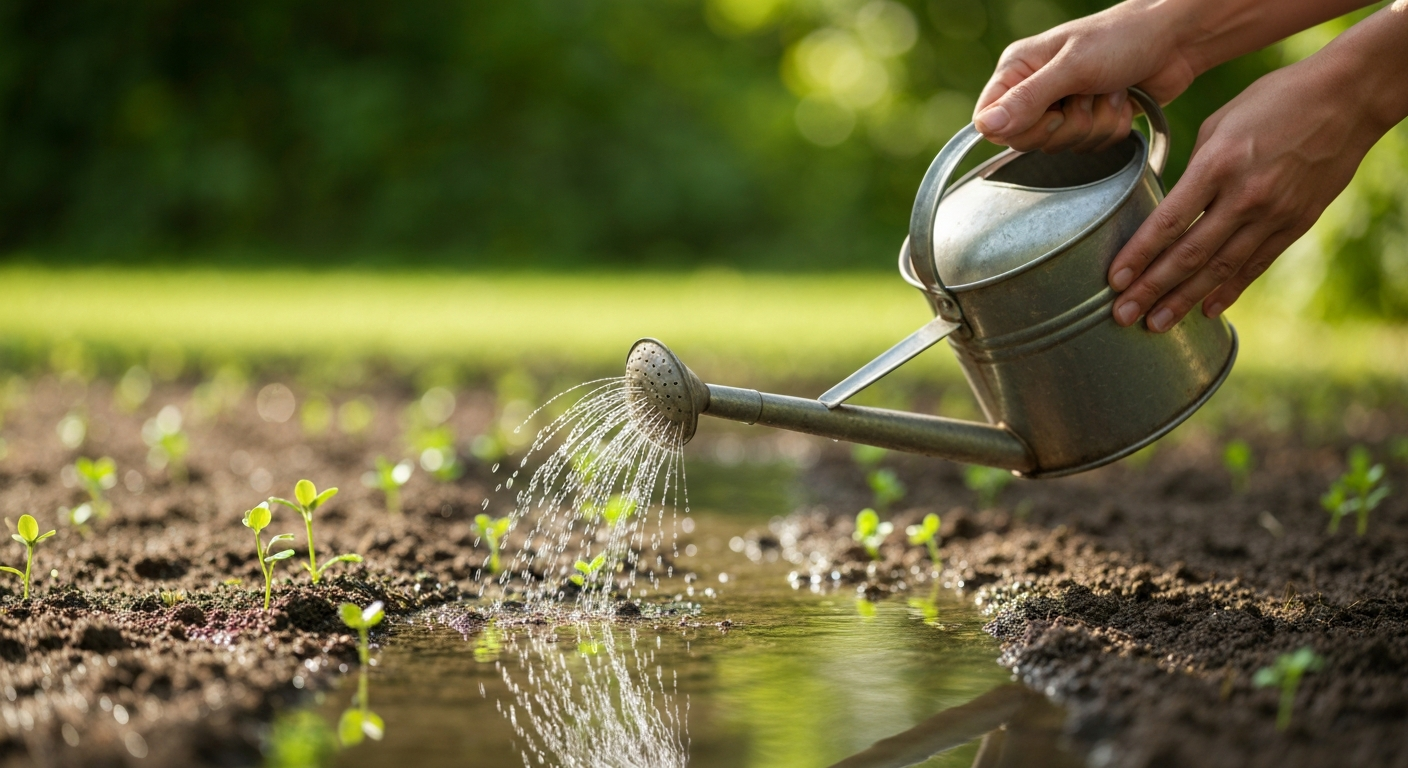
During the first phase after sowing, the top layer of soil must never dry out completely. This does not mean that you should flood the area. Waterlogging is just as harmful as drought, as it can wash away the seeds or cause them to rot.
Instead, water several times a day, for example in the morning, at midday and in the late afternoon, for 10 to 15 minutes each time. Use a sprinkler with a fine spray setting. A strong jet of water would disturb and wash away the seeds. The aim is to keep the top 1-2 centimeters of soil consistently moist, like a wrung-out sponge.
Important note
Dryness is the greatest enemy of young lawn seedlings. Once a seedling has dried out, it dies and will not recover. Check the soil moisture several times, especially on sunny and windy days.
After germination (weeks 2-4): Water less often but more deeply
As soon as a delicate green haze is visible and the grass is a few centimeters tall, change your watering strategy. The goal now is to encourage the young roots to grow into deeper layers of soil. A deep root system will make the lawn more drought-tolerant and resilient later on.
Reduce the watering frequency to once a day or even just every other day. In return, increase the watering time significantly. The soil should now be moistened to a depth of 10-15 cm. You can test whether you have watered enough with a spade or a long screwdriver. It should penetrate the soil easily.
When should I walk on freshly sown lawn for the first time?
The temptation to inspect your progress up close is strong. Resist it. The young grass blades and their shallow roots are extremely sensitive. Every step compacts the soil, damages the delicate roots and can kill the seedlings. The result is unsightly bare patches or footprints that are difficult to repair.
As a rule of thumb, do not walk on the area until the lawn has reached a height of at least 8-10 cm and has already been mowed once. The grass is then strong enough to withstand the pressure. Also avoid intensive use, such as playing football or placing garden furniture on the lawn, during the first few months.
Pro tip
If you need to walk on the area for an important reason, such as removing weeds, place a wide wooden board on the lawn. The board distributes your weight over a larger area and minimizes pressure on individual grass plants.
First lawn mowing: What should I watch out for?
The first cut is a milestone for your new lawn. It signals to the grass that it should grow outward and become denser. This process, also known as tillering, is crucial for forming dense turf. However, timing and technique are everything.
The right time
Wait until most of the grass has reached a height of 8 to 10 cm. Do not mow too early. The young plants need their leaf mass for photosynthesis so they can build up energy for strong root growth. Cutting too early significantly weakens the plants.
The right technique
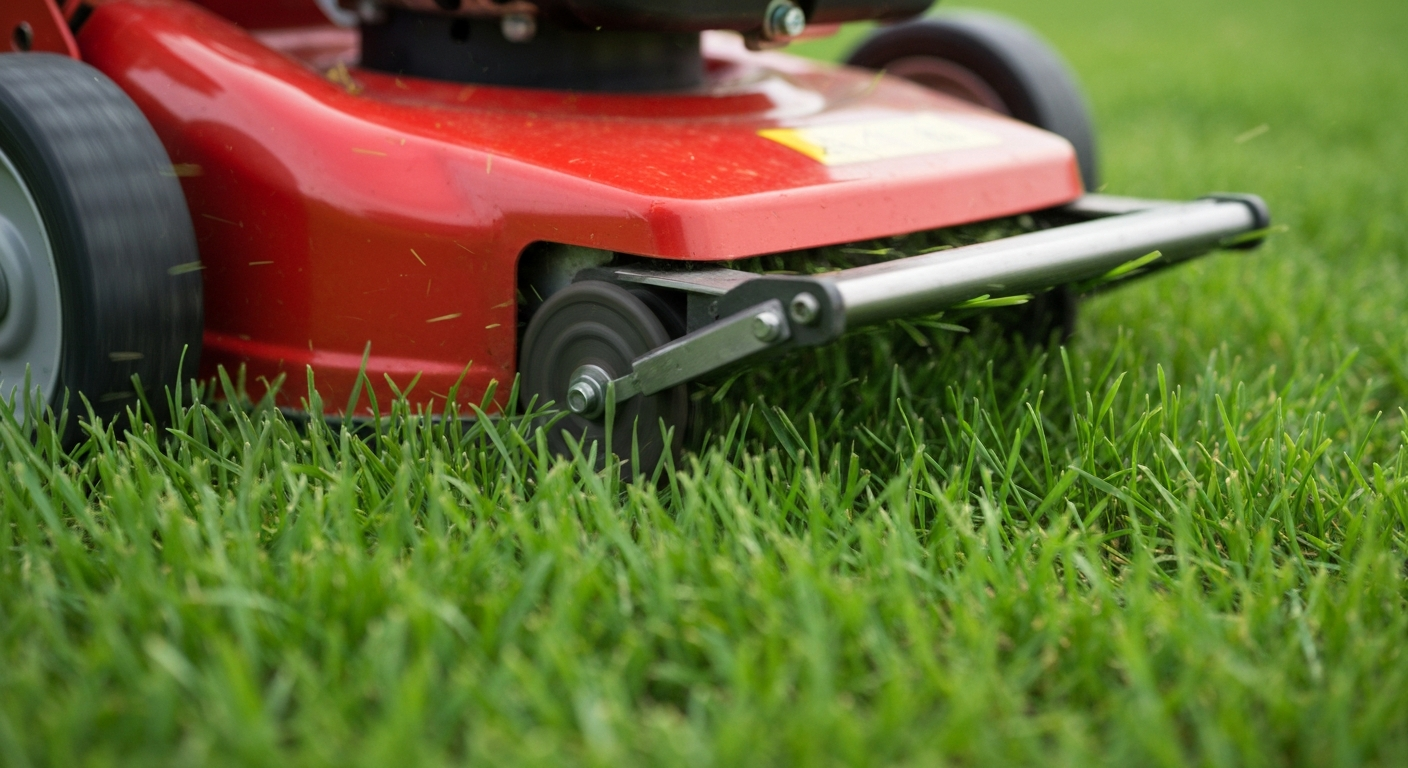
The technique used for the first cut differs from normal lawn care. Be sure to sharpen your lawn mower blades. Blunt blades tear the grass blades out instead of cutting them cleanly. This damages the young plants and their still-weak roots. A clean cut promotes rapid healing.
Set the cutting height to the highest setting, usually 5-6 cm. Follow the one-third rule: never cut off more than one third of the blade length at a time. Cutting too aggressively puts the plant under stress and weakens it. Mow when the grass is dry and be sure to collect the clippings. Grass blades left behind could smother the plants underneath and deprive them of light.
How do I deal with weeds in a new lawn?
It is perfectly normal for some weeds to germinate alongside the grass. Countless seeds lie dormant in the soil and also find ideal conditions thanks to soil cultivation and regular watering. Don't panic. Most annual weeds disappear on their own after the first few mowing sessions because they cannot tolerate regular cutting.
Under no circumstances should you use chemical weed killers on a newly seeded lawn. The young grass is still too sensitive and could be severely damaged or even killed by herbicides. Wait at least six months, or preferably a full year, before using chemical treatments.
The best method is careful hand weeding. Remove particularly large and dominant weeds such as dandelions or thistles before they can produce seeds. Gently loosen the soil around the weed with a small tool to remove the entire root without disturbing the neighbouring grass plants. In the long term, the best defence against weeds is a dense, healthy turf that leaves unwanted plants no room or light to grow.
Additional advice
If larger bare patches do appear in the lawn after a few months, you can overseed them specifically. Special overseeding mixtures such as the Robot Lawn Mower Overseeding Grass Seed, 1 kg () germinate particularly quickly and fill in bare patches.

When and how should I fertilise my new lawn for the first time?
The nutrients stored in the seed are quickly used up. For strong growth and the development of a robust root system, new grass needs additional nutrients. The first application of fertiliser is an important step in helping your lawn develop into a resilient carpet of grass.
The ideal time for the first application of fertiliser is around four to six weeks after germination, often when mowing for the second or third time. Be sure to choose a special starter lawn fertiliser. This fertiliser has a special nutrient composition and is rich in phosphorus, which is essential for developing a strong, deep root system. A standard lawn fertiliser with a high nitrogen content would strongly stimulate leaf growth but neglect root development.
Apply the fertiliser evenly, preferably with a spreader, to avoid over- or under-fertilising individual areas. Water the lawn thoroughly after fertilising so that the nutrients dissolve in the soil and can be absorbed by the roots. For smaller repairs or overseeding, a smaller pack such as "Wunder Rasen" Grass Seed, 1 kg () is also a practical alternative.
Nutrients are to young grass what a solid foundation is to a house. Without them, growth remains superficial and is not equipped for the future.
Caring for your new lawn during the first few weeks is an investment in the future. With consistent watering, patience about walking on it, the right mowing technique and a targeted first application of fertiliser, you lay the foundations for a beautiful, dense and healthy lawn that will last for years. Browse our wide range of grass seed and find the perfect mixture for your garden.
Frequently Asked Questions
- How often should I water newly sown grass?
- Several times a day during the first 1-2 weeks to keep the surface consistently moist. After that, water less frequently but more thoroughly to encourage deep root growth. Avoid waterlogging.
- When can I walk on a new lawn for the first time?
- Avoid walking on it completely until the grass has reached a height of 8-10 cm. Young seedlings are extremely sensitive and can easily be crushed.
- How high should I set the mower for the first cut?
- Set your lawn mower to a high setting, around 5 to 6 cm. Never cut off more than one third of the blade length to avoid stressing the young grass.
- What can I do about weeds in a new lawn?
- Carefully pull out large weeds by hand. Do not use chemical weed killers, as they can damage the young lawn. A dense lawn will later crowd out weeds on its own.
- When should I fertilise young grass for the first time?
- Fertilise around 4 to 6 weeks after germination. Use a special starter lawn fertiliser with a high phosphorus content to specifically promote root growth.
You may also be interested in
- Sowing a lawn: Step-by-step guide to a dense lawn
- Lawn care: How to make your lawn green, dense and healthy
- Lawn seed: Sown too much? Tips for the perfect lawn
- Sowing a lawn: When can you walk on it? Important tips for establishment
- Mowing a lawn after sowing: When and how
- Grass seed germination time: The facts for your perfect lawn